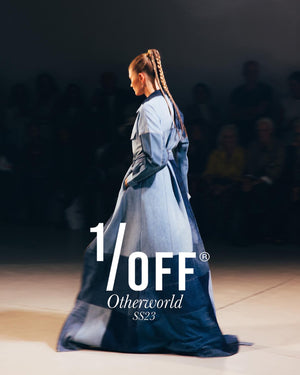
1/OFF Paris has never been a brand content to whisper its ambitions. With the launch of its 'Into the Unknown' fashion film, the Amsterdam- and Paris-rooted label has done what few upcycled fashion houses dare: it has placed its reconstructed couture squarely within the visual language of high luxury, and in doing so, has issued a quiet but unmistakable challenge to an industry still clinging to the comforts of virgin materials and seasonal novelty. The film arrives at a moment of genuine momentum — Forbes has reported 400% growth for the brand, a figure that transforms what might once have been read as a niche experiment into a commercial proposition that the wider market can no longer afford to dismiss.
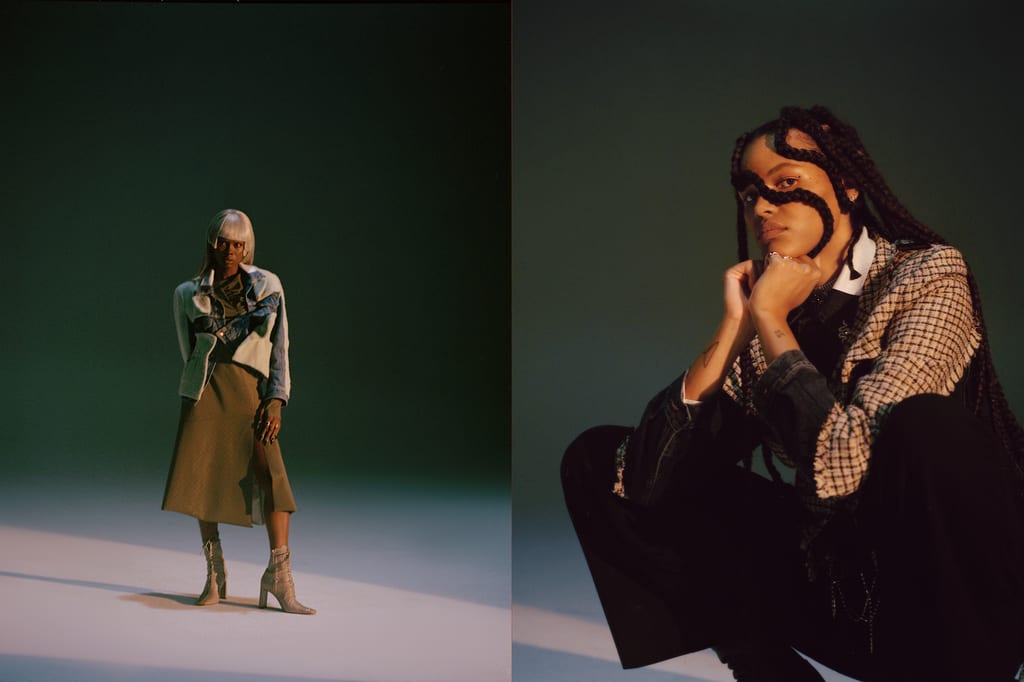
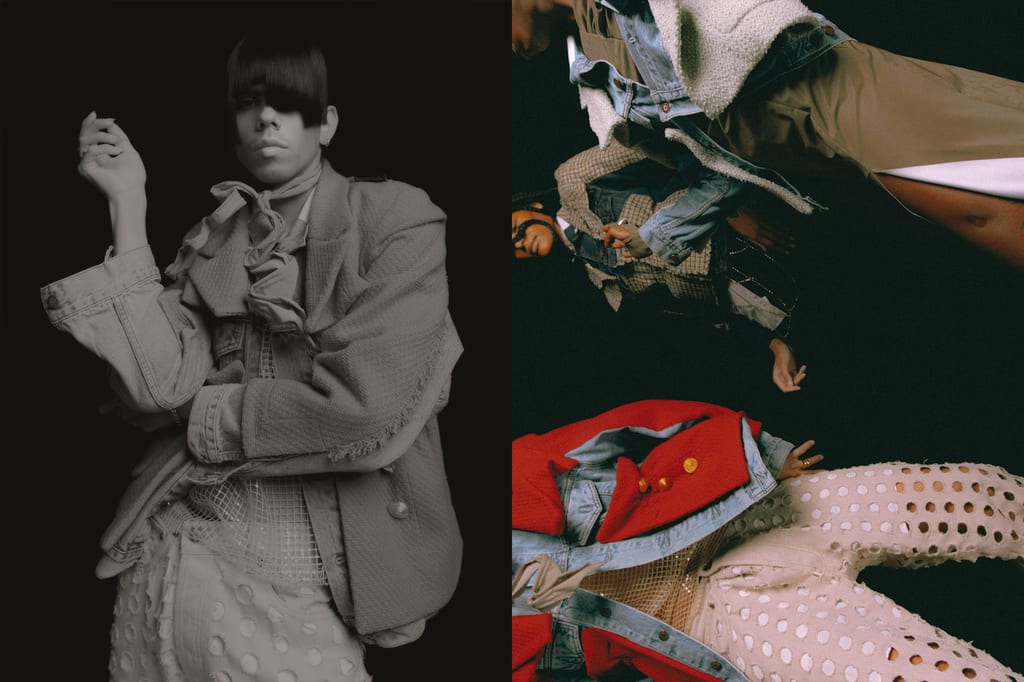
The premise behind 1/OFF Paris is deceptively simple and extraordinarily difficult to execute well. The label works with existing garments — archival designer pieces, deadstock, and forgotten couture — and reconstructs them into entirely new silhouettes. This is not vintage resale dressed up in editorial language; it is genuine re-authorship, a process in which a single garment is deconstructed, its seams unpicked, and its material reimagined into something that carries the DNA of its origin while existing as an entirely contemporary object. The result is a product that is, by definition, singular: no two pieces are identical, and each carries a provenance that mass-produced luxury simply cannot manufacture.
The Film as Thesis
What 'Into the Unknown' achieves, as a piece of fashion filmmaking, is the translation of that philosophy into atmosphere. The title itself is a statement of intent — a refusal of the safety net that recycled collections often retreat into, whereby sustainability is offered as sufficient justification for design that otherwise asks little of the viewer. Here, the imagery leans into the cinematic and the slightly uncanny, positioning reconstructed couture not as a compromise but as a provocation. It is a canny move. In a market where the language of sustainability has become so ubiquitous as to verge on the meaningless, 1/OFF Paris has chosen to compete on desirability first and ethics second — which is, counterintuitively, the more persuasive order of operations.
Couture at an Inflection Point
This matters because the conversation around couture and sustainability has reached an inflection point. Publications from HIGHXTAR to Vogue have begun asking, in earnest, whether haute couture can be reinvented for a sustainable future — a question that exposes the uncomfortable truth that the most rarefied tier of fashion is also among the most resource-intensive. 1/OFF Paris answers that question not with a manifesto but with product: garments that retain the handwork, the material quality, and the emotional charge of couture while sidestepping the extractive logic of making anything anew. The 400% growth figure suggests the market is listening. It also suggests that the brand has found a way to make upcycling legible to a luxury consumer who might never have considered secondhand, let alone reconstructed, clothing.
For the Collector, Not the Logo-Chaser
The collection is aimed squarely at that consumer — someone who understands craft, who is unmoved by logos, and who wants the garment they wear to carry a story worth telling. It is for the person who sees the irony in buying a new piece to signal an environmental conscience, and who would rather own one extraordinary reconstructed garment than five forgettable ones. In an era when the most interesting conversations in fashion are happening at the intersection of archive and authorship — the same territory Craig Green has long mined, the same instinct that has made vintage and upcycled denim a fixture of the style press — 1/OFF Paris occupies a distinctive position: rigorous enough for the collector, wearable enough for the wardrobe, and conceptually sharp enough to withstand the scrutiny that comes with growth at this pace.
'Into the Unknown' is, ultimately, less a campaign than a thesis. It argues that the future of luxury need not be manufactured from scratch, that provenance can be inherited rather than invented, and that the most radical thing a fashion house can do in 2025 is to make something beautiful out of what already exists. On the evidence of the film — and the numbers behind it — 1/OFF Paris is making that argument with unusual conviction.