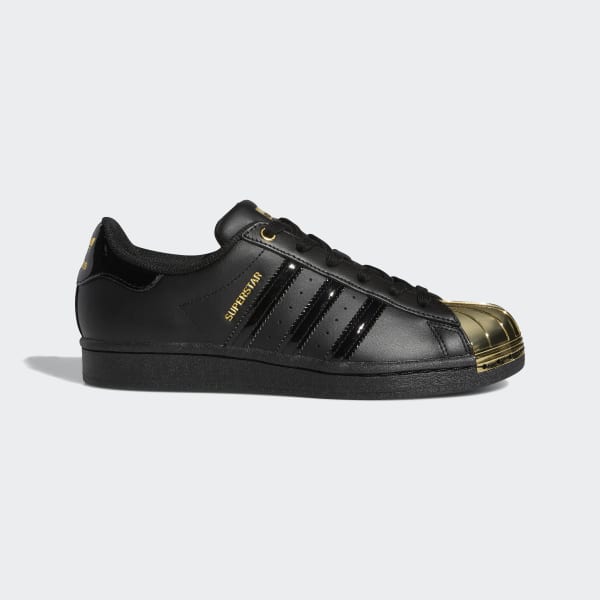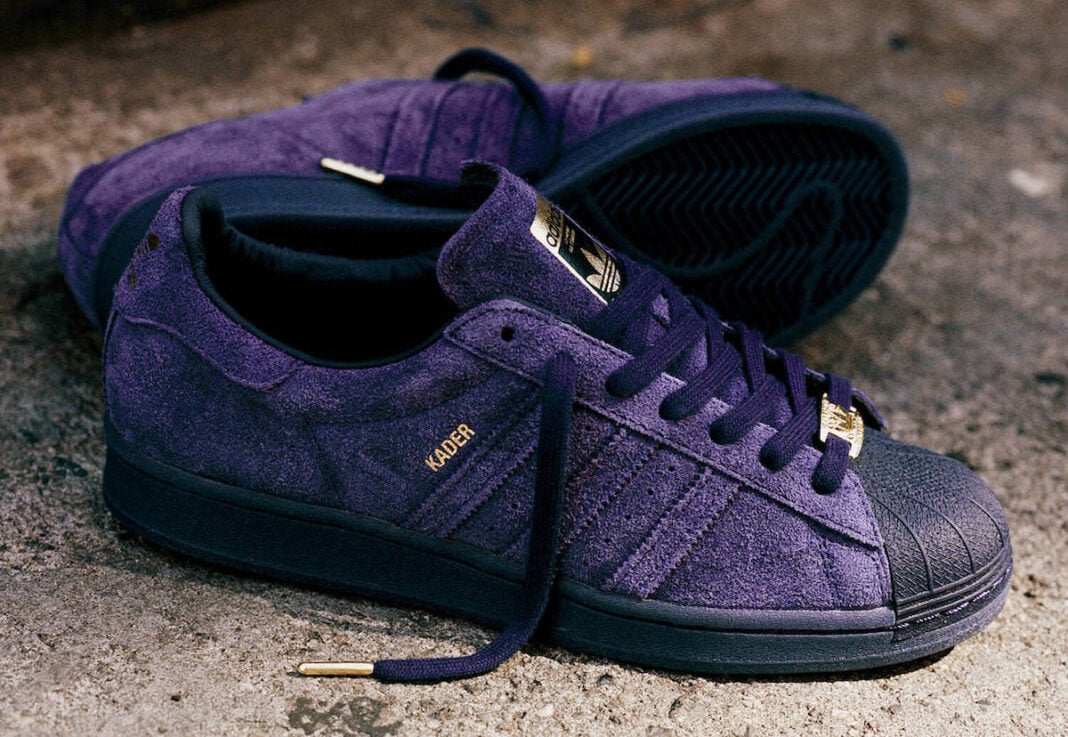
The Superstar has never needed an introduction. Since 1969 it has lived on basketball courts, stared out from hip-hop album covers, and worn a groove into downtown sidewalks — its shell toe and serrated Three Stripes as legible as any mark in sportswear. So when adidas submits that familiar form to the demands of the job site — reinforcing the toe box with genuine steel, hardening the upper, reengineering the outsole for surfaces that don't forgive a soft step — the move lands less like a gimmick and more like a homecoming. As Highsnobiety put it, this is a shoe that "works hard, flexes harder." A piece of protective equipment that refuses to look like one is a rare thing indeed.
What makes it work is restraint. Every alteration serves a purpose, and none of them announces itself loudly.
Steel Beneath the Shell
Start with the detail that gives the shoe its name. The steel toe cap sits beneath the classic rubber shell, meeting industrial safety standards without abandoning the Superstar's signature profile — a feat of engineering that preserves the shoe's identity rather than burying it. The upper is rendered in rugged leather and heavy-duty textile, materials chosen for abrasion resistance and finished with reinforced stitching at the stress points, the kind of construction you feel before you can articulate it. The outsole is reworked for slip resistance and grip on concrete, tile, and shop floors, while the interior gains a cushioned insole and padded collar built for twelve-hour shifts rather than twelve-minute commutes. Tactile, deliberate, unsentimental — and still unmistakably a Superstar.
A Seam in the Culture
Culturally, the Steel-Toe Superstar occupies a fascinating seam. Workwear has spent the past decade migrating from the trades into fashion's mainstream — the Carhartt jacket, the moc-toe boot, the hi-vis accent — and footwear has followed. But most of that crossover has been aesthetic, garments styled to *look* like they could take a beating. This shoe inverts the equation: here is one that can genuinely withstand the beating, cut to a pattern the culture already loves. It belongs to the lineage of the Timberland boot and the Dr. Martens 1460 — objects that crossed from function to folklore without ever renouncing their original purpose. Adidas, a brand currently reshaping its image across collaborations and archive revivals, has quietly added something with actual utility to that conversation.
Who It's For
The answer is broader than it first appears. There is the obvious wearer — the tradesperson, the warehouse worker, the kitchen professional who wants safety compliance without the orthopedic gloom of a standard work shoe. But there is also the stylist, the archivist, the person who understands that the most interesting footwear of the moment carries a patina earned rather than applied. Worn with raw denim and a heavy overshirt, the Steel-Toe Superstar reads as deliberate; worn on the job, it simply reads as sensible. Few shoes perform convincingly in both registers.
Why Now
Timing matters here. The market is saturated with nostalgia — reissues, retros, and collaborations that recycle the past with varying degrees of sincerity. Against that backdrop, a product that takes a heritage silhouette and gives it a new capability feels unusually substantive. It also arrives as workwear's cultural stock continues to rise and as consumers, chastened by disposable fashion, increasingly favor objects built to last. The Steel-Toe Superstar answers that appetite without pandering to it. It is not a costume of labor; it is labor, wearing a familiar face.
The Superstar has always been a shoe of the people — the court, the block, the stage. With steel in its toe and grit in its construction, it extends that franchise to the people who build, haul, cook, and repair. It is the rare icon that has gotten more honest with age.