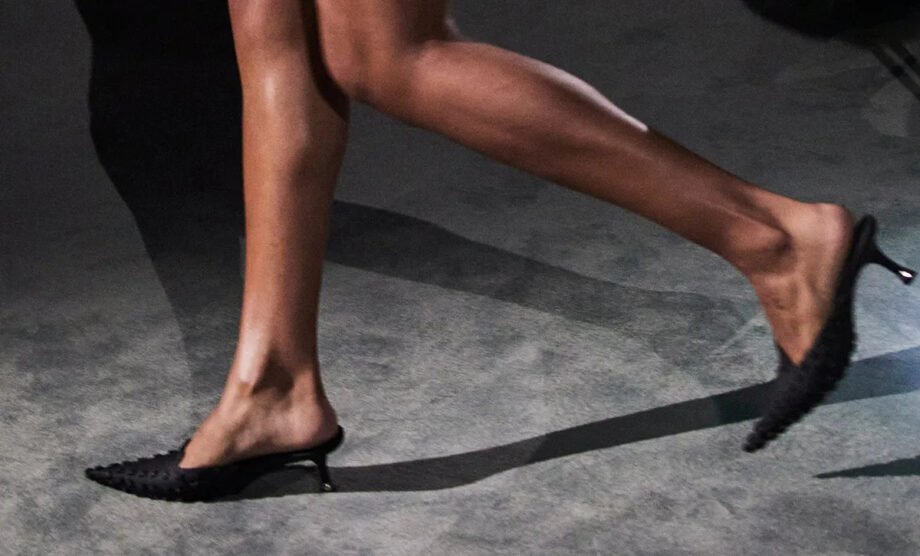
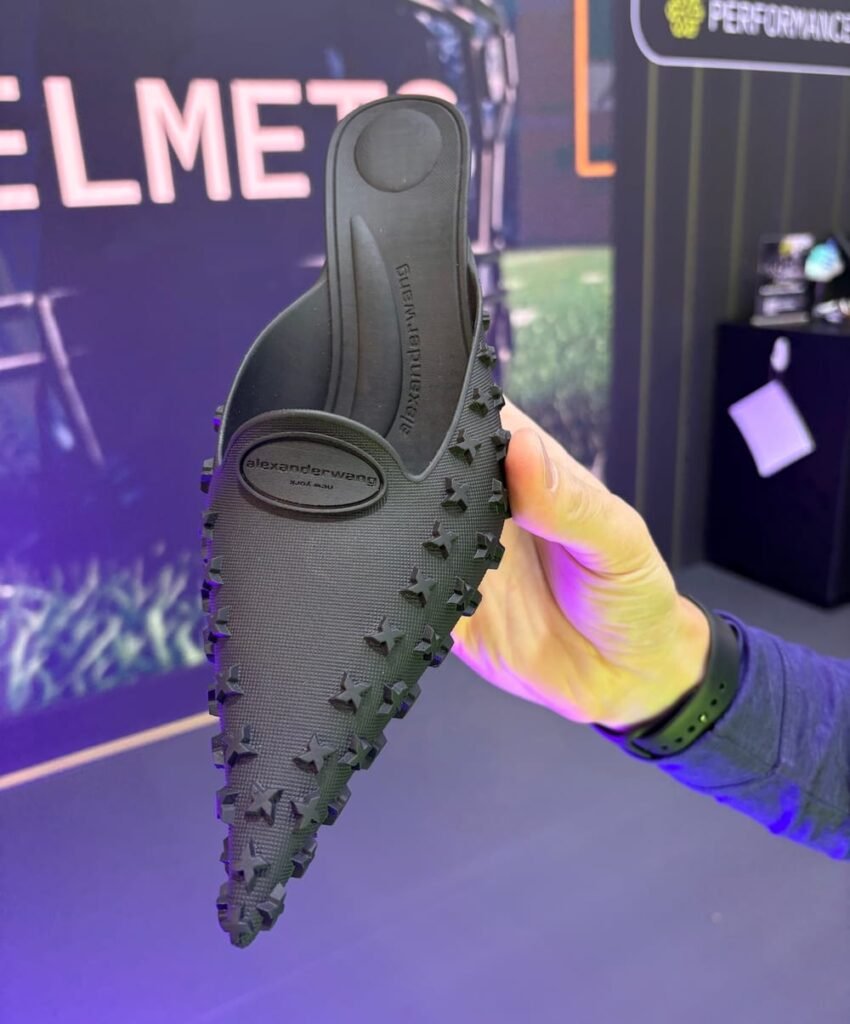
Alexander Wang has never been a designer content to color inside the lines. From the slouchy knits that made his name in the mid-2000s to his tenure at Balenciaga to his ongoing reign over downtown New York cool, Wang has built a career on tension — grit against glamour, streetwear against couture, the subversive against the supremely polished. With Griphoria, his newly unveiled 3D-printed stiletto, that tension finds its most literal expression yet: a shoe that sits at the precise intersection of additive manufacturing and high-fashion craftsmanship, and one the industry is already calling a genuine first.
The Griphoria is not a concept render or a runway-only curiosity. According to Wang's team, it is the first fully wearable 3D-printed stiletto — a distinction that matters enormously in a fashion landscape littered with printed prototypes that never made it past the atelier. The shoe's structure is generated through industrial-grade additive manufacturing, allowing for geometries traditional shoemaking simply cannot produce: lattice-like internal architectures, organic curves that flow from heel to sole without seams, a silhouette that reads as simultaneously alien and elegant. Wang has long been fascinated by the aesthetics of hardware and the body as machine. Griphoria translates that obsession into footwear that looks engineered rather than assembled, because it is.
The Wearability Problem, Finally Solved
What sets the Griphoria apart from the wave of 3D-printed footwear experiments that preceded it is the question of wearability. Previous attempts — from major sportswear brands to boutique labs — have tended to produce either sculptural objects too rigid for the foot or flimsy novelties that collapse under real weight. Wang's stiletto reportedly resolves that tension through a considered marriage of material science and ergonomic design, with the printed structure calibrated to support the foot's natural stance while maintaining the razor-thin profile of a true stiletto. The result is a heel that photographs like sculpture and, crucially, functions like a shoe. That balance — object versus garment — is where most printed footwear has stumbled. Here, it appears to be the entire point.
A Designer Thinking in Systems
Culturally, the timing is sharp. Wang's recent moves — opening Wang Contemporary, a cross-disciplinary arts hub in a Chinatown landmark, with his mother; partnering with Samsung on donations to Art Start; staging a Fall 2026 collection that reaffirmed his grip on downtown New York's aesthetic vocabulary — paint a portrait of a designer increasingly interested in the systems and institutions that surround fashion, not just the garments themselves. Griphoria fits that arc perfectly. It is a product that asks what a shoe can be when the factory floor is replaced by a printer, and when the designer's imagination is no longer bounded by the limits of stitching, lasting, and traditional assembly. The shoe, in other words, is less a departure than a logical next step.
When the Technology Stops Being the Story
The Griphoria also arrives at a moment when 3D printing has shed its novelty status and entered a genuinely interesting phase — one in which the technology is no longer the point, but rather the enabler of ideas that would otherwise be impossible. Wang's stiletto is a beneficiary of that shift. It doesn't ask you to admire the printer; it asks you to admire the line, the proportion, the audacity. That the two happen to be inseparable is precisely the achievement. Plenty of brands have made printable shoes. Very few have made you want to wear one.
Who It's For
Certainly not the timid. It is for the woman who has already worn every classic heel and wants something that hasn't existed before — the collector, the early adopter, the person who understands that fashion's most interesting frontier right now is not a revival but an invention. It is also, quietly, for the industry itself: a proof of concept that couture-level design and additive manufacturing can coexist in a single wearable object. Whether the Griphoria becomes a template for a new category of luxury footwear or remains a brilliant one-off, it has already done the hard part. It has made the future of the stiletto feel, for the first time, genuinely unwritten.
And unmistakably Alexander Wang — a designer who has spent two decades refusing the easy answer, and who now seems intent on printing his own.