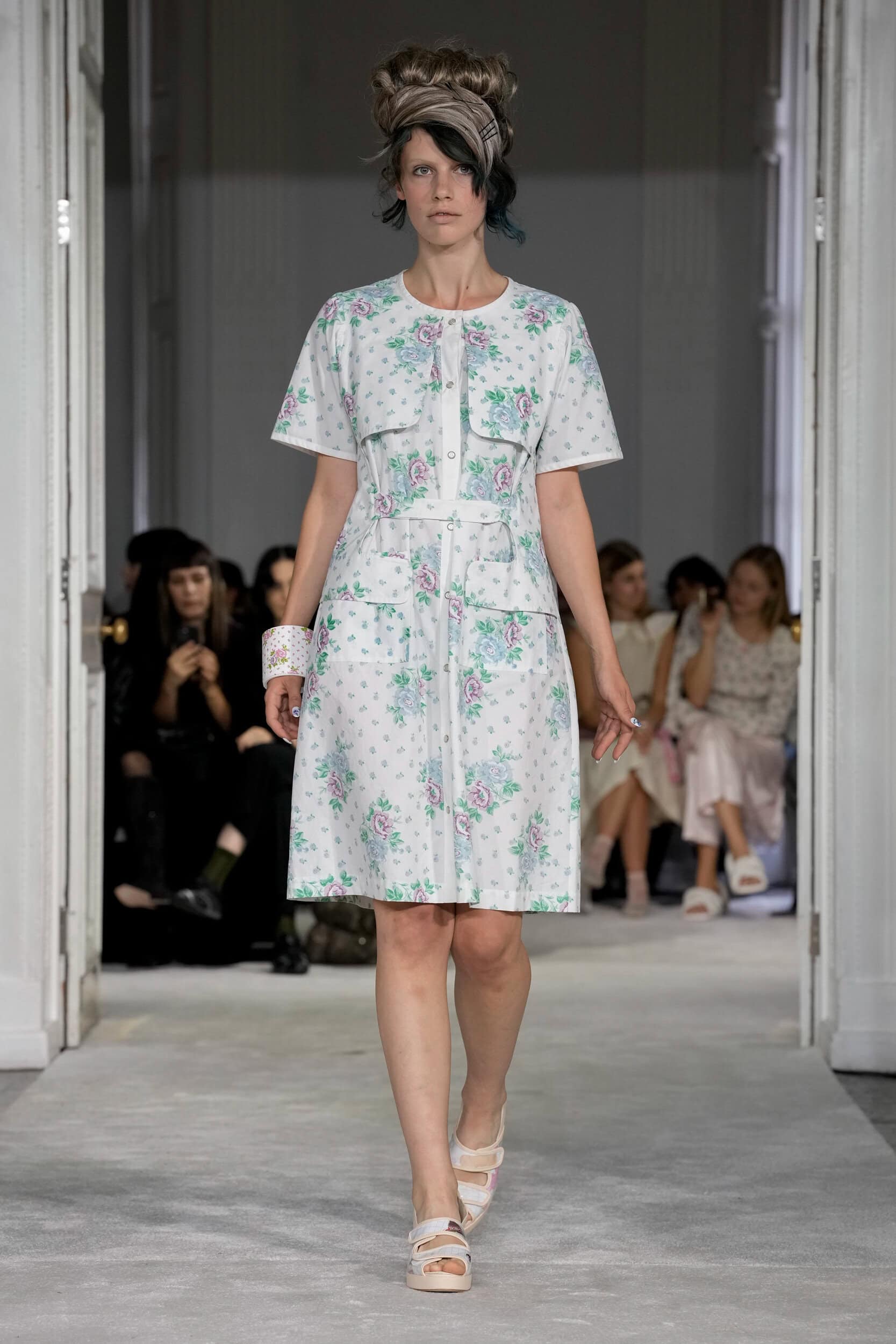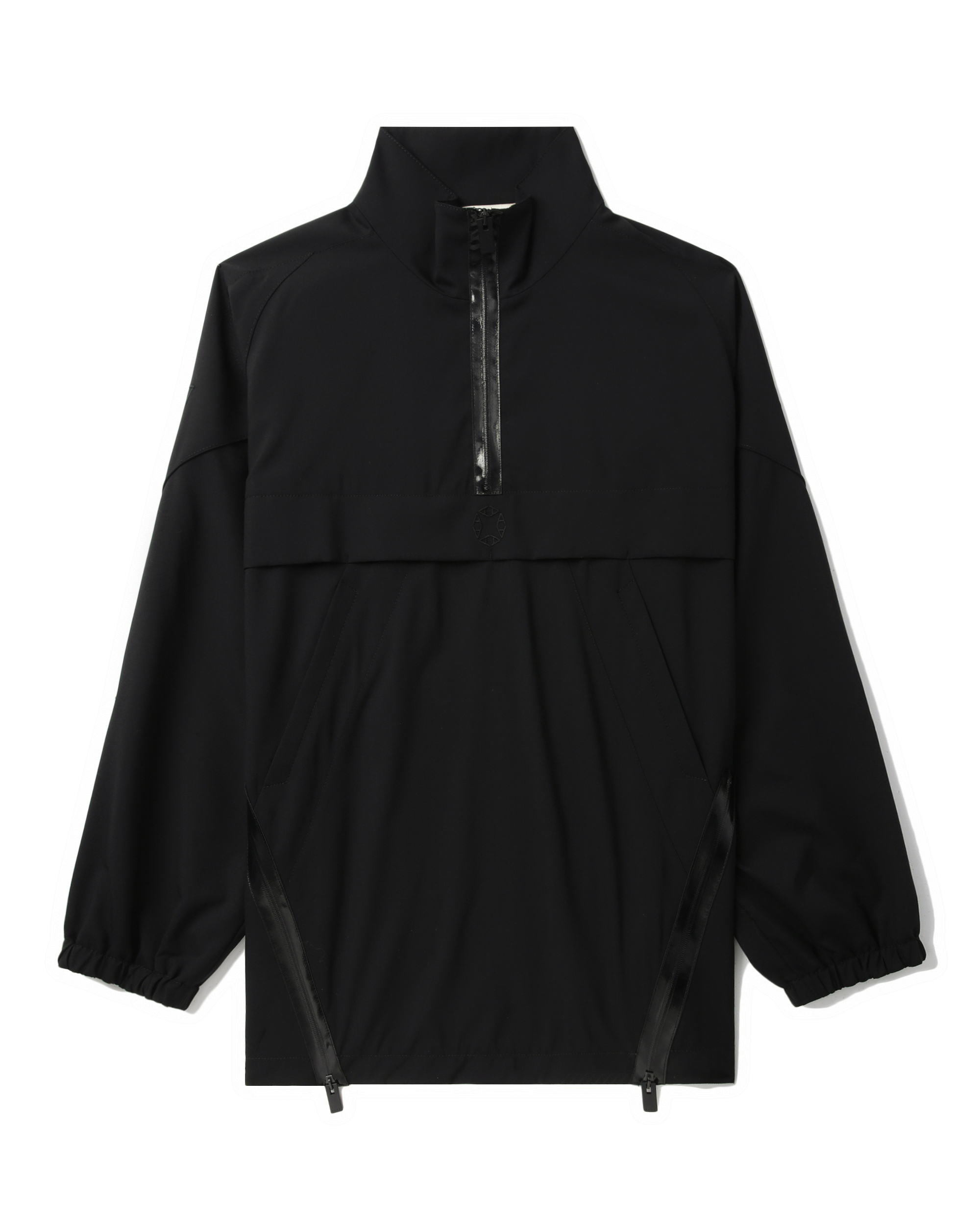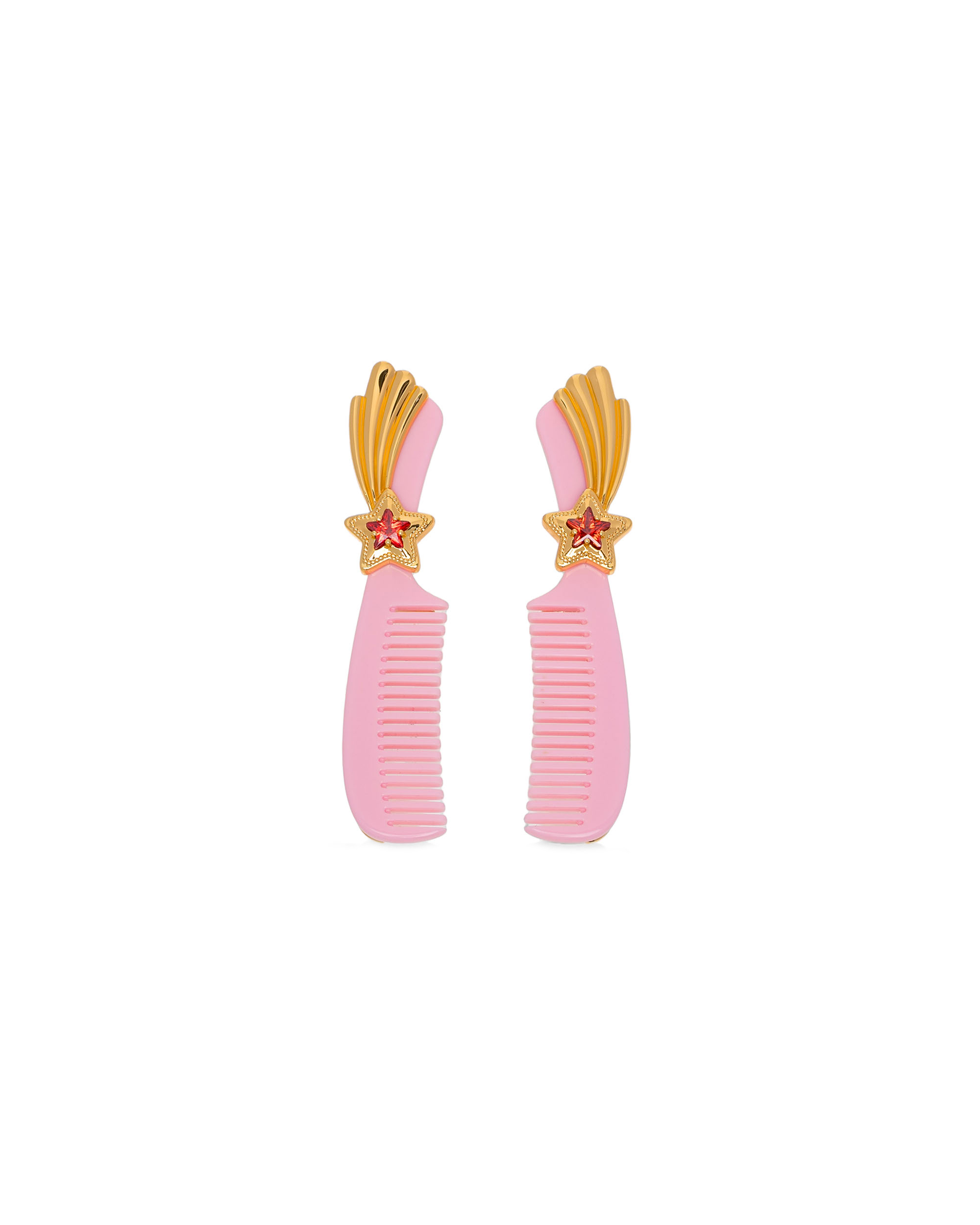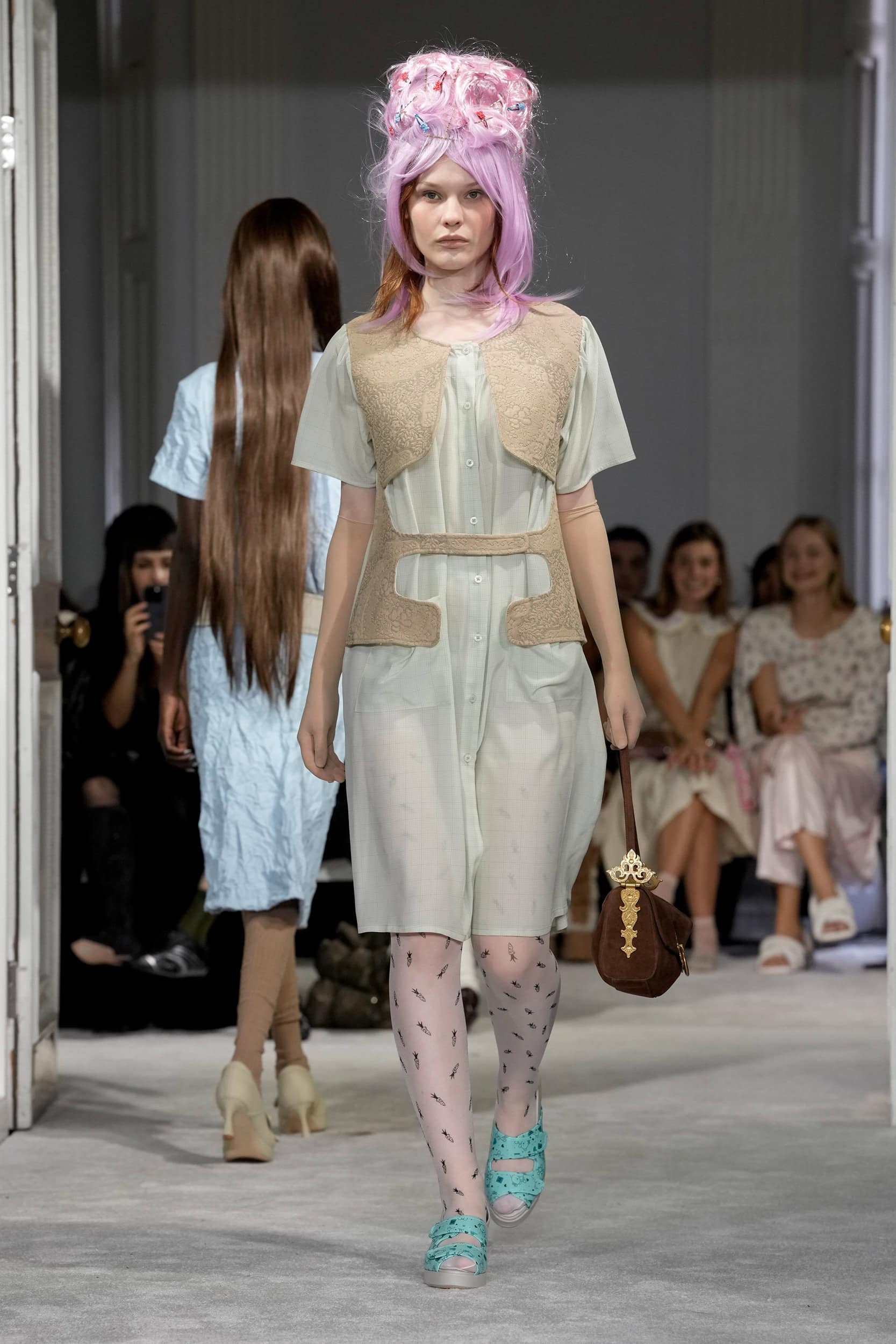
Ashley Williams has always been the provocateur in the room. But for her London Fashion Week debut, the British designer chose a different kind of disruption. With Spring 2027's "There's Life Here, Still," she traded punk pastiche for the parlour curtain, excavating the textures of British home life and returning them to the runway stripped of irony and charged with feeling. It was one of the season's most anticipated propositions—WWD and Vogue both documented the runway in full—and it confirmed what the industry has suspected for several seasons: Williams has matured from provocateur into archivist.
The title itself functions as a manifesto. "There's Life Here, Still" reads as both elegy and declaration, an insistence that the ordinary—the kitchen table, the parlour curtain, the knitted layering of a cold-weather household—retains a vitality worth attending to. Where earlier collections leaned on punk disruption and pop-cultural pastiche, Spring 2027 turns inward, making the domestic sphere the site of inquiry.
Domestic Icons, Reworked
Wallpaper florals return as engineered prints. Tea-dress silhouettes are spliced with utilitarian hardware. The kind of humble knitwear one associates with grandmothers is rendered in unexpected proportions and subversive colourways. The result is a collection that feels like memory itself—familiar yet distorted, tender yet unsettled. Williams has always traded in Britishness, but here she trades in its most private register: the home.
Material Intelligence
What distinguishes "There's Life Here, Still" is its material intelligence. Williams has long been celebrated for her collaborations and craft sensibility, and here the fabrication choices carry the narrative. Crisp cottons and lawn fabrics evoke household linens; heavier woollens and crochet work gesture toward the handmade and the inherited. There is deliberate friction between the softness of the references and the precision of the cutting—garments that appear to reference the pastoral are structured with a sharpness that keeps sentimentality at bay. This is nostalgia with its eyes open, aware that the British domestic ideal was never as stable or as inclusive as its myth suggested, and choosing to rework it rather than simply mourn or mock it.
The Personal as Political
Culturally, the timing is acute. London Fashion Week has spent recent seasons negotiating questions of national identity, sustainability, and the value of local manufacturing. Williams answers those questions through the most intimate register available: the home. In an era of accelerating digital dislocation, the collection's insistence on the tactile, the worn-in, and the lived-in registers as a quiet act of resistance. The Spring 2027 runway debut positions Williams within a lineage of British designers who have treated the everyday as worthy of serious design attention, but her voice remains distinctively her own—wittier than the romantics, warmer than the conceptualists, and more emotionally exposed than her earlier work ever allowed.
Who It's For
"There's Life Here, Still" speaks most directly to those who have felt the pull of inherited aesthetics without wanting to be trapped by them—a generation negotiating its relationship to tradition on its own terms. It rewards the wearer who understands that a garment can hold both affection and critique, that domesticity can be reclaimed without being romanticised into falsehood. For retailers and stylists, the collection's strength lies in its wearability: the prints, the knitwear, the reimagined daywear all translate from runway to wardrobe with unusual fluency, and the emotional clarity of the concept gives each piece a story that sells itself.
Why it matters now is precisely this clarity. In a season crowded with spectacle, Ashley Williams Spring 2027 "There's Life Here, Still" chose the quiet radicalism of looking homeward—and in doing so, made her London Fashion Week debut feel less like an arrival than a homecoming. The collection asserts that the domestic is not a retreat from contemporary life but one of its most urgent subjects, and that Williams, with her singular blend of craft, wit, and feeling, is exactly the designer to make us see it anew.