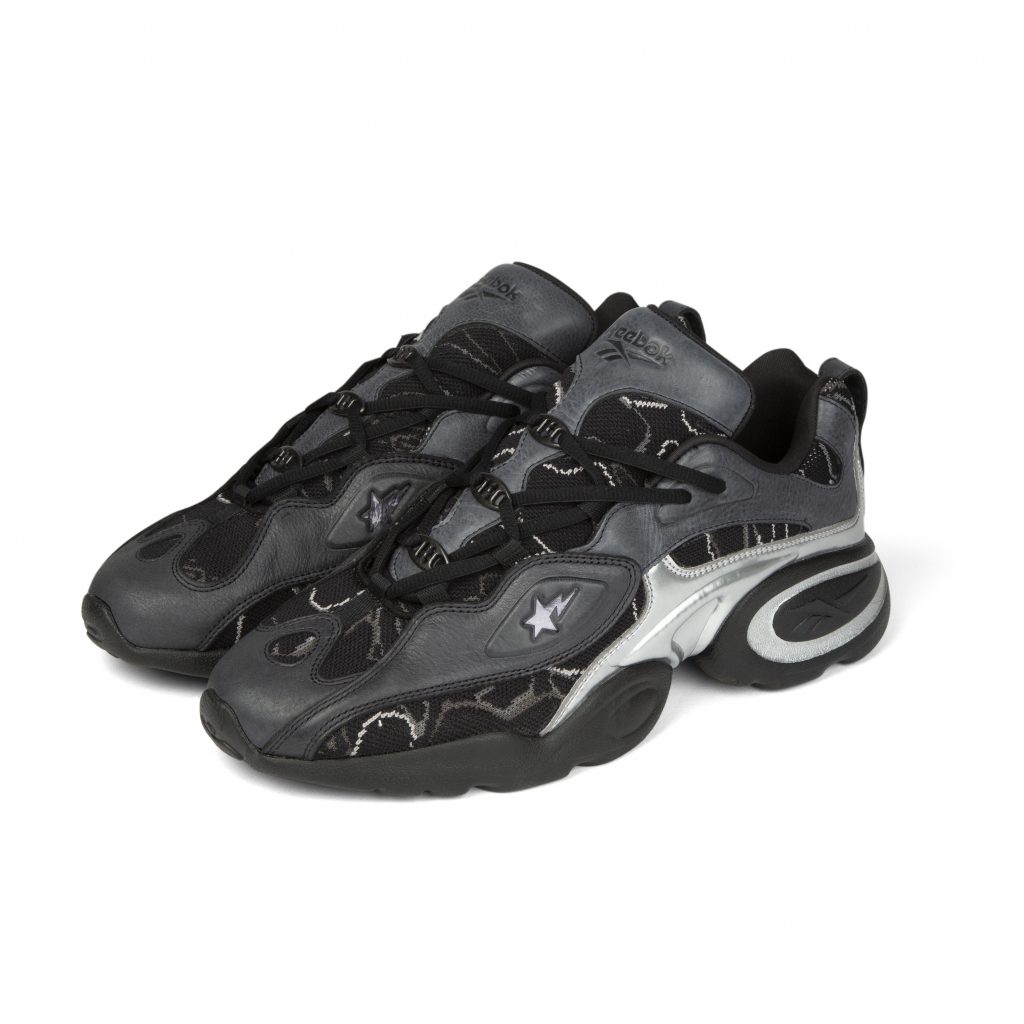
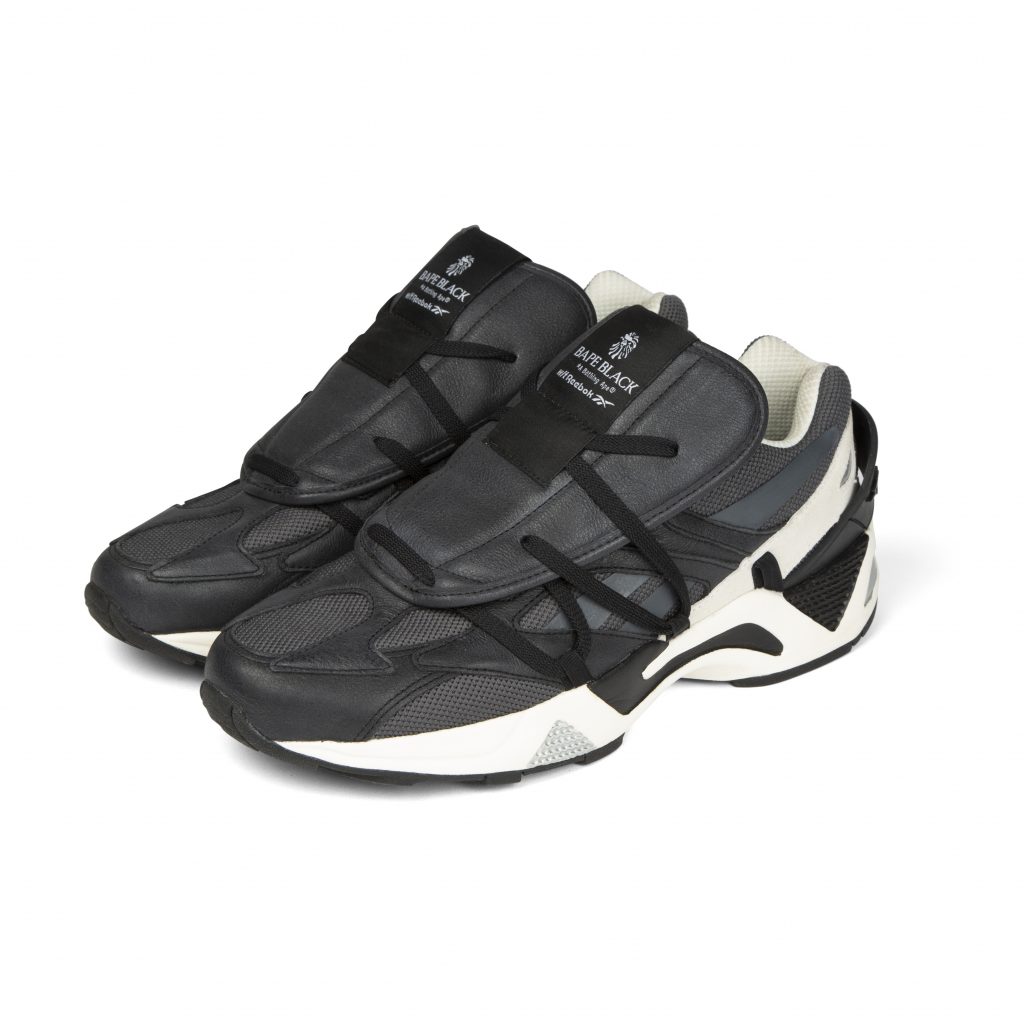
There's a particular tension that defines the best fashion collaborations — the meeting point between a label that trades in exclusivity and a silhouette that has spent four decades earning its place in the everyday. The BAPE BLACK x Reebok Club C lives precisely at that intersection, and it may be the most consequential release to emerge from either camp in recent memory.
Since its introduction, the Club C has functioned as Reebok's quietest triumph: a low-profile tennis shoe from 1985 whose clean lines and unfussy construction have made it a perennial canvas for collaborators ranging from Palace to Cardi B. But placing it under the BAPE BLACK banner changes the register entirely. This is not a novelty colorway or a logo-stamped cash grab; it is a deliberate repositioning of a heritage model inside a luxury vocabulary.
When Restraint Becomes the Statement
The design itself rewards close attention. Where mainline BAPE operates in loud, primary-colored graphics and camo that announces itself from across the room, BAPE BLACK — the sub-label that has quietly become A Bathing Ape's most sophisticated arm — traffics in restraint.
The Club C arrives dressed in muted, tonal executions that let material do the talking: premium leather uppers with subtle texture variation, understated co-branding, and a silhouette that reads as elevated rather than athletic. The aesthetic aligns with what Hypebeast has described as the label's ongoing interest in "texture and tone," a philosophy that has guided recent BAPE BLACK collections and distinguishes them from the parent brand's maximalism. The shoe is meant to be worn with tailoring as readily as with denim — a genuine wardrobe piece rather than a display object.
A Footwear Program, Not a One-Off
That ambition matters because it reflects a broader strategic pivot. BAPE BLACK has spent the past several seasons building a credible luxury footwear program, moving from the Chaos Mountain Boots crafted with Japanese cobbler foot the coacher to a grey-dressed Electrolyte 97 with Reebok and now to the Club C.
Each release has widened the label's range, and the Reebok partnership in particular — spanning multiple silhouettes — signals a sustained relationship rather than a one-off. The timing is shrewd. As BAPE continues its global retail expansion, including a new Las Vegas flagship, the BLACK line gives the brand a credible answer to the luxury-adjacent customers who might otherwise overlook it. The appointment of high-profile faces to represent the label has further pushed it into mainstream cultural conversation, but the product has to carry the weight — and here, it does.
The Anti-Hype Argument for the Club C
Culturally, the Club C is an inspired choice precisely because it is unglamorous. It carries none of the hype baggage of a Dunk or a Jordan; it is the shoe of British casuals, of tennis clubs, of people who buy sneakers to wear rather than to resell.
Wrapping it in BAPE BLACK's understated luxury signals a kind of confidence — an assumption that the audience is mature enough to appreciate a shoe that whispers. It also speaks to a broader shift in streetwear, where the pendulum has swung from logo saturation toward fabrication, silhouette, and longevity. Collectors who have grown tired of the cycle are looking for pieces that age well, and a tonal leather Club C with refined co-branding fits that brief almost perfectly.
Who It's Actually For
Not the completist chasing every BAPE drop, and not the purist who wants the original 1985 spec untouched. It is for the person who has graduated from hype and wants a sneaker that works across contexts — one that reads as considered rather than consumed.
It is for the customer who understands that BAPE BLACK exists as the parent brand's more grown-up sibling, and who values the distinction. In a market flooded with collaborations that feel transactional, the BAPE BLACK x Reebok Club C is a reminder that the best partnerships do not shout. They recalibrate. And in doing so, they give a classic a second life worth paying attention to.