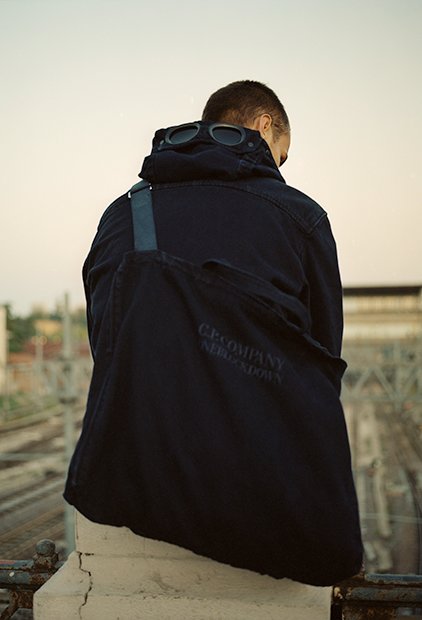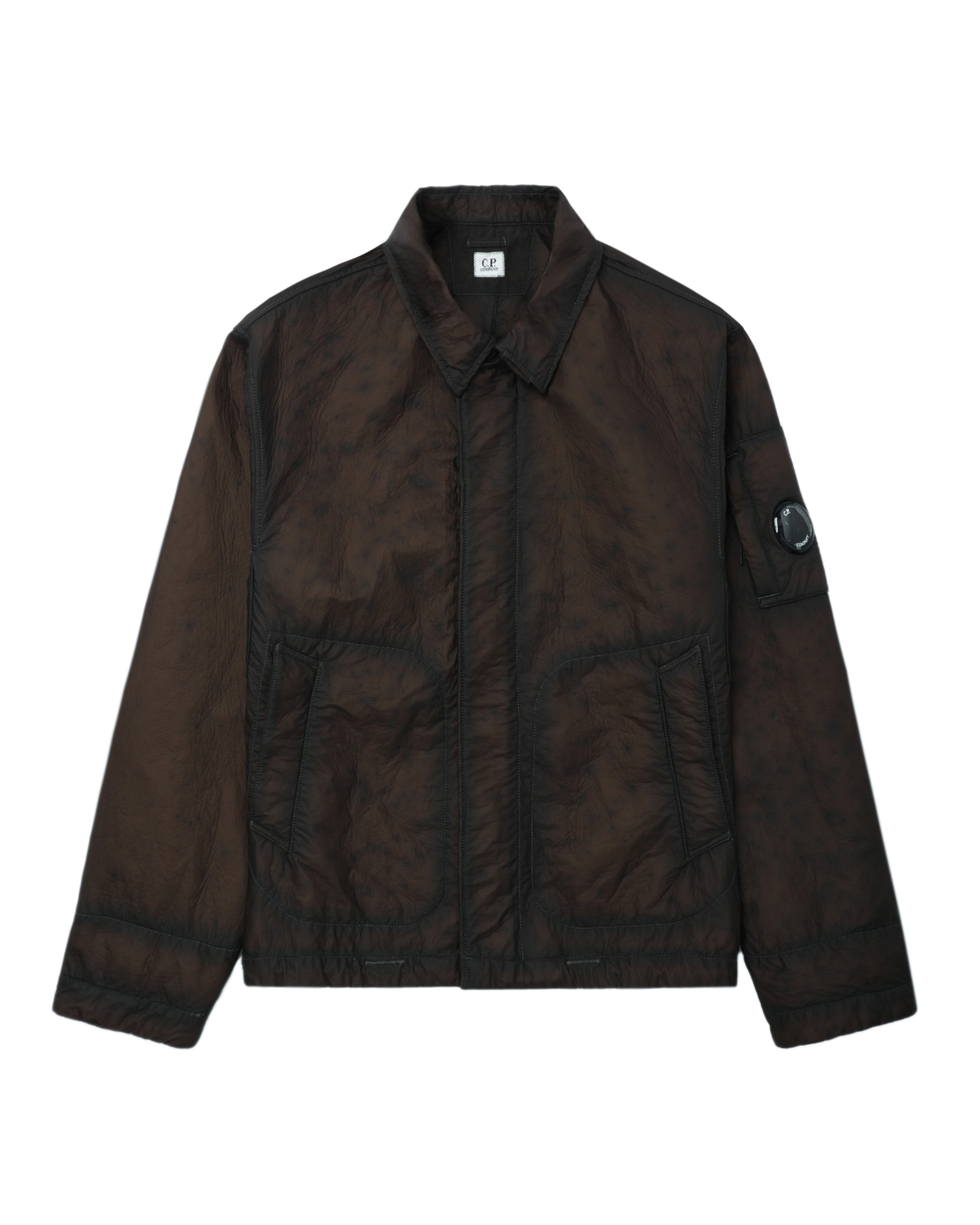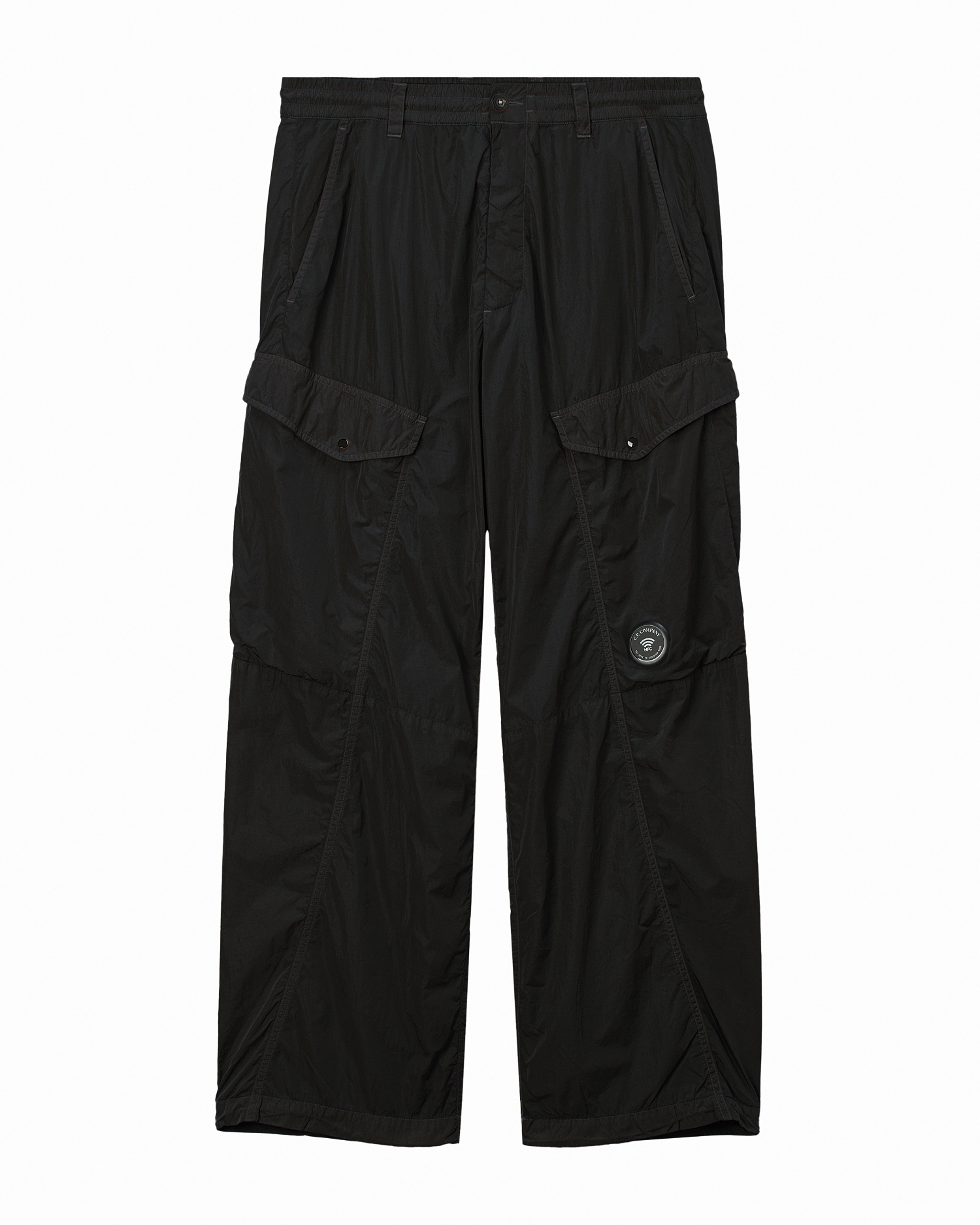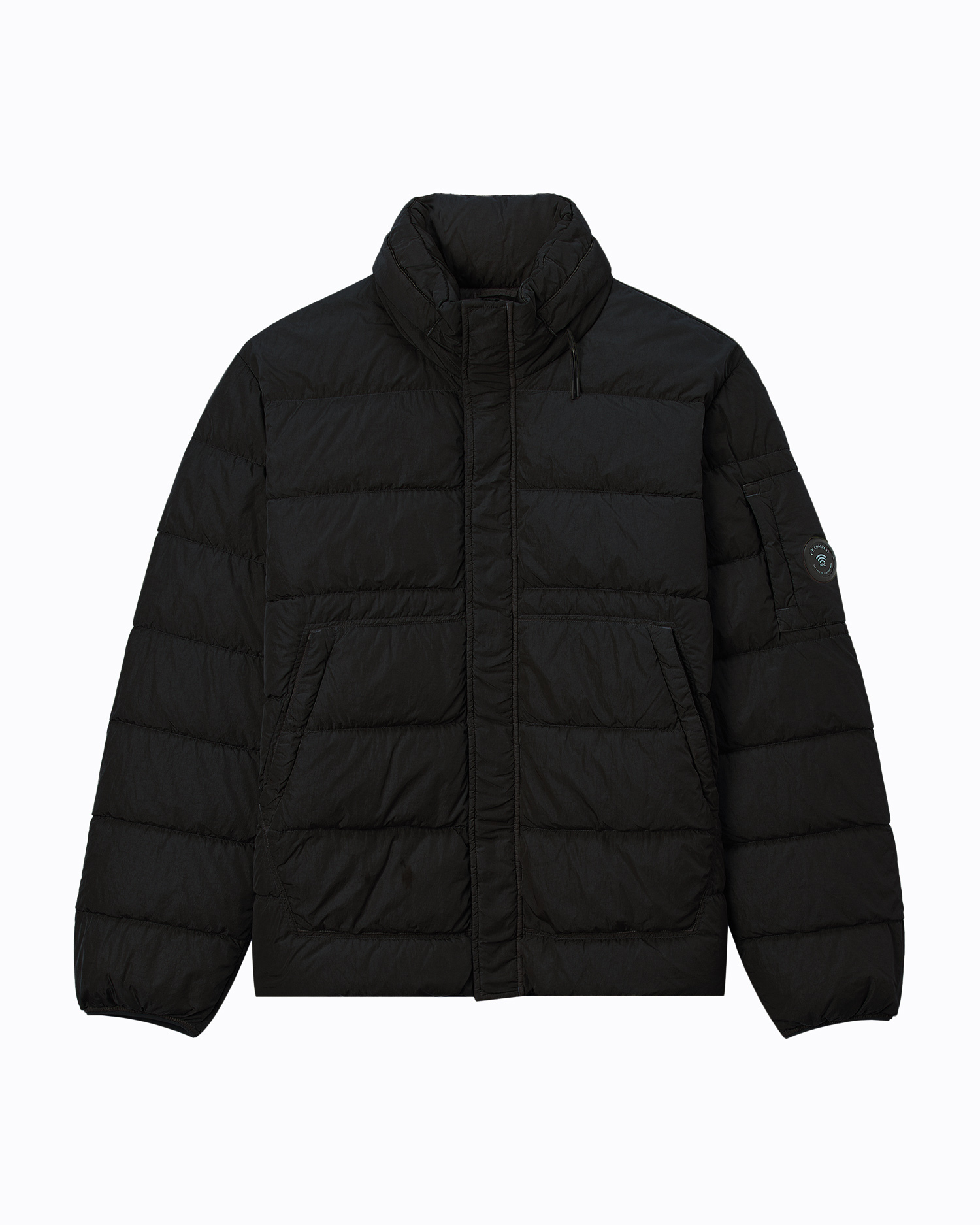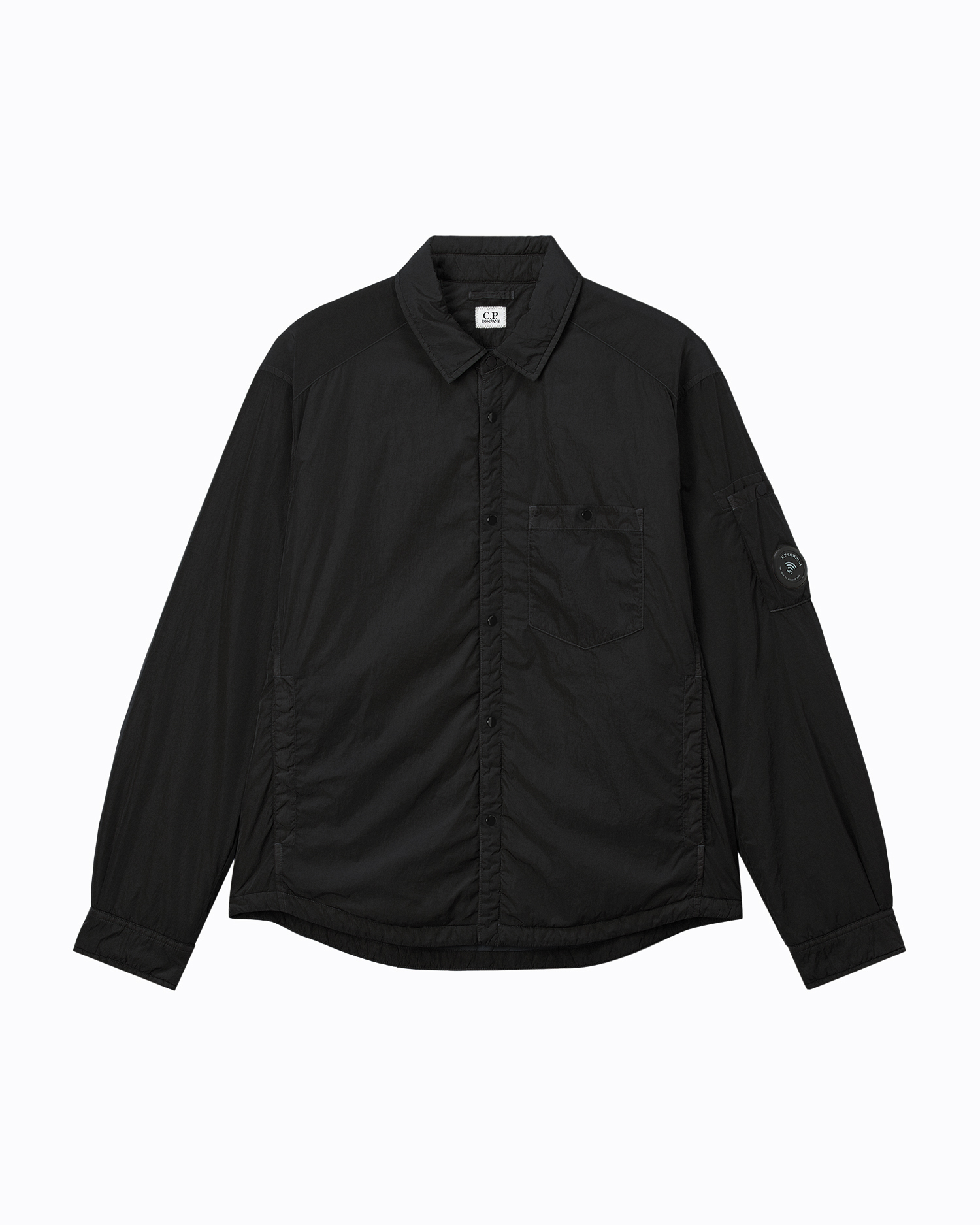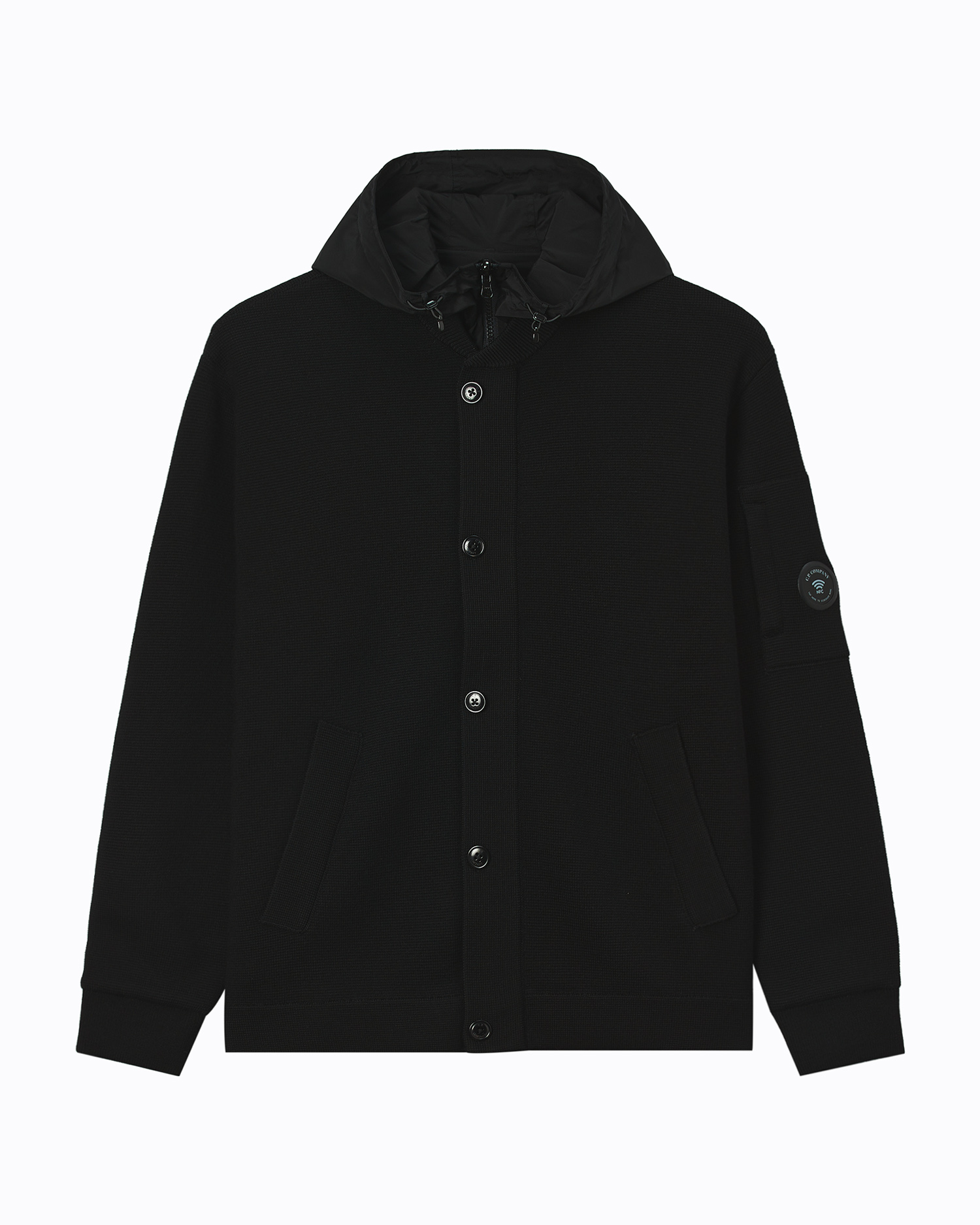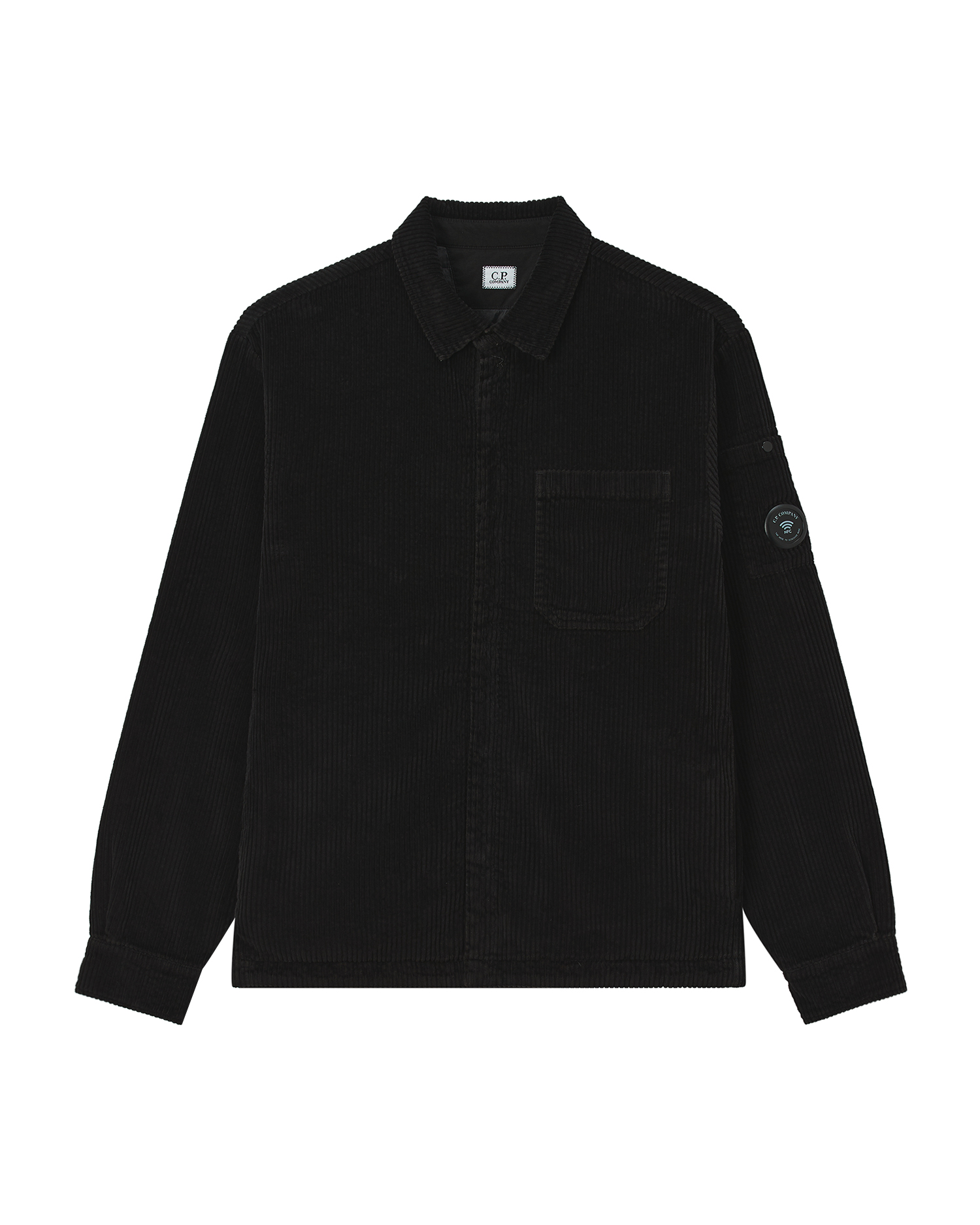
There are few garments in contemporary menswear that carry as much coded meaning as a C.P. Company goggle jacket. So when the storied Italian label links with Milanese retailer One Block Down for a capsule called "Inversion," something rarer than a reissue happens: the house deliberately misreads its own history in order to keep it alive.
Released as part of the Spring/Summer 2026 season, the collaboration takes C.P. Company's most recognizable utilitarian signatures — the Mille Miglia-derived silhouette, the goggle hood, the garment-dyed shell — and subjects them to a process of inversion. Linings are turned outward. Colorways are flipped. Archival references are recontextualized through the lens of the contemporary street. The archive doesn't get a tribute here. It gets a remix.
The Fabric Comes First
The technical story begins, as it always does with C.P. Company, in the fabric. The brand's founding obsession — developed by Massimo Osti in the 1970s and refined ever since — is garment dyeing: finished pieces are dyed after construction, producing a depth of color and subtle irregularity that no flat-dyed nylon can replicate.
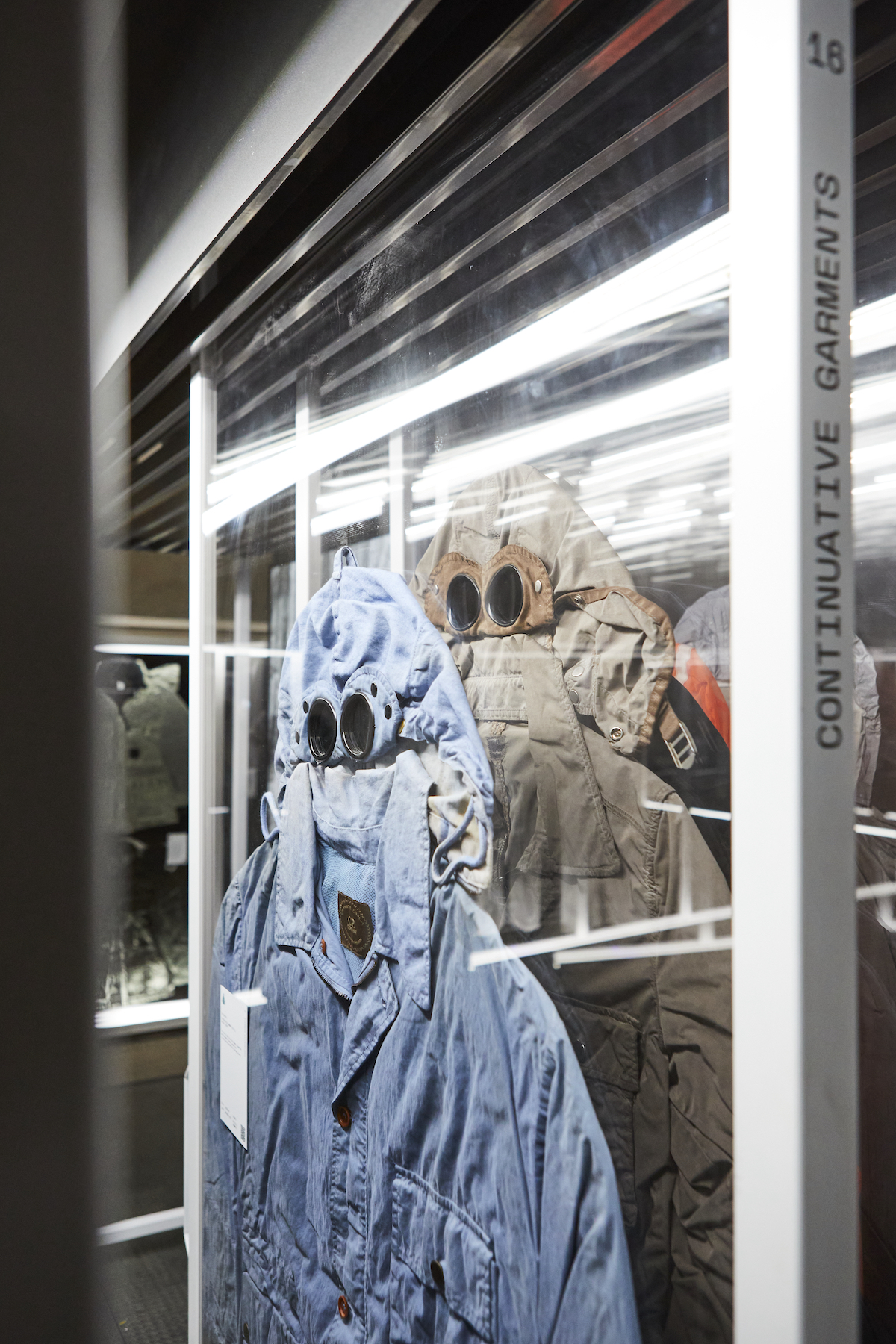
In the "Inversion" drop, that process is pushed further. Chrome-R nylon and treated cotton shells are cut with contrast linings meant to be seen. Seams and taping are turned inside out so the garment's construction becomes its decoration. The goggle hood — that unmistakable dual-lens apparatus, originally engineered for driver visibility in the Mille Miglia — remains intact, but here it reads less as motorsport equipment and more as a piece of urban armor. Functional, yes. But also confrontational.
A Conversation, Not a Drop
What makes the capsule culturally significant is not the garment itself but the conversation it stages. One Block Down is not a generic stockist. It is one of the most credible curators of Italian street culture, with a Milanese retail presence that has functioned as a gathering point for the football-terrace-adjacent, techno-adjacent, and sneaker-adjacent tribes that have long formed C.P. Company's natural constituency.
The "Inversion" concept — the archive reframed rather than reproduced — is precisely the kind of gesture that keeps a fifty-year-old brand from calcifying into nostalgia. It acknowledges that the codes of Italian technical sportswear have been absorbed, remixed, and re-exported by a generation that never knew the original context. And it responds by handing that generation the tools to reinterpret the source material themselves. No gatekeeping. Just a nudge and a turned seam.
A Brand in Motion
This moment in the brand's trajectory is notably busy. C.P. Company has just shown its Men's Spring 2027 ready-to-wear collection, returned with ASICS for a two-pack of GEL-Quantum 360 I sneakers, and confirmed a surprising collaboration with Alessi — unveiled at Milan Design Week 2026 — that reimagines the ritual of morning coffee through the same industrial-design vocabulary the brand applies to outerwear.
There is also the "People Make The Clothes, Clothes Make The People" presentation in Copenhagen, a title that reads almost as a mission statement for the "Inversion" capsule itself. Read together, these projects describe a label that has decided its future lies in translation: moving its utility aesthetic across categories, cities, and collaborators without diluting the technical rigor that justifies the price of entry.
For the Initiated — and the Curious
The "Inversion" pieces are made for a specific wearer — someone who understands that a C.P. Company jacket is not merely outerwear but a piece of design history, and who wants that history delivered with a twist rather than a tribute. The garment-dyed shells, the turned linings, the lensed hoods: each element is legible to the initiated and intriguing to the newcomer.
In a market saturated with archive-referencing drops that amount to little more than logo placement, C.P. Company x One Block Down "Inversion" stands apart because it treats the archive as a living language rather than a museum exhibit. The clothes still do what they were engineered to do — protect, conceal, identify — but they now also ask the wearer to look twice. And in 2026, when everything has been seen, borrowed, and re-borrowed, that second look is the most radical gesture of all.