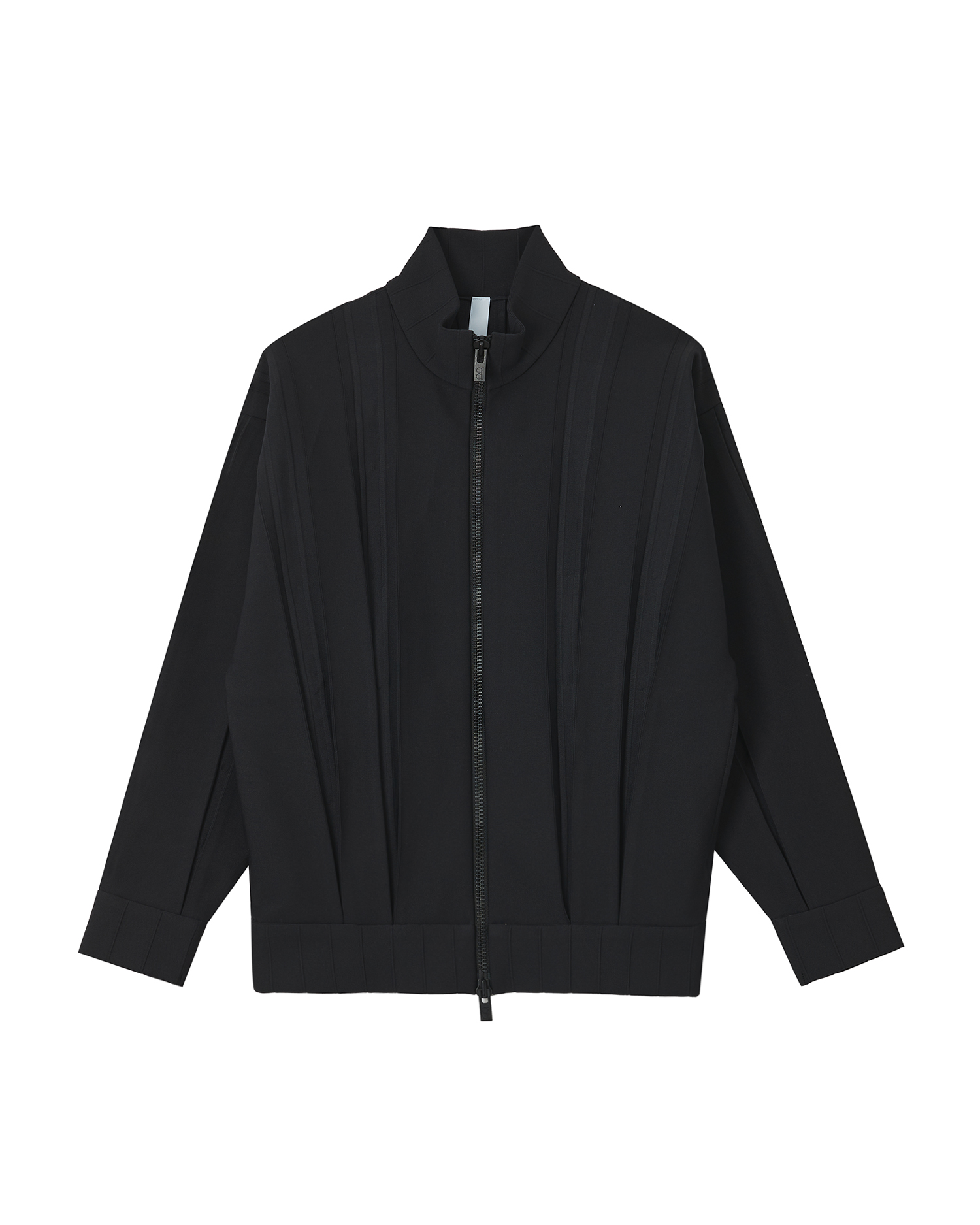
When CFCL presented its Spring 2027 collection on the Paris runway this season, it marked something more than a debut—it announced the arrival of a genuinely singular proposition in contemporary fashion. Founded by Yusuke Takahashi, the label built its reputation on a deceptively simple premise: that clothing should be engineered as precisely as technology, with every garment conceived through a computational design process before a single yarn is knit. This season, that philosophy moved from the studio to the catwalk, and the result is the most compelling argument yet that knitwear can be both radically technical and quietly beautiful.
The Spring 2027 knitwear collection is, at its core, a study in form. Where many designers treat knit as a soft, forgiving medium, CFCL treats it as architecture. Seamless constructions are programmed stitch by stitch, allowing the garments to hold shape with an integrity that traditional cut-and-sew knitwear rarely achieves. The silhouettes are clean and deliberate—column dresses that skim the body, boxy tops with precisely calibrated volume, trousers whose drape is engineered rather than incidental. There is a restraint here that reads as confidence. Nothing is decorative for decoration's sake; every rib, every transition in gauge, every change in density serves a structural purpose.
Knit as Architecture
What distinguishes CFCL's engineered knitwear from the broader field is the transparency of its method. The label's name references its commitment to a fully traceable, low-waste production chain, and the Spring 2027 pieces embody that ethos without ever feeling like a lecture. The yarns are selected for their hand and their environmental profile—fine-gauge cottons, recycled fibers, blends that breathe and move with the wearer. Because garments are knit to shape rather than cut from flat cloth, the waste that plagues conventional manufacturing is largely designed out of existence. This is sustainability expressed as engineering discipline rather than marketing language, and on the runway it translated into clothes that felt light, fluid, and unmistakably modern.
A Paris Debut Between Craft and Code
The cultural context matters here. Paris has spent recent seasons grappling with the tension between craft heritage and technological futures, and CFCL arrives as a rare synthesis of both. Takahashi's background—shaped by years within a major Japanese house known for its conceptual rigor—informs a collection that respects the hand while embracing the algorithm. The Spring 2027 show drew attention from WWD, Vogue, and The Impression not because it chased spectacle, but because it proposed a coherent alternative: a wardrobe built on precision, longevity, and a near-monastic commitment to material honesty. In an industry saturated with trend cycles, that proposition feels almost radical.
The Wearer, and the Men's Offering
The collection speaks to a specific wearer—someone who values quiet construction over logos, who understands that a well-engineered seam is its own form of luxury, and who wants clothing that performs across seasons and contexts. The men's Spring 2027 offering, noted for its summertime sharpness, extends this logic into crisper territory: knit polos with sculpted collars, lightweight layering pieces with a tailored edge, garments that bridge the gap between ease and formality without strain. Together, the womenswear and menswear read as a unified thesis rather than parallel exercises.
Why It Matters Now
Why it matters now is a question of timing. As the broader industry reckons with overproduction and the limits of seasonal novelty, CFCL's engineered knitwear offers a model of restraint that is also forward-looking. The Paris debut positioned the label not as a niche technical experiment but as a legitimate voice in the global conversation—one whose clothes are as considered in the wearing as they are in the making. For anyone seeking a wardrobe built on intelligence rather than noise, the CFCL Spring 2027 collection is the season's most persuasive answer.