For four decades, Rei Kawakubo has treated collaboration as an act of interrogation rather than endorsement. Her work with Nike has never been a mere colorway exercise — it is a conceptual proposition, an exercise in restraint, deconstruction, and the quiet violence of removing what the market expects to see. So when news broke that COMME des GARÇONS Homme Plus would become the first label in history to collaborate on the Air Jordan 11 Retro — a silhouette untouched by outside hands since its 1995 debut — the stakes were immediately legible to anyone who understands what it means to be first.
The Air Jordan 11 occupies a singular place in sneaker culture. Designed by Tinker Hatfield and worn by Michael Jordan during the 72-win 1995–96 season, it introduced patent leather to the hardwood, borrowing a material from formal dress shoes and grafting it onto a basketball sneaker. It is the model Jordan himself has called his favorite. It has been retroed endlessly, colorwayed exhaustively, and yet never handed over to a fashion house — until now. That Kawakubo's Homme Plus line is the first to receive that privilege is not incidental. It is a statement about where the center of gravity in fashion and sportswear currently sits.
A Pack, Not a Product
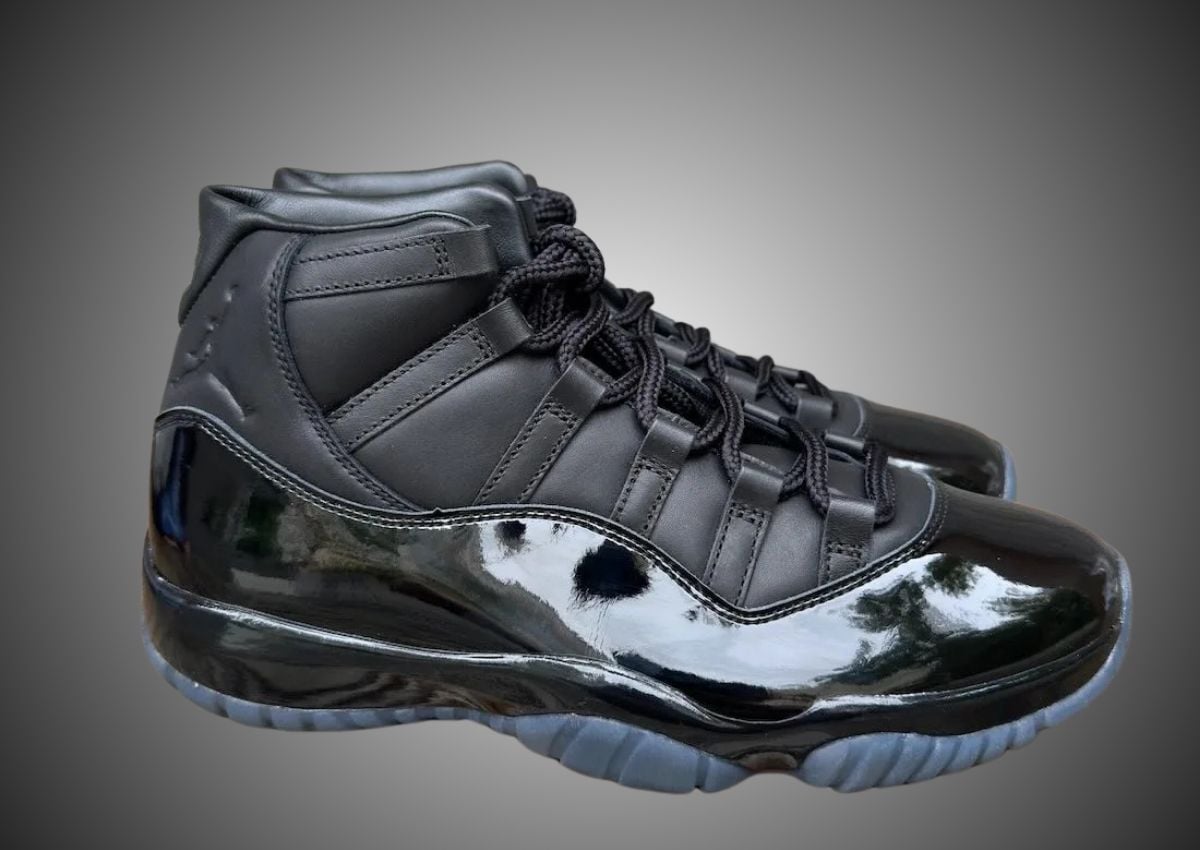
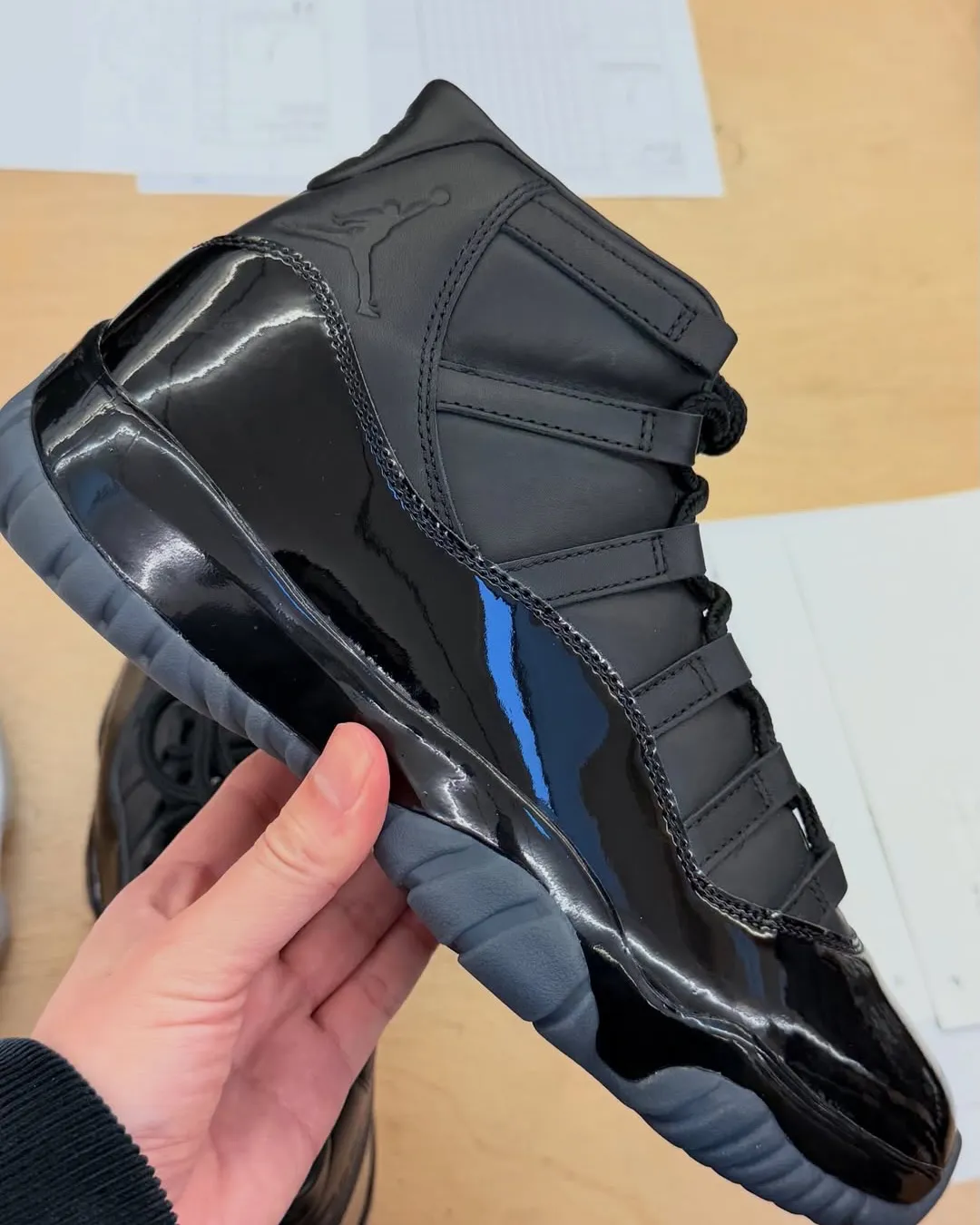
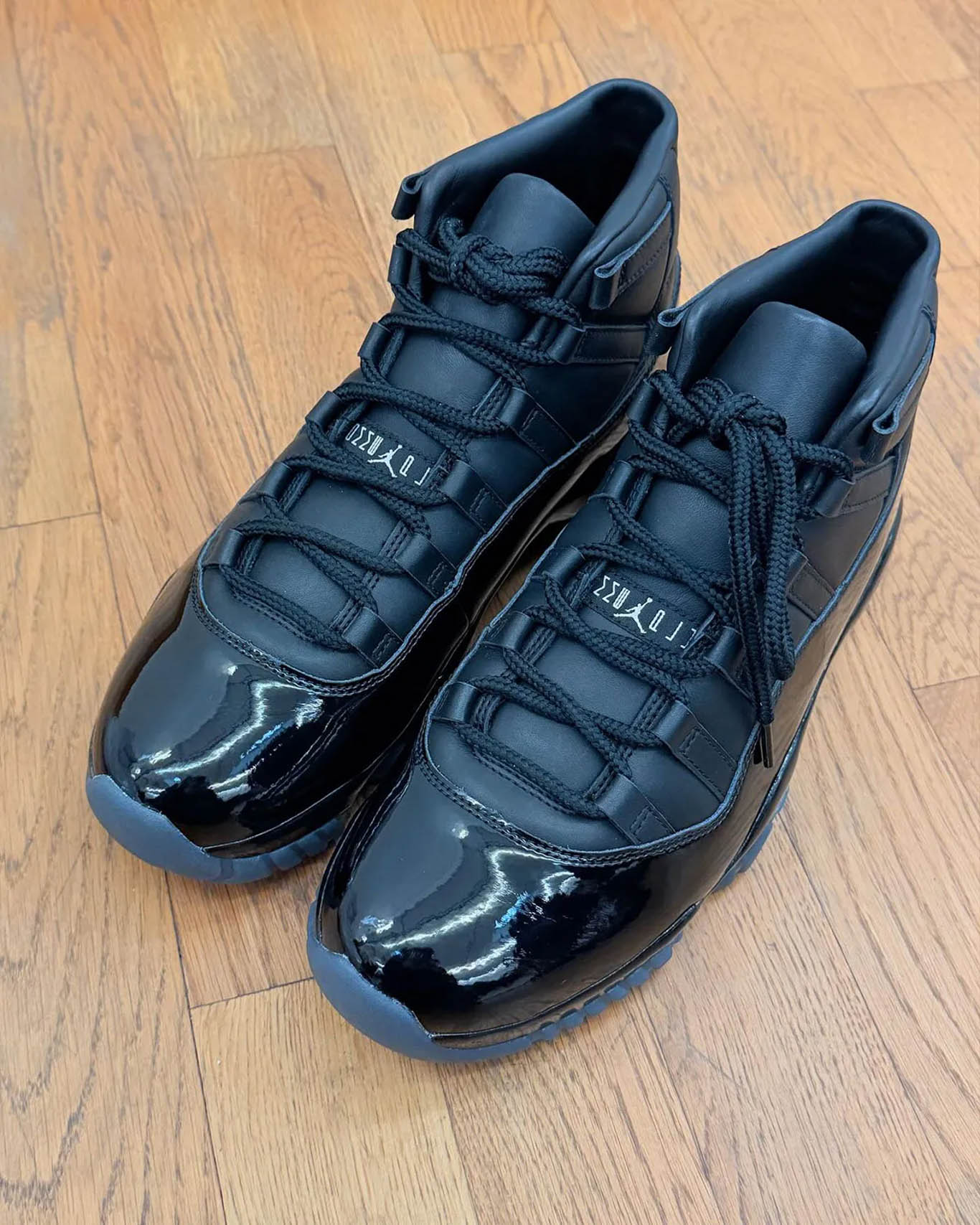
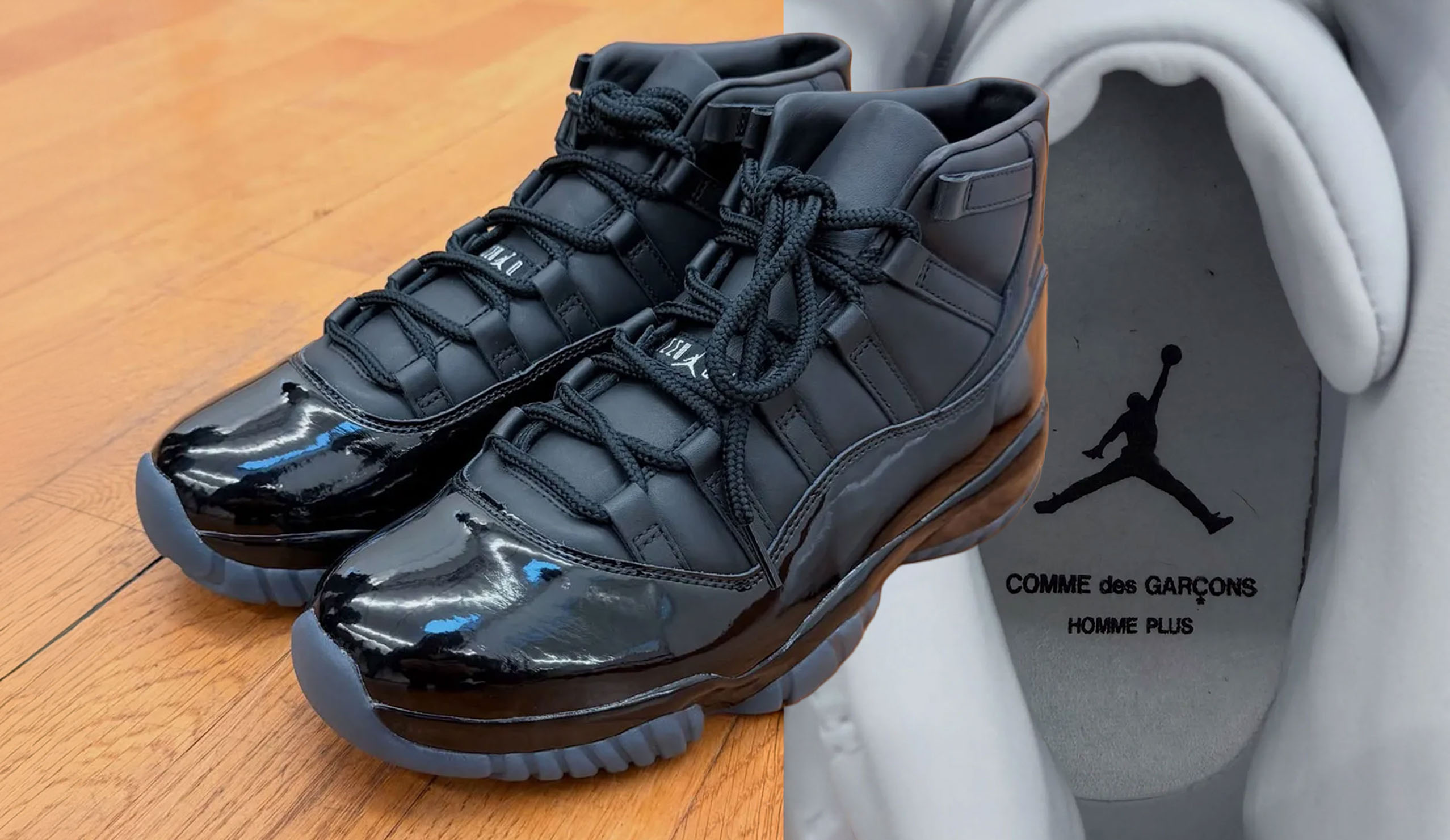
The COMME des GARÇONS Homme Plus x Air Jordan 11 Retro Pack, scheduled for release on September 5, arrives as a pair of interpretations rather than a single shoe — a characteristically Kawakubo gesture. The design language strips the silhouette back to its essentials: the patent leather mudguard remains, but the palette is muted, the branding is minimized, and the overall effect is one of disciplined reduction. Nothing is added for spectacle. Everything superfluous is removed.
This is the Homme Plus ethos applied to a sneaker that has historically thrived on maximalist color stories, and the tension between those two impulses is precisely the point. Where the Air Jordan 11 has long been a canvas for bold contrast and celebratory shine, here it becomes something closer to a study — quieter, more considered, less interested in announcing itself.
The Architecture of Restraint
Look closely and the shoe reads like an edit, not a remix. The patent leather mudguard — the 11's signature gesture, that glossy sweep borrowed from a dress shoe — stays put. The palette recedes. The branding shrinks to a whisper. What's left is proportion, material, and negative space, which is to say: what's left is Kawakubo.
It is a familiar move from a designer who has spent her career removing the obvious signifiers of luxury to see what remains underneath. The result is a sneaker that feels less like a trophy and more like an object — one that rewards the wearer who notices the absence of noise rather than the presence of a logo.
A Hierarchy, Not a One-Off
What makes this release resonate beyond the sneaker world is its timing. COMME des GARÇONS has spent the past several seasons deepening its relationship with Nike across multiple diffusion lines — the COMME des GARÇONS BLACK x Nike LD-1000 in "Spirit Pink," the CDG BLACK x Nike Field General 82, the Air Max 97 rendered in worn-in blacks. Each of these projects operates in a different register, from the accessible to the archival.
The Air Jordan 11 sits at the apex of that hierarchy: the most culturally protected silhouette, entrusted to the most conceptually rigorous house. It signals that Nike views Kawakubo not as a marketing partner but as an author — someone whose name carries weight enough to justify opening a door that has stayed shut for thirty years.
Who It's For
The shoe is, in practical terms, for the collector who understands both lineages. It will appeal to the Jordan devotee who has waited three decades to see the 11 reinterpreted by an outside designer, and to the COMME des GARÇONS client who has followed Kawakubo's Nike output from the early Nike Foamposite experiments through the present athletic capsule.
It is not a sneaker for someone seeking loudness. It is a sneaker for someone who recognizes that the most radical move available to a designer working with an untouchable object is restraint.
Why it matters now is simple: the Air Jordan 11 has finally been opened. Whatever follows — and follow it will — this is the release that broke the seal. Kawakubo got there first, and she got there on her own terms, with a pack that treats the most beloved basketball shoe of the modern era not as a canvas for decoration but as a subject for editing. In a market saturated with collaborations that amount to little more than logos on uppers, that distinction is everything.