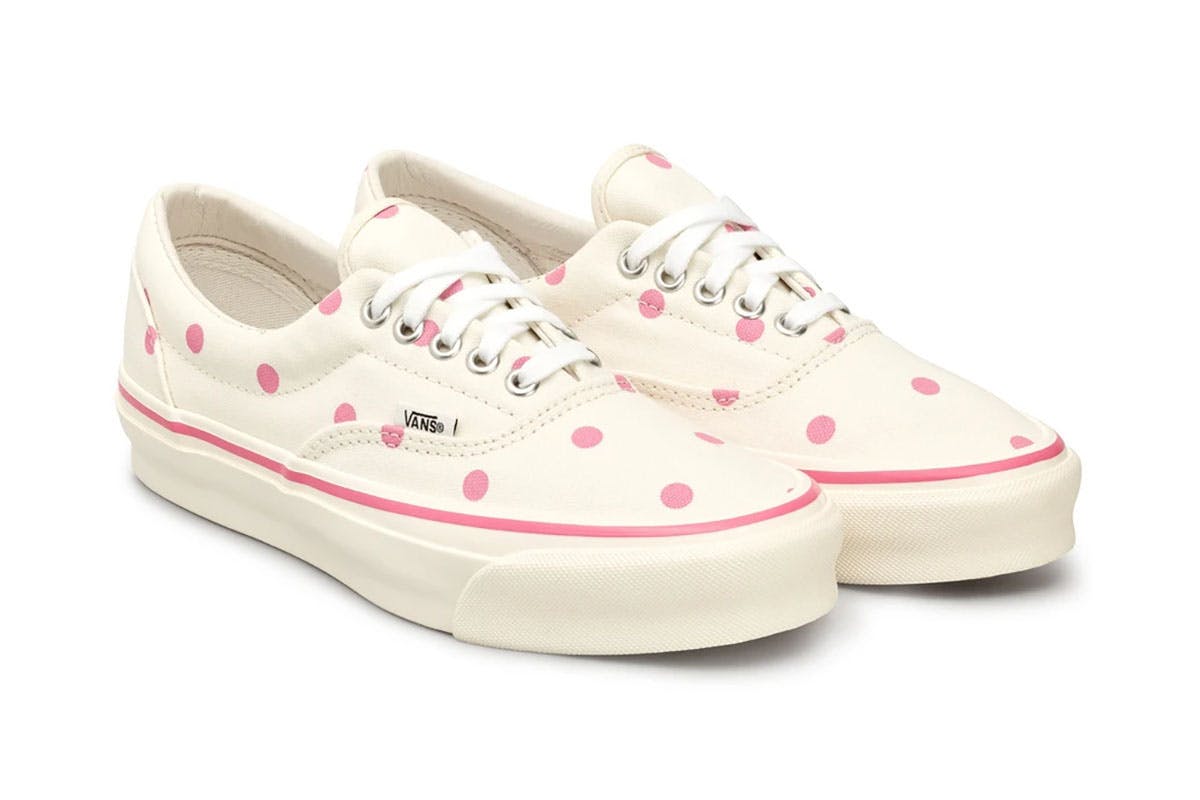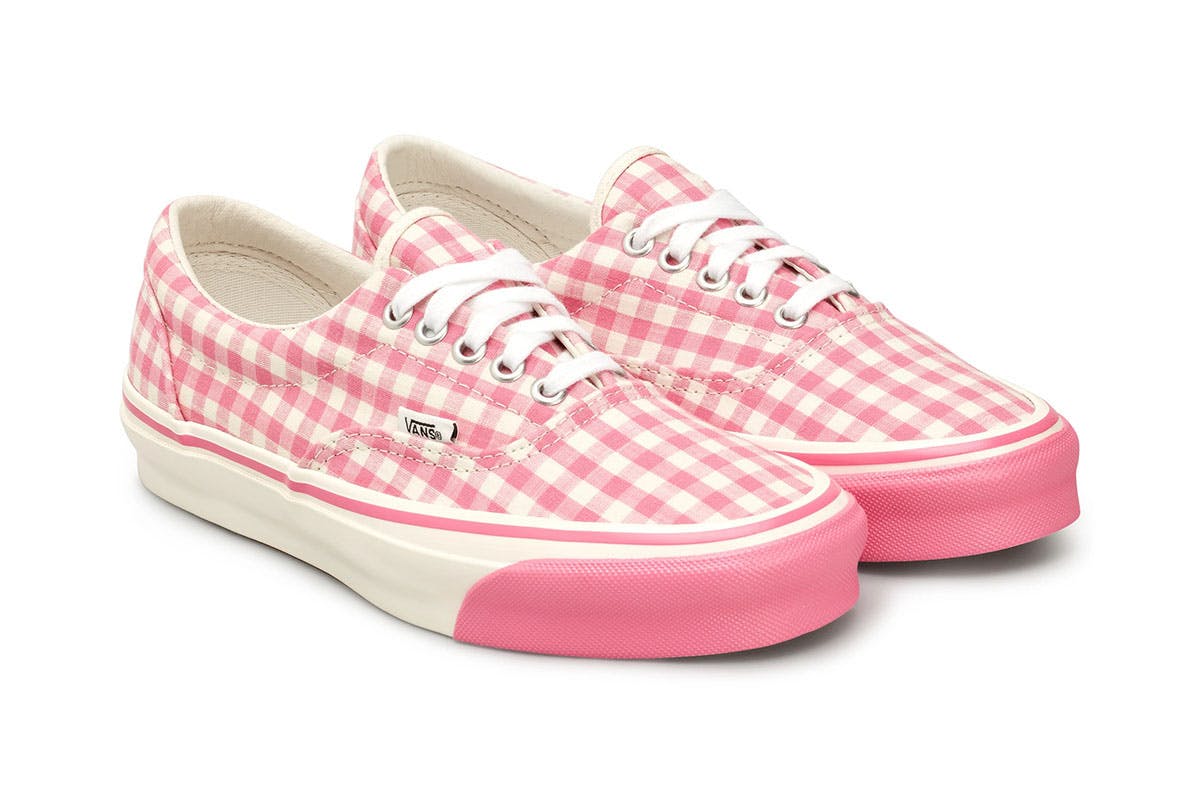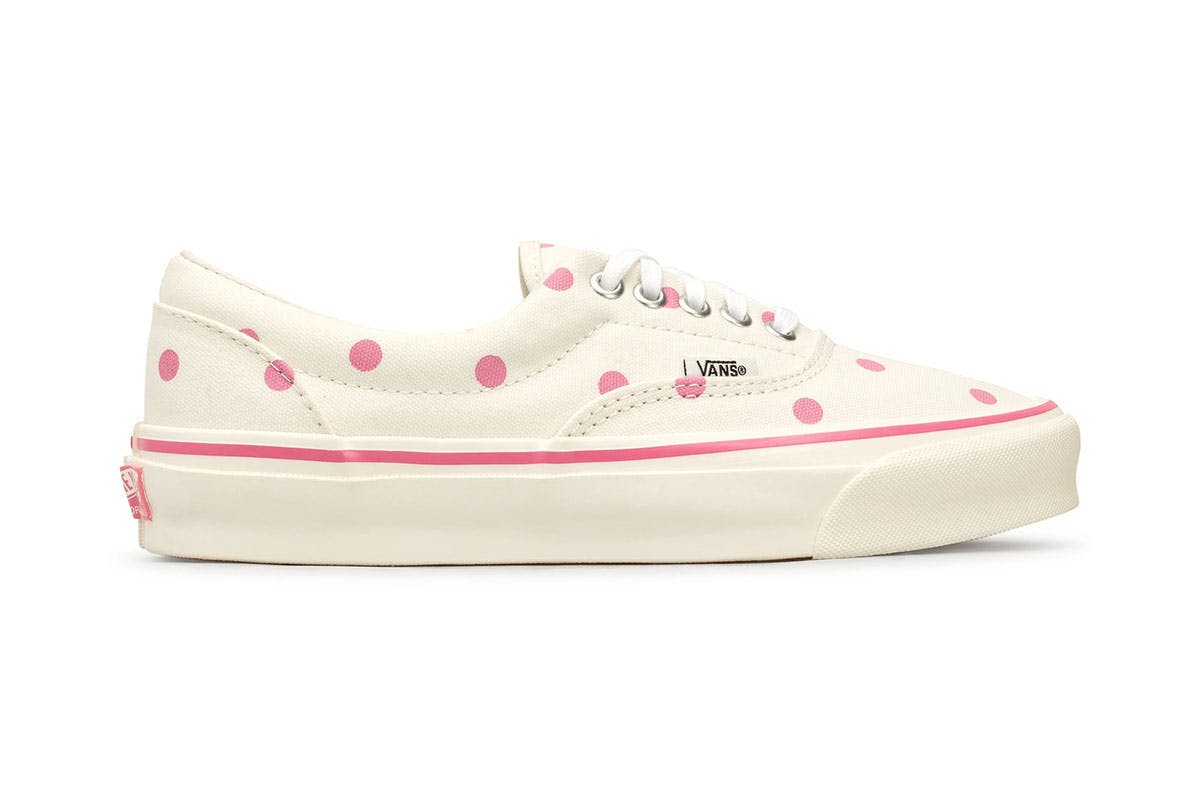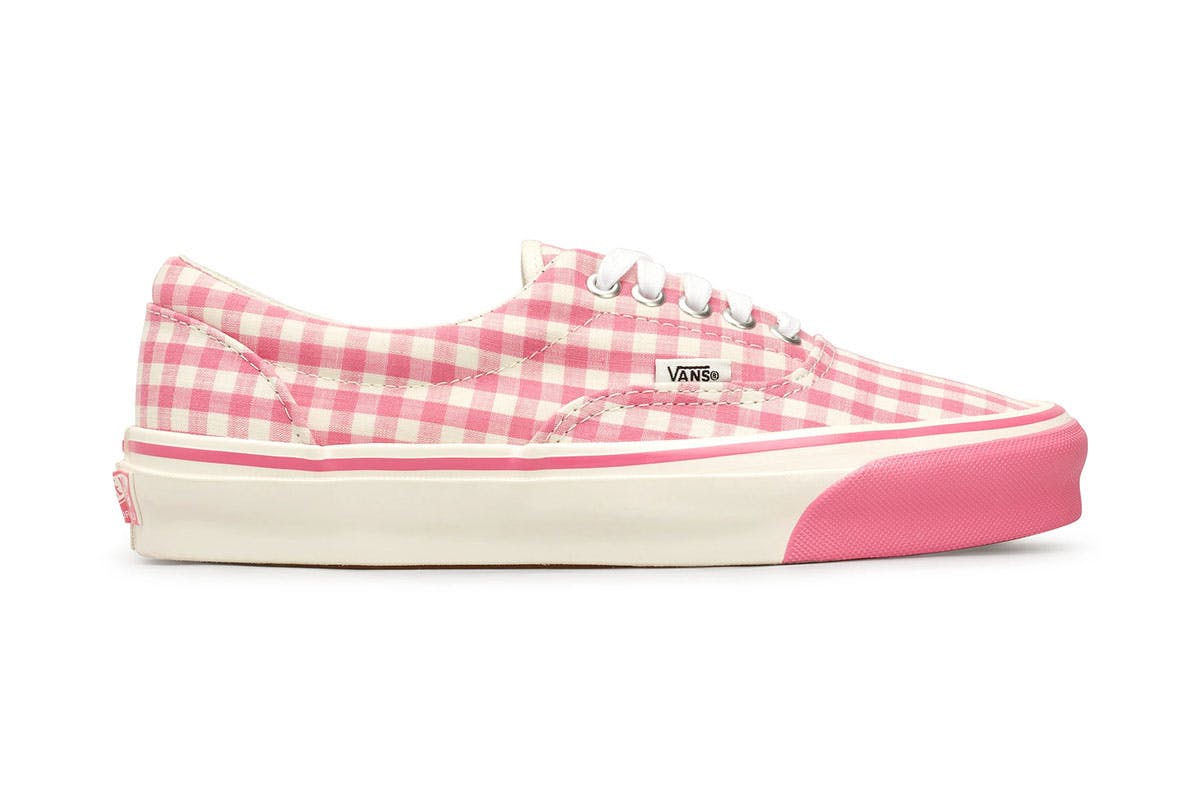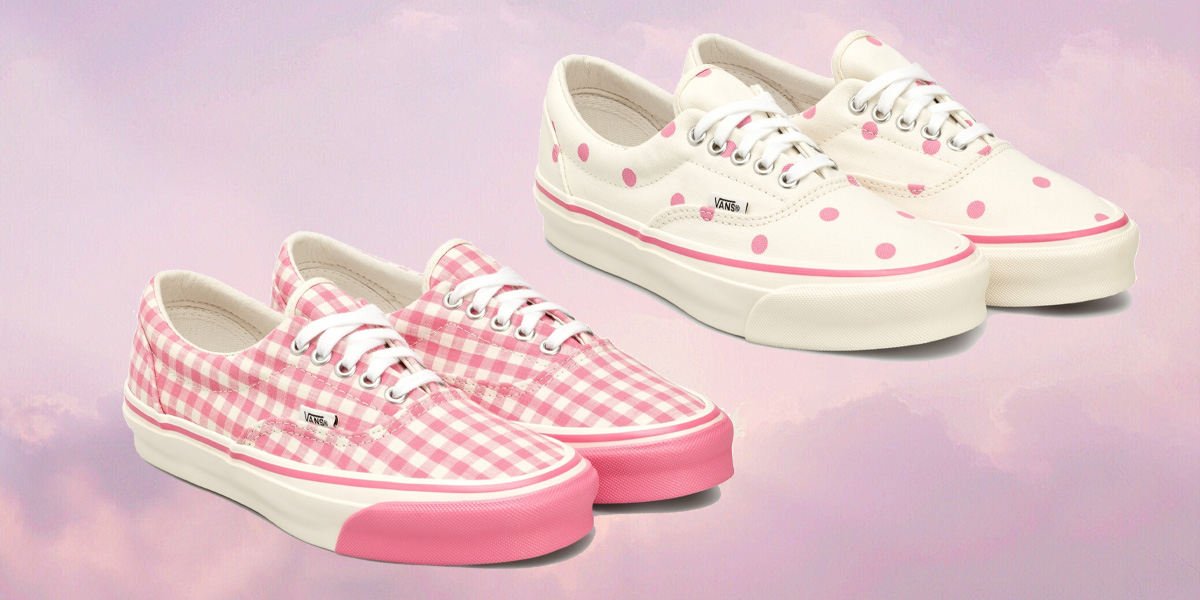
The COMME des GARÇONS GIRL x Vans OG Era arrives in a shade of pastel pink that looks, at first glance, disarmingly innocent — the kind of blush-toned sneaker engineered for brunch reservations and carefully curated mood boards. Look closer, though, and the shoe reveals its true nature. This is not simply a soft-girl sneaker. It is a soft-girl sneaker with subcultural credentials stamped into every stitch, a collaboration that smuggles decades of punk, skate, and avant-garde provocation into a silhouette that happens to match your favorite cardigan.
The tension is the point. Pink canvas has rarely carried this much history.
Built on Concrete, Not Catwalks
The foundation is the Vans OG Era, a shoe with its own quietly radical history. Introduced in 1976 as Vans' first skate-specific design, the Era was built with a padded collar and a reinforced heel long before skateboarding had corporate sponsors or televised competitions. Its DNA is Southern California concrete, backyard pools, and the DIY ethics of a scene that distrusted anything polished.
Rei Kawakubo's COMME des GARÇONS GIRL line, launched in 2017 and positioned as a younger, more playful counterpart to the main label, has spent the years since interrogating exactly this kind of tension — between sweetness and severity, between girlhood as marketing trope and girlhood as genuine creative territory. Pairing that instinct with a shoe born in skate parks is less a mismatch than a manifesto.
The Details Do the Work
On this iteration, the pastel pink canvas upper and matching laces are offset by the familiar black-and-white Vans jazz stripe and a crisp white midsole, but the details are where the collaboration asserts itself. Co-branded COMME des GARÇONS GIRL embroidery sits at the heel, subtle enough to escape a casual glance but unmistakable to anyone who knows.
The OG Era's proportions are preserved faithfully — the low profile, the vulcanized sole, the slightly boxy toe — which matters enormously here. A lesser collaboration might have reworked the silhouette into something fashion-forward and unwearable, stripping the shoe of the very skate heritage that gives it meaning. Instead, the design leaves the Era intact and lets the colorway and branding do the subversive work. The result is a sneaker that reads as genuinely wearable, which is precisely what makes it effective.
A Track Record, Not a One-Off
This is consistent with how COMME des GARÇONS GIRL has approached footwear more broadly. Recent releases — hand-air-brushed Nike Blazer Lows, boldly patterned Salomon SR811 platforms, and the widely covered Vans drops that Highsnobiety described as being "for the heads" — suggest a line that treats sneakers as a legitimate canvas for experimentation rather than a licensing afterthought.
That reputation matters. When a pink sneaker comes from a brand with this kind of track record, it carries a different weight than when it comes from a fast-fashion label chasing a trend cycle. The color is a choice, not a capitulation.
Pink Without the Softness of Meaning
The cultural context makes the timing especially sharp. The soft-girl aesthetic — pastels, bows, cardigans, a studied gentleness — has become one of the dominant visual languages of the past several years, and it has been thoroughly commercialized in the process. Every mall brand now sells a version of it.
What the COMME des GARÇONS GIRL x Vans OG Era offers is a way into that aesthetic without the attendant softness of meaning. It is a shoe that says you can wear pink and still know exactly where the color came from — that you understand the difference between girlhood as a filter and girlhood as a position of strength.
Who is this for? It suits the collector who has been tracking CdG GIRL's footwear output since the line's inception, the skater who wants something with genuine heritage underneath the branding, and the fashion-literate shopper who wants a single pair of sneakers capable of bridging a pastel outfit and a leather jacket without a costume change. It is also, frankly, for anyone who has grown tired of choosing between credibility and charm.
The shoe declines to make that choice, and that refusal is its entire point. In a market saturated with collaborations that amount to little more than logo placement, this one remembers that subversion works best when it arrives wearing something soft.