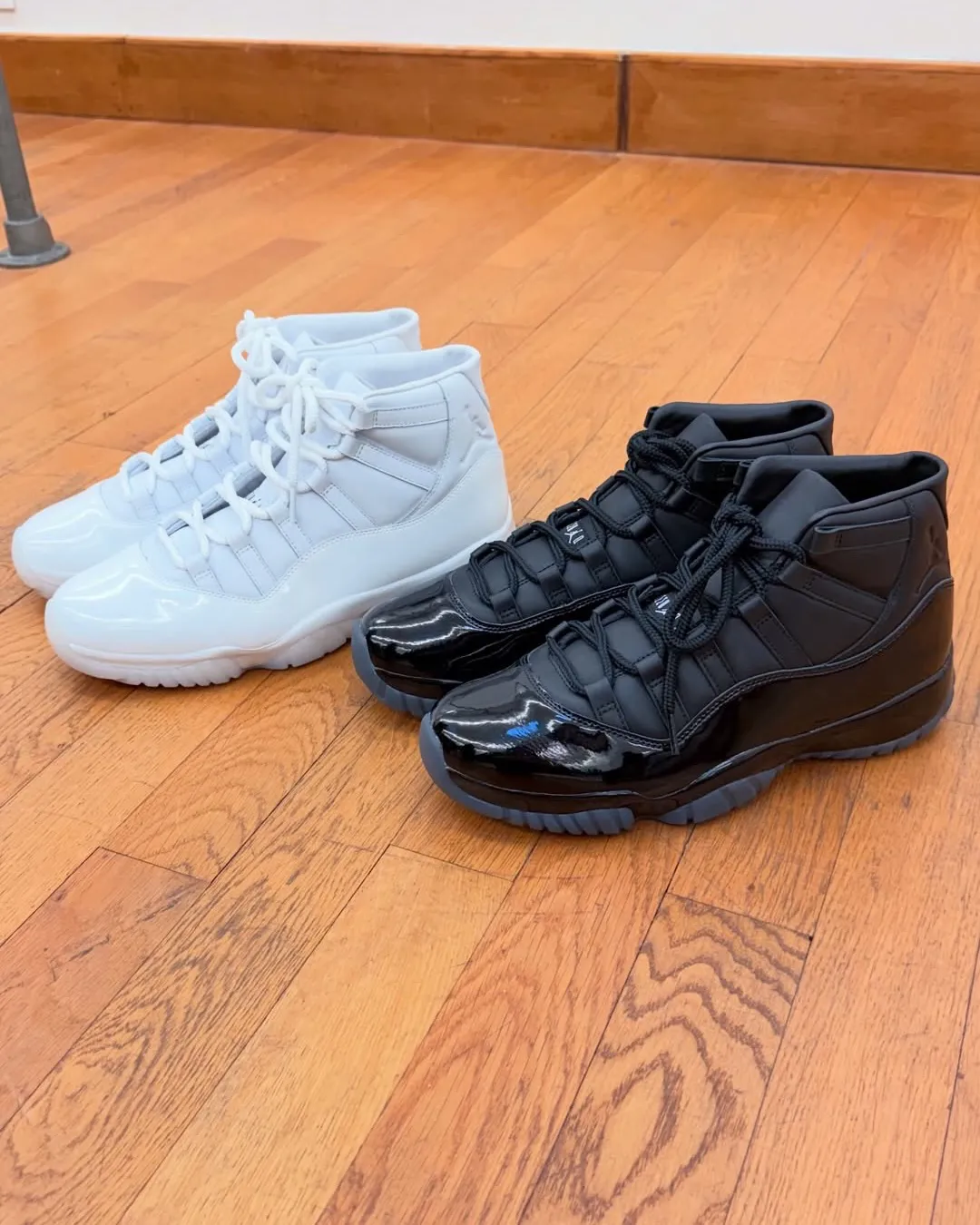
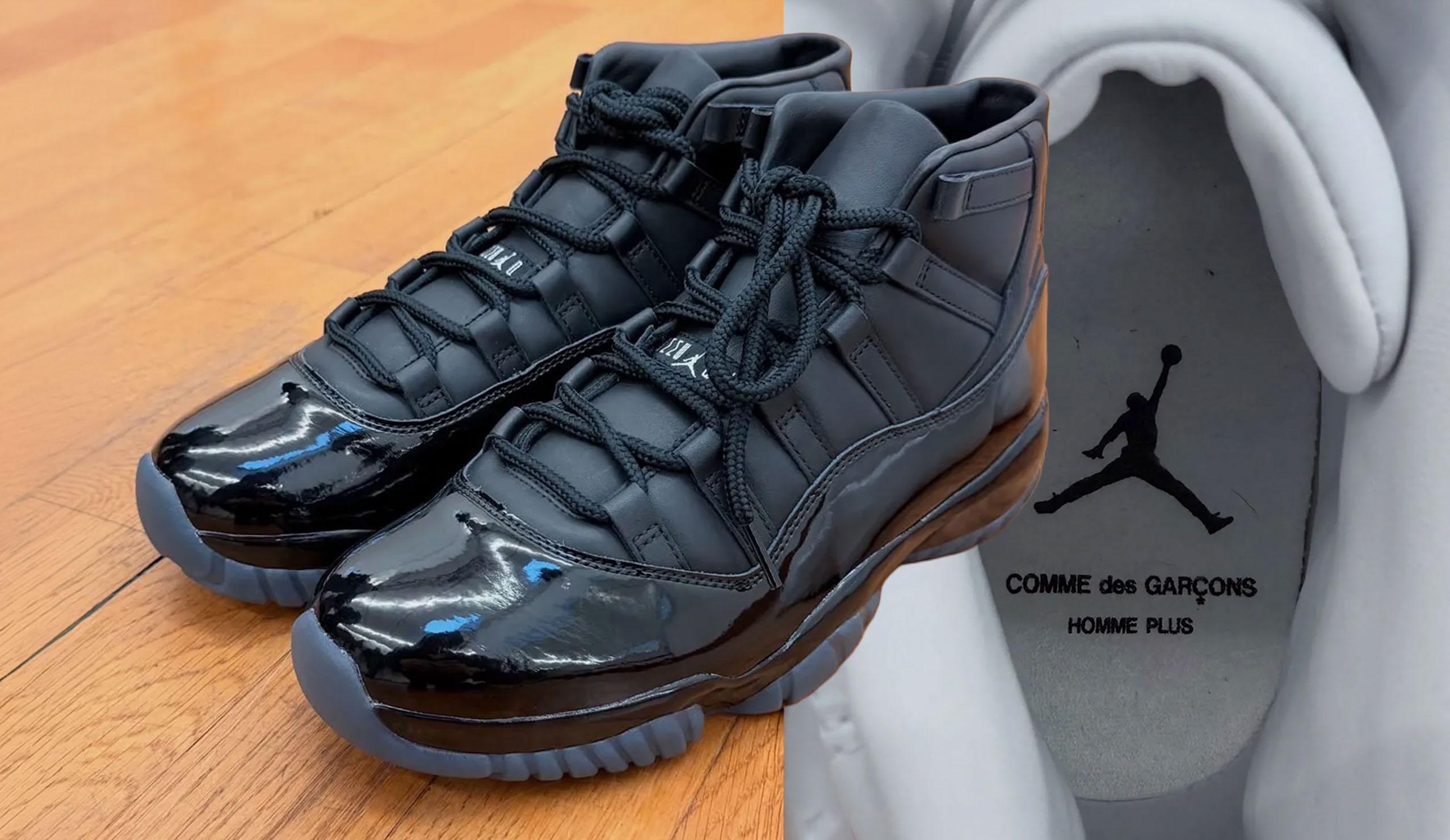
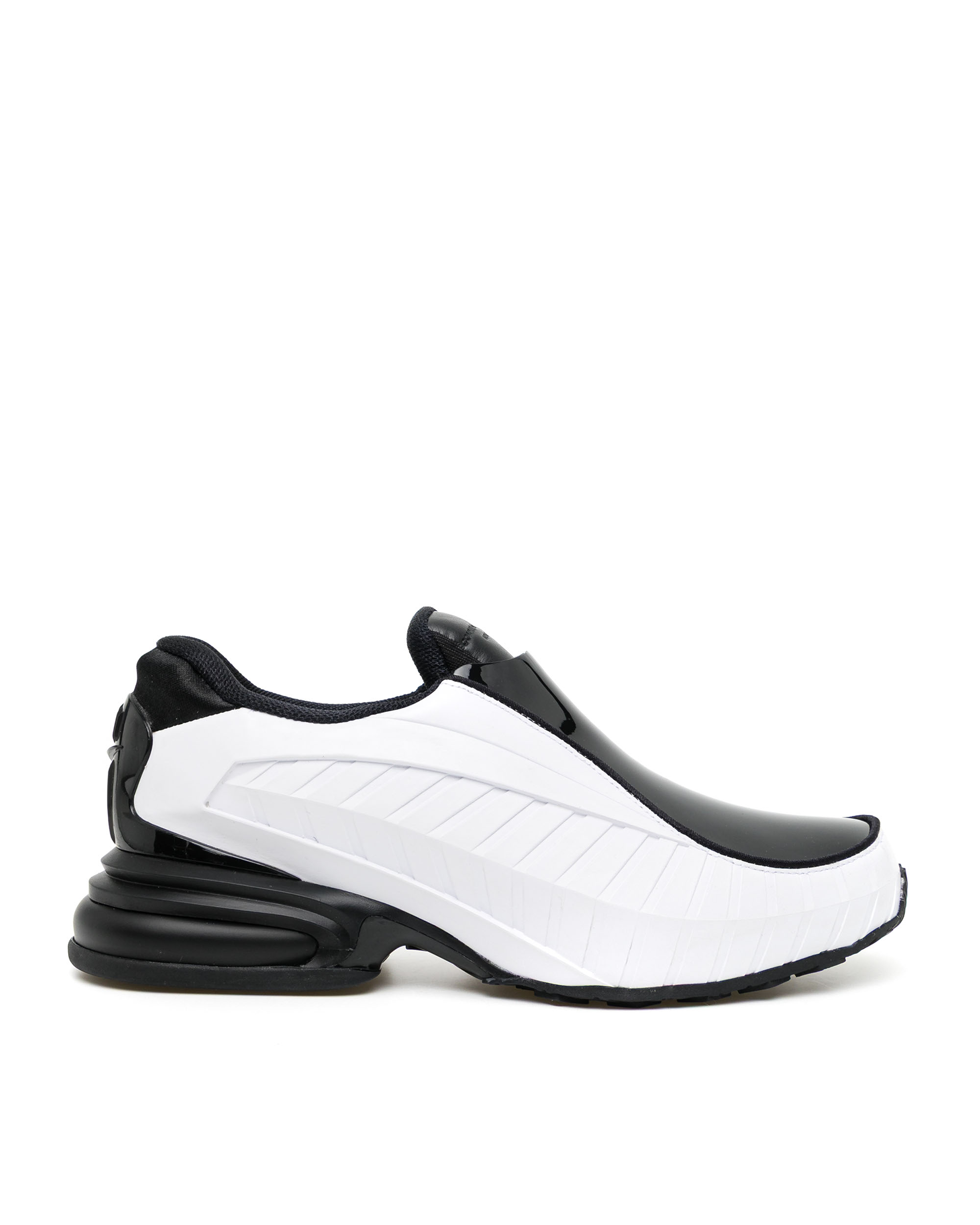
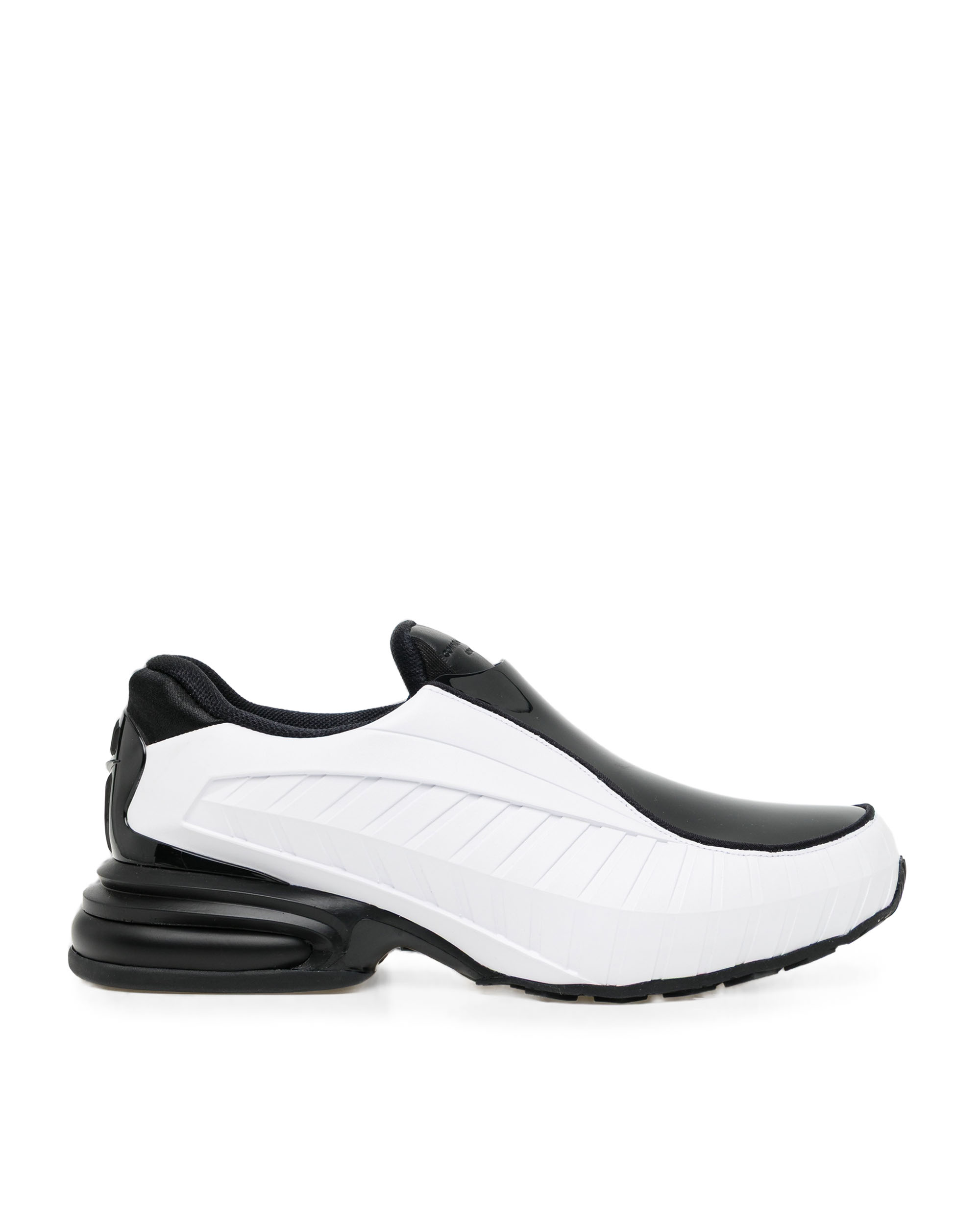
For nearly four decades, Rei Kawakubo has treated the sneaker as an instrument of provocation rather than mere footwear — a canvas on which her COMME des GARÇONS empire has repeatedly tested the boundaries between sportswear and tailoring. So the arrival of the COMME des GARÇONS Homme Plus x Air Jordan 11 Retro Pack feels like something genuinely unprecedented: the first collaboration in the history of the Air Jordan 11, a silhouette Tinker Hatfield conceived in 1995 with patent leather borrowed from the formal dress shoe. That the pairing took this long is remarkable. That it lands now, with Kawakubo's Homme Plus line at its most philosophically charged, is deliberate. The pack releases September 5 in two colorways — a study in restraint from a designer who has never confused minimalism with simplicity.
The Dress Shoe and the Basketball Shoe
What makes the collaboration so persuasive is its conceptual symmetry. The Air Jordan 11 was always the most dressed-up of basketball shoes, its mudguard cut from that glossy patent leather that belongs on a patent oxford. Hypebeast's assessment that Homme Plus "made the Air Jordan 11 feel like a dress shoe" is not hyperbole but the entire point: Kawakubo has taken Hatfield's original gesture — the formalized basketball sneaker — and pushed it toward its logical conclusion.
The design language is characteristically quiet. Monochromatic treatments, stripped of the loud color-blocking that defines most Jordan collaborations, allow the silhouette itself to do the talking. Branding is deployed with surgical economy, the CDG signature integrated where it reads as a considered mark rather than a billboard. Two colors, one luxury drop, as Men's Journal framed it — a phrase that captures the collection's disciplined severity.
Beauty After the Black Hole
The cultural context here is impossible to separate from the moment. This season's Homme Plus show, titled "If The War Were To End.." and staged as a dual-act meditation on what follows conflict, has been read across the press as Kawakubo's most overtly philosophical statement in years. AnOther Magazine described the collection as finding "beauty after the black hole," while HERO Magazine quoted the designer's own imperative: "Let's get out of the black hole."
Against that backdrop, a sneaker collaboration might seem trivial — but it isn't. The AJ11 pack is the commercial-facing arm of the same inquiry: what does elegance look like after catastrophe? The answer, in Kawakubo's hands, is something austere, precise, and quietly luxurious.
Finishing That Earns Its Price
Materials and construction reflect the price of entry. This is a premium-tier release, executed with the kind of finishing that justifies both houses' reputations: the patent leather rendered with a deeper, more muted sheen than standard AJ11 production, the textile underlays refined, the overall package presented with the gravity of a fashion object rather than a performance product.
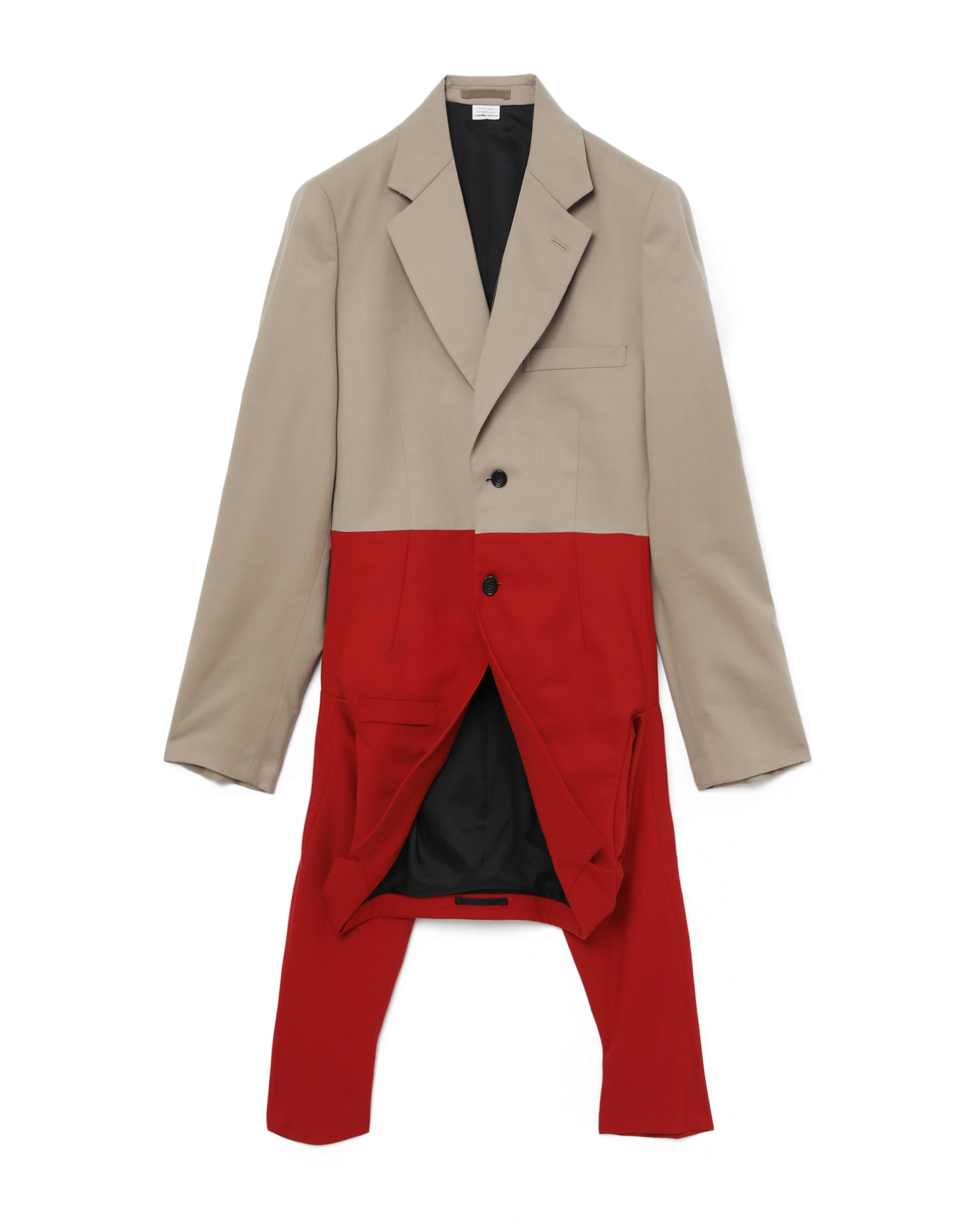
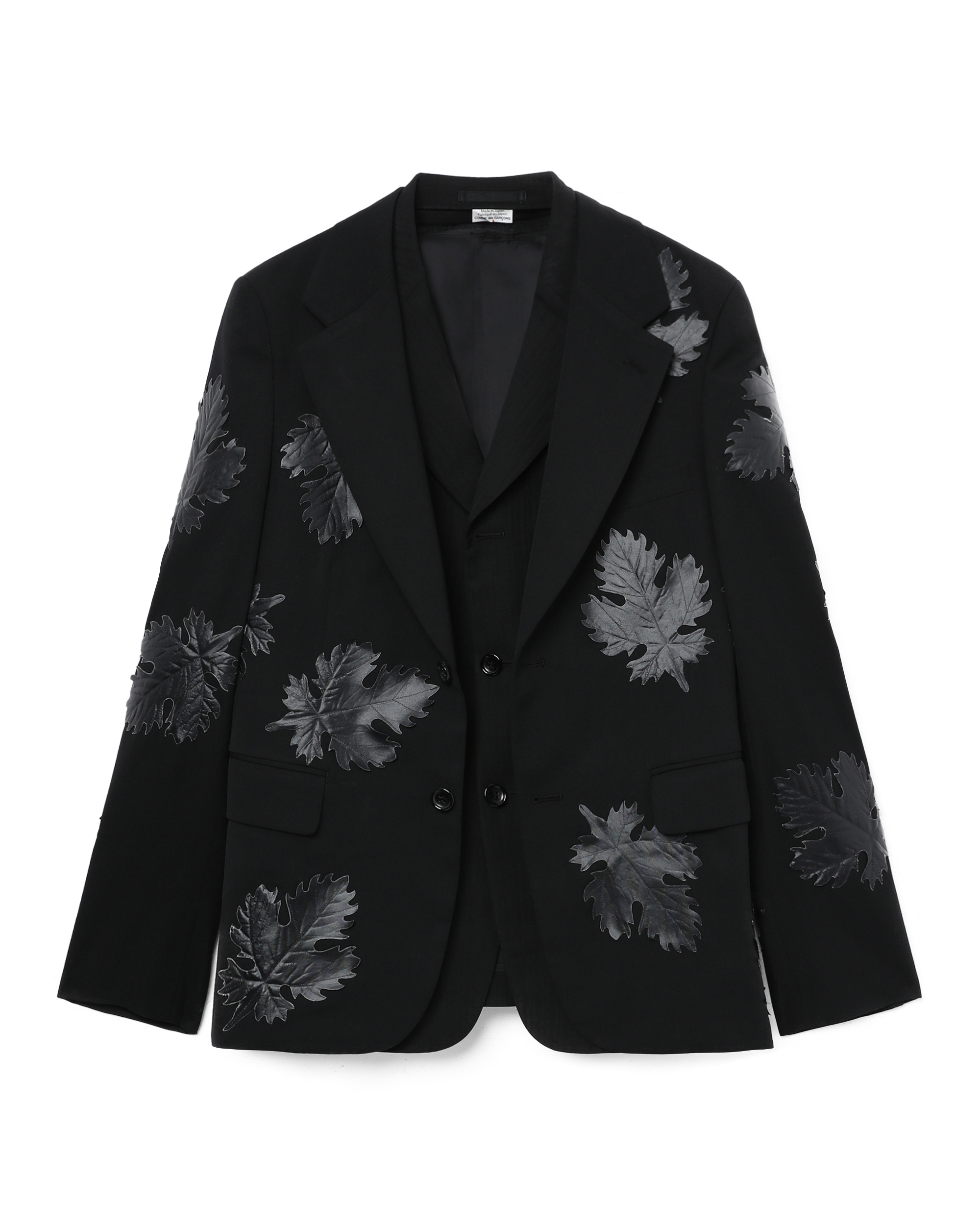
The pack is designed to be worn with tailoring — the way Homme Plus has always intended its footwear to function — and it rewards that reading. These are sneakers that hold their own beneath a wool trouser and an unstructured jacket, a proposition the Air Jordan 11 was quietly built for three decades ago.
Who It's For
The collector who has tired of the collaboration economy's noise. The Homme Plus loyalist who understands that Kawakubo's commercial projects are never merely commercial. The Jordan devotee who recognizes that the AJ11's first designer partnership is a genuine historical marker.
It matters now because it arrives at a hinge moment — as the brand revives its GUERRILLA STORE archive project in Fukuoka and stages a Spring 2027 collection preoccupied with peace — and because it demonstrates, with unusual clarity, that a sneaker can carry an idea.
On September 5, the dress shoe and the basketball shoe complete a conversation thirty years in the making. Kawakubo, characteristically, gets the last word.