There are collaborations, and then there are artifacts—objects that arrive carrying the weight of a specific moment in fashion history, quietly insisting that the past is never quite finished with us. The Comme des Garçons x Nike Air Max Dolce "Triple Black" belongs firmly to the latter category. First released in 2002 as part of a fleeting chapter in the long, restless dialogue between Rei Kawakubo's house and the American sportswear giant, the silhouette has returned as an archive revival, and it is—remarkably—sitting under retail. In a market that treats scarcity as a personality trait, that last detail is not a footnote. It is the story.
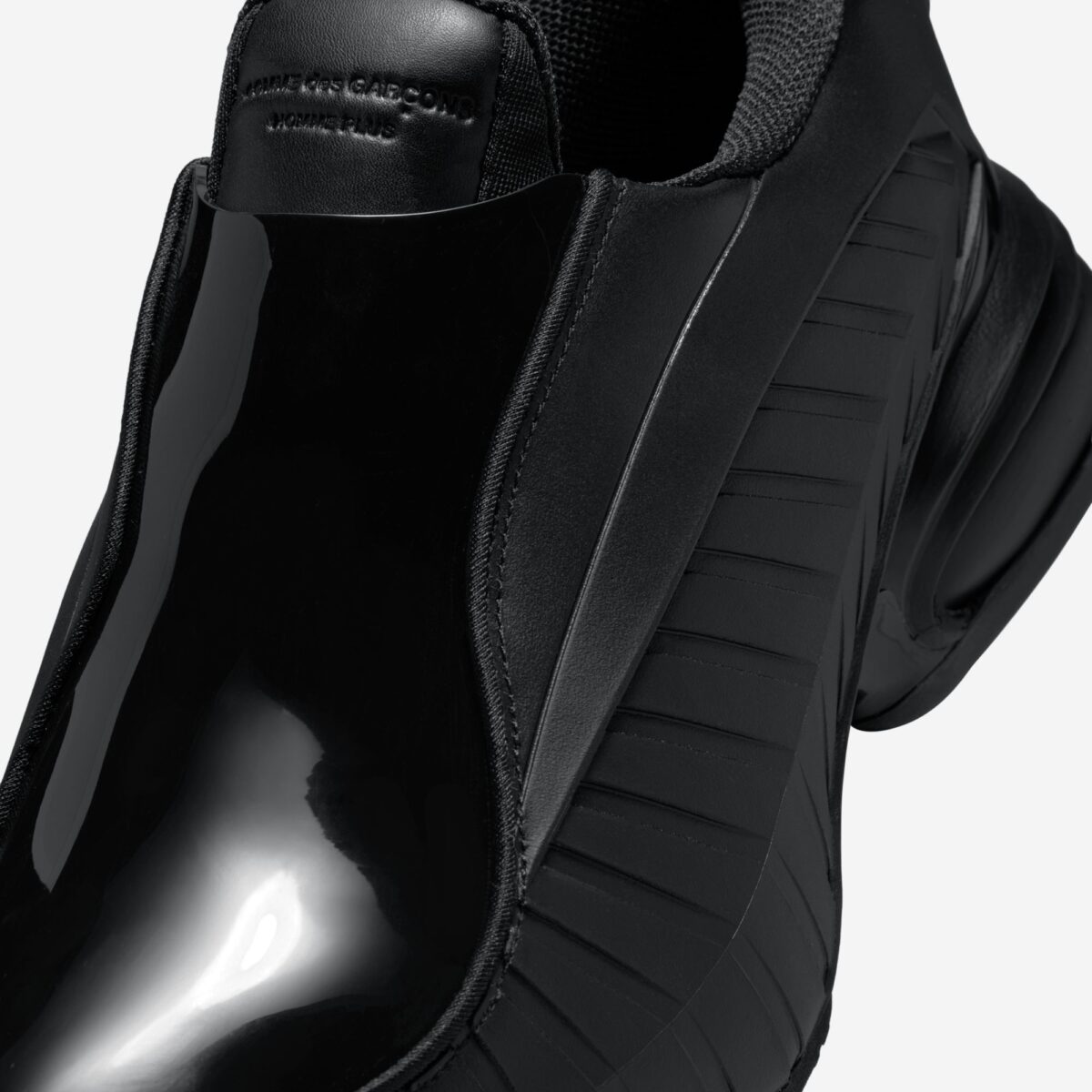
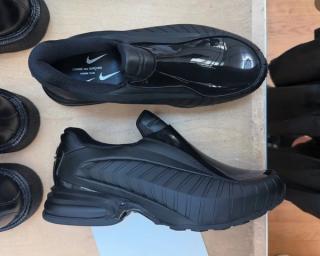
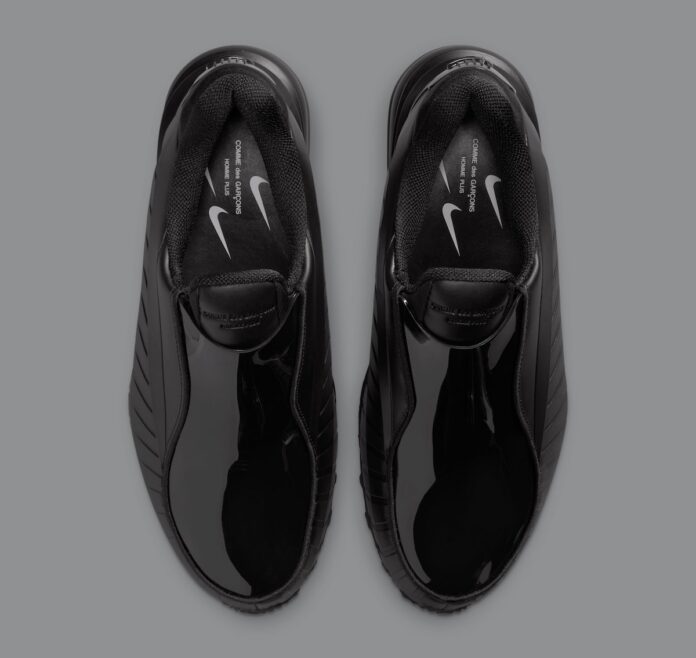
To understand why this shoe matters, one must first understand the strange, hybrid object it is. The Air Max Dolce is not a sneaker in any conventional sense, nor is it a dress shoe in any polite one. It fuses the patent leather upper of a formal loafer with the visible Air Max cushioning of Nike's performance lineage—a Frankenstein of bourgeois propriety and street-level utility, rendered entirely in triple black so that the contradiction reads as a whisper rather than a shout.
An Object That Argues With Itself
The gloss of the patent leather catches light the way a good derby does; the sole beneath it speaks a different language altogether. It is, in the truest sense, a garment that argues with itself, and that argument is precisely the point.
This is the kind of object Kawakubo has spent five decades teaching us to want. The house's current cultural moment only sharpens the shoe's resonance. Comme des Garçons has spent this season in a state of deliberate self-canonization—reviving its Guerrilla Store in Fukuoka with archive pieces, resurrecting its cult magazine Six at Dover Street Market London, staging exhibitions at Dover Street Market Paris that critics have described as beautifully chaotic. Meanwhile, the Spring 2027 collection, with its meditation on royalty and everyday life, reminded the industry that Kawakubo remains the rare designer whose conceptual provocations are also commercial propositions. The Air Max Dolce is a small, wearable piece of that same logic: an archive object reissued not as nostalgia but as argument.
The Materials Do the Talking
Patent leather is an unforgiving medium—it shows every scuff, holds every crease, and refuses to age gracefully in the conventional sense. That is its virtue here. The triple-black treatment means the shoe reads as a single, monolithic form at a distance, its loafer geometry and Air Max sole unified into something almost sculptural. Up close, the tension reveals itself: the formal apron toe, the athletic midsole, the quiet branding that never announces itself more loudly than necessary. It is a shoe designed for people who understand that the most sophisticated statements are the ones that require a second look.
Who It's For
Not the sneaker completist chasing a hype drop, and not the tailoring purist who finds visible cushioning an affront. It is for the collector who understands Kawakubo's collaborations as a continuous body of work rather than a series of one-offs—the person who knows that the 2002 original now lives in archive discourse alongside the house's most cerebral experiments. It is for the wearer who wants a single object that can move between a gallery opening and a dinner reservation without changing register. And it is, frankly, for anyone who has watched the resale market inflate the price of every meaningful collaboration and wondered when the correction would come. Here it is, in patent leather and Air.
Why It Matters Now
The answer is simpler than it sounds. Fashion is in the middle of a long, unresolved conversation about archives—what to revive, what to leave buried, and whether a reissue can ever carry the charge of an original. Comme des Garçons has answered that question across multiple fronts this season, from Fukuoka to Dover Street Market, and the Air Max Dolce is the most accessible answer of all. An under-retail archive revival is a rare thing: a chance to own a piece of the house's strange, argumentative history without paying the premium that history usually commands.
The shoe is not trying to be new. It is trying to be exactly what it was in 2002—and in doing so, it makes a case for the archive as a living thing rather than a museum piece. That has always been the Kawakubo method: take the familiar, turn it slightly against itself, and let the contradiction do the work. The Air Max Dolce simply asks you to wear it.