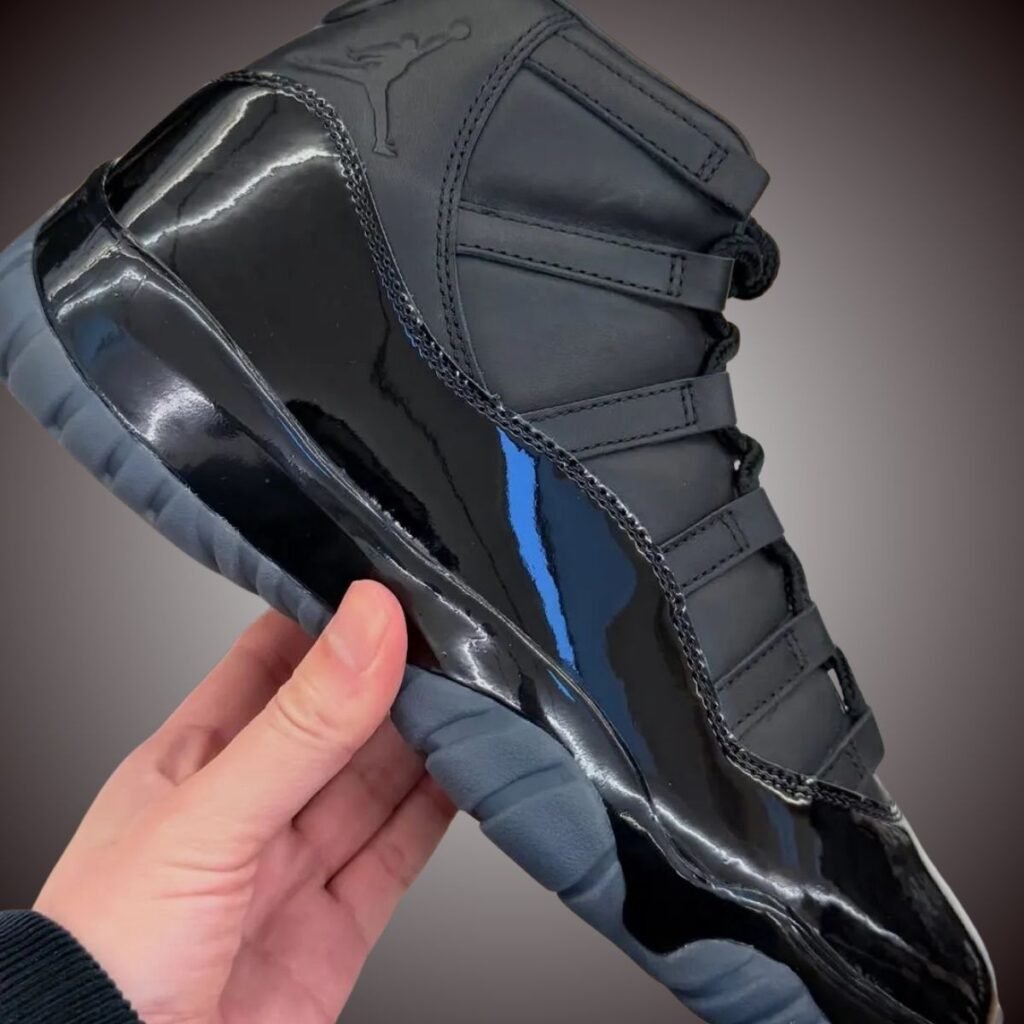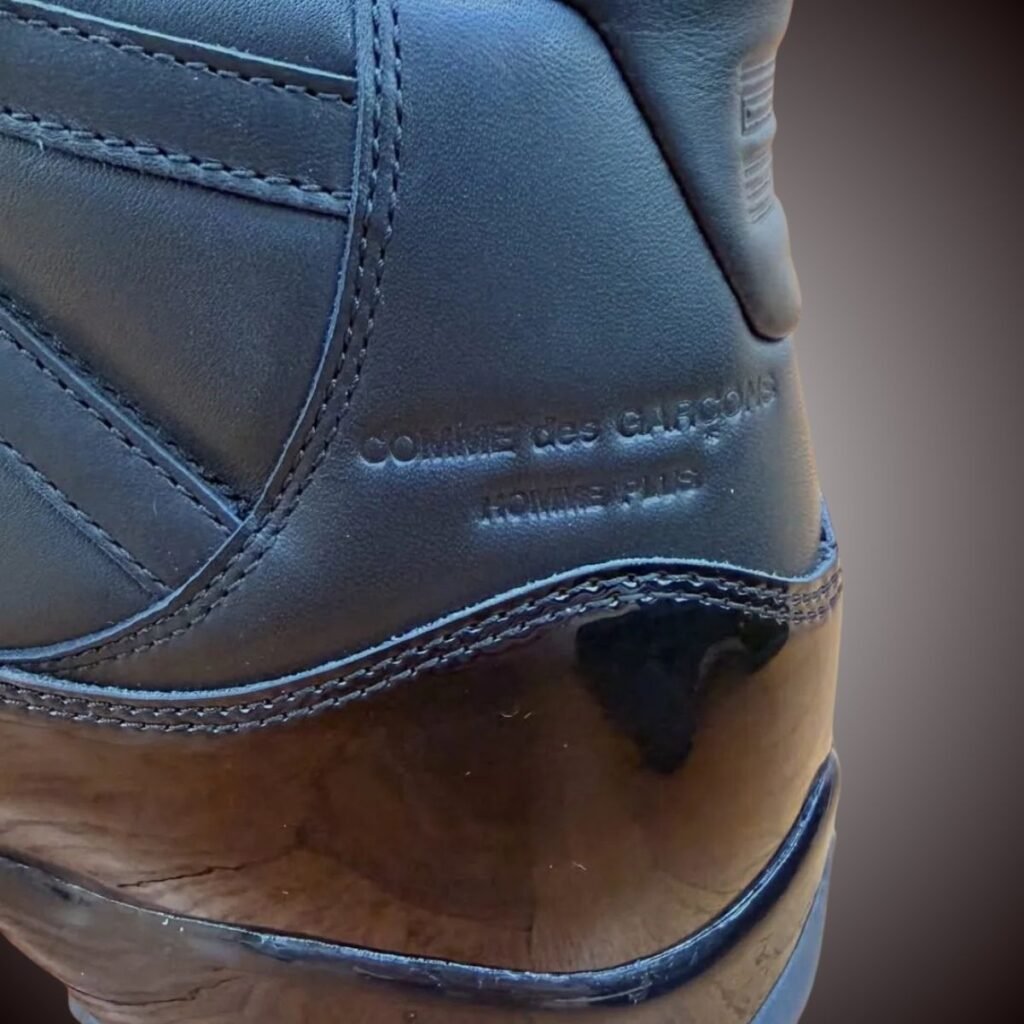
Rei Kawakubo has spent four decades treating the sneaker as an afterthought at best and an adversary at worst — something to be subverted, deconstructed, or ignored entirely in favor of garments that interrogate the very idea of clothing. So when news broke that COMME des GARÇONS Homme Plus would collaborate with Jordan Brand on the Air Jordan 11 — the first such partnership in the silhouette's thirty-year history — the fashion world braced for provocation.
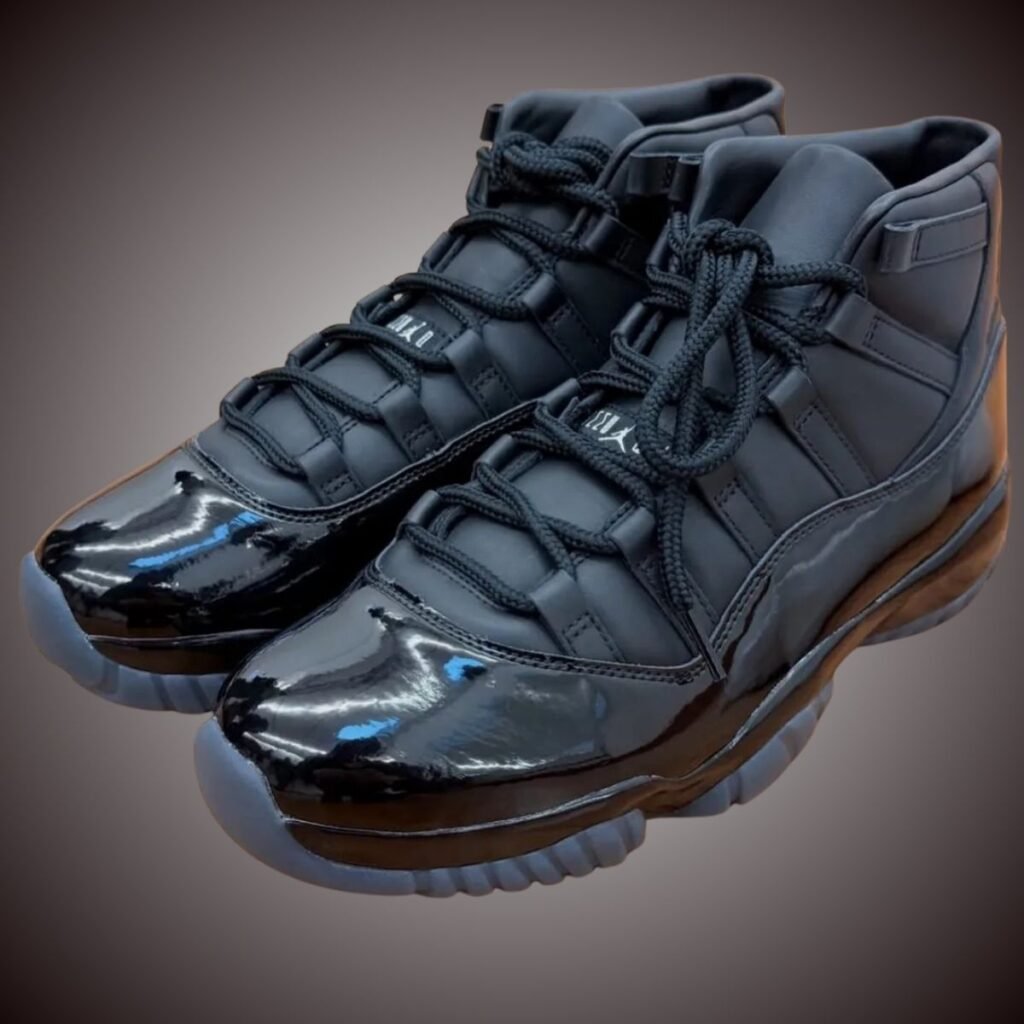
What arrived instead, in the "Triple Black" edition, is something stranger and more radical than shock value: a sneaker quietly reengineered into formal footwear, and in the process, perhaps the purest expression of the AJ11 ever produced.
All the Way Down to Black
The transformation begins with the upper. Where Tinker Hatfield's 1995 original paired ballistic mesh with a gleaming patent leather mudguard — a material choice borrowed from baseball cleats and tuxedo shoes alike — the COMME des GARÇONS iteration plunges the entire composition into monochrome black. The patent leather, traditionally the shoe's flashiest gesture, becomes a study in restraint: light still travels across its surface, but the reflection is now the only ornament. The signature "23" branding and Jumpman insignia are stripped away or subdued, leaving a silhouette that reads less like a basketball shoe than a wholecut derby stretched over an Air sole. Reports from the collection's unveiling described the effect plainly: this is an Air Jordan 11 that feels like a dress shoe.
Proportion and Line
The material story deepens on closer inspection. The Homme Plus team reportedly refined the patent's finish and reworked the collar and lining to eliminate the padding that gives standard AJ11s their athletic bulk, slimming the profile to something that sits beneath a tailored trouser without apology. The translucent outsole — a hallmark of the original — is rendered in smoked black, its icy transparency traded for opacity. Even the carbon fiber plate, that piece of performance engineering Hatfield once likened to a sprint spike's spine, disappears into the darkness. What remains is proportion and line: the defining virtues of formal shoemaking, applied to a sneaker that has spent three decades as a status symbol of an entirely different kind.
The Timing
Culturally, the timing could not be more charged. Kawakubo's recent Homme Plus collections have asked what comes after war, after conflict, after the aggressive posturing that defined so much of late-twentieth-century menswear — and a triple-black dress sneaker reads as a logical answer. Meanwhile, the resale market's appetite for rare COMME des GARÇONS has never been hungrier, with landmark auctions and record prices underscoring the brand's status as collectible art as much as fashion. The Air Jordan 11, for its part, has always carried dual citizenship: worn with tuxedos to prom and with suits on draft night, it was never purely athletic. This collaboration simply completes an argument the shoe had been making all along.
Who It's For
Not the sneakerhead chasing volume, and not the purist who considers any deviation from the 1995 original a betrayal. The COMME des GARÇONS Homme Plus x Air Jordan 11 "Triple Black" belongs to the man who owns one good overcoat and knows why it cost what it did — someone who wants the comfort and cultural weight of a Jordan 11 without the shout. Worn with wide wool trousers and a crisp shirt, it is nearly invisible; worn with denim, it is a quiet flex legible only to those fluent in both languages. The September 2026 release, arriving sooner than early reports suggested, will almost certainly sell through instantly, but its significance won't be measured in sellouts.
It will be measured in what it proves: that after thirty years, the Air Jordan 11 still had an untold story, and that it took a Japanese house famous for dismantling fashion to tell it — not by adding, but by removing everything that wasn't essential.