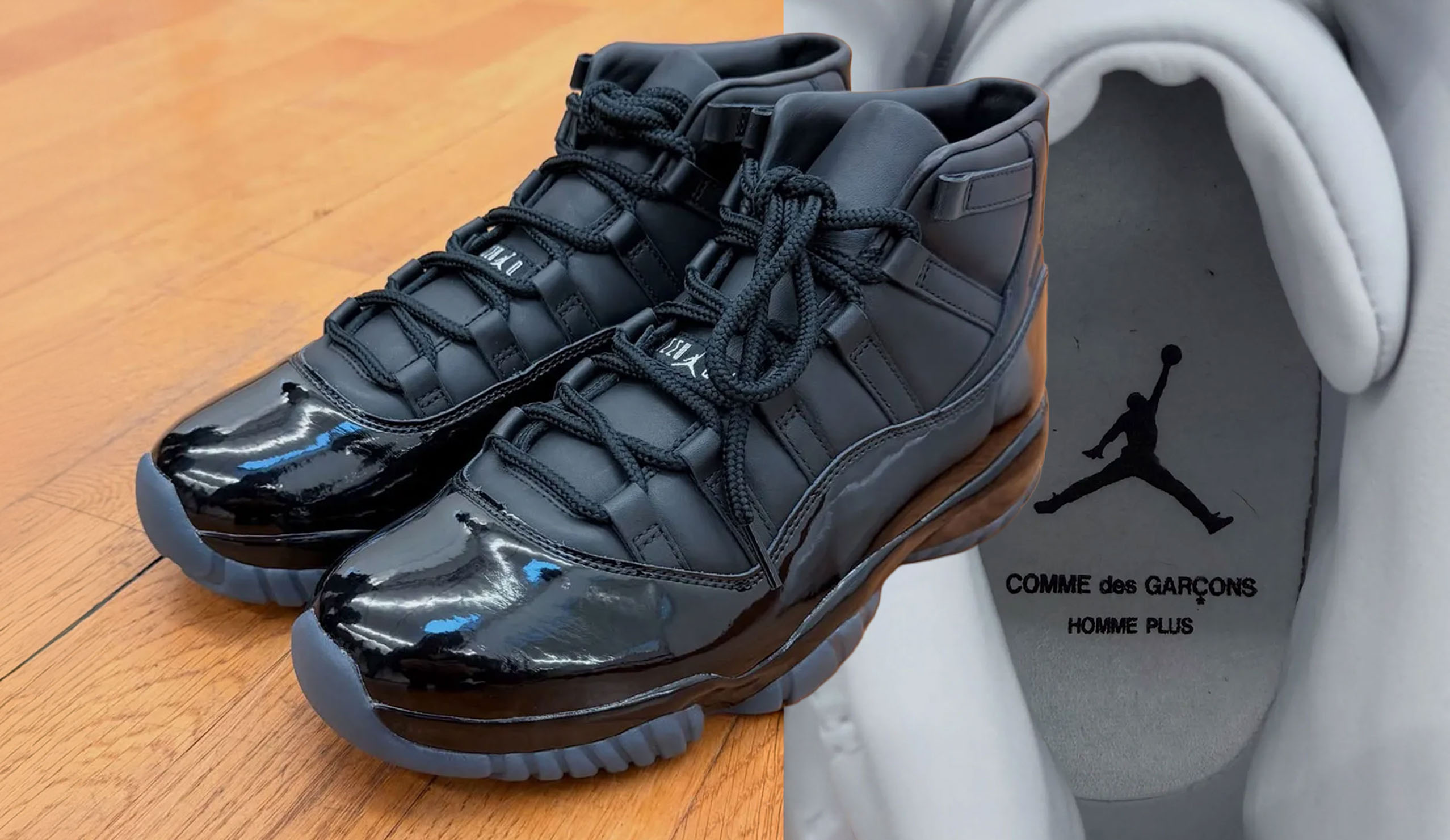
On September 5, the COMME des GARÇONS Homme Plus x Air Jordan 11 Retro arrives in a two-piece pack that does something rare in the modern collaboration economy: it subtracts. Where most sneaker partnerships add logos, layers, and narrative noise, Rei Kawakubo has stripped the Jordan 11 down to its architectural bones, removing the varsity theatrics and leaving behind a silhouette that reads less like basketball heritage and more like a black-tie derby. Highsnobiety called it "the Air Jordan 11's purest form," and that assessment is not hyperbole — it is the entire thesis of the project.
The design logic follows Kawakubo's long-standing preoccupation with the tension between formal and informal dress. The Jordan 11, designed by Tinker Hatfield in 1995, was already the most dress-shoe-adjacent sneaker in the Jordan lineage — its patent leather mudguard borrowed directly from formal footwear, its ballistic mesh upper a nod to industrial utility. Kawakubo exploits that duality rather than obscuring it.
The Architecture of Restraint
The COMME des GARÇONS Homme Plus iteration retains the patent leather, but renders it in monochrome depths that flatten the shoe into a single, sculptural gesture. The recognizable Jumpman branding is minimized or displaced; the midsole is muted; the overall effect is of a sneaker that has been pressed, tailored, and sent to a dinner party rather than a pickup game.
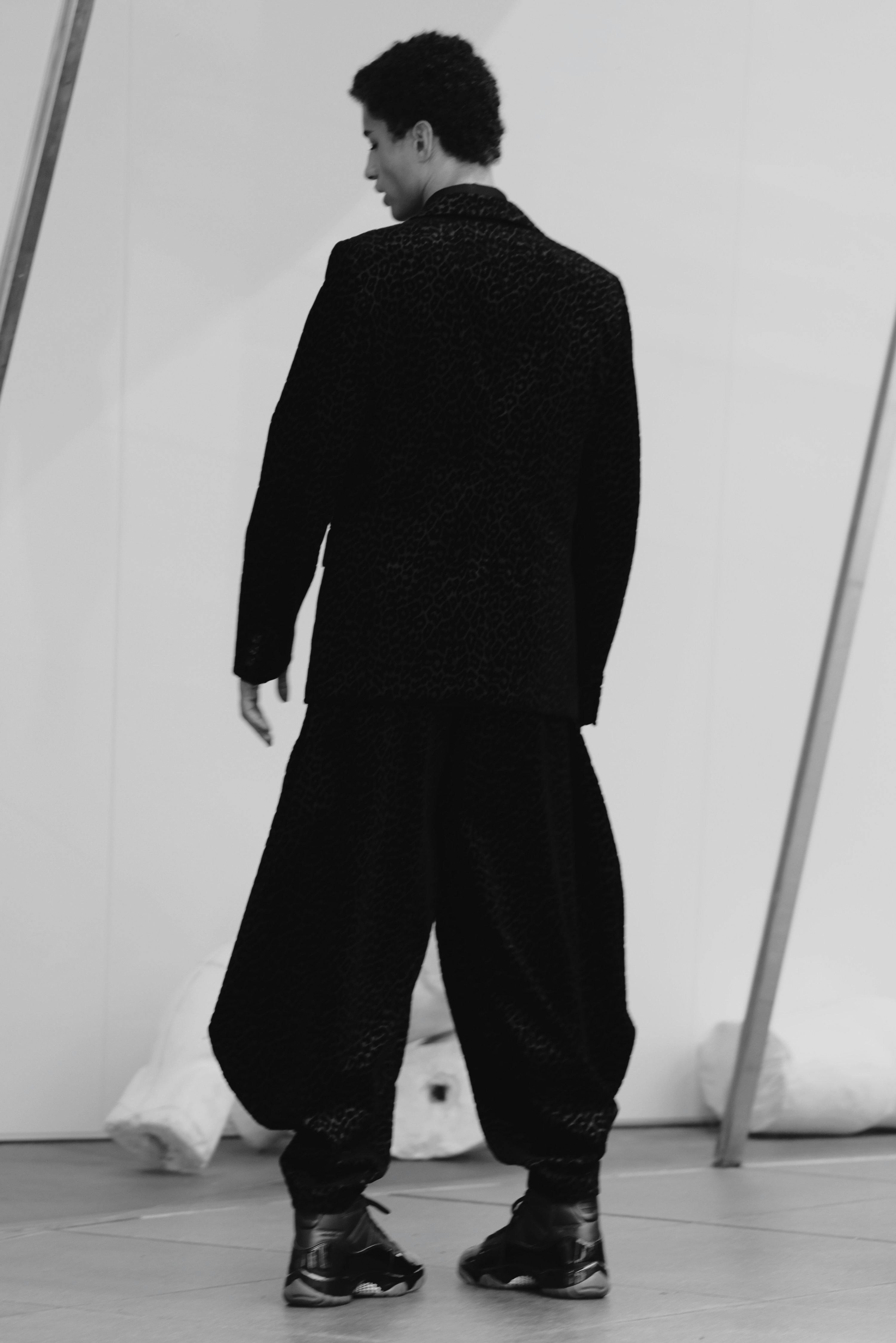
Materials matter here in a way they rarely do in collaboration sneakers. The ballistic mesh and patent leather combination is unchanged from the original tooling, which is precisely the point — Kawakubo is not redesigning the shoe, she is recontextualizing it. The accompanying apparel in the Homme Plus line reinforces the proposition: tailored trousers, elongated jackets, and the kind of severe, black-dominant silhouettes that have defined her menswear since the early 1980s. Worn together, the Air Jordan 11 Retro ceases to function as athletic equipment and becomes something closer to a monk strap with a Nike Air unit.
One Node in a Longer Argument
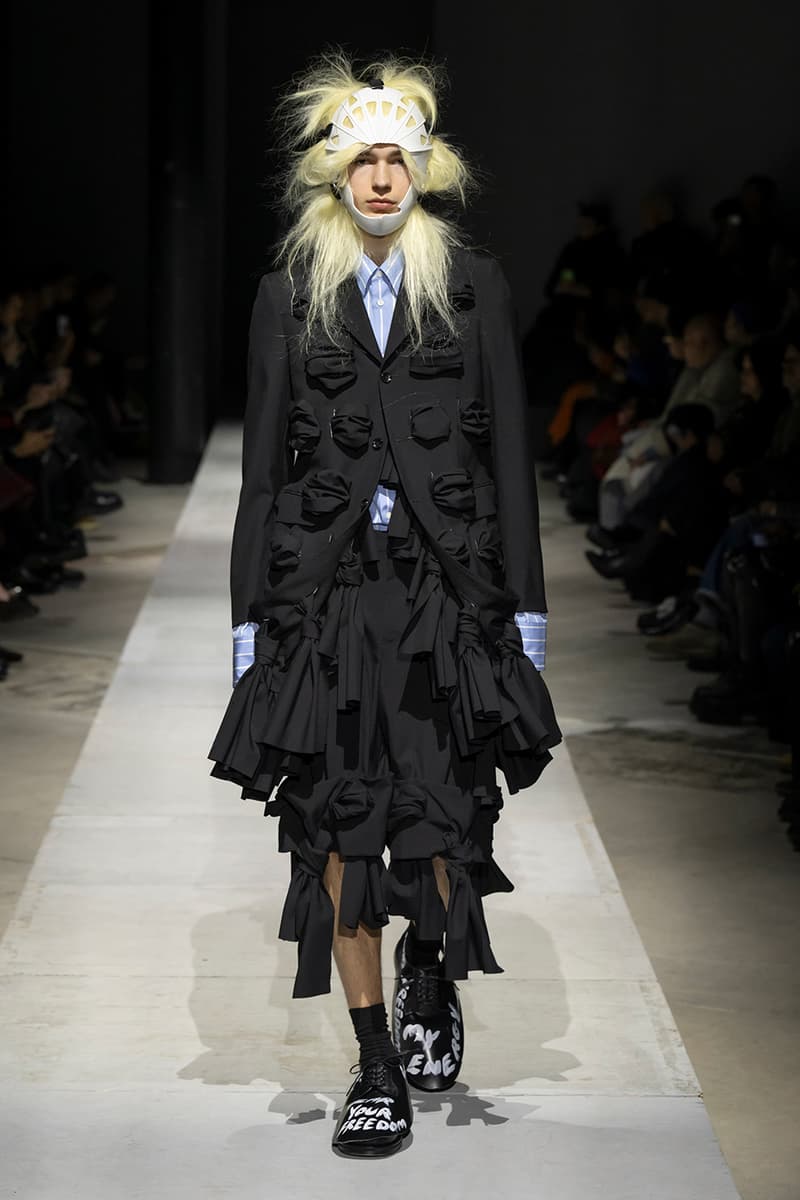
This release lands in a season where Kawakubo's broader practice is unusually visible. Her Homme Plus Spring 2027 collection, titled "If The War Were To End..," staged a dual-act meditation on what follows conflict — a characteristically oblique inquiry that the fashion press, from AnOther Magazine to WWD, has read as both political and deeply personal. Meanwhile, the Denim Tears x COMME des GARÇONS Parfums fragrance, "Tears" Eau de Parfum, has bottled the smell of cotton, extending the house's conceptual reach into olfactory territory. And GQ's recent profile of David Sedaris "at the altar of Comme des Garçons" serves as a reminder that the brand's cultural gravity extends well beyond the runway. The Air Jordan 11 collaboration is not an isolated stunt; it is one node in a coherent, decades-long argument about what clothing can mean.
Who It's For
Not the collector chasing resale premiums, though that audience will inevitably appear. The COMME des GARÇONS Homme Plus x Air Jordan 11 Retro is for the person who has already resolved the sneaker-versus-suit question and decided the answer is both. It is for the wearer who understands that Kawakubo's genius has always been her refusal to treat categories as sacred — she put holes in sweaters when holes were considered damage, she sent models down runways in lumps and volumes when the industry wanted bodies. Turning a basketball shoe into formalwear is, by her standards, a modest provocation. But it is a provocation with consequences: once you accept that the Jordan 11 can be worn with a tailored coat, the hierarchy that separates "streetwear" from "fashion" collapses entirely.
Available September 5 in a two-shoe pack, the release is limited, deliberate, and characteristically uncompromising. In an era when collaborations are announced weekly and forgotten hourly, Kawakubo has done what she has always done: taken an object everyone thought they understood and returned it, quieter and stranger, asking to be looked at again.