There are sneaker collaborations, and then there are artifacts—objects that exist at the precise intersection of sportswear utility and conceptual fashion, so singular in their execution that the passage of time only deepens their mystique. The Comme des Garçons x Nike Air Max Dolce "Triple Black" belongs firmly to the latter category. Originally released in 2002 as part of a quietly radical partnership between Rei Kawakubo's label and Nike, the silhouette has spent more than two decades lodged in the collective memory of collectors who understand that the most important footwear is rarely the loudest. Now, in a moment when the archive has become fashion's most valuable currency, this hybrid loafer-sneaker has resurfaced under retail—a rare second chance at a piece that was never meant to be accessible twice.
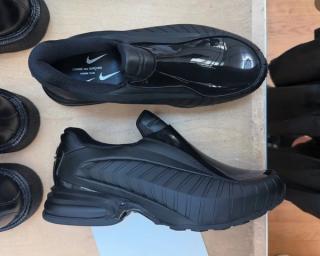
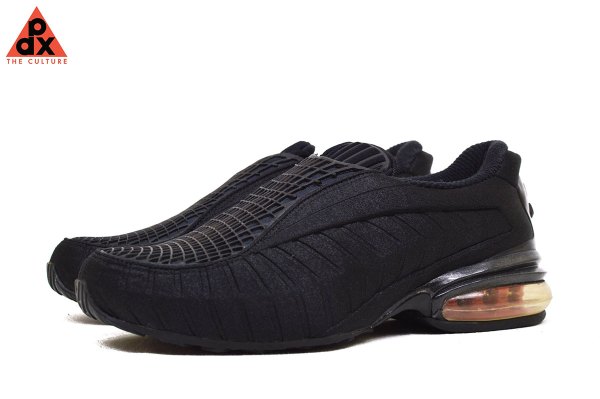
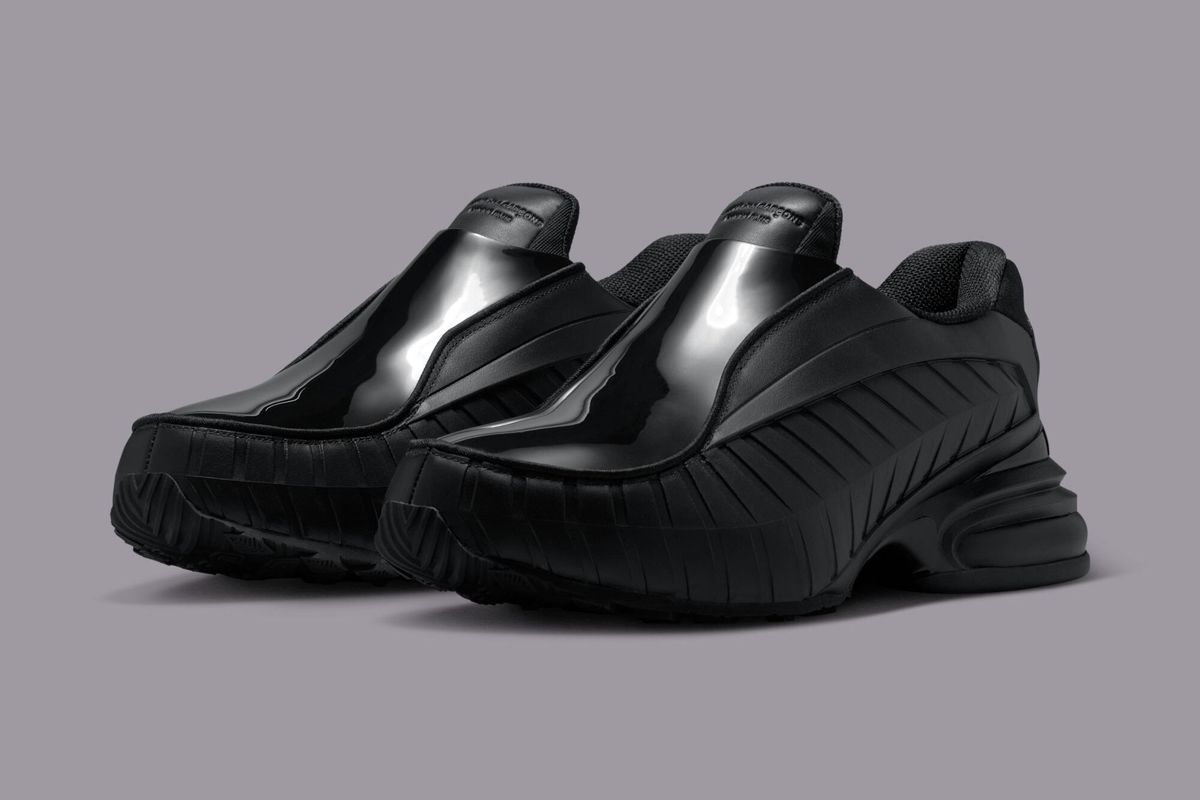
What makes the Air Max Dolce so compelling is its deliberate refusal to be categorized. The upper is rendered in glossy patent leather, cut in the silhouette of a formal loafer rather than a trainer, complete with a subtle vamp and a profile that reads closer to eveningwear than gym wear. Beneath it sits a full Air Max sole unit—visible cushioning that grounds the shoe in athletic function and announces its Nike DNA without apology. The "Triple Black" colorway strips away distraction entirely: no contrast Swoosh, no competing panels, just a monolithic black that lets the tension between dress shoe and performance sole do all the talking. It is a shoe that understands the power of restraint, and it rewards those who look closely rather than those who need to be seen.
A Loafer in Sneaker's Clothing
The genius of the Dolce is the way it withholds. Where most collaborations chase visibility—a logo here, a co-branded heel there—this one trades in suggestion. The patent leather catches light the way a good oxford does, and the vamp holds its shape with the quiet formality of something you'd wear to a gallery opening rather than a gym. Then you look down, and there's that Air Max sole: a full-length cushioning unit that refuses to pretend it's anything other than Nike engineering. The friction between the two halves is the entire point. On foot, it reads as neither fully dress nor fully sport—just unmistakably Comme.
The Archive Is the New Front Row
This is not nostalgia for its own sake. The revival arrives at a moment when Comme des Garçons is actively excavating its own history with unusual conviction. The label recently revived its Guerrilla Store in Fukuoka, stocking archive pieces for a generation that never had access the first time around, and it has resurrected its cult magazine *Six*, with Adrian Joffe declaring that "Six is new again." Even the Spring 2027 runway—a meditation on royalty and everyday life—continues Kawakubo's career-long project of collapsing hierarchies. The Air Max Dolce sits perfectly within that philosophy: a luxury object disguised as a basic, a performance shoe dressed for a dinner party, a piece of fashion history that refuses to announce its own importance.
Who It's For
The Comme des Garçons x Nike Air Max Dolce "Triple Black" is not for the casual enthusiast. It is for the collector who understands that the most enduring collaborations are the ones that made people uncomfortable at the time—who remembers that a patent leather loafer on an Air Max sole was, in 2002, a genuinely strange proposition. It is for the wearer who values craft and concept over hype, who wants a shoe that works with tailoring as easily as with denim, and who recognizes that true archive pieces rarely return to shelves. That it has resurfaced under retail is almost beside the point—though it makes the decision considerably easier.
The Case for Moving Now
What matters now is timing. The archive revival cycle has reached its apex, and the pieces that once seemed too odd, too quiet, or too ahead of their moment are now the ones that define a wardrobe. The Air Max Dolce was never designed to be understood immediately. It was designed to be understood eventually.
That moment, it seems, has arrived—and the smart money is moving before the rest of the room catches on. Because if there's one thing Kawakubo has taught us across four decades, it's that the pieces worth keeping are the ones that ask a question rather than answer one. The Dolce asks whether a shoe can be both formal and athletic, both archive and everyday, both strange and inevitable. The answer, twenty-plus years on, is a quiet, monolithic yes.