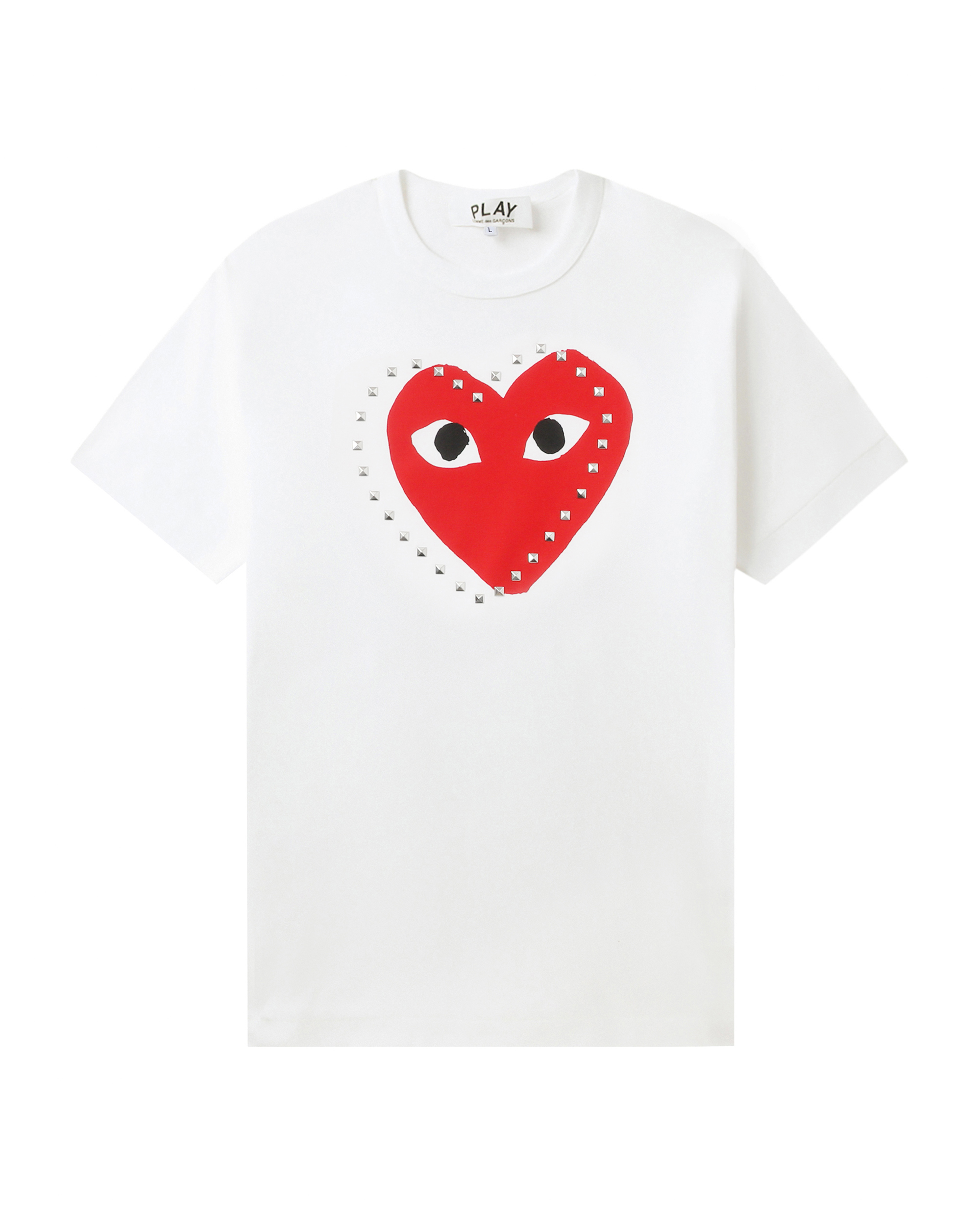
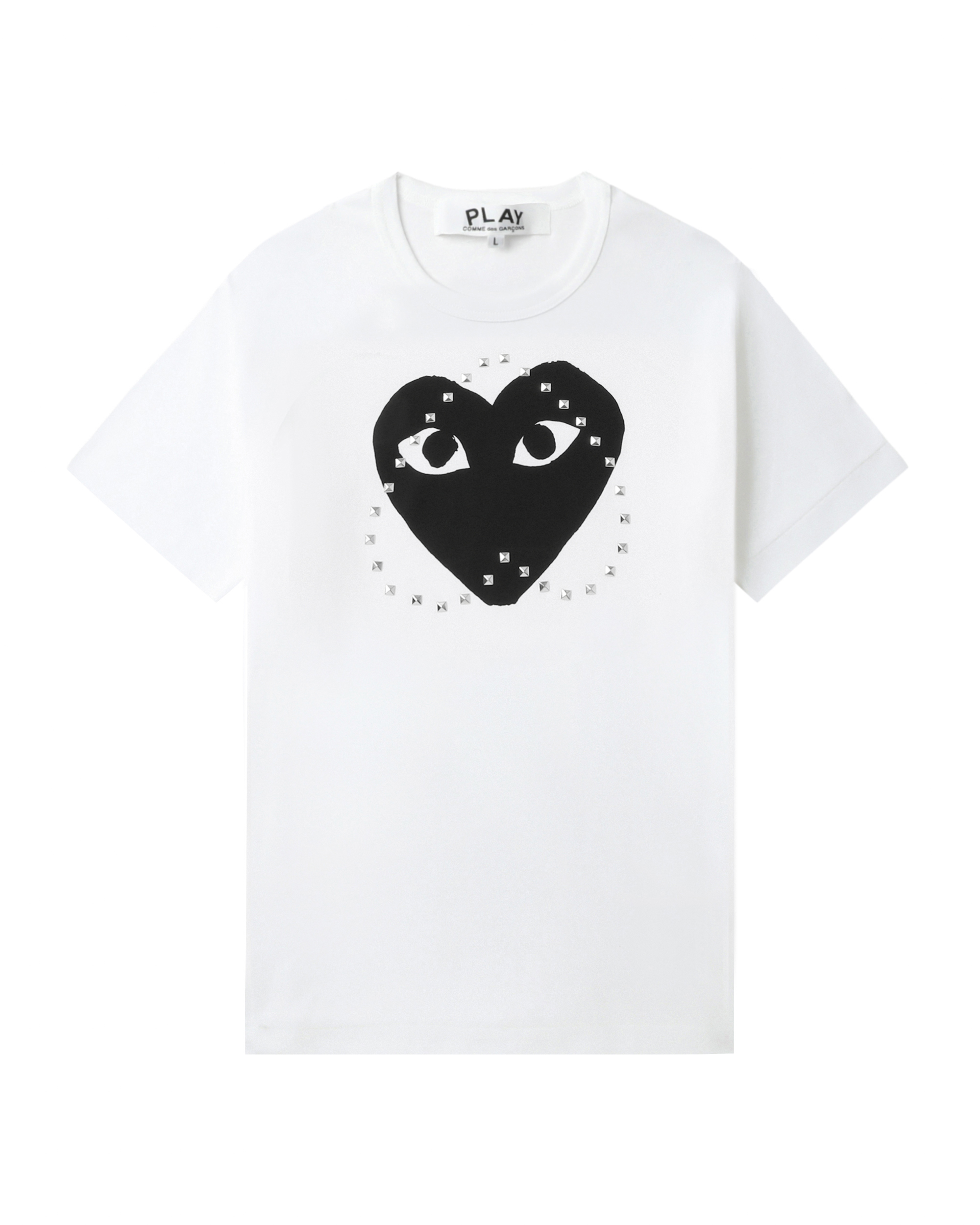
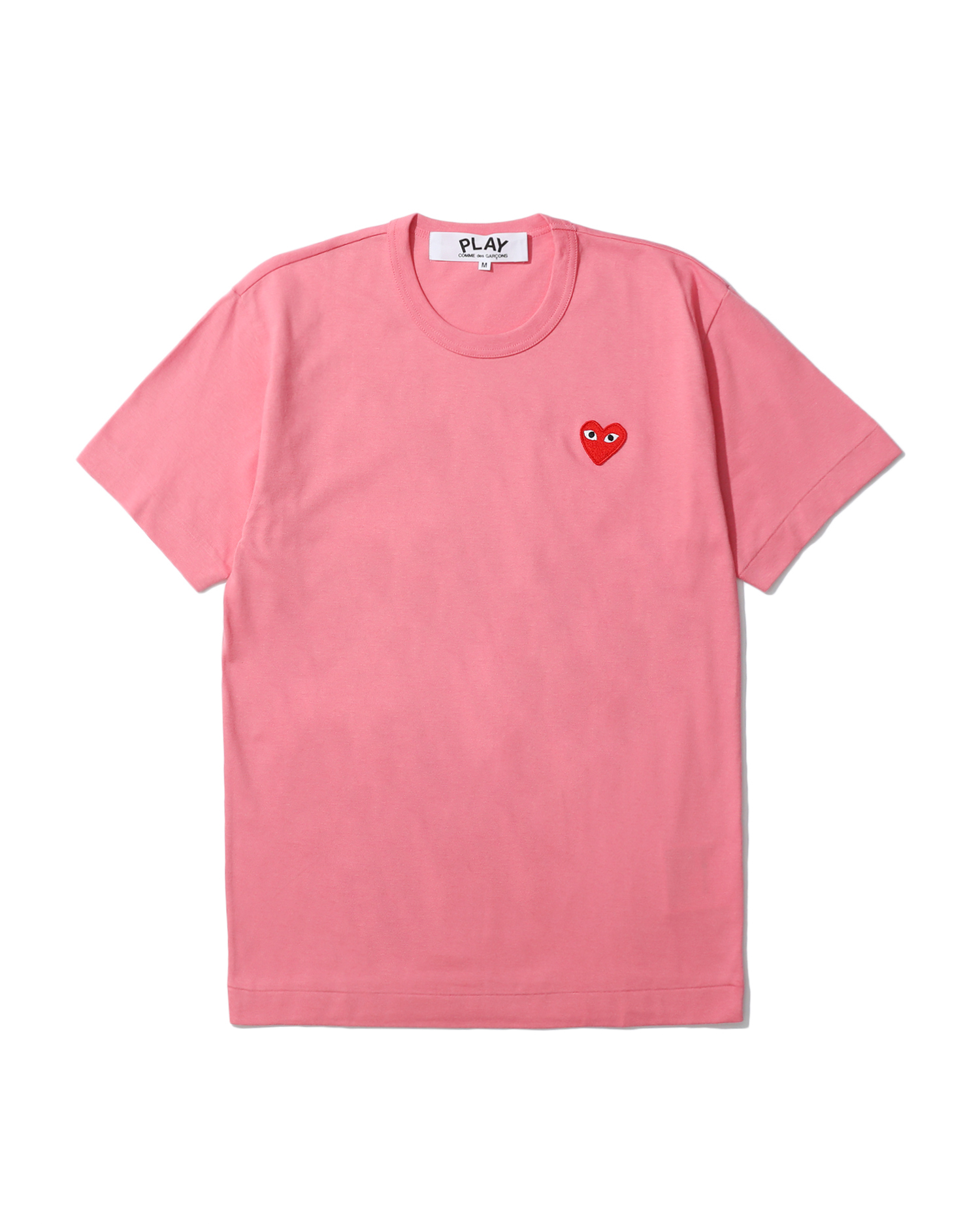
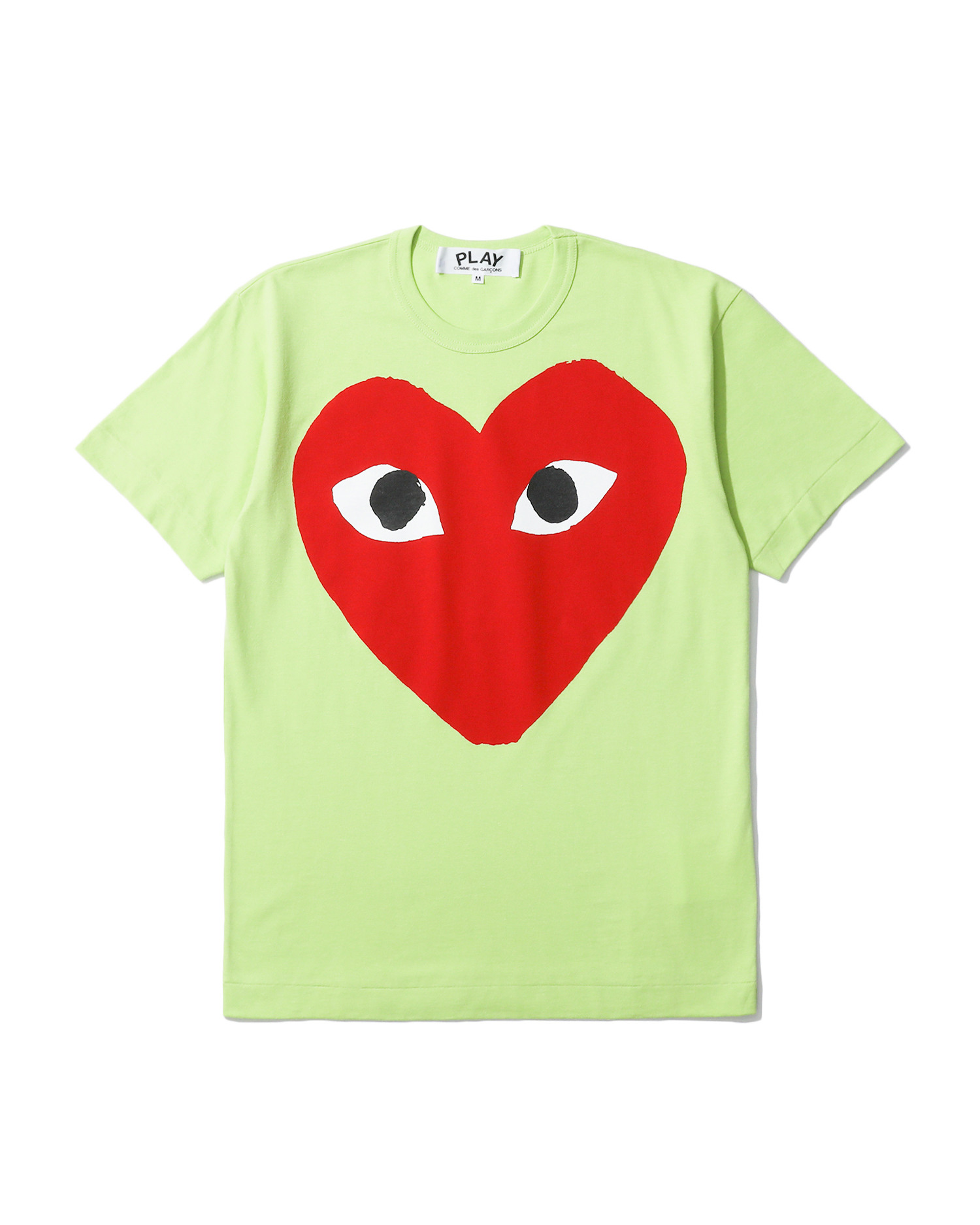
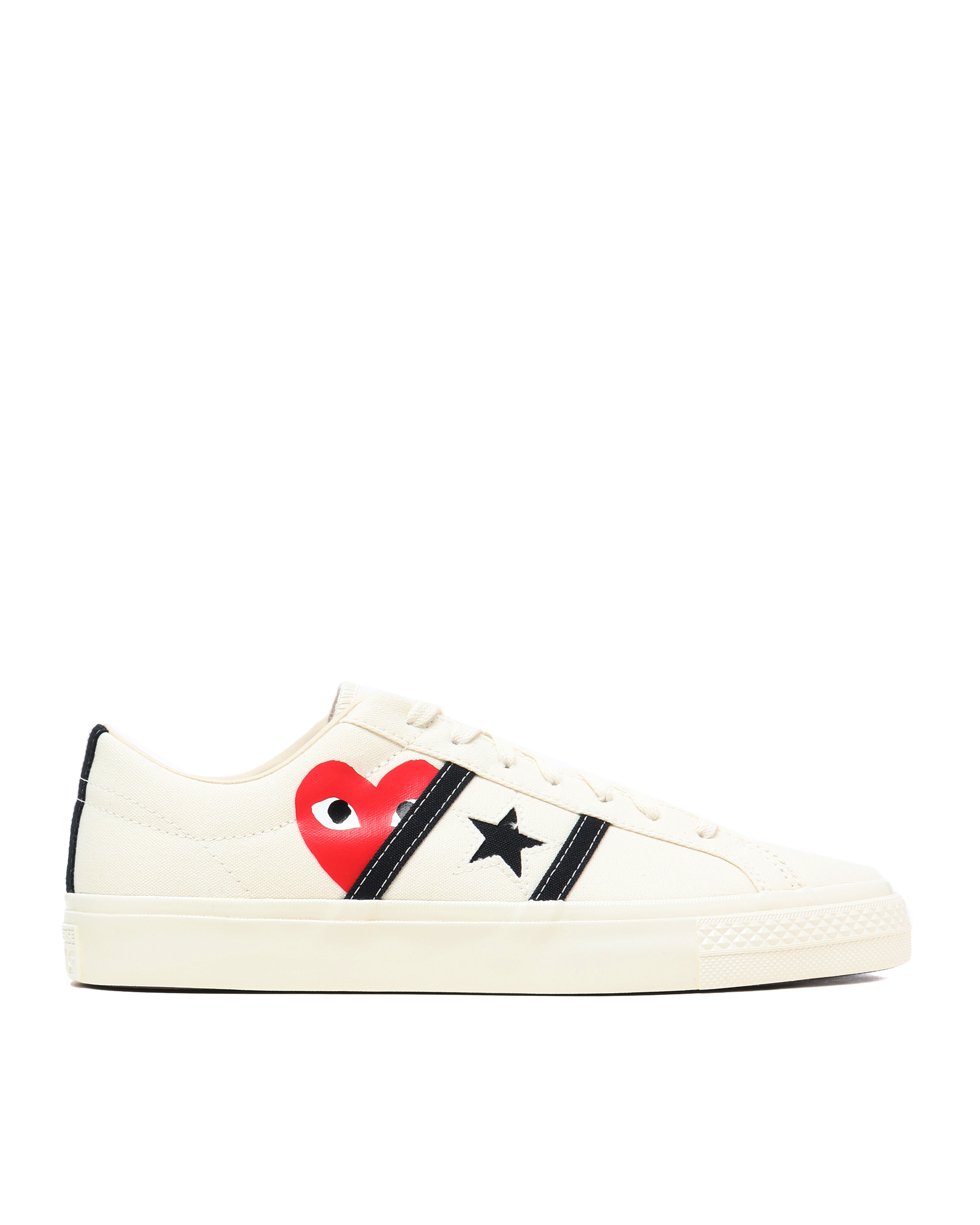
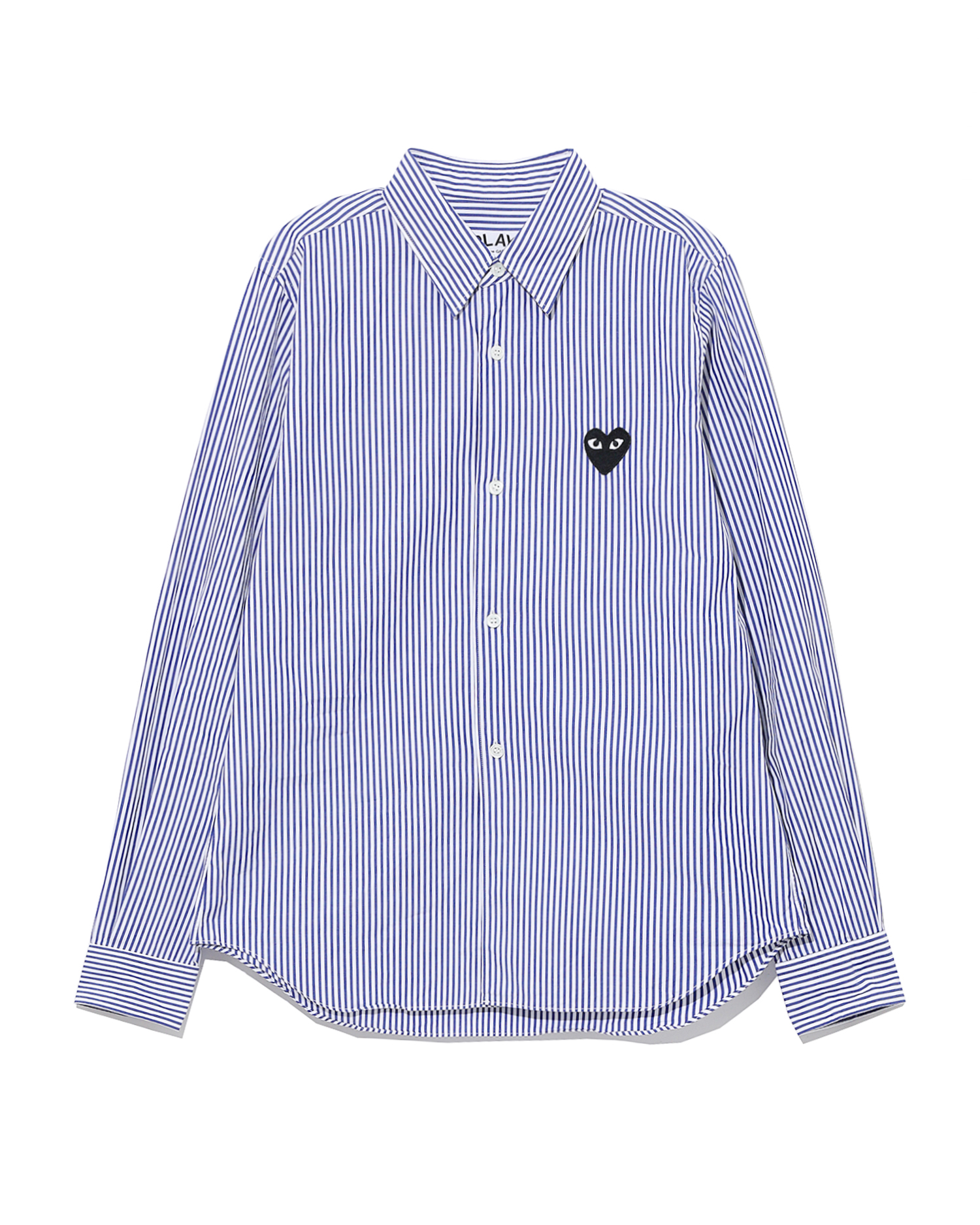
On paper, it is the most ordinary object in the Comme des Garçons universe: a cotton crewneck, a short sleeve, a small chest print. But that is precisely the trick Rei Kawakubo has been playing on the fashion world since 2002, when the PLAY line first appeared as a collaboration with illustrator Filip Pagowski. His hand-drawn heart—wide-eyed, slightly weary, peering out from beneath a bold black outline—became an instant cipher. It looked sweet. It was not. That tension is the entire point, and it is why the shirt has survived every cycle of trend that should have buried it.
The design details are deceptively simple. The heart motif is printed small, usually on the left chest, often in red or black, sometimes trimmed in a contrasting outline. The cotton is substantial enough to hold its shape but soft enough to feel broken-in from the first wear. The fit is relaxed without being sloppy—a boxy shoulder, a clean hem, a neckline that doesn't gape. There is no visible branding beyond the heart itself, no logo screaming from the sleeve. That restraint is what separates it from the graphic-tee industrial complex. The PLAY tee doesn't ask to be noticed; it assumes you already know.
The Anatomy of a Non-Statement
Look closely at the print and you'll find the whole philosophy in miniature. The heart is deliberately imperfect—hand-drawn lines, an outline that wobbles just enough, two wide eyes that seem to have seen things. It sits quietly against the cotton, never competing with the fabric's texture, never demanding the frame. Up close, the ink has a matte density that feels considered rather than mass-applied. The neckline holds its ribbed tension wash after wash; the hem stays clean and flat against the hip. These are not details you notice at first glance. They are details you notice after a year of wear, when the shirt has outlasted three of its louder contemporaries.
That durability is part of the story. Longtime collectors often buy a fresh one every few years because the old one has been worn to transparency—not because it failed, but because it was worn that hard. There is something almost romantic about a garment built to be lived in rather than preserved. The PLAY tee doesn't belong in a glass case. It belongs in rotation.
Chalamet, Gen Z, and the Accidental Revival
What makes the shirt culturally significant right now is a strange and very modern convergence. Timothée Chalamet has been photographed in it repeatedly, and the internet has responded exactly as it always does: with a revival. GQ has documented the phenomenon directly, noting that Chalamet is leading a Comme des Garçons PLAY resurgence among a generation that was barely born when the line launched. For Gen Z, the heart is not nostalgic—it's new. It carries the same low-key cool that made it a cult object for the first wave of wearers, but it now arrives with the added weight of being genuinely old, genuinely weird, and genuinely Rei.
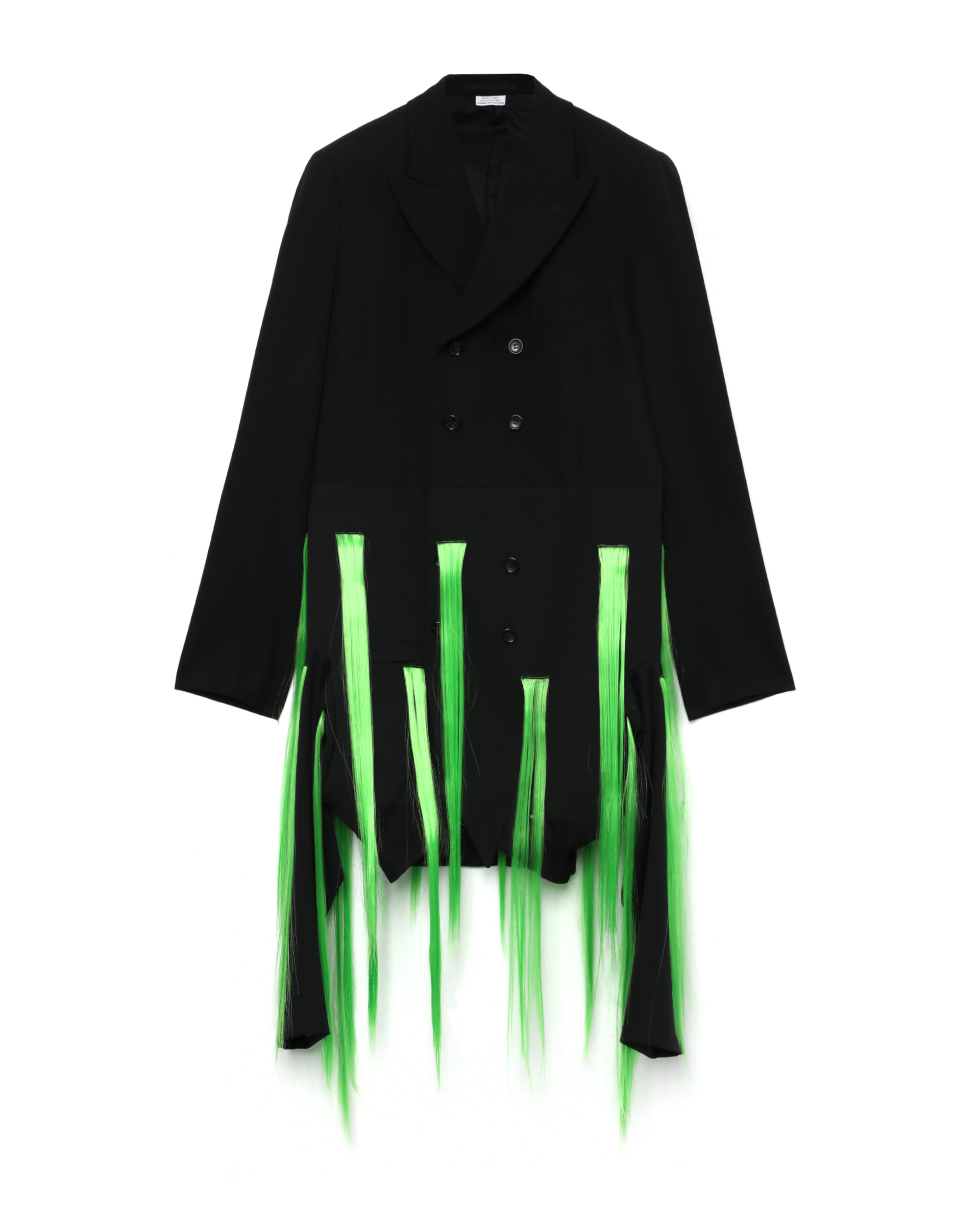
That context matters, because the broader Comme des Garçons world is having a moment of institutional rediscovery. The house has revived its cult magazine, *Six*, with Adrian Joffe telling AnOther Magazine that "Six is new again." It has resurrected the guerrilla store format in Fukuoka with archive pieces, staged a beautifully chaotic exhibition at Dover Street Market, and continued to push its main line into provocative territory—Spring 2027 collections that ask what comes after war, that declare "we'll never be royals." Even the house's most "normal" product, Comme des Garçons Shirt, has been reframed by Highsnobiety as something your dad would actually wear. Against that backdrop, the PLAY tee is not a dilution of the brand. It is the brand's most accessible contradiction: a mass-produced object from an anti-mass-production house, a cartoon heart from a designer who has spent five decades refusing sentimentality.
Who It's For, and Why It Still Lands
Officially, anyone. Practically, it is for the person who wants a piece of the Comme des Garçons mythology without committing to the architectural tailoring or the conceptual knits. It is for the Chalamet acolyte and the longtime collector alike—the latter often buying a fresh one every few years because the old one has been worn to transparency. It is for people who understand that the most subversive thing a fashion house can do in 2026 is sell a T-shirt that simply works.
Why it matters now is harder to pin down, but it has something to do with fatigue. The fashion cycle has never been faster, and the PLAY heart tee is a rare object that refuses to participate in it. It doesn't change much. It doesn't need to. The heart looks out at the world with the same slightly exhausted expression it has always had, and somehow that reads as more honest than ever. In a season of grand statements—peace treatises, black holes, royal refusals—the smallest gesture is the one still landing.
That is the quiet power of Comme des Garçons PLAY: a heart that has been beating for over two decades, and shows no sign of stopping. It is the rare thing in fashion that has nothing to prove—and that, more than any loud logo or seasonal reinvention, is what keeps it on backs and in conversation year after year.