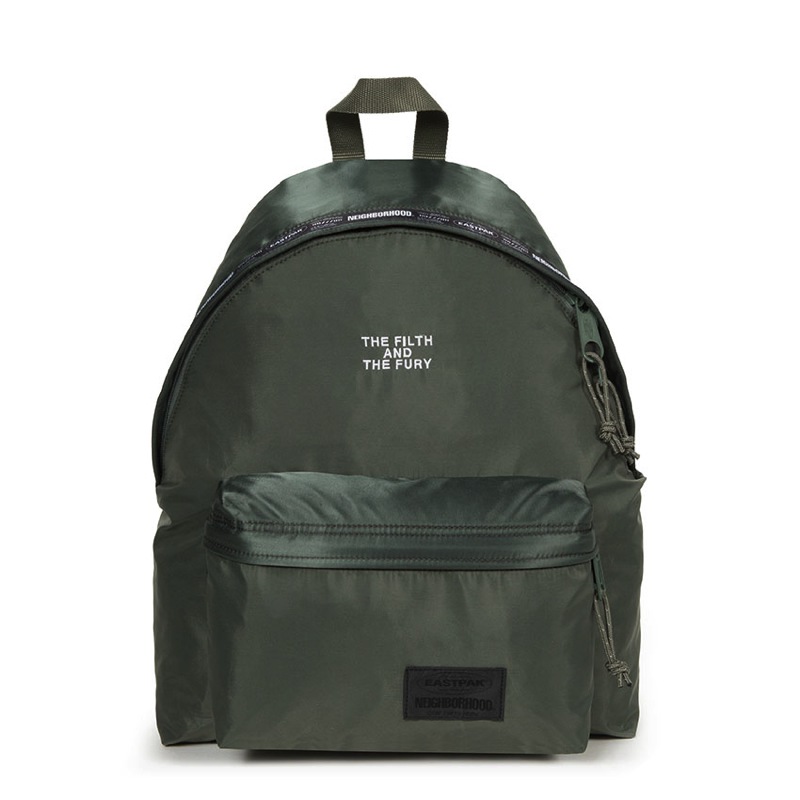
Some bags carry your things. A rare few carry your taste. The Fear of God Essentials x Eastpak Archival Shell Bag belongs firmly to the second category—a piece of utilitarian hardware that doubles as a quiet declaration of allegiance. Produced at the intersection of Jerry Lorenzo's Essentials diffusion line and the American heritage of Eastpak—founded in 1952 as Eastern Canvas Products, supplying duffels to the U.S. military before becoming a staple of school hallways and airport carousels—the Archival Shell Bag is a study in disciplined restraint. It is also, notably, sold out nearly everywhere. Which tells you something about how precisely it landed.
The design language is unmistakably Lorenzo's. Where Eastpak's standard output leans on nylon and boxy silhouettes, the Archival Shell Bag arrives in a structured, matte shell fabric with a faintly technical hand—closer to a hard-shell case softened for daily carry than to a floppy backpack. The palette stays within the Essentials register: oat, cement, black, and the muted taupe that has become the line's signature. Hardware is minimal and tonal. Branding is reduced to a debossed logo and a woven label that reads as a whisper rather than a shout.
A Silhouette Built for the Commute
The shape itself is compact but generous—enough for a 13-inch laptop, a notebook, a charger, and the small miscellany of a modern commute. A top handle and adjustable strap let it move between handheld and crossbody without ceremony. There is no fuss here, no superfluous strap dangling like an afterthought. Just clean lines and a structure that holds its form whether you're sprinting for a train or setting it down at a café table.
Where Utility Meets Restraint
What makes the piece culturally legible is the tension it resolves. Essentials built its reputation on elevated basics—hoodies, sweatpants, tees—that translated Lorenzo's Fear of God aesthetic into an accessible price band. Eastpak built its reputation on indestructibility. The Archival Shell Bag is where those two propositions meet: a bag that looks like it belongs in a minimalist apartment in Silver Lake and can, in fact, survive being thrown into the overhead bin of a budget carrier.
It is quiet-luxury utility in its purest form. No monogram. No hardware flash. No logo that announces the price. The value is in the material and the cut, which is precisely the point.
The Sell-Out, and What It Signals
That it sold out is unsurprising. The resale market has treated the collaboration as a collectible, with prices on secondary platforms climbing well past retail. But the bag's real significance is less about scarcity than about timing. We are in a moment when the culture has tired of loud branding and is gravitating toward objects that perform quietly—the same instinct that has driven shoppers toward functional essentials across every category, from home goods to travel gear. The Archival Shell Bag arrives as the streetwear answer to that instinct: a piece that reads as anonymous to the uninitiated and as a signal to those who know.
Who It's For
It is for the person who wants one bag, not five. It is for the traveler who has learned that the best gear is the gear you don't have to think about. It is for the Essentials loyalist who already owns the hoodie and the track pant and wants the object that completes the uniform. And it is for anyone who understands that the most persuasive argument for a product is not its logo but its longevity—a bag built by a company that has been making them for seventy years, filtered through the eye of a designer who has spent a decade refining what modern American luxury should look like.
If you find one at retail, buy it. If you find one at resale, consider it. The Fear of God Essentials x Eastpak Archival Shell Bag is not a trend piece. It is the rare collaboration that improves on both of its parents—and that is why it disappeared.