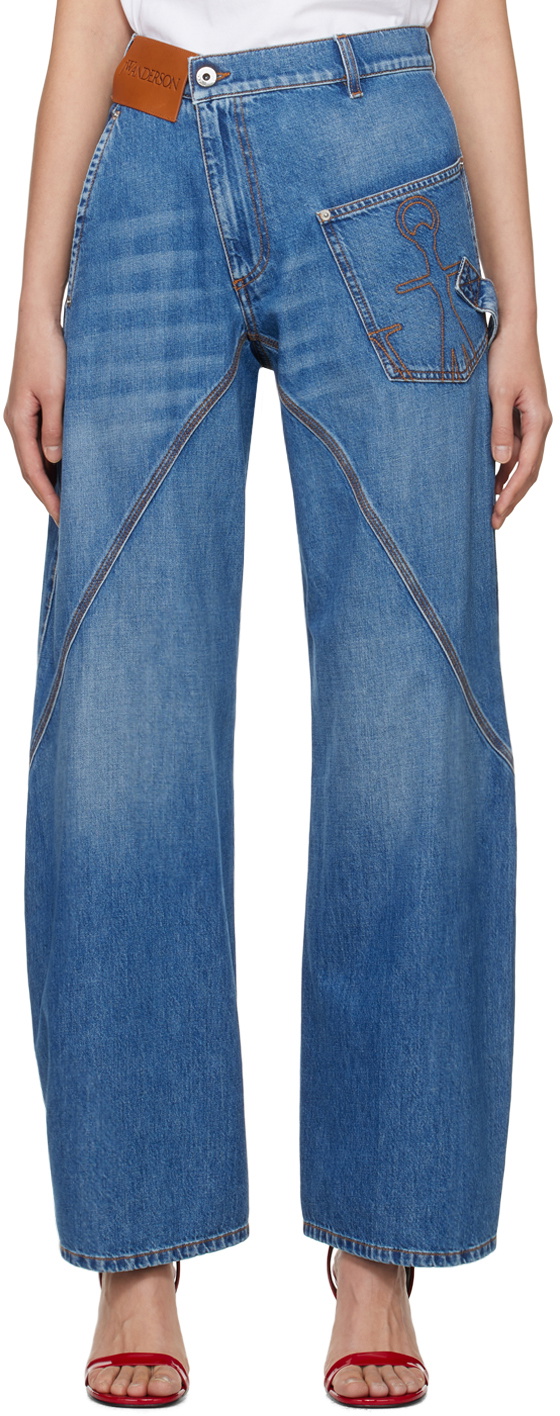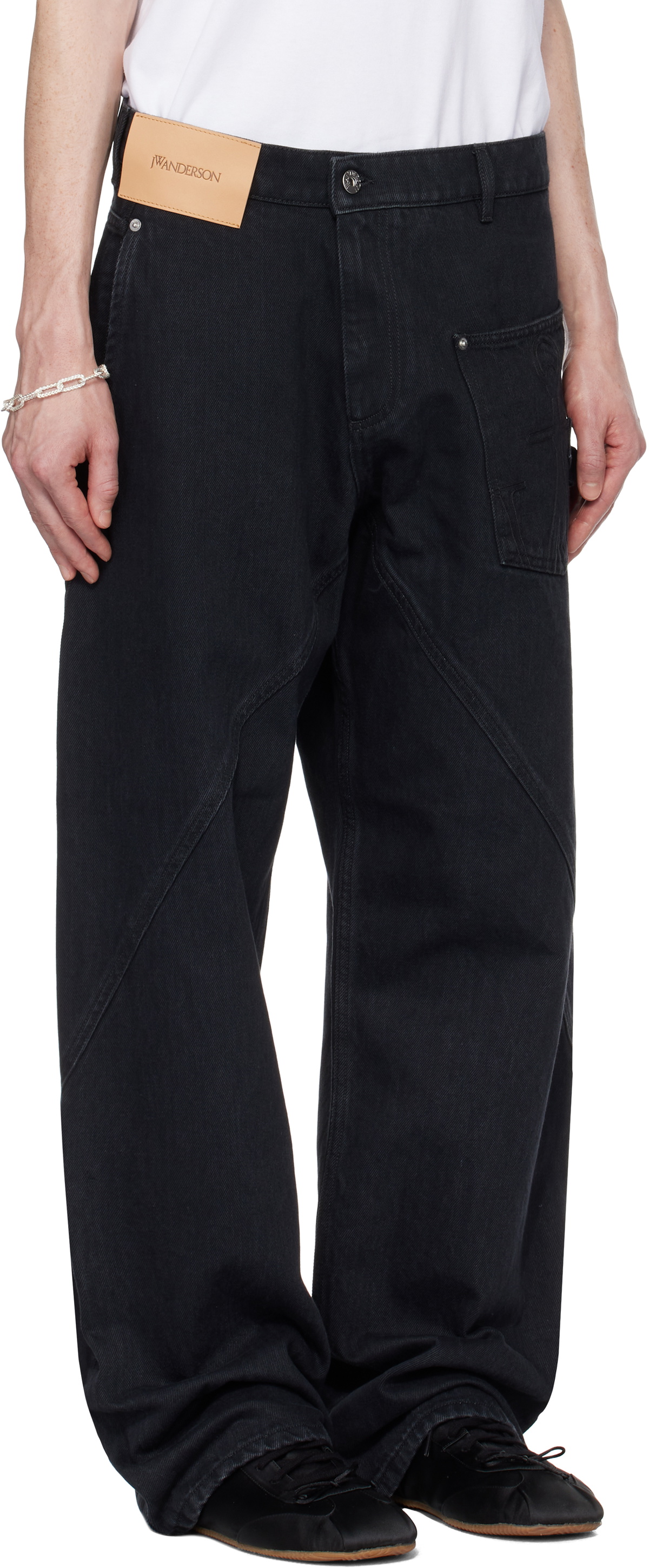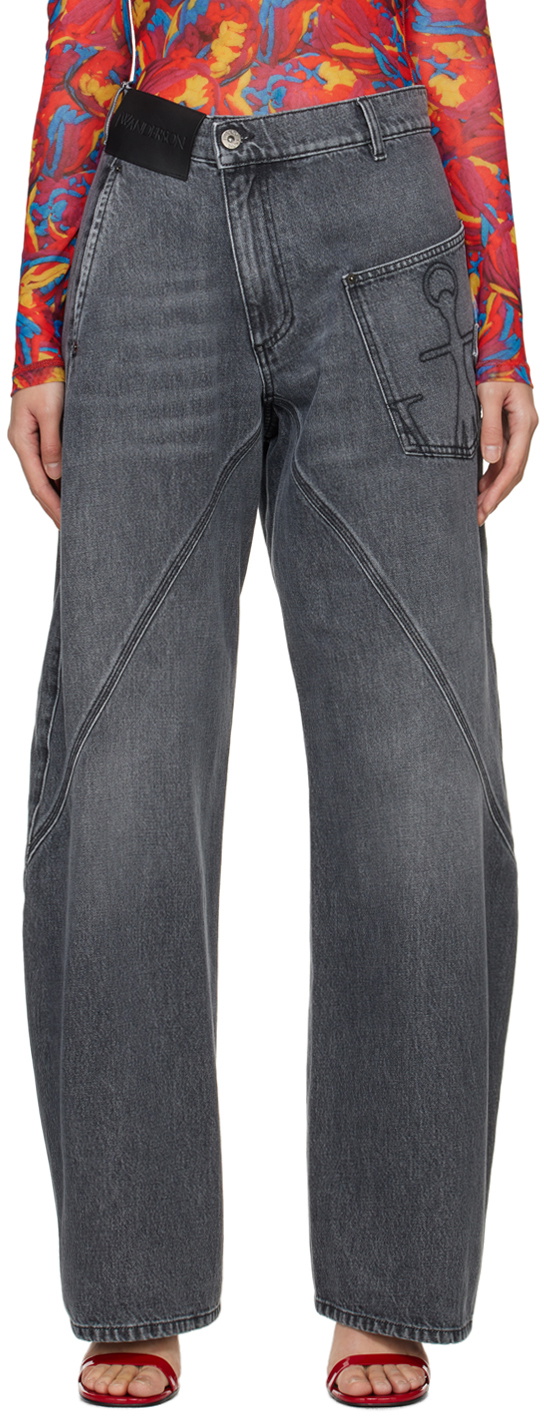
There is a particular thrill in witnessing a garment that refuses to sit still, and JW Anderson’s Twisted Denim Jeans deliver exactly that frisson of controlled chaos. At first glance, they read as a classic pair of indigo jeans—familiar, sturdy, and unassuming. But linger for a moment, and the optical illusion sets in: a second waistband emerges from the hips, wrapping around the torso like a possessive embrace, while the legs seem to torque and rotate against the grain of standard construction. This is not a gimmick; it is a masterclass in redefining the most democratic garment in fashion through the lens of romantic entanglement. The design, which has been the subject of a dedicated global campaign, positions denim not as a backdrop but as the protagonist of a narrative about togetherness—a sculptural double-waist that quite literally suggests two bodies interlocking, sharing a single silhouette.
Anderson has never been one for quiet gestures. From his early days of subverting knitwear codes to his tenure at Loewe, where craft met conceptualism at every turn, his work has always orbited the idea that clothing can hold memory, tension, and desire. With these jeans, he compresses that philosophy into a single, wearable object. They are not simply trousers; they are an argument for denim as a medium for emotional expression—a fabric so steeped in utility and uniformity that to twist it is to challenge the very grammar of how we dress.
The Construction: Where Subversion Meets Material Integrity
The construction of the Twisted Denim Jeans is where Anderson’s genius for subversion meets his deep respect for material integrity. Crafted from heavyweight, rigid cotton denim that will mold to the wearer over time, the jeans feature a secondary waistband that is fully functional, complete with button hardware and belt loops that serve no utilitarian purpose yet possess immense emotional weight. The "twist" is achieved through a precise pattern-cutting technique that shifts the seam lines, causing the fabric to spiral subtly around the leg—a motion that feels alive when walking. It is a piece of wearable architecture that relies on the tension between the cloth and the body, a structural sleight of hand that elevates a utilitarian staple into something closer to a kinetic sculpture. The indigo wash is deep, almost black in shadow, allowing the twisted seams to catch the light and delineate the form, ensuring the detail is visible without ever shouting for attention.
You can almost feel the weight of the fabric before you even slip it on. This is denim with heft, with intention—the kind of material that promises to crease and fade in all the right places, documenting your movements like a diary written in indigo. The double waistband, meanwhile, functions as a kind of sartorial metaphor: it cinches, it holds, it embraces. It asks you to consider what it means to share space, to be intertwined, to exist in relation to another body. That is the quiet poetry of Anderson’s design language—he builds emotion into the seams themselves.
A Cultural Pivot Toward Expressive Dressing
This launch arrives at a culturally significant moment, coinciding with a broader industry pivot away from quiet luxury toward expressive, individualistic dressing. The recent campaign imagery, shot with a tenderness that borders on intimate portraiture, features couples intertwined, their bodies sharing the twisted silhouette as if the jeans are the physical manifestation of their bond. Anderson has long played with the idea of clothing as a second skin, but here he explores the concept of a shared skin—a notion that resonates deeply in a post-pandemic era where intimacy and connection have become the ultimate luxury. The timing is impeccable, arriving alongside news of the brand’s expansion into a Parisian pop-up and the strategic addition of Delphine Arnault to its board, signaling that this conceptual playfulness is now backed by serious commercial muscle. The jeans are not merely a product; they are a statement of intent from a house that refuses to be boxed into minimalist restraint or maximalist excess.
There is also something refreshingly anti-algorithmic about this release. In a fashion landscape dominated by viral micro-trends and the relentless churn of "drops," Anderson offers a garment that demands contemplation. It cannot be reduced to a single image or a fleeting hashtag; it requires a body, a movement, a relationship to space. That is a radical proposition in 2024, and it is precisely why these jeans feel so urgent.
The Wearer: A Sartorial Romantic
Who is the wearer of the Twisted Denim Jeans? They are the sartorial romantic, the individual who understands that fashion is a language of gesture rather than a uniform of conformity. This is for the person who finds poetry in a skewed seam and appreciates that a double waistband can communicate more about a relationship than a hundred love letters. It appeals to the stylist who wants to challenge their clients, the art director who sees clothing as an extension of their visual practice, and the discerning buyer who owns the classics but craves a conversation piece that will not date. It matters now because it offers an antidote to the algorithm-driven sameness of contemporary dressing; it demands presence, a physical engagement with the garment that fast fashion can never replicate.
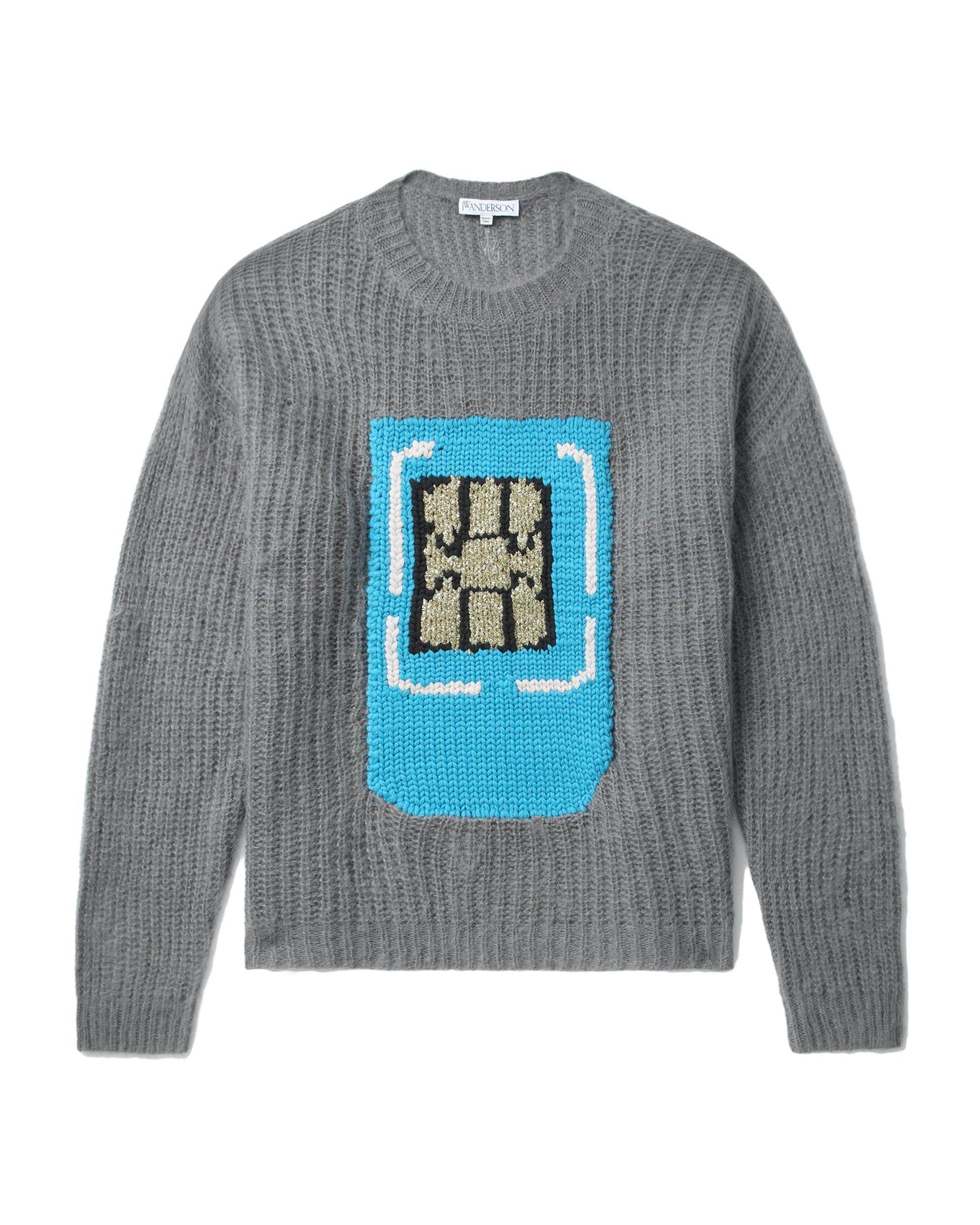
To wear these jeans is to participate in Anderson’s ongoing inquiry into what clothing can mean. They are not a uniform, nor a costume, but something in between—a tool for storytelling that begins the moment you button that second waistband. Pair them with a crisp white shirt and loafers for a studied nonchalance, or throw them on with a worn-in knit and sneakers for something more undone. The beauty is that they adapt to your narrative, not the other way around.
In the end, Anderson is asking us to reconsider what we put on our bodies, not just as a covering, but as a tool for storytelling—a twisted, beautiful, and deeply human story that wraps around the waist and refuses to let go. And in a world that often feels flat, fragmented, and disconnected, that is a proposition worth embracing. The Twisted Denim Jeans are more than a piece of clothing; they are an invitation to feel, to connect, and to wear your heart on your hips.