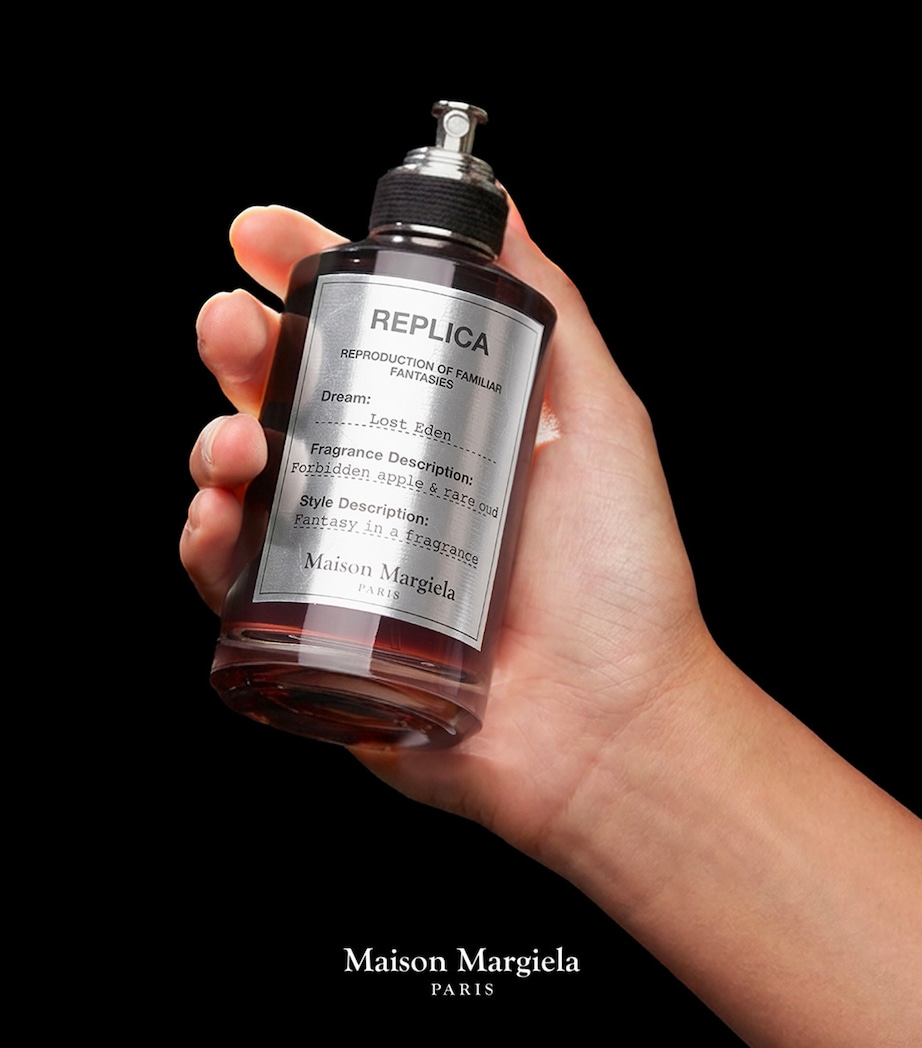
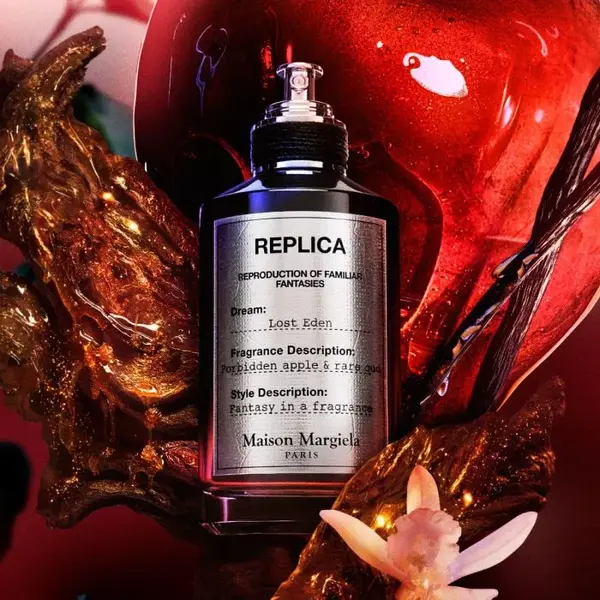
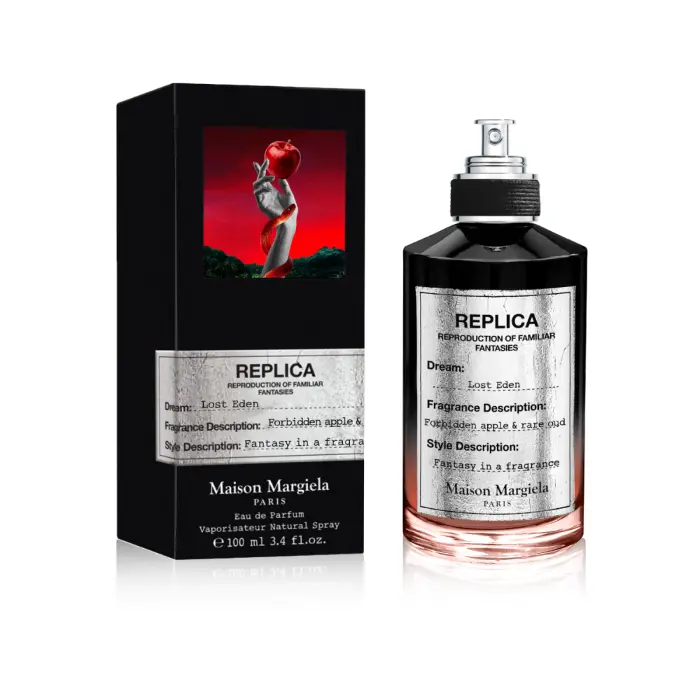
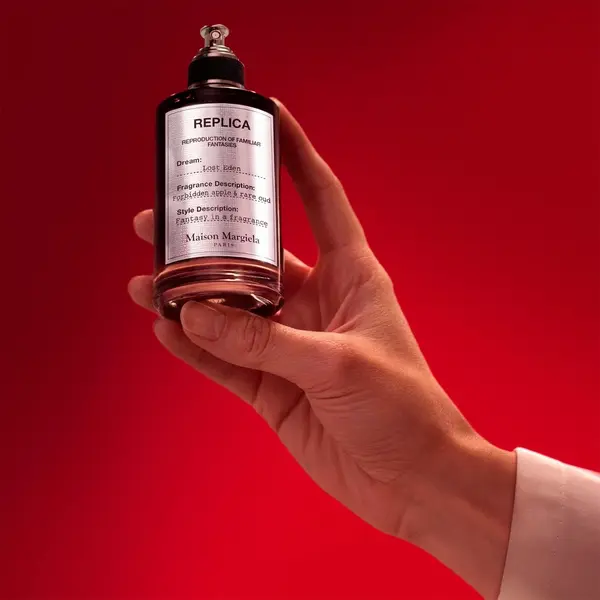
In a fashion landscape increasingly defined by the literal—logos shouted from jacquard, silhouettes reduced to their most recognizable codes—Maison Margiela has always operated in the language of subversion. The house's REPLICA fragrance line, which began as an olfactory archive of shared memories, has long traded in the familiar: a Parisian morning, a lazy Sunday afternoon, a beach at dusk. But with the latest addition, Maison Margiela REPLICA "Lost Eden", the narrative shifts from nostalgia to mythology, trading sun-drenched recollections for something far more primal. The scent builds its entire architecture around a forbidden-fruit accord, a concept that feels both ancient and startlingly contemporary, rendered through the unlikely trinity of candied apple, vanilla, and smoky oud. It is a fragrance that doesn't simply evoke a place or a time—it conjures a state of being just before the fall, suspended in the electric tension between innocence and knowledge.
The Art of Olfactory Tension
The composition of "Lost Eden" is a masterclass in olfactory tension, a quality that has become the signature of the REPLICA line under the creative direction of Glenn Martens, whose recent work at the house has been nothing short of revelatory. The candied apple note is the entry point—bright, glossy, and almost childlike in its sweetness, it recalls the polished fruit of a still-life painting rather than anything found in a modern supermarket. This is not a crisp, fresh apple; it is confected, lacquered, and slightly unnatural, which is precisely the point. It represents the allure of the garden before the bite.
Beneath it, vanilla does not perform its usual role as a comforting, gourmand base. Instead, it is rendered almost translucent, a sheer veil that amplifies the apple's saccharine glow while hinting at something fleshier, warmer, and more human. Then comes the smoky oud, which crashes through the sweetness like a shadow crossing a sunlit lawn. The oud here is not the medicinal, barnyard-heavy variety favored by niche houses; it is clean, ember-like, and dry, providing the necessary foil to the fruit's sticky temptation. Together, these three pillars create a scent that is simultaneously innocent and knowing, a paradox that sits at the very heart of the forbidden-fruit myth.
A House in Cultural Overdrive
This release arrives at a moment when the cultural conversation around Margiela is unusually loud. The recent news cycle has been dominated by the house's radical gestures—from the SS26 campaign that recruited composer Max Richter and a children's orchestra to the decision to share its entire archival history for free on Dropbox, a move that democratizes fashion history in a way few luxury houses would dare. Martens, who has been lauded for getting "better and better" at the helm, is clearly unafraid to test the boundaries of what a heritage maison can be.
In this context, "Lost Eden" feels less like a standalone product and more like a continuation of the house's broader philosophical project: the constant interrogation of memory, desire, and the spaces where they collide. The scent is not merely a perfume; it is a wearable commentary on the nature of temptation itself, a question posed in liquid form about whether we would take the bite if we knew what came after.
Wearing the Fall
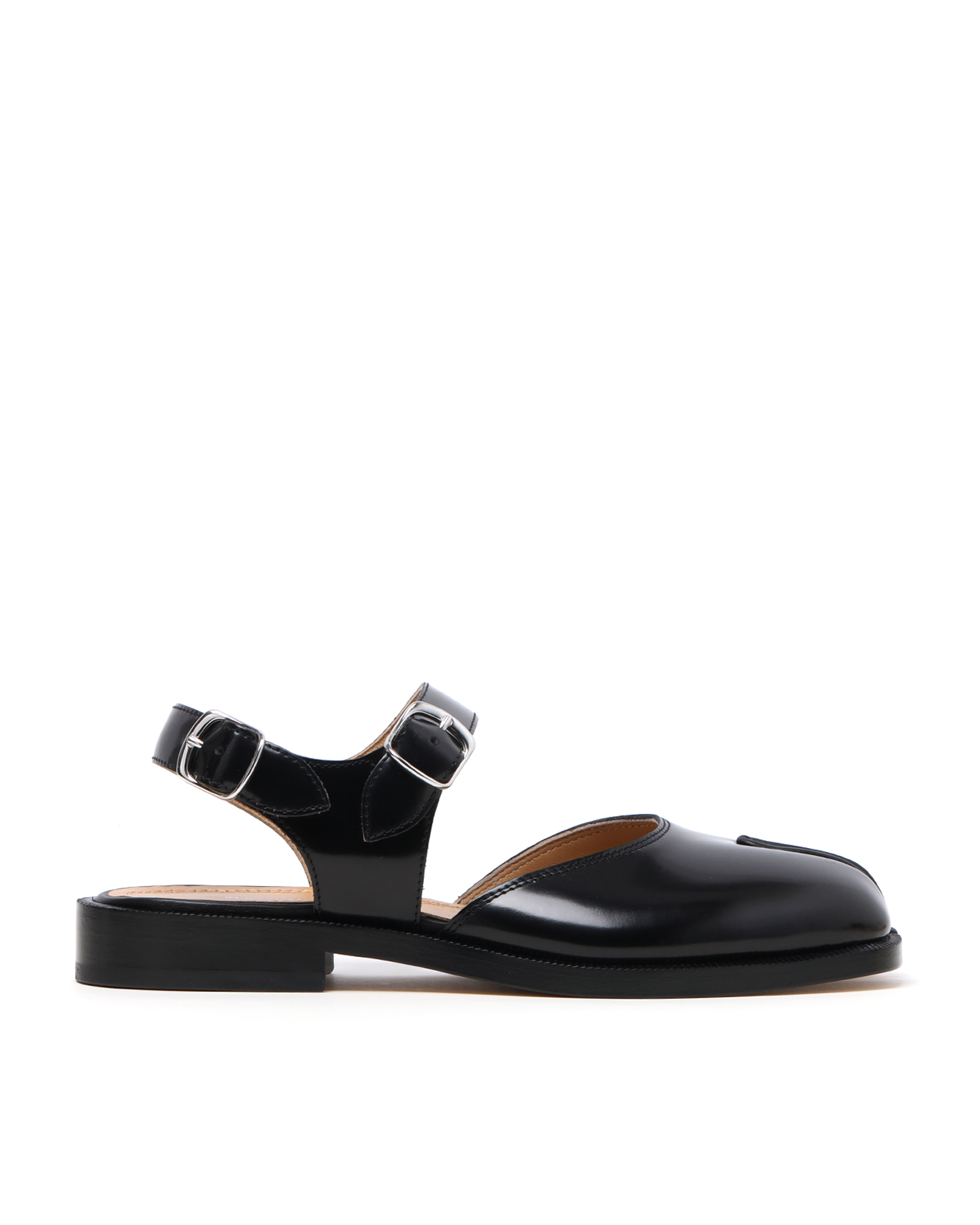
For the wearer, "Lost Eden" is an exercise in controlled risk. It is designed for the individual who understands that true luxury lies not in comfort but in dissonance—the fashion-forward consumer who appreciates the cerebral provocation of Margiela's Tabi shoe or the deconstructed tailoring of the Artisanal line. This is not a scent for the faint of heart or for those seeking mere compliments; it is a statement, worn close to the skin, that signals a sophisticated understanding of the brand's codes.
The candied apple provides an immediate, almost playful accessibility, while the smoky oud grounds it in a darkness that reveals itself slowly throughout the day. It is versatile in its complexity, working as a daytime signature for the creatively inclined or as an evening scent that lingers in a room long after the wearer has departed. In a market saturated with safe, skin-scent minimalist offerings, "Lost Eden" dares to be narrative, to be lush, and to be unapologetically symbolic.
It matters now because we are living through an era of cultural reckoning—a collective awakening to the complexities of desire, morality, and consequence. Maison Margiela has bottled that tension, offering not an escape from the present but a fragrant meditation on the oldest story we know, told with the urgency of a brand that has never been more relevant.