The flip-flop is the least theorized object in the modern wardrobe: a slab of rubber, a V-shaped strap, and a tacit agreement that footwear can be purely functional. MM6 Maison Margiela has spent its recent seasons dismantling exactly this kind of unexamined everyday object, and its collaboration with Havaianas — the Brazilian flip-flop institution — lands as the purest expression of that instinct yet.
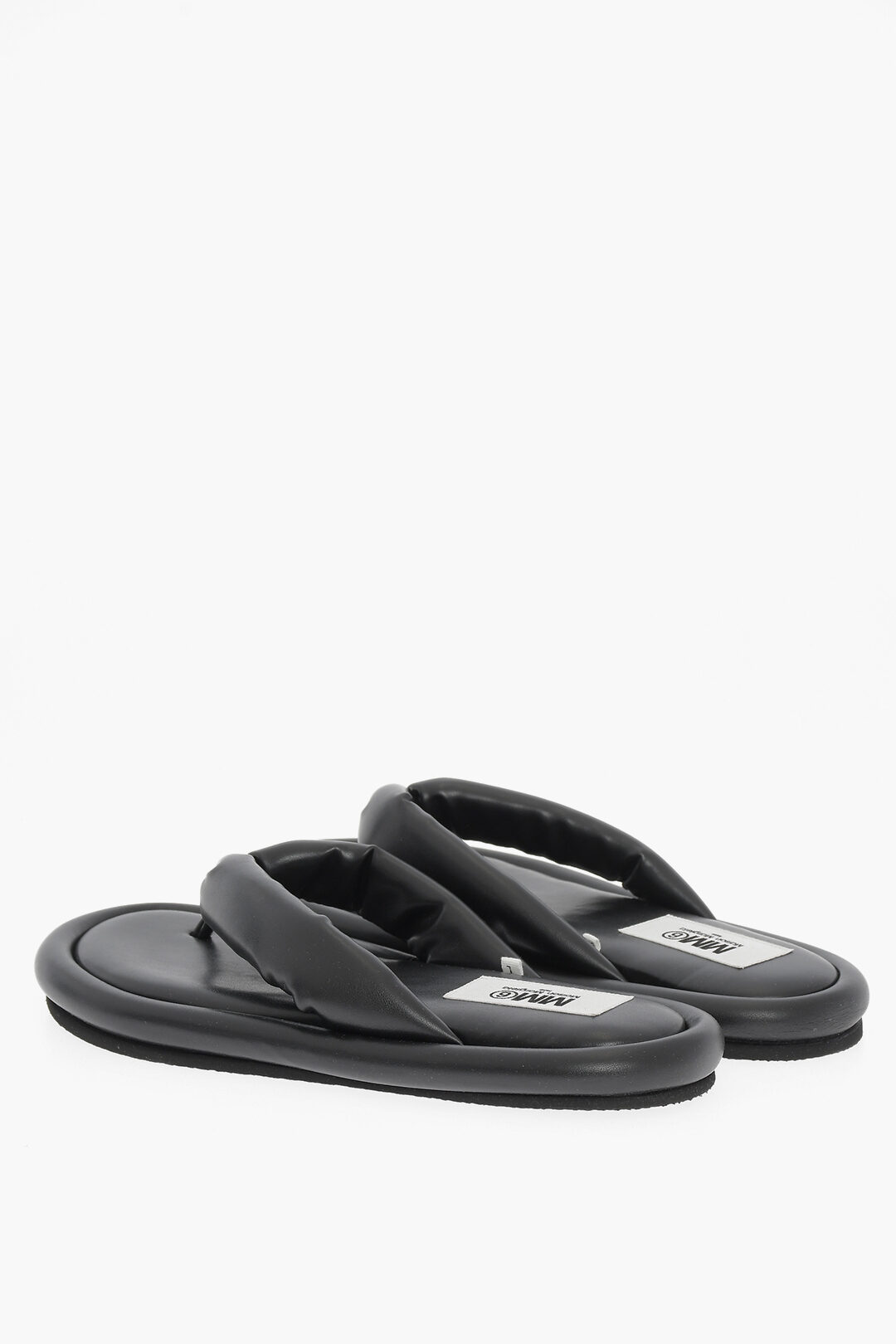
The Havaianas x MM6 Maison Margiela flip-flop with an extra toe does precisely what it says. It adds a sixth toe post to the classic silhouette, splitting the foot's grip into an anatomically impossible arrangement that turns a beach staple into a small, wearable provocation.
A Second Channel for the Toes
The design logic is deceptively simple. Where a standard Havaianas thong relies on a single strap dividing the big toe from its neighbors, the MM6 version introduces an additional post, so the wearer's toes must negotiate a second channel. The effect is immediately legible and faintly unsettling — the foot looks as though it belongs to something not quite human, or to a future in which the human foot has been quietly redesigned.
This is signature MM6 territory. The line has long operated as Maison Margiela's laboratory for re-reading the ordinary: the trench coat cut apart, the shirt that is emphatically *not* a shirt, the everyday garment estranged from itself. The extra toe is the same gesture in miniature, applied to the most casual object imaginable.
Rubber, Restraint, and a Single Intervention
Materials and construction stay true to Havaianas' heritage. The sole is the brand's familiar molded rubber — lightweight, water-resistant, and built on decades of Brazilian manufacturing expertise, a product originally inspired by Japanese zōri sandals and refined into a national icon since 1962.
The MM6 intervention is minimal and precise: the additional toe post, the considered palette, and the discreet co-branding that signals the collaboration without shouting it. Nothing is overbuilt. The subversion is structural, not decorative — which is what makes it land. A novelty shoe that merely printed a logo would be forgettable; one that quietly rewires how a foot interacts with the ground is a different proposition entirely.
Timing Is Everything
Culturally, the timing is sharp. MM6's Spring 2027 ready-to-wear collection, shown to strong reviews, was widely framed as an exercise in subverting everyday wear — the house taking ordinary garments and turning them inside out, literally and conceptually. The Havaianas collaboration extends that thesis beyond the runway and into the street.
It also arrives as Maison Margiela's broader cultural presence intensifies: a forthcoming film about the house's founding mystery, a psychological-thriller-tinged FW26 campaign titled "ANONYMITY," and a steady stream of red-carpet moments. The extra-toe flip-flop is the accessible edge of that momentum — a piece of viral footwear that carries genuine conceptual weight.
Not for Everyone, Which Is the Point
It is not for everyone, and it isn't meant to be. This is for the wearer who understands that fashion's most interesting gestures often happen at the lowest altitude — on the foot, at the beach, in the aisle of a drugstore. It is for the MM6 loyalist who already owns the Tabi and wants the joke, the critique, and the craft in one object. It is also, frankly, for anyone who wants to watch a room recalibrate when they look down.
The extra toe is the entire point: a tiny, deliberate error in the grammar of the flip-flop that makes you look twice, then think.
What matters now is that the collaboration demonstrates how far a single alteration can travel. In an era of logo-slapped partnerships, MM6 and Havaianas have produced something closer to a readymade — an everyday object slightly displaced, and thereby made strange. The flip-flop was never supposed to be interesting. This one is. And it will be on feet, in photographs, and in arguments about what footwear is for, all summer long.