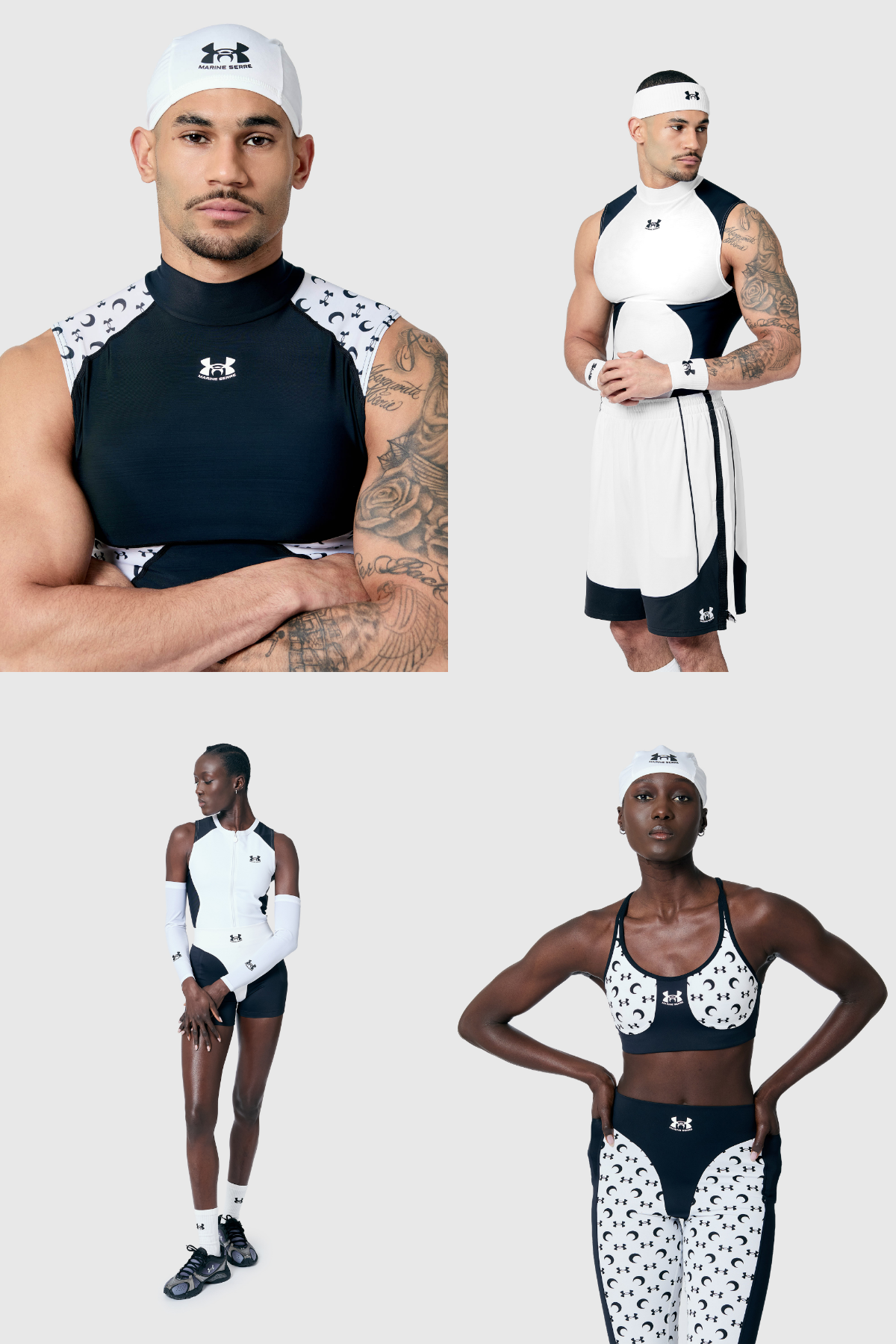
The crescent moon has been everywhere — stretched across couture bodysuits, printed on regenerated silk scarves, even bent around a reworked French folding chair. But its most consequential landing yet might be on technical compression fabric. The Marine Serre x Under Armour 30th Anniversary Capsule is a genuine collision of sensibilities: a Paris-based independent house built on upcycling and apocalyptic romance, and a Baltimore performance giant marking three decades of engineering sweat-wicking, muscle-supporting gear.
That the collaboration exists at all is remarkable. That it arrives while Marine Serre navigates bankruptcy proceedings in France and hunts for new investors makes it something closer to a statement of intent than a simple licensing play.
A New Vision of Performance
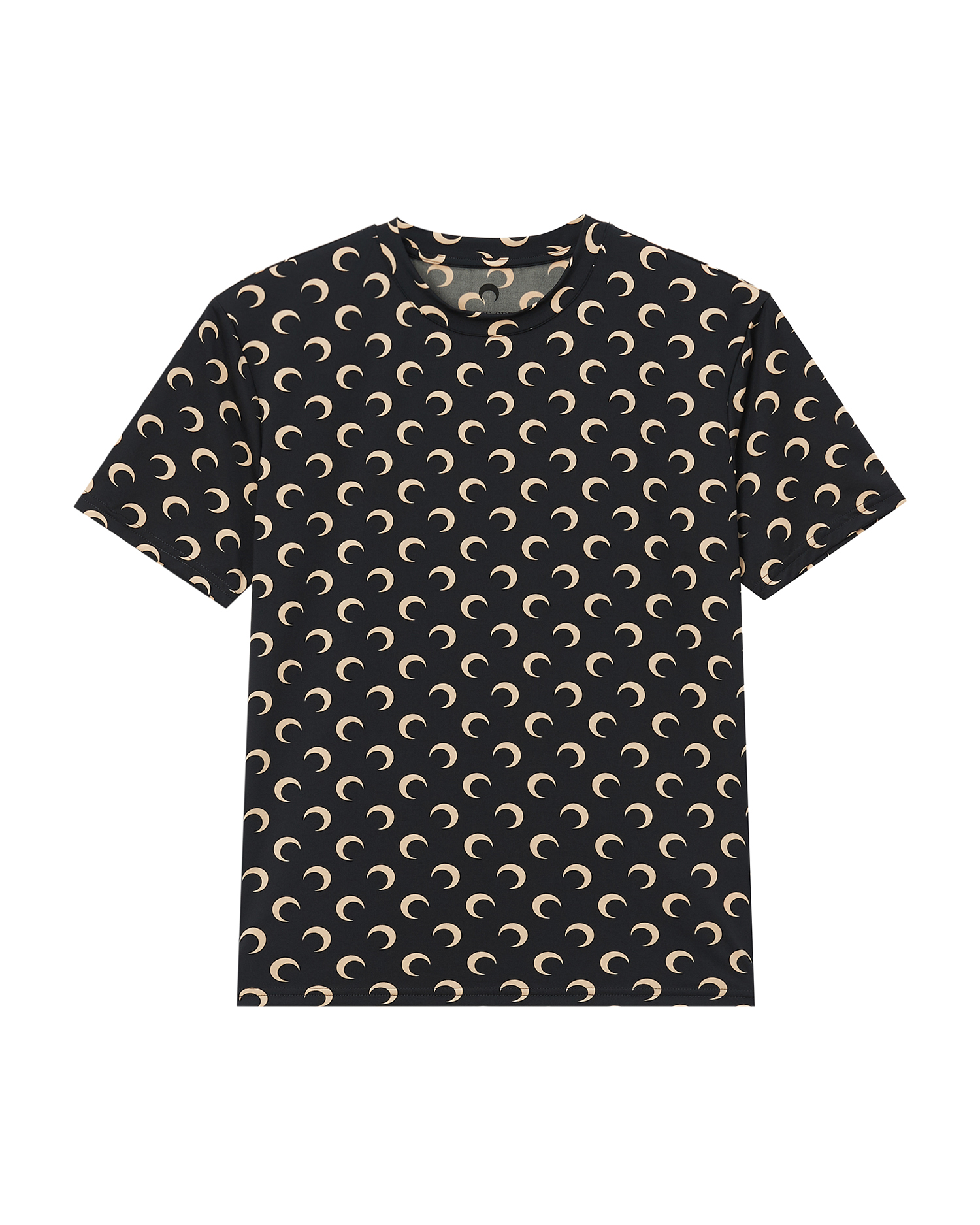
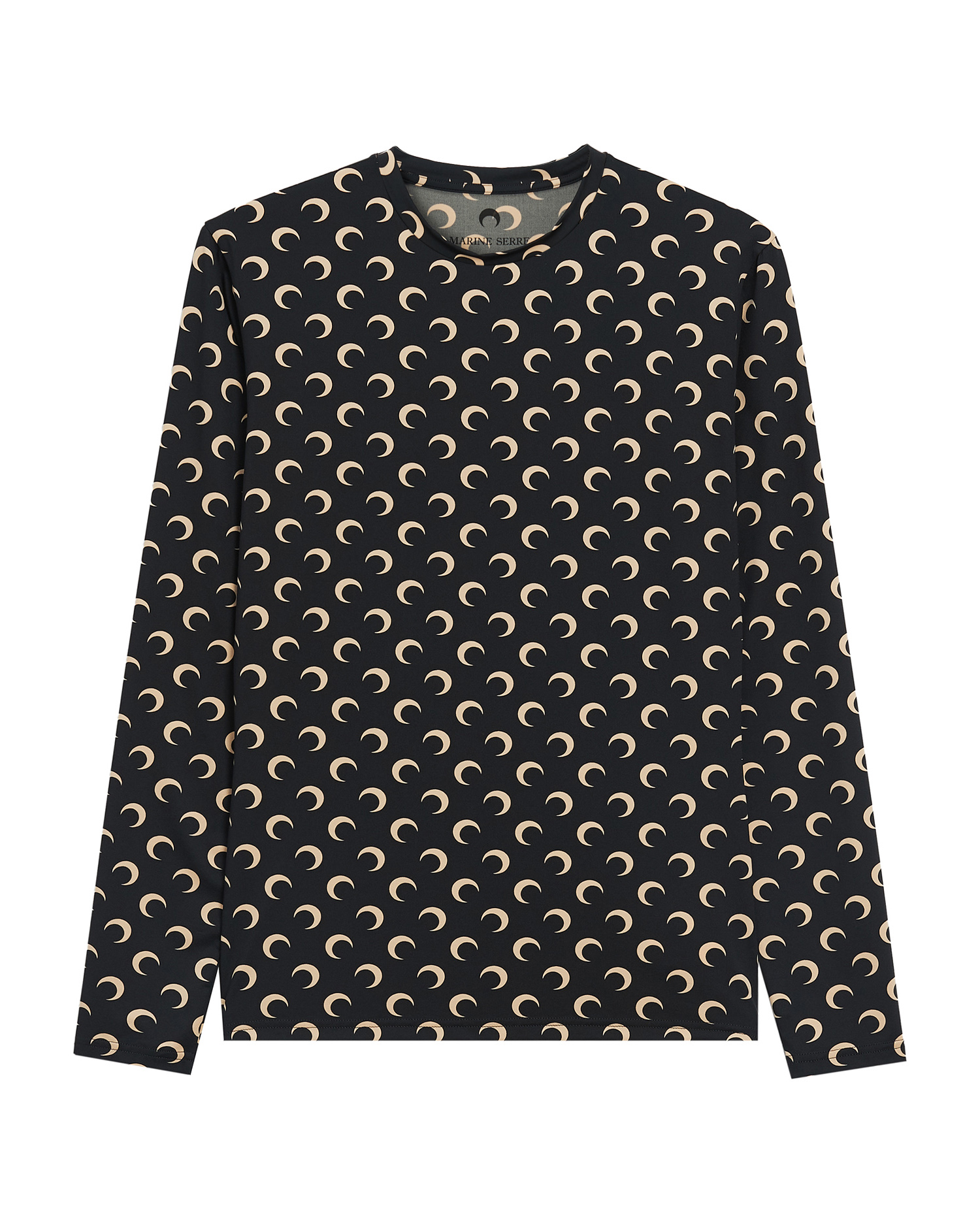
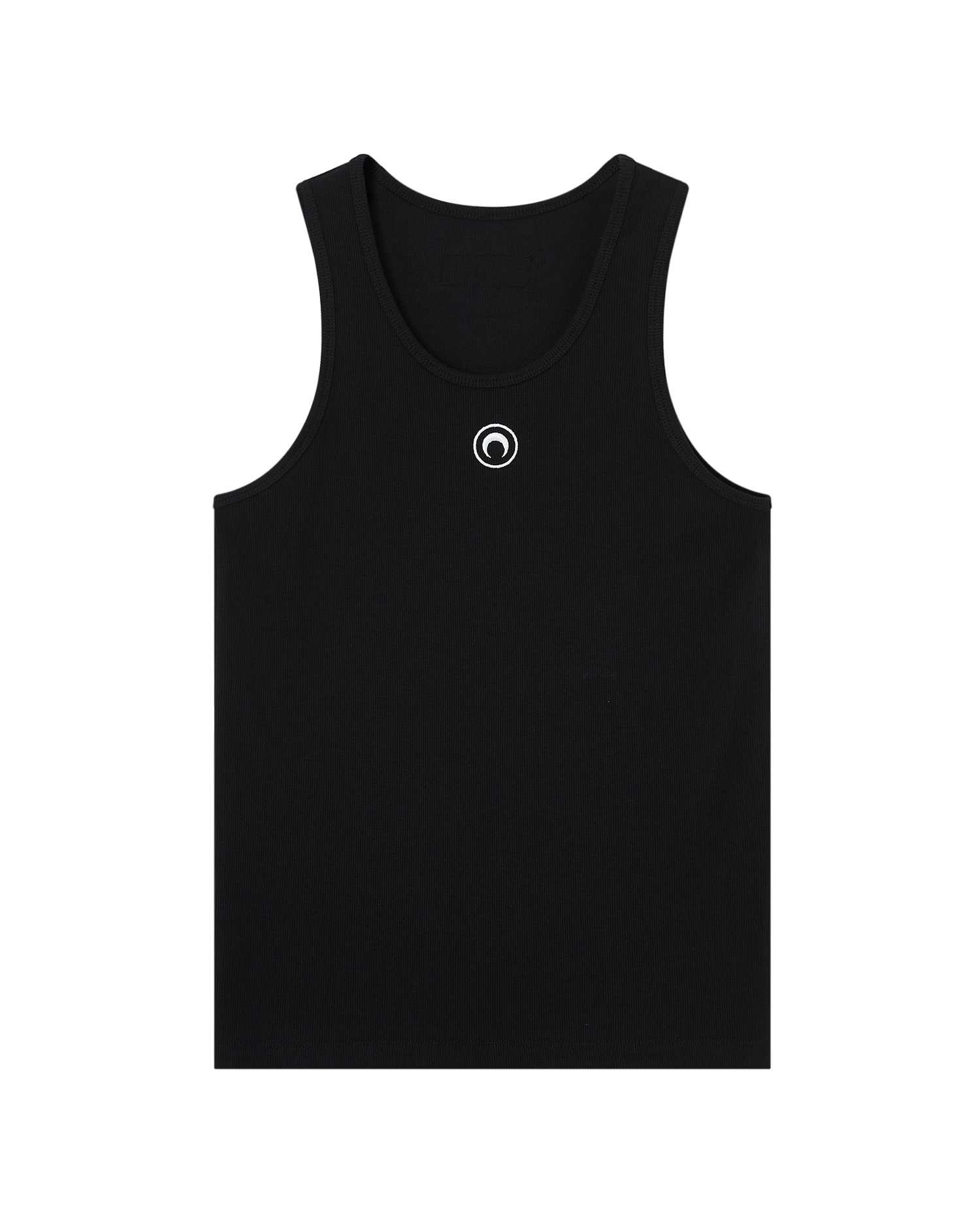
At the center of the capsule sits what the two brands have billed as "a new vision of performance" — moon-logo compression wear that translates Serre's signature crescent into the language of base layers, training tights, and fitted tops. The moon, historically rendered in regenerated jacquard or printed across secondhand textiles, here appears on Under Armour's compression knits: fabrics engineered for moisture management, four-way stretch, and graduated pressure across muscle groups.
The result reads as both fetish object and functional equipment — a bodysuit that could plausibly be worn under a tailored coat to dinner, or through a full training session. That ambiguity is entirely the point. Serre has spent nearly a decade arguing that sustainability and desirability are not opposing forces. Under Armour has spent thirty years arguing that performance and everyday wear should be indistinguishable. The capsule is where those arguments meet.
The Material Argument
Materially, the collaboration leans on Under Armour's technical arsenal — compression textiles with elastane blends, flatlock seams, moisture-transport finishes — while Serre's contribution is largely semiotic and editorial: the moon placement, the color palette, the styling logic that treats activewear as a complete wardrobe rather than a category.
For a designer whose practice is built on regenerating deadstock and recontextualizing the discarded, working with virgin performance fabric is a notable pivot. It will invite scrutiny from the sustainability purists who have followed her since her 2017 LVMH Prize win. The counterargument is pragmatic: compression wear is a category where recycled inputs still struggle to match technical benchmarks, and reaching a mass athletic audience — Under Armour's core constituency — requires meeting that audience on its own material terms.
The Timing
The timing is impossible to ignore. News of the bankruptcy filing and the search for investors broke alongside the brand's continued creative output: the Spring 2027 "The Deep Shine" collection shown in Paris, the FW26 "The Grace of Time" outing, the ARCHETYPE campaign cast from the brand's own team, a Chaisor furniture collaboration, and Suki Waterhouse wearing Marine Serre while promoting *Loveland*.
The Under Armour capsule sits inside that flurry as evidence of a house still capable of securing major partnerships and expanding its moon motif into new territory — from your living room to your gym bag. Whether it functions as a lifeline or a footnote will depend on how the financial restructuring resolves. But the product itself is not a compromise. It is a coherent extension of the Serre worldview: the crescent as a universal symbol, now printed on the fabric that moves with your body.
Who It's For
Not the collector chasing an archive upcycled scarf, and not the athlete who buys compression wear by the multipack. It is for the hybrid consumer — the person who trains and dresses with equal seriousness, who wants their base layer to carry the same visual signature as their outerwear.
It matters now because it demonstrates that a brand in crisis can still produce work with forward momentum, and because it tests whether the moon motif can survive contact with the most utilitarian fabric category in fashion.
On the evidence of the capsule, it can. The crescent has always been Serre's argument that protection and beauty belong on the same garment. Compression fabric, with its grip and its graduated pressure, may be the most literal expression of that idea yet — clothing that holds you, in every sense, while still looking like something you chose.