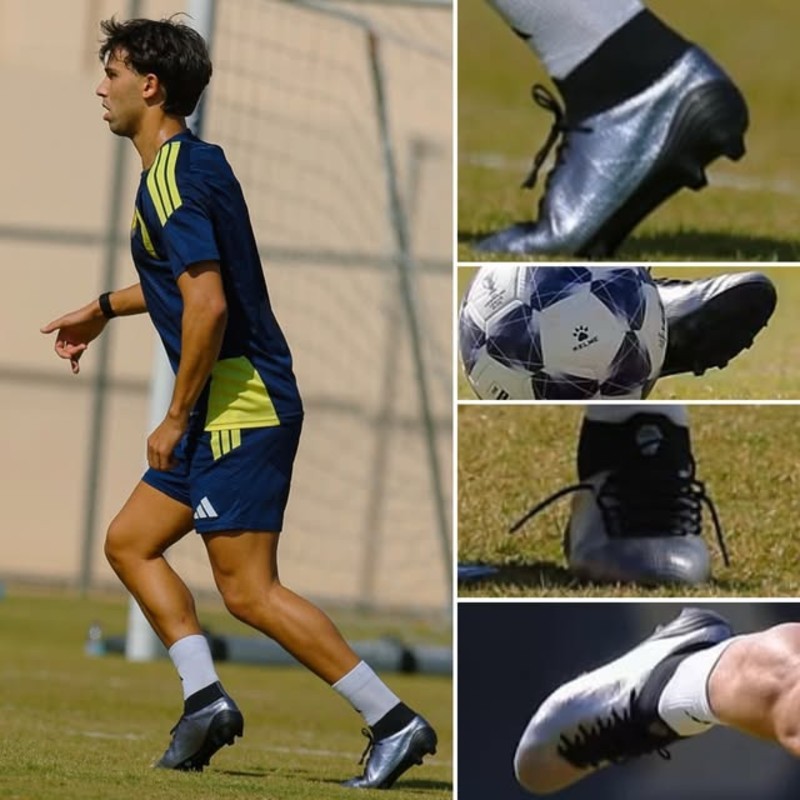
The most telling moment in football footwear this season didn't arrive on a catwalk or in a glossy launch film. It came on a training pitch, laced to the feet of João Félix. The Portuguese forward was photographed wearing an unreleased Mizuno Alpha prototype in a high-cut silhouette — a configuration that deviates sharply from the low-cut Alpha that has anchored Mizuno's speed category since its debut. For a brand historically deliberate in its product cadence, the sighting is freighted with intent. This is not a cosmetic refresh. It is a signal that Mizuno is preparing a bold new football silo, and that Félix — a player whose game is built on improvisational touch and sudden acceleration — has been entrusted with its public unveiling.
The prototype visible on Félix's feet retains the genetic markers of the Alpha line while pushing its architecture in a more enveloping direction. The upper appears to employ the same engineered synthetic skin that made the production Alpha one of the lightest boots in the elite speed tier, but the high-cut collar introduces a fundamentally different ergonomic proposition. Where the low-cut Alpha prioritised unencumbered ankle articulation for pure straight-line sprinting, the high-cut build suggests a boot designed for the modern forward's full movement vocabulary — the lateral cut, the sharp deceleration, the close-control turn. The collar itself reads as a knit or woven composite, seamlessly integrated into the upper rather than stitched on as an afterthought, which points to Mizuno's continuing investment in monocoque construction and reduced seam interference.
A Silo in Motion
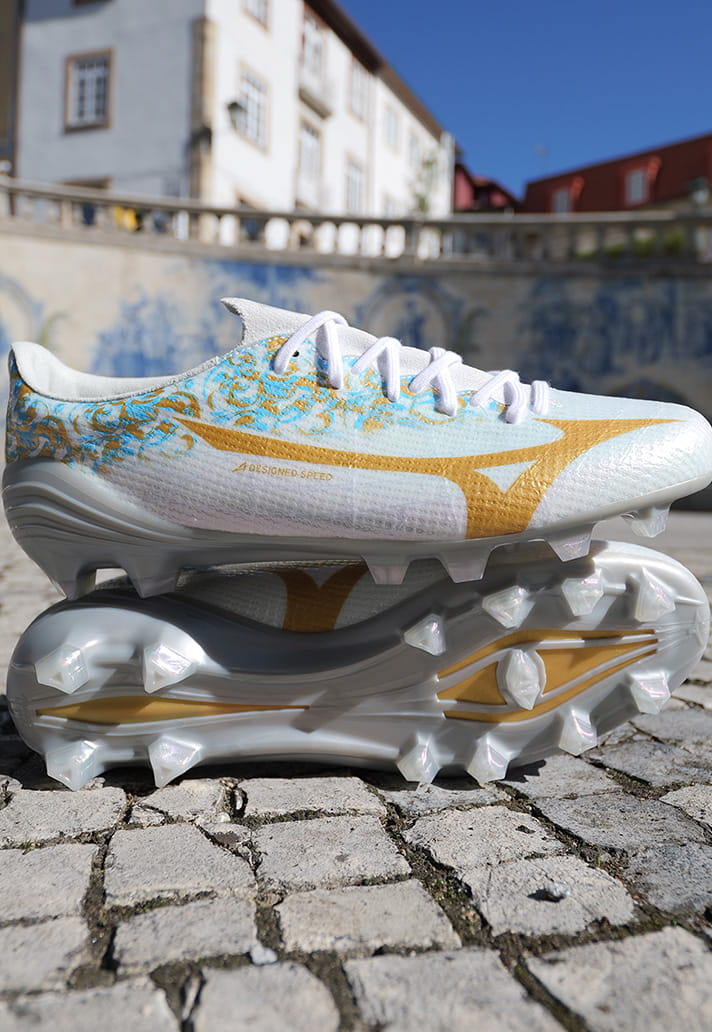
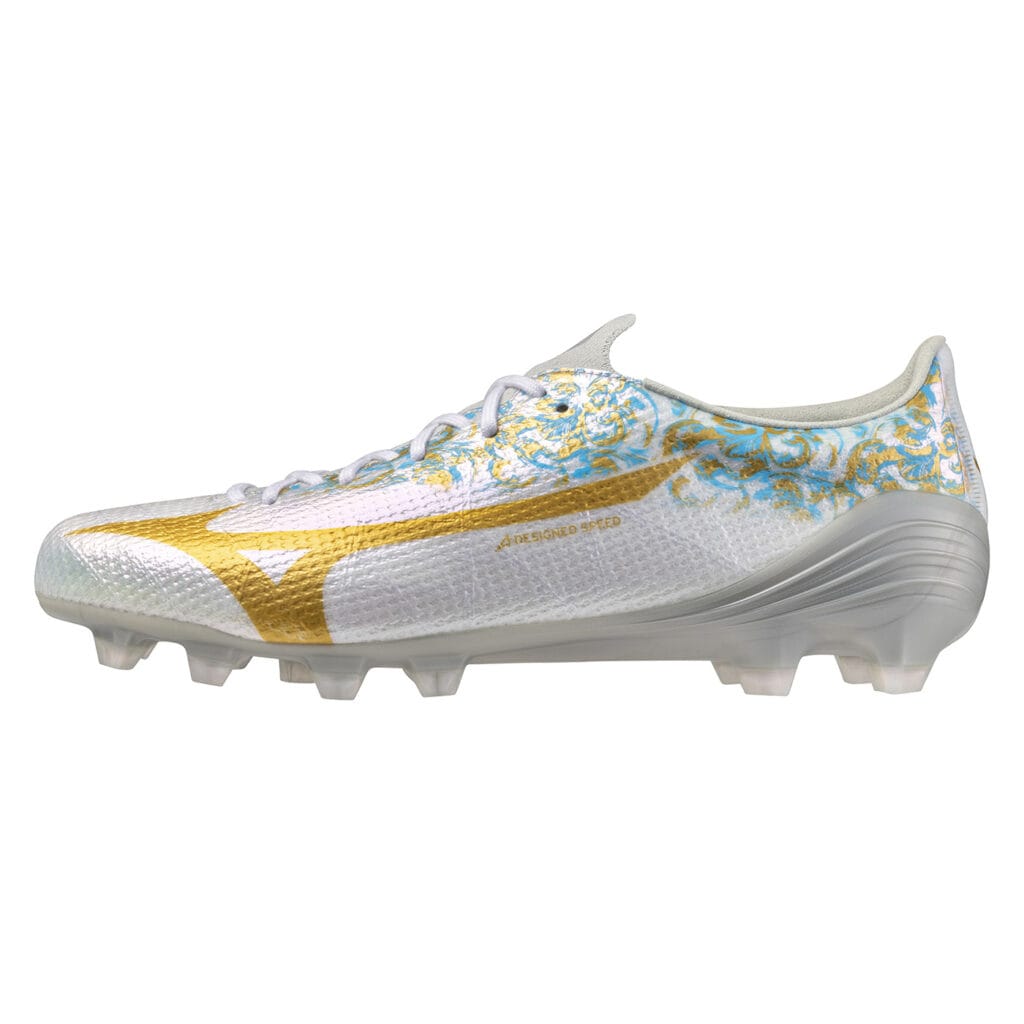
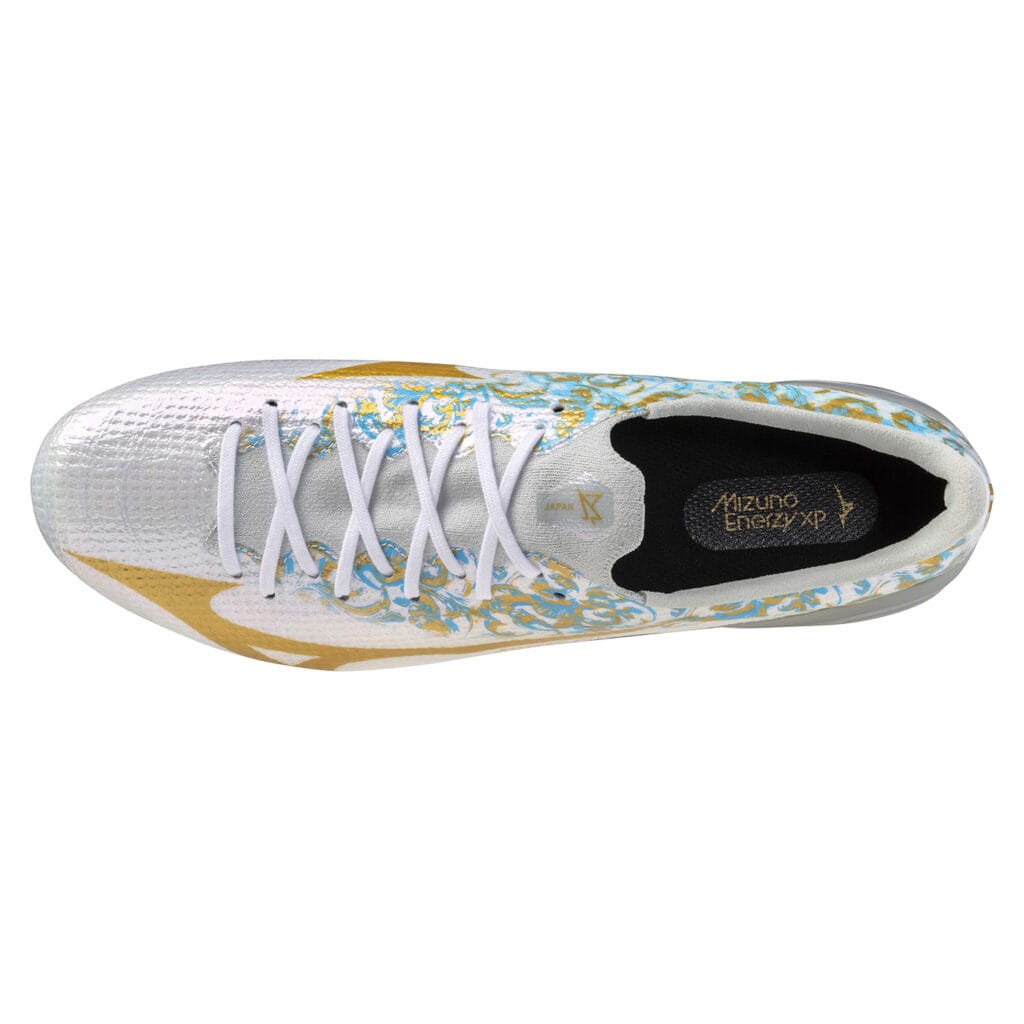
What makes this prototype culturally significant is the timing. Mizuno has spent the past several seasons quietly rebuilding its football credibility, and the Alpha line has been central to that project. The brand's football heritage runs deep — the Morelia remains a benchmark of kangaroo-leather craftsmanship, a boot still worn by professionals who reject the synthetic era entirely. But the Alpha represents Mizuno's argument about the future: that Japanese engineering can compete with the dominant European speed silos on weight, traction and lockdown. A high-cut variant, tested by a player of Félix's profile, extends that argument into a new category. It suggests Mizuno is no longer content to occupy a single lane in the speed market.
Built for the Congested Spaces
The high-cut Mizuno Alpha prototype is, by any reasonable reading, aimed at the attacking player who operates in congested spaces — the second striker, the inverted winger, the number ten who needs ankle support without sacrificing the close touch that defines their game. Félix is precisely this archetype. His involvement is not incidental marketing; it is product validation conducted in the most demanding laboratory available. The boot's silhouette, with its raised collar and streamlined last, reads as a deliberate attempt to bridge the gap between the speed category and the control category — a hybrid proposition that few brands have attempted with conviction.
The Momentum Question
Why it matters now is a question of market momentum. Mizuno's broader product portfolio is enjoying an unusual moment of visibility, from running to golf, and the football division appears determined not to be left behind. The Alpha prototype functions as a statement of ambition: a reminder that Mizuno's football operation retains the appetite to disrupt, not merely to sustain. For the player who has watched the speed-boot market consolidate around a handful of familiar silhouettes, the prospect of a high-cut Alpha — refined in Japan, tested by a forward of genuine international pedigree — is genuinely compelling.
The production version, whenever it arrives, will be judged against high expectations. On the evidence of Félix's testing session, Mizuno appears content to set them. That is the through-line of the Three-Run Bird: a philosophy of patient engineering that refuses to chase trends, preferring instead to let the product speak once it is ready. The high-cut Alpha prototype is that philosophy made visible — an argument, worn on a training pitch, that the future of speed football may not belong solely to the brands that have long defined it.