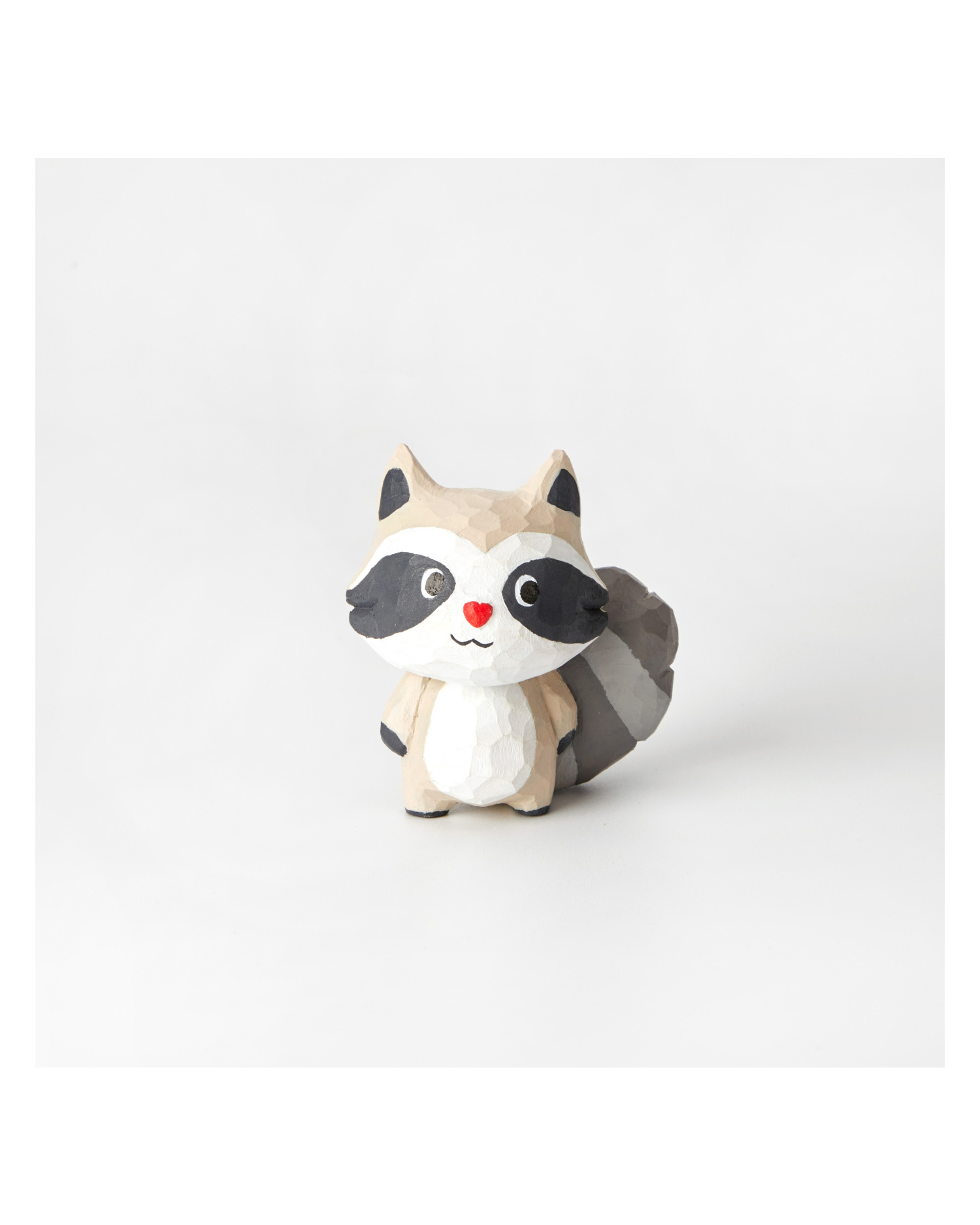
In an industry conditioned to accept punchboard tokens and injection-molded plastic as the price of admission, Mokuomo has staked its identity on a quieter, older craft. The brand's cutesy animal spies board game arrives with hand-carved wooden meeples in every box — not as a stretch-goal luxury, not as a convention exclusive, but as the standard. In a market saturated with shrink-wrapped sameness, that decision reads less like a manufacturing choice and more like a manifesto.
The design language is unmistakably Mokuomo: rounded animal silhouettes rendered in warm, tactile wood, each meeple carved rather than stamped, so no two pieces share precisely the same grain or contour. The conceit — woodland creatures cast as covert operatives — gives the game a whimsical, storybook esprit that the physical components reinforce rather than merely illustrate. Where most publishers treat components as delivery vehicles for rules, Mokuomo treats them as the argument itself. The meeples are the product; the game is what happens around them. That inversion is precisely what makes the box worth owning.
The Case for Imperfection
Materials matter here, and Mokuomo clearly knows it. Hand-carving introduces natural variation in weight, finish, and figure — the kind of imperfection that collectors have long prized in everything from mid-century wooden toys to artisanal chess sets. The result is a set that ages rather than degrades, developing patina with play instead of scuffing into anonymity. In a hobby increasingly conscious of plastic waste and disposable production, a game that ships with carved wooden components positions itself on the right side of a growing cultural conversation about what we keep and why.
Reviving a Tradition, Pushing It Forward
That conversation has a history. Wooden meeples have been a hallmark of European-style board gaming since the 1990s, when the now-iconic humanoid silhouette became shorthand for thoughtful design. But the mainstream industry largely abandoned wood for cost-efficiency, reserving it for anniversary editions and premium reprints. Mokuomo's insistence on carving every piece — for every box, at every price tier — revives that tradition while pushing it somewhere new: toward the collectible. The animal spies theme compounds the effect. These aren't anonymous workers; they're characters, each with a species, a silhouette, a personality legible at arm's length. Players don't move pawns. They deploy agents.
The Collector's Calculus
The timing is not incidental. As board gaming's collector market matures — fueled by deluxe editions, painted miniatures, and a thriving secondary trade in out-of-print treasures — the appetite for genuinely differentiated physical objects has never been sharper. A mass-produced plastic meeple is fungible. A hand-carved wooden meeple is not. Each box becomes a small edition unto itself, its contents shaped by a human hand rather than a mold cavity. For completionists, that's a compelling hook; for casual players, it's a reason to keep the box on the shelf rather than in the closet. The recent attention the game has drawn — including a write-up from Wargamer whose author confessed to being "obsessed" — suggests the market has noticed exactly this distinction.
Who It's For
Certainly the design-literate gamer who has grown weary of component bloat — boxes stuffed with plastic that adds volume but not meaning. Certainly the collector drawn to objects with craft provenance, the sort who appreciates that a carved figure carries the trace of its making. And certainly the gift-giver, because a game with hand-carved wooden pieces announces its quality before a single rule is read. This is a box that looks like something on a coffee table, not something to be shuffled into a shelf of identical rectangles.
Why it matters now is simpler still. Board games are increasingly judged not only by how they play but by what they are — objects of design, of craft, of lasting value. Mokuomo has built its animal spies game around that standard rather than treating it as an afterthought, and in doing so has produced something the hobby rarely sees: a mainstream release with the soul of a limited edition. The meeples are small. The statement is not.