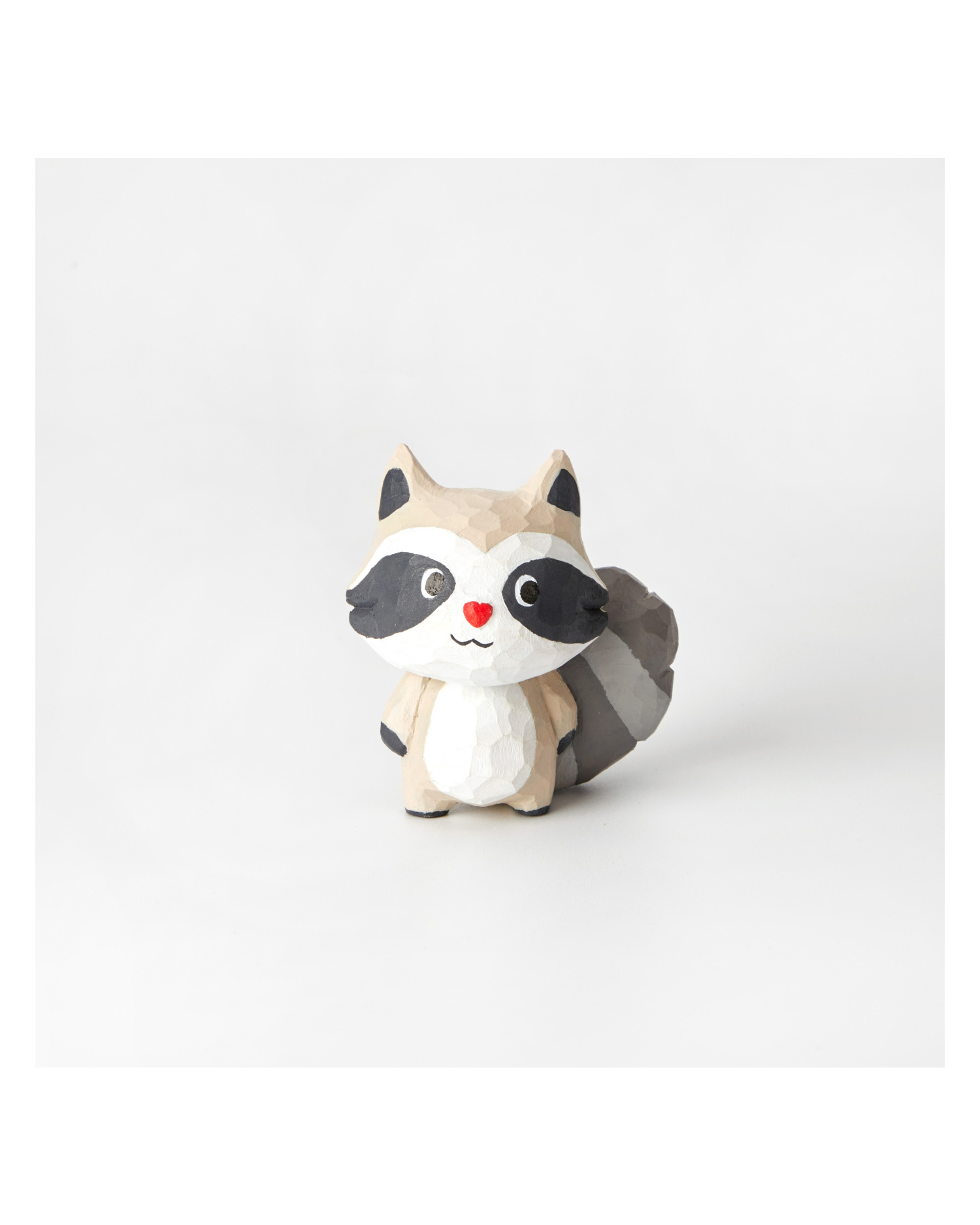
The board game world has spent the past decade chasing plastic. Minis have grown more elaborate, inserts more engineered, boxes heavier—yet the most quietly radical object in the hobby right now fits between two fingers. Mokuomo's hand-carved wooden meeples are exactly what they sound like: the classic little person-shaped game token, rendered not in injection-molded ABS but in carved timber, each one shaped by hand and bearing the small irregularities that machines are built to eliminate.
If you've seen them lately, it's likely because of *Animal Spy*, a cutesy deduction game that ships with hand-carved wooden meeples in every box—a production decision so unusual that Wargamer's reviewer confessed to being obsessed. The meeples, not the game, are the story.
The Material Is the Message
What distinguishes a Mokuomo meeple begins with the wood itself. These are cut from solid hardwood—walnut, cherry, maple, and beech among the house favorites—selected for tight, consistent grain so that the delicate waist and shoulder of the classic meeple silhouette hold up to handling. Each piece is carved and then finished by hand, sanded to a softness that feels closer to a well-worn chess piece than a toy, and treated with oils or waxes rather than the thick lacquers that give mass-market components their faintly chemical sheen.
The result is a token with weight and warmth, one whose color deepens with use and whose surface picks up the patina of actual play. Run a thumb across one and you'll find tool marks, minute asymmetries, the evidence of a person's hand—the very qualities that make an object feel owned rather than merely acquired.
Reclaiming the Meeple
That tactility is the point, and it's also the cultural argument. The meeple has spent twenty years as the universal symbol of the modern hobby—a shape so recognizable it functions as shorthand for the entire tabletop renaissance. But ubiquity has a cost: the plastic meeple became disposable, the thing you scoop into a bag without a second glance.
Mokuomo's carving reverses that relationship. By rendering the meeple in wood and by hand, the company reframes it as an artifact—something closer to the hand-carved game pieces of nineteenth-century Europe, when chess sets, dominoes, and skittles were made by craftspeople and passed down rather than replaced. There's a deep irony in the fact that the hobby's most futuristic, miniature-saturated moment has produced an appetite for exactly this: small, honest, analog objects with grain you can see.
Who They're For
These meeples are not, it should be said, for everyone. They cost more than the tokens that come in the box, and they demand a certain care—wood does not appreciate being left in a hot car or dropped from height onto stone. But for the player who has accumulated shelves of games and feels the pull of something more personal, they make a compelling case.
They suit the solo gamer who wants a tactile, meditative component to handle during a long think. They suit the host whose table has become a gathering place and who wants the objects on it to feel considered. They suit the collector who has quietly begun replacing plastic components with wooden ones—upgraded resource tokens, custom inserts, artisanal dice—as a way of investing the hobby with permanence. And they suit anyone who has ever wished that the little wooden person in their hand felt as good as it looked.
Why Now
Because the hobby is maturing, and maturing audiences ask different questions of their objects. The novelty of more—more minis, more expansions, more plastic—has begun to give way to an appreciation of better: fewer pieces, made well, kept longer. Mokuomo's hand-carved meeples sit precisely at that turn.
They take the most ordinary component in board gaming and restore to it the dignity of craft, reminding players that the things we touch while we play are not incidental to the experience. They are the experience—small, warm, and made to be held.