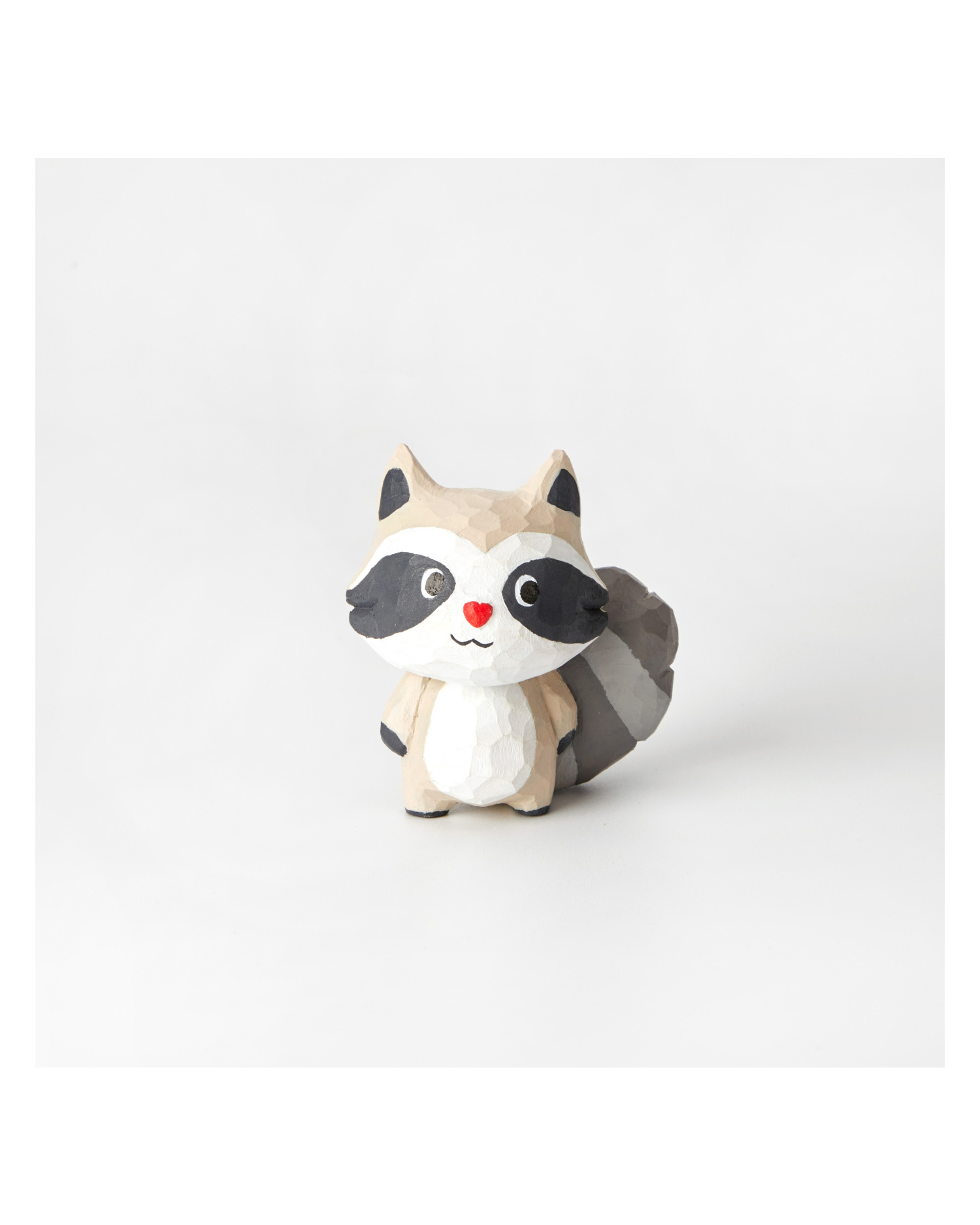
In an industry that has spent three decades perfecting the economics of cardboard and plastic, the idea that a publisher would voluntarily put something hand-carved into every box reads almost like a provocation. Yet that is precisely what Mokuomo has done, and the recent arrival of its cutesy animal spies board game—which ships with hand-carved wooden meeples in every copy—has made the proposition impossible to ignore. Wargamer's recent coverage confessed to being obsessed, and the reaction is understandable: this is not a deluxe upgrade tier or a limited Kickstarter stretch goal, but a baseline commitment to craft in an era of industrial sameness.
The meeples themselves are the heart of the story. Each piece is carved by hand from wood, which means no two are identical—grain patterns shift, silhouettes carry the faint asymmetry of the human hand, and the tactile surface is warm and lightly textured in a way that molded polystyrene can never be. Where mass-produced meeples are stamped out by the tens of thousands with uniform precision, these are individually shaped components, closer in spirit to the carved game pieces of earlier centuries than to anything on a modern retail shelf.
The Anti-Plastic Statement
The animal-spy theme gives the line its charm—each figure reads as a distinct little character rather than an abstract token—but the underlying appeal is material honesty. That material choice situates Mokuomo within a longer cultural tradition. Wooden gaming pieces are among the oldest artifacts of play, and carved animals in particular carry folk-art DNA that stretches from Alpine toy workshops to Japanese kokeshi and netsuke carving, where small functional objects were elevated into collectible art.
The contemporary board game boom has largely abandoned that lineage in favor of cheap, uniform plastic—defensible on cost, less so on feeling. By returning to hand-carved wood, Mokuomo reconnects the tabletop hobby with the crafts tradition it grew out of, and it does so at a moment when players are visibly hungry for objects that feel made rather than manufactured. The rise of premium components, bespoke inserts, and display-worthy shelf presence all point the same direction: the hobby is maturing, and its audience wants components with a soul.
The Patina of Play
What distinguishes these meeples from mere novelty is how they function in play. Board games are tactile experiences—pieces are picked up, moved, caressed while thinking, passed between hands—and hand-carved wooden meeples transform that routine physicality into something quietly pleasurable. They develop a patina with use; the edges soften, the wood darkens slightly, and the set accrues the marks of shared evenings and contested victories.
In this sense the pieces are not merely components but collector's objects that record their own history, which is exactly the quality that has made the Wargamer write-up resonate with readers who expected nothing more than a quirky animal spy game and found themselves thinking about the box as an heirloom instead. The grain deepens, the silhouettes settle into familiarity, and what began as a novelty becomes something you'd be reluctant to swap out for a shinier edition.
Who It's For
The product is aimed squarely at players who care how a game feels in the hand as much as how it plays on the table—collectors, component enthusiasts, gift-buyers looking for something that photographs beautifully and survives years of use, and lapsed hobbyists drawn back by the promise of craft. It also speaks to a broader audience: design-minded consumers who treat a well-made game as an object for the living room shelf, not just the storage closet.
For them, Mokuomo's hand-carved meeples are the rare case where the production story and the play experience are one and the same. You don't have to choose between a game that plays well and an object that looks good sitting out—the carved animal in your hand is both, and the box it came in earns its place in the room.
Why it matters now is simple. The board game market is saturated with competent, interchangeable product, and differentiation increasingly comes from touch, texture, and provenance. Mokuomo has bet that players will pay attention to a box where every piece was shaped by a carver's hands—and the early reception suggests the bet is landing. In a medium built on cardboard and plastic, a small carved animal is a quietly radical thing: proof that the components of play can themselves be worth collecting, and that the philosophy behind a box can be felt in the palm of your hand long before the first turn is taken.