Daisuke Obana has spent more than two decades proving that restraint is its own form of radicalism. Through N.HOOLYWOOD, the Japanese designer has built a reputation on precise tailoring, archival obsession, and a refusal to chase spectacle—a philosophy that has quietly made him one of the most respected figures in Tokyo menswear. His TEST PRODUCT EXCHANGE SERVICE line, conceived as a kind of laboratory for utilitarian garment-making, has always been where that rigor meets the everyday. And its latest output, a collaboration with the storied Japanese bagmaker PORTER, arrives at a moment when the designer's cultural stock has rarely been higher.
Vogue and WWD have chronicled his Fall 2026 and Spring 2027 collections, and a string of high-profile linkups—Brooks Brothers, Champion, Teva, KEEN, DESCENTE—has cemented his cross-category reach. Yet it is this PORTER capsule that deserves the closest attention, because it does something rare: it treats the modular pouch not as an accessory but as the collection's organizing principle.
A System, Not a Singular Object
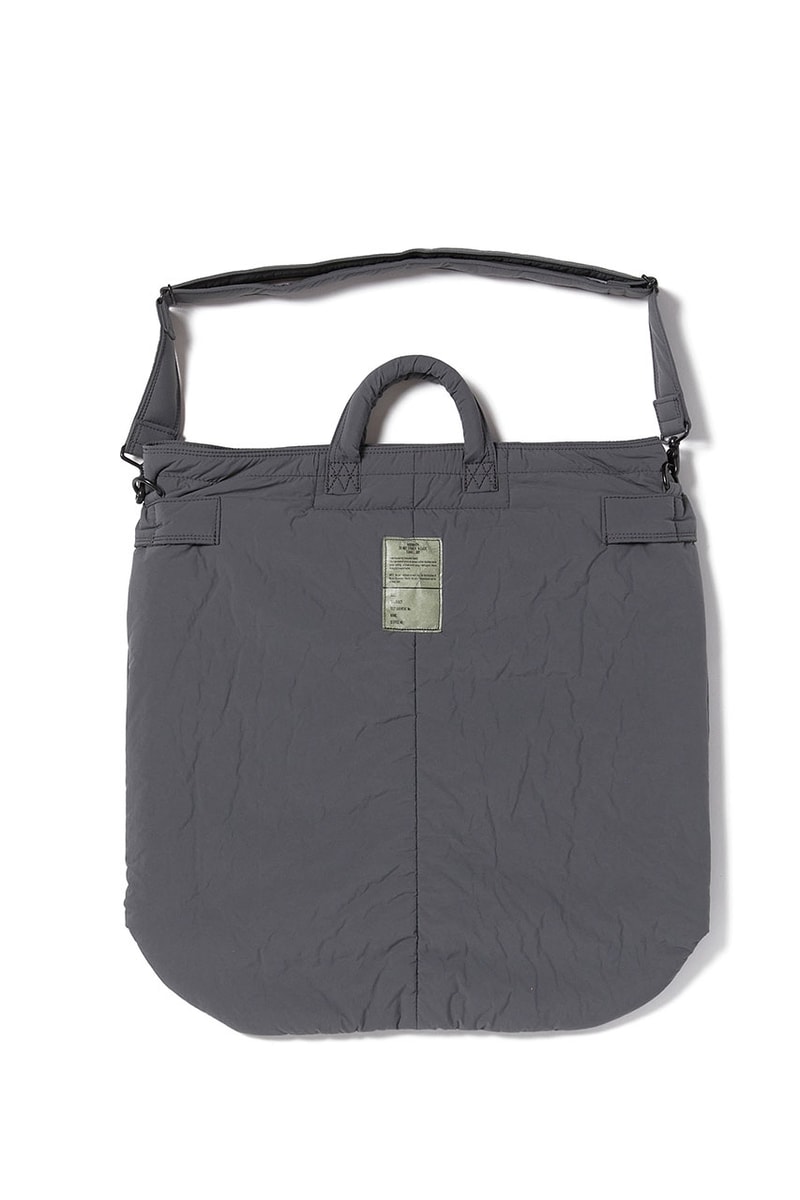
The design language is unmistakably Obana. Each piece is built around a modular system in which pouches attach, detach, and reconfigure across a host of carriers—shoulder bags, waist packs, and tote configurations—so that a single purchase becomes a flexible toolkit rather than a fixed object. The pouches are the focal point, deliberately foregrounded rather than hidden inside some larger silhouette.
Hardware is functional and unshowy; straps are adjustable and cleanly finished; the geometry is squared-off and disciplined, the kind of shape that reads as military surplus one moment and minimal streetwear the next. There is no logo noise, no decorative flourish—only the quiet confidence of things built to work.
The Fabric Story
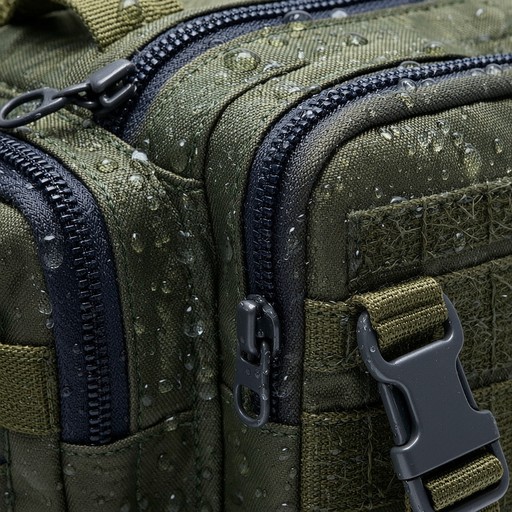
Materials follow the same logic. PORTER, a division of Yoshida Kaban that has been making bags in Japan since 1935, brings its signature high-tenacity nylon and meticulous stitching to the table, while the N.HOOLYWOOD side contributes a sharper editorial eye. The result is a fabric story that prizes durability, light weight, and a matte hand—nylon that resists abrasion, sheds a light rain, and ages with the sort of patina that rewards use rather than punishing it.
Zippers run smoothly and are taped or bound where it counts; seams are reinforced at stress points; interior organization is considered without being fussy. This is the TEST PRODUCT EXCHANGE SERVICE ethos made tangible: garments and goods that treat the wearer as someone who actually moves through the world.
Two Houses, One Belief
Culturally, the collaboration sits at a fascinating intersection. PORTER is a national institution in Japan, its tankers and waist bags a fixture of both salaryman commuting and global streetwear canon. N.HOOLYWOOD is the designer's designer's label—beloved by people who read lookbooks the way others read novels. Bringing them together is not a stunt but a natural convergence of two Japanese houses that share a belief in quiet utility over loud branding.
It also reflects a broader shift in menswear: as silhouettes grow more relaxed and layering more complex, the modular pouch has become the practical answer to carrying the increasing number of small essentials—phone, cards, keys, cables, a compact camera—without resorting to a bulky backpack. Obana is simply formalizing what the streets have been improvising for years.
Who It's For
It is for the discerning everyday carrier—the commuter, the traveler, the design-literate minimalist who wants one system that adapts rather than five bags that don't. It suits the N.HOOLYWOOD loyalist who already trusts Obana's eye, and the PORTER collector drawn to a limited, well-considered release. It is not for those who need a single do-everything backpack; it is for those who understand that modularity is a philosophy, not a gimmick.
Why it matters now is simple. In a market saturated with collaborations that amount to little more than a logo swap, PORTER x N.HOOLYWOOD offers something more substantial: a genuinely considered system, made by two houses that have earned their reputations through decades of quiet, obsessive craft. The pouch is the point—and in Obana's hands, that is more than enough.