In the pantheon of Japanese streetwear, few names carry the gravitational pull of NEIGHBORHOOD. Founded by Shinsuke Takizawa in 1994, the Tokyo-based label has spent three decades refining a singular vision: clothing that fuses the raw energy of biker and punk subcultures with an almost obsessive commitment to construction. The NEIGHBORHOOD NHBD Craft Zip-Up Hoodie distills that philosophy into a single garment — a piece that reads as effortlessly casual at a glance yet reveals its rigor the moment you handle it.
This is not a hoodie designed to disappear into a drawer. It is a hoodie designed to anchor a wardrobe.
Design Language: Restrained, Utilitarian, Quietly Assertive
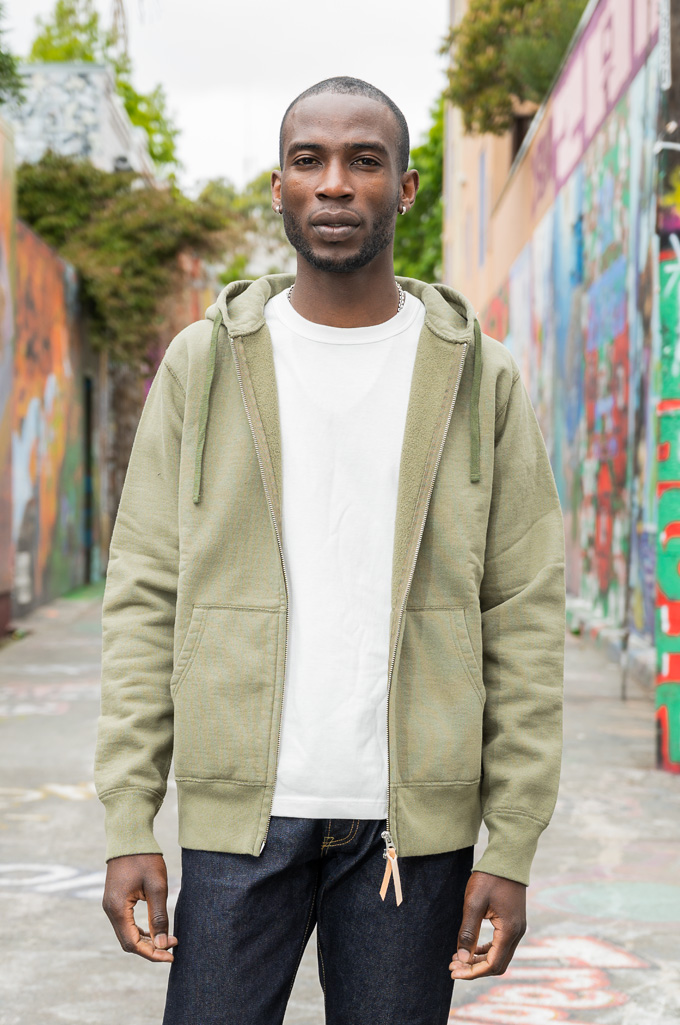
The design language here is unmistakably NEIGHBORHOOD. The silhouette is cut with intention — roomy through the shoulders and chest without veering into shapelessness, with ribbed cuffs and hem that hold their structure through years of wear. The full-length zip runs clean and substantial, framed by a double-layer hood that stands with purpose rather than collapsing.
Signature branding appears with the label's characteristic economy — a chest hit, a sleeve detail, the NHBD wordmark rendered with the precision that has made the brand a reference point for collectors from Harajuku to Los Angeles. Nothing shouts. Everything communicates.
The Material Story: Where Craft Becomes Non-Negotiable
What separates the NHBD Craft Zip-Up Hoodie from the endless sea of premium basics is the material story. NEIGHBORHOOD has long operated at the intersection of heritage manufacturing and contemporary streetwear, and this piece exemplifies that balance.
The fabric is a heavyweight loopback cotton, dense enough to drape with weight and soft enough to break in beautifully over time. The "Craft" designation in the name is not marketing decoration — it signals a construction standard rooted in Japanese textile tradition, where stitching density, seam finishing, and dye consistency are treated as non-negotiables. The result is a hoodie that feels broken-in on day one and only improves with each wash.
Cultural Timing: Substance Over Saturation
Culturally, the timing could hardly be more pointed. Streetwear has spent the past several years in a reckoning over what "premium" actually means — a correction away from logo saturation and toward substance. The NEIGHBORHOOD NHBD Craft Zip-Up Hoodie arrives squarely in that moment.
It belongs to a lineage that predates the hype cycle: Takizawa's label was building elevated essentials before the term existed, collaborating with everything from fragment design to Adidas while never diluting its core identity. Wearing NEIGHBORHOOD has always signified a certain literacy — an understanding that the most enduring pieces are the ones that reward a second look rather than a first glance.
Who It's For: The Curation Phase
This hoodie is for the person who has moved past the acquisition phase and into the curation phase. It suits the collector who appreciates the archival weight of a Japanese label that has never chased trends, the creative professional who wants a layer that works as hard in a studio as it does on a weekend, and the newcomer drawn to streetwear's craft-first vanguard.
It layers cleanly under a coach jacket or over a heavyweight tee, pairs with denim or technical trousers, and transitions across seasons without complaint. That versatility is the point — it is a foundational piece, not a statement piece, and foundations are what separate a wardrobe from a pile of clothes.
Why does it matter now? Because the market is saturated with hoodies that look the part and fall apart by spring. The NEIGHBORHOOD NHBD Craft Zip-Up Hoodie represents the opposite proposition: a garment built by a house that has spent thirty years earning the right to charge for quality, and that continues to treat craft as the ultimate form of self-expression.
In an era of disposable drops and algorithmic trends, choosing a piece like this is a deliberate act. It says you understand that true style is not what you wear once, but what you reach for again and again — and that the best investments are the ones you never have to think about.