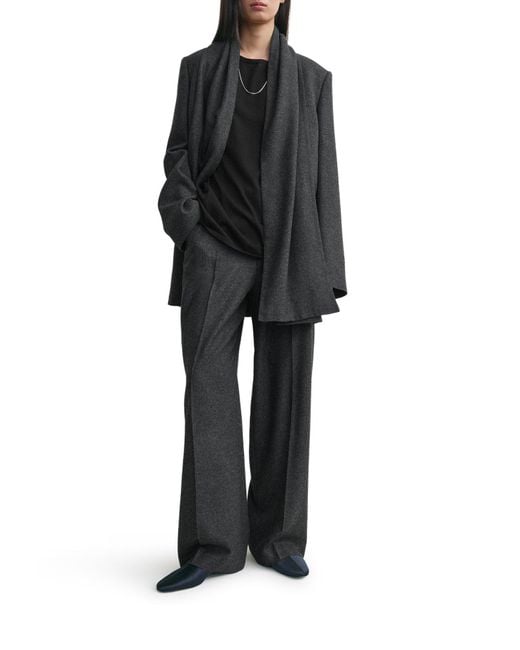
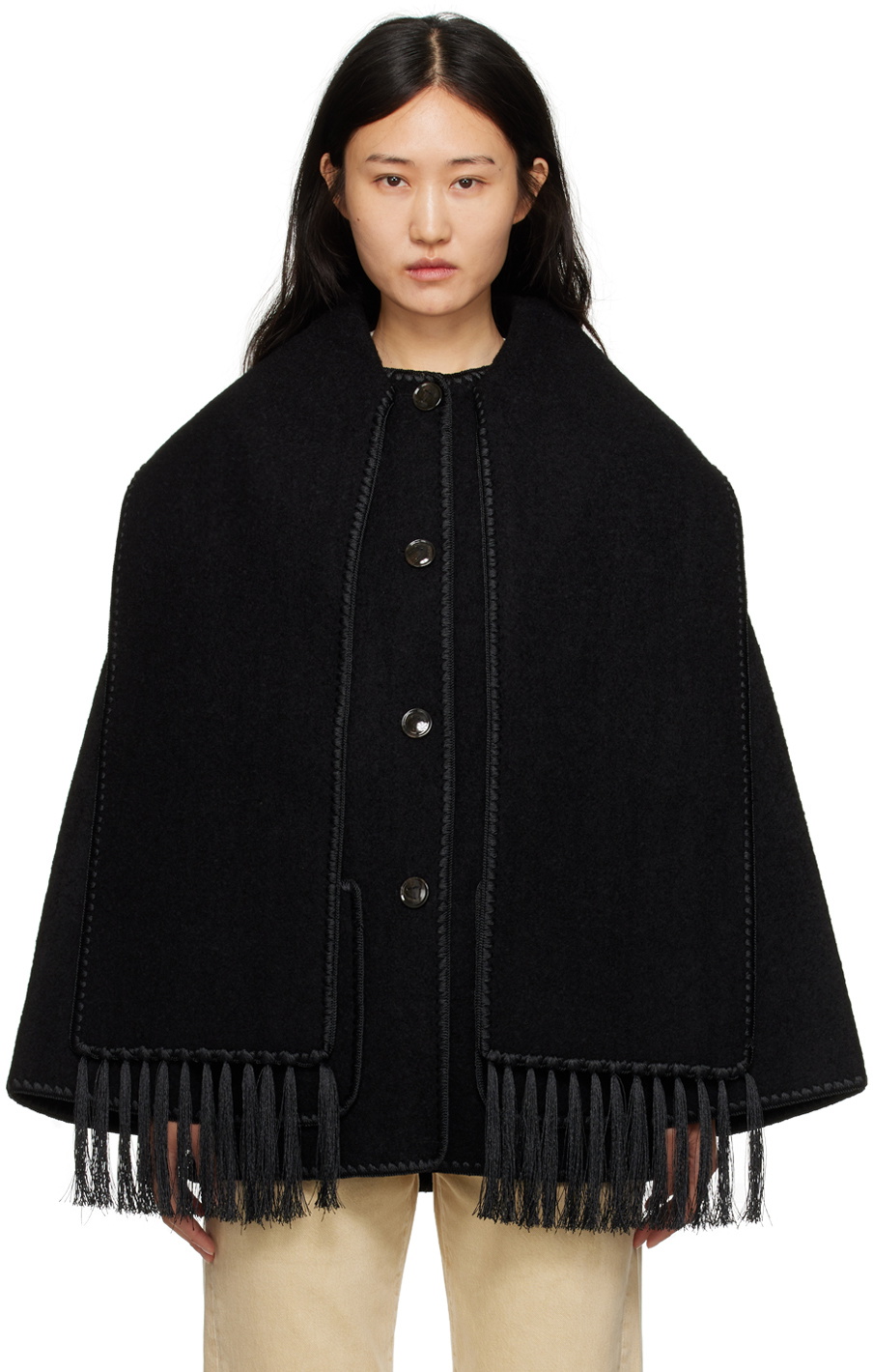
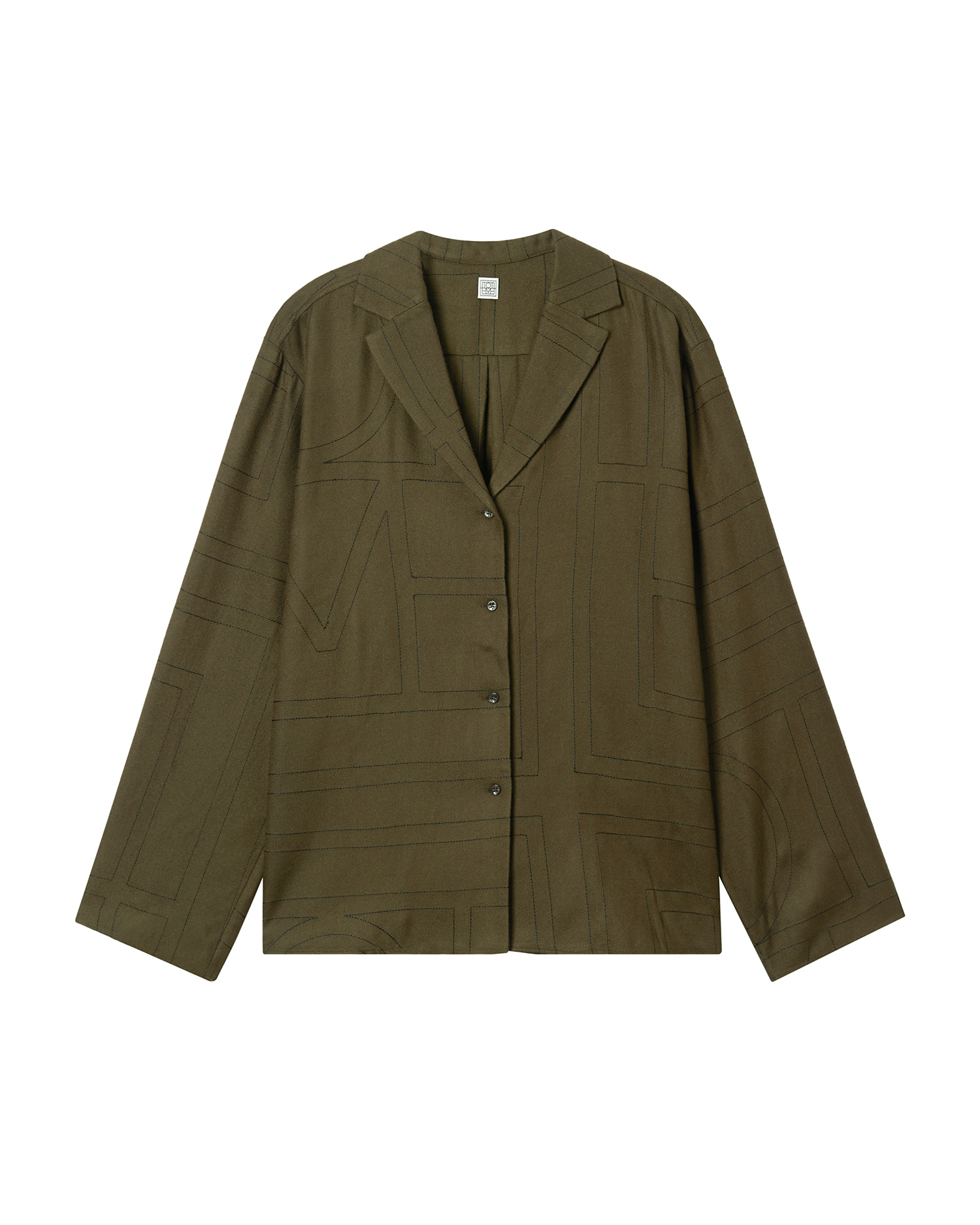
Before the menswear debut, before the Miami storefronts and the Oak Street lease, there was a blazer with a scarf attached—and a quiet argument that a single, perfectly resolved garment could carry an entire brand. The Totême Black Scarf Blazer has always been more than merchandise. It is the piece that announced, in no uncertain terms, what Swedish minimalism could be when it stopped apologizing for its own severity.
And as Totême's tailoring enters the mainstream—the house just unveiled its first menswear collection, opened its first Miami store, and signed for a space on Chicago's Oak Street, all while Vogue parsed the Fall 2026 runway and Coveteur's resident Scandi stylist began calling out FW26 picks—the Scarf Blazer reads less like a seasonal hero and more like a thesis statement finally being vindicated.
An Exercise in Subtraction
The design is exactly that: subtraction. Cut from a fluid wool crepe with enough weight to hold a clean shoulder yet enough give to move with the body, the blazer is single-breasted and long-lined, its lapels narrow, its construction deliberately soft. What distinguishes it is the integrated scarf—a panel that emerges at the collar and drapes as a continuous, self-fabric extension, so the neckline never reads as an afterthought.
There are no visible closures competing for attention, no hardware, no logo. The black is a true, depthless black that behaves differently in daylight than it does at night, which is precisely the point: the garment is designed to be read at close range, by the wearer and by anyone standing near enough to notice the seam work.
Tailoring, Warmer Than the Word Suggests
This is tailoring in the Scandinavian register—functionalist in lineage, but warmer than the word suggests. Totême's founders, Elin Kling and Karl Lindman, built the label on the idea of a personal uniform, and the Scarf Blazer is that idea made literal. It nods to the draped, protective outerwear of northern European winters without tipping into costume; it borrows the authority of a suit jacket while refusing the stiffness that makes most suiting feel like borrowed clothing.
In a market saturated with logomania and aggressive silhouettes, the piece argues for restraint as a form of confidence. It is the sort of garment a stylist reaches for when a shoot needs gravity rather than noise—and the sort of garment a woman reaches for when she has four minutes to get dressed and cannot afford to be wrong.
Who It's For
Who it is for is unusually broad, which is part of why it has persisted. It suits the creative director who wants a jacket that photographs as well as it travels; the architect who prefers structure without ornament; the woman building a wardrobe on a small number of decisions made well. It layers over a fine-gauge knit—Totême's own cashmere has become a category unto itself, the subject of investment-sweater roundups—and it works as readily over a slip dress as it does with denim. Its appeal is generational in a way few "cult" pieces manage: it does not require youth, only intent.
Why It Matters Now
Why it matters now is a matter of timing and legitimacy. Totême's expansion into menswear, covered by the Times, GQ, and FashionNetwork alike, effectively canonizes the house's tailoring language—and the Scarf Blazer is the clearest articulation of that language. As the brand's retail footprint widens across American cities, the piece functions as an entry point and a destination at once: recognizable to those who know, legible to those who don't. On resale and discovery platforms it resurfaces with the regularity of a true classic, sought by buyers who understand that the most durable fashion statements are the quietest ones.
The Totême Black Scarf Blazer was never designed to shout. It was designed to outlast—and the moment has finally caught up with it.