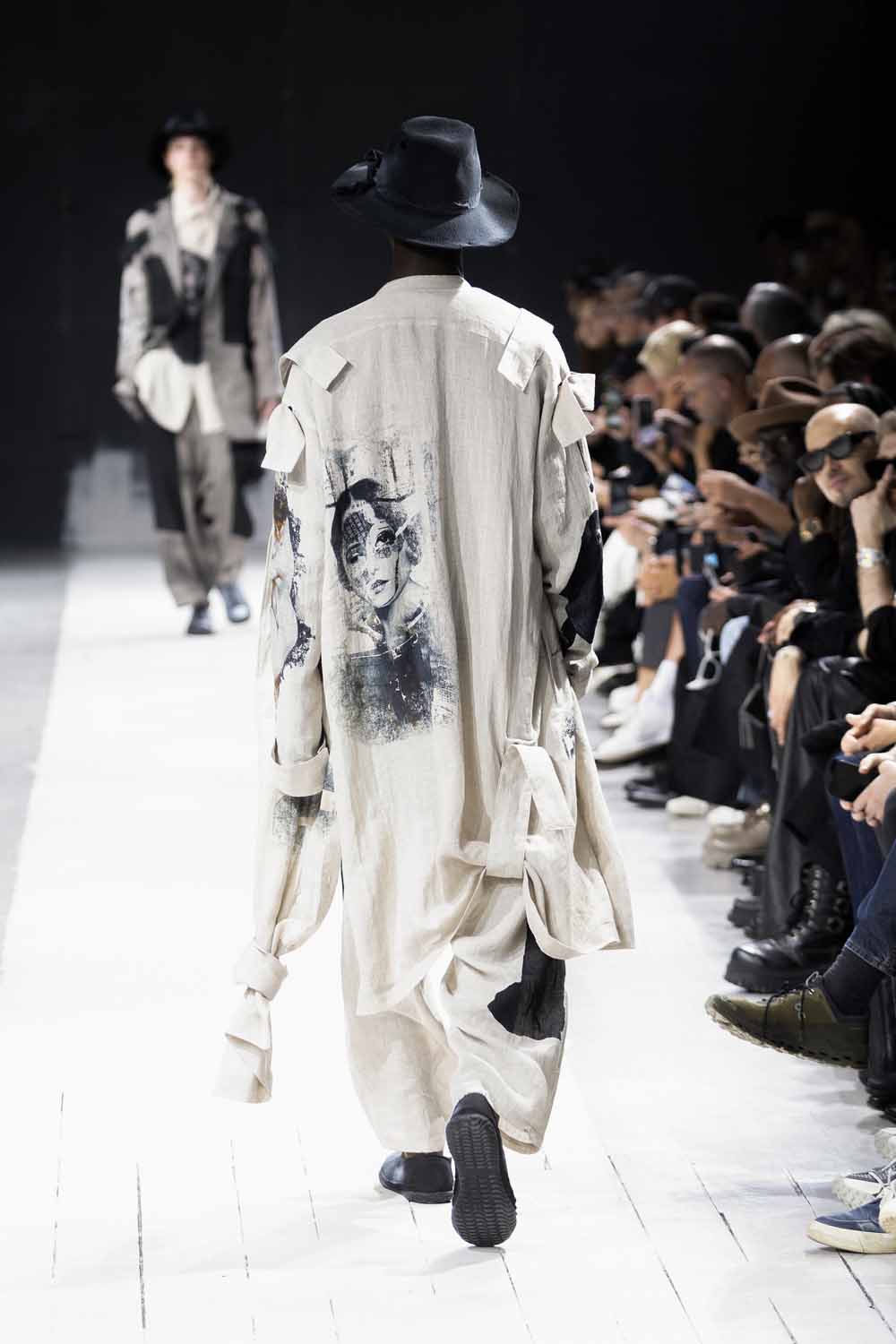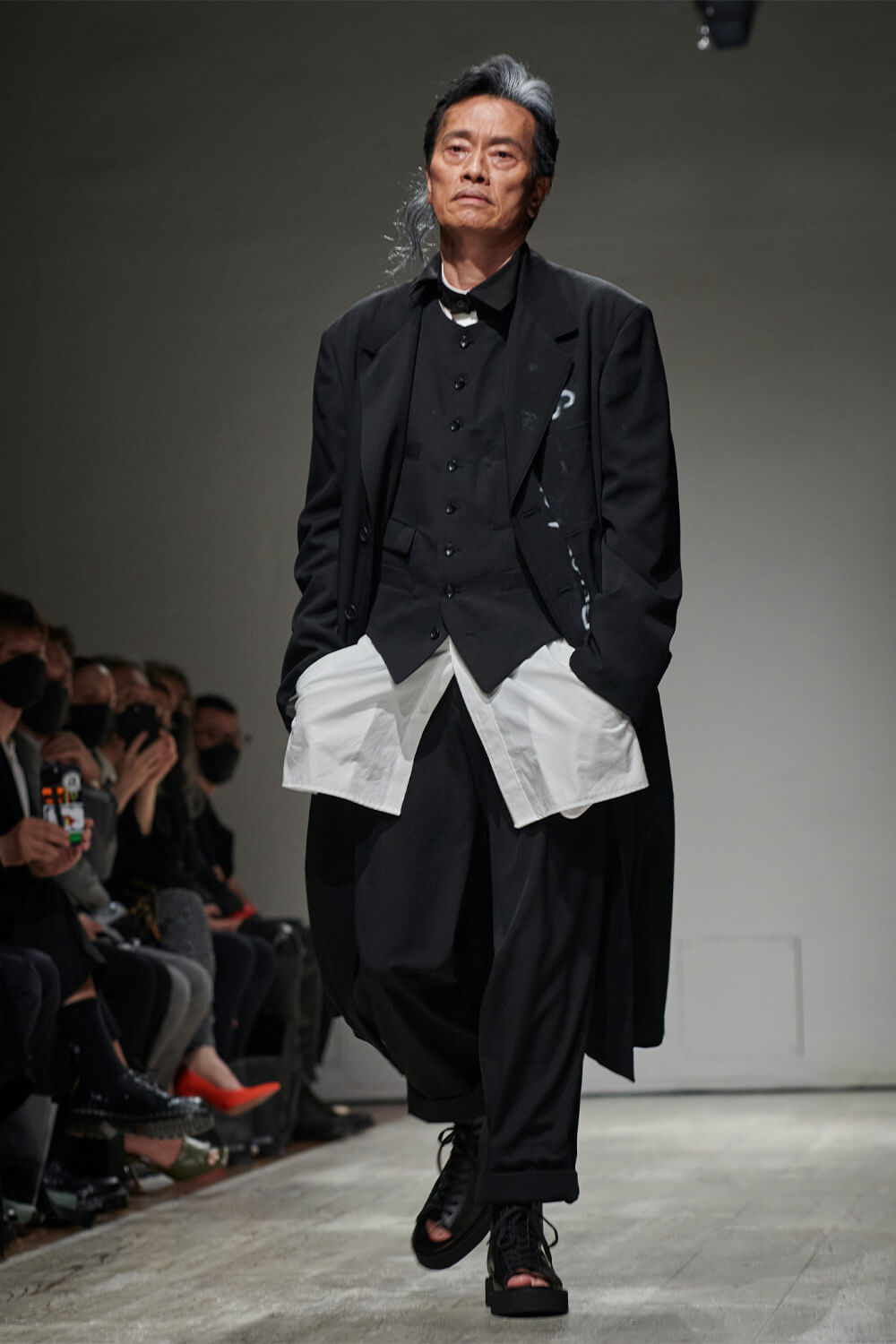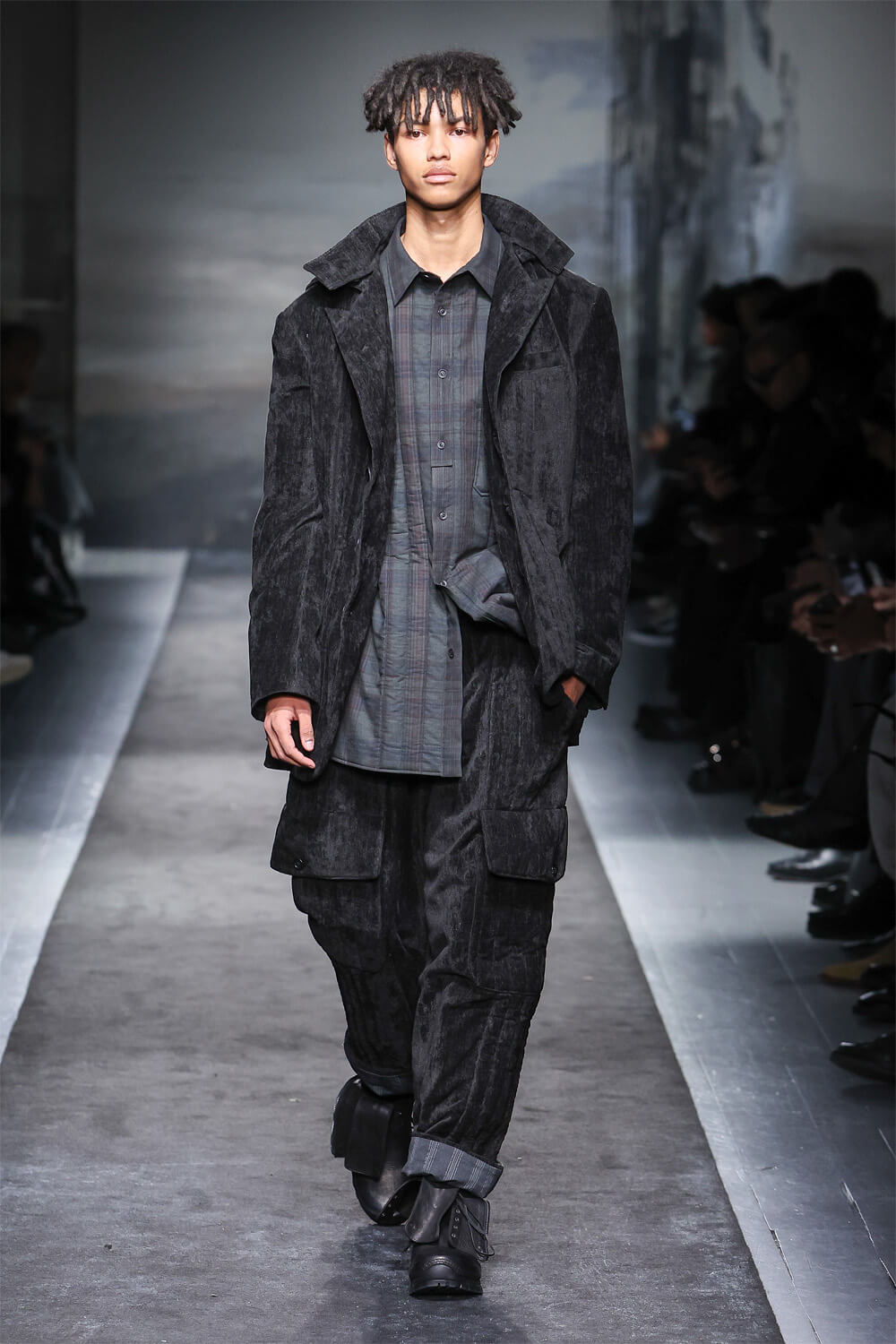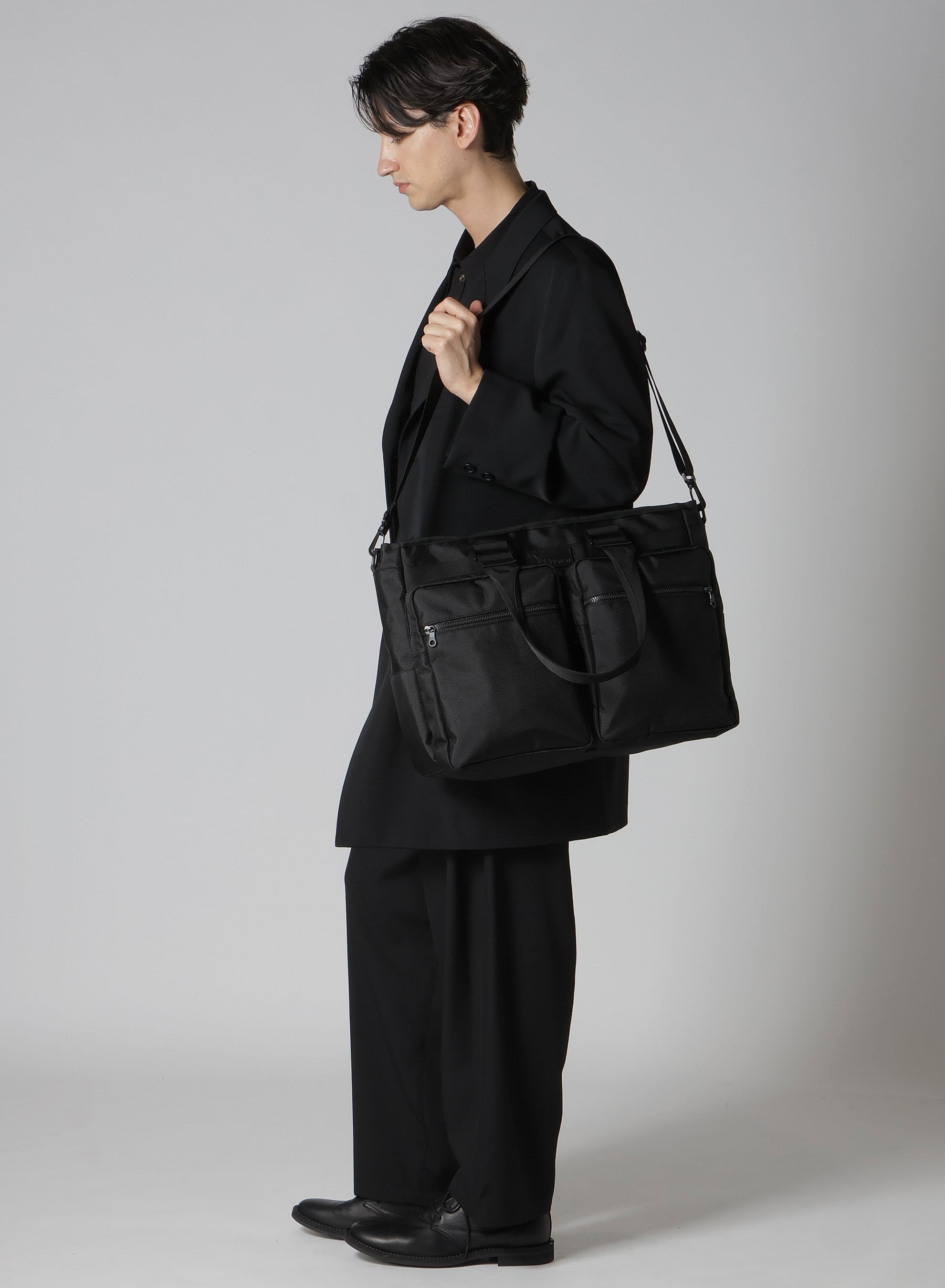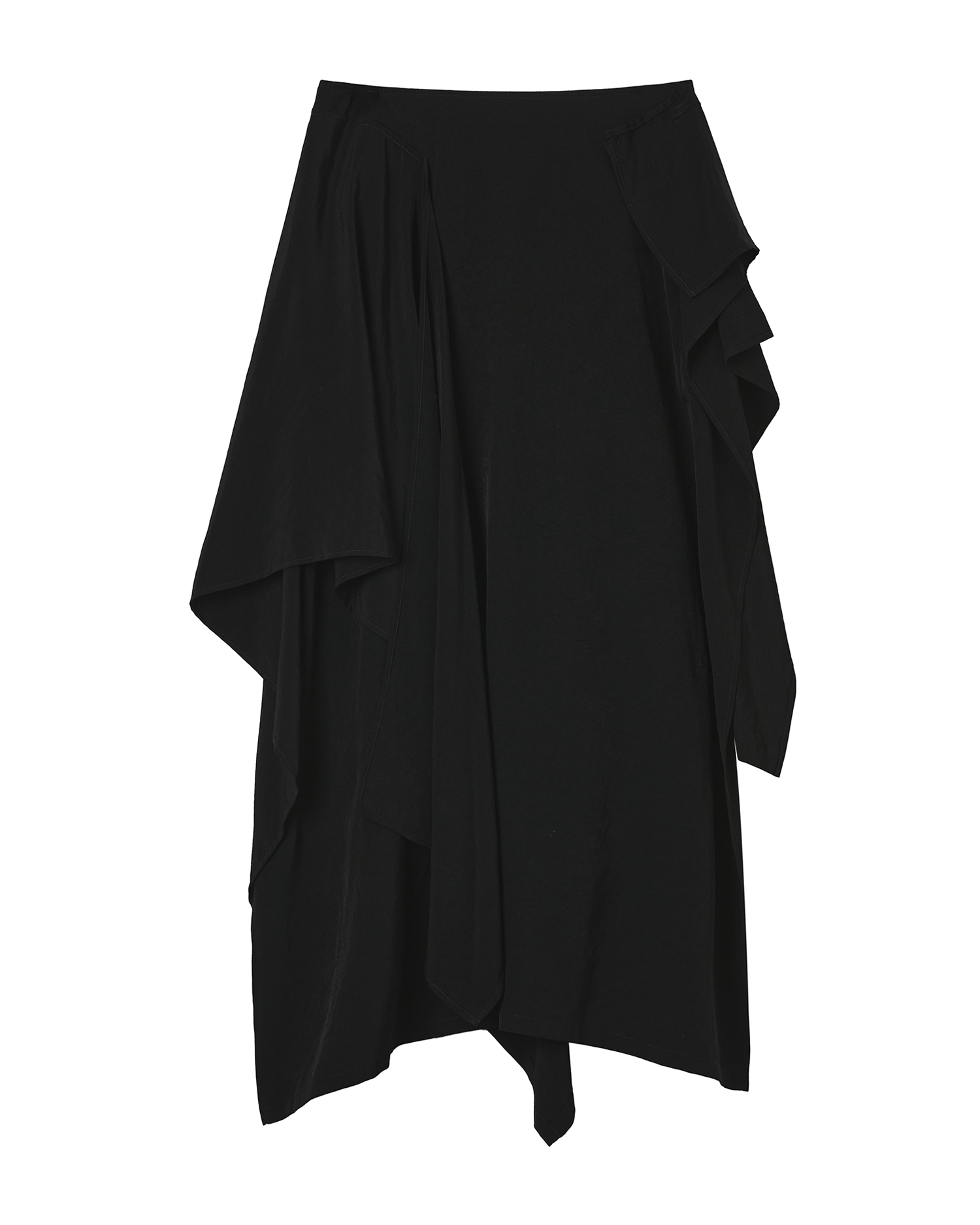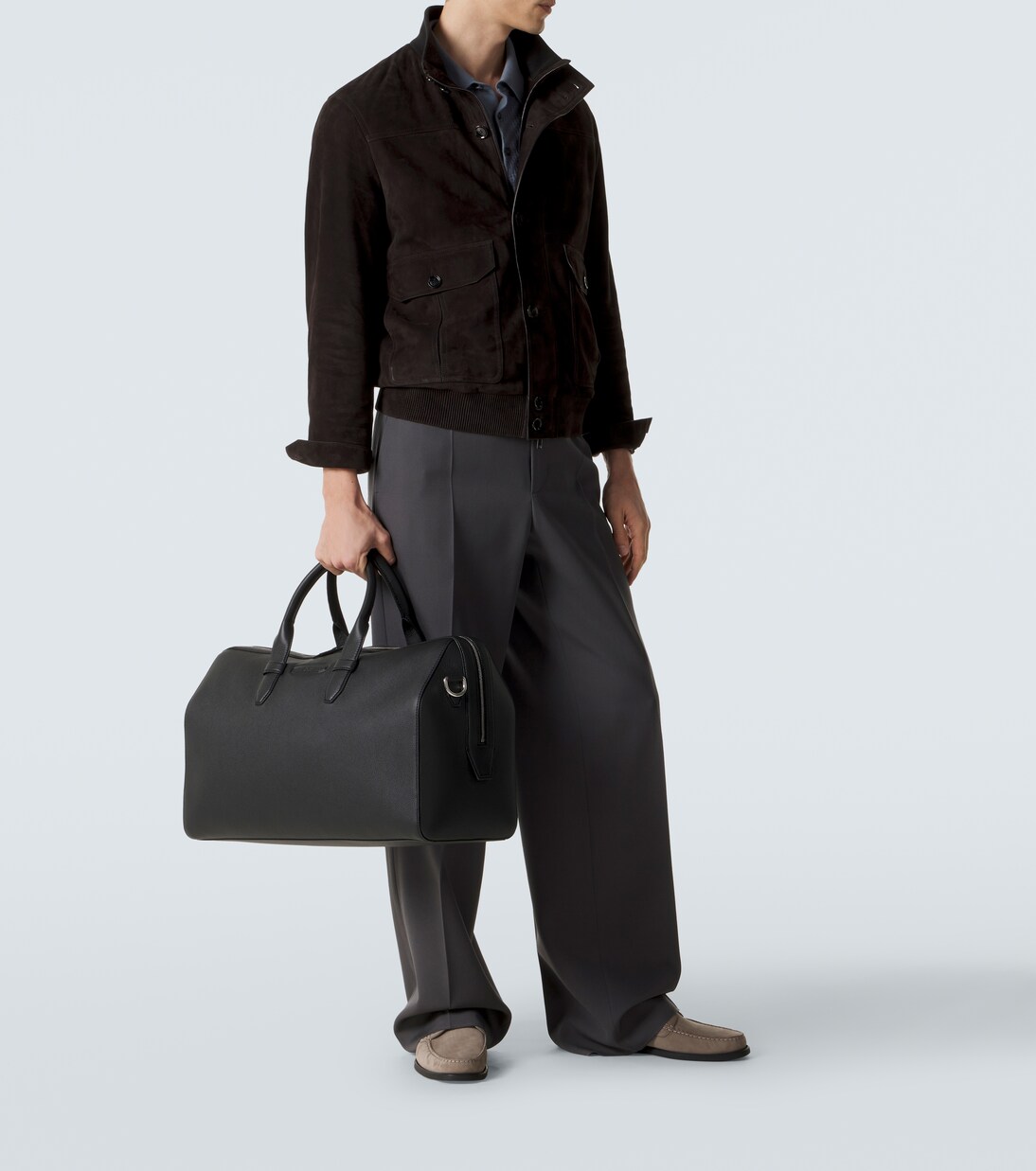
There is a moment in the Yohji Yamamoto Homme fall/winter 2020 show when the runway logic inverts. A model walks out carrying what appears to be an oversized leather duffel—but the bag is not held. It is worn. The straps are not handles but harnesses; the body of the luggage drapes across the torso like a second skin armored in black cowhide. This is the FW20 bag-as-clothing piece, a singular object that collapses the ancient distance between accessory and garment, turning wearable luggage into sculptural fashion. For Yamamoto—who has spent four decades dismantling the Western canon of tailoring—this is not a novelty gimmick but a philosophical statement rendered in leather, canvas, and hardware. It asks a radical question: why must a bag hang from your shoulder when it could inhabit your silhouette entirely?
The design is deceptively simple in appearance, profoundly complex in construction. The central volume—a soft-structured rectangular body—sits flush against the chest and stomach, secured by wide, adjustable straps that cross the back and clip at the waist. When worn, it does not swing or bounce. It becomes part of the wearer’s posture, forcing a slight forward lean that echoes the stooped elegance of Yamamoto’s signature draped coats. The leather is vegetable-tanned, untreated, meant to age with the owner, developing a patina that records every journey. Inside, the compartments are utilitarian: a large main cavity, a zip pocket for documents, a hidden sleeve for a passport. But the exterior is where the artistry lives—raw edges left unhemmed, stitching that veers intentionally off-line, and a single metal clasp that looks salvaged from a 1950s train carriage. This is luggage that refuses to be neat, rejecting the sterile minimalism of luxury travel brands in favor of a wabi-sabi imperfection.
The Paradox of Permanent Revolution
Culturally, this piece arrives at a moment when Yamamoto’s paradoxes are being re-examined. As recent coverage from *Another Magazine* notes, his work embodies a "perpetual revolution"—a constant undoing of form that never settles into a signature. The FW20 bag-as-clothing is a perfect distillation of that ethos: simultaneously a practical object and a conceptual provocation. The fashion press has long framed Yamamoto as the poet of black, the master of asymmetry, but this piece reveals a more pragmatic layer. In a world where carry-on culture dominates and personal space shrinks, the bag-as-clothing proposes that your belongings should be part of your body, not an appendage to it. It is a response to the modern condition of perpetual mobility—the traveler who wants to feel the weight of their life, not drag it behind them.
For the Collector, Not the Casual Shopper
This piece is not for the casual shopper. It is for the collector who understands Yamamoto’s lineage from the 1980s Paris debut—where he shocked the establishment with oversized, shredded silhouettes—through his decades of collaboration with Adidas and his enduring influence on figures like Carolyn Bessette-Kennedy, whom GQ recently called his "great interpreter." It is for the person who sees fashion as a philosophical practice, who understands that a bag can be a meditation on gravity, time, and the relationship between the body and what it carries. The recent launch of THE SHOP YOHJI YAMAMOTO’s official web store signals a democratization of access, but this particular piece demands a different kind of engagement. You must try it on, feel the leather settle against your ribs, adjust the straps until the load becomes posture.
Why It Matters Now
Why does it matter now? Because we are drowning in accessories that scream for attention—logo-covered, mass-produced, disposable. Yamamoto’s FW20 bag-as-clothing is the antidote: a silent, functional sculpture that whispers rather than shouts. It aligns with the current menswear shift toward utility and tactility, yet it transcends trends by rooting itself in the designer’s lifelong investigation of the human form. As *FashionNetwork* noted in its Paris menswear coverage, Yamamoto’s show stood apart from peers like Dries Van Noten for its refusal to entertain—this is fashion as serious art, not entertainment. The bag-as-clothing piece is the clearest expression of that seriousness: a wearable object that demands you reconsider what clothing can do.
It is not merely a product; it is a proposition. That the things we carry can become the people we are. In an era of frictionless, forgettable luxury, Yamamoto reminds us that the most radical gesture is to make your belongings part of your body—to wear your life, not just hold it. The bag becomes a garment, and the garment becomes a philosophy, stitched in black leather and patience. For those willing to lean into the weight, it offers something rare: a piece that ages with you, records your travels, and refuses to be ignored. That is not fashion. That is memory, made wearable.