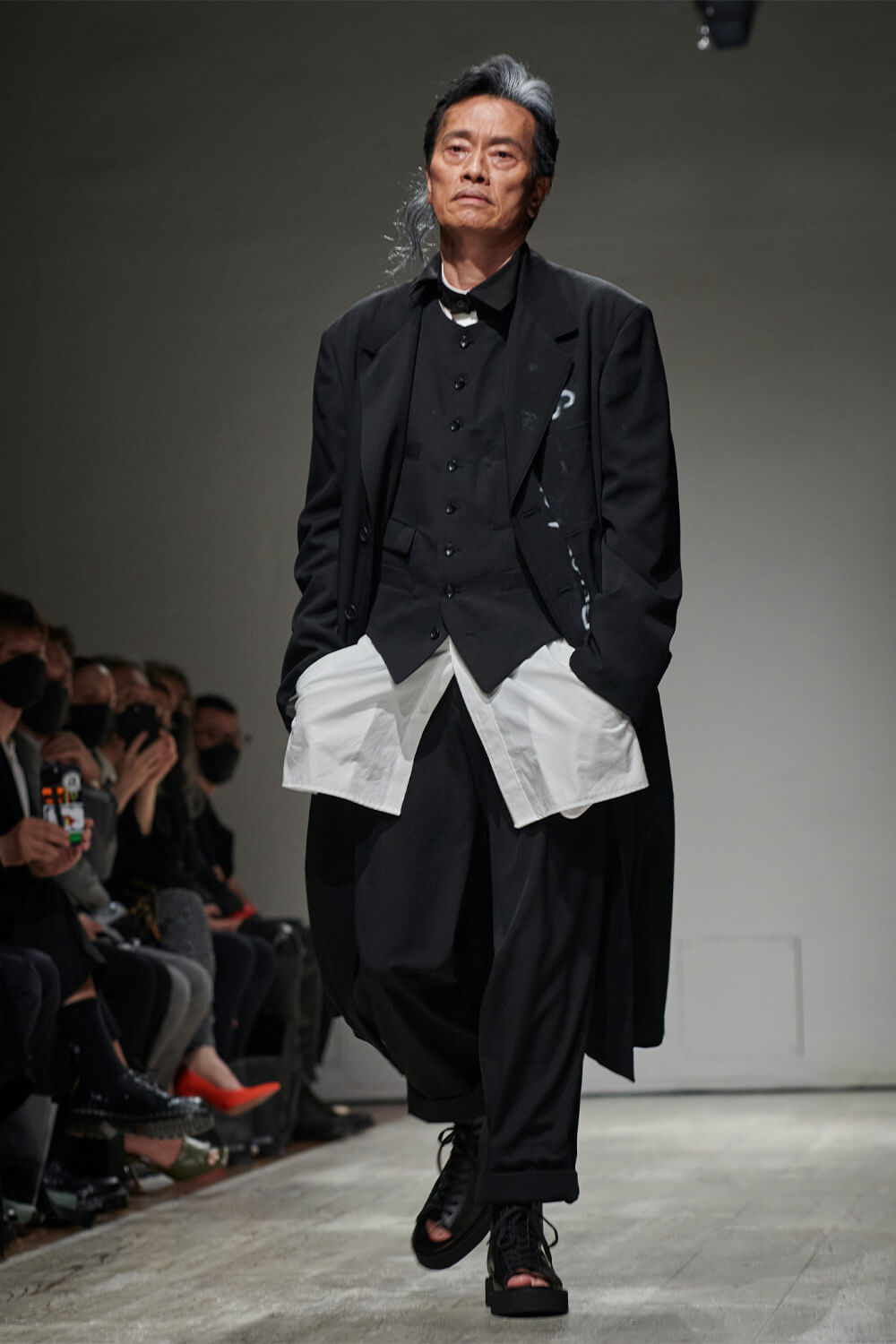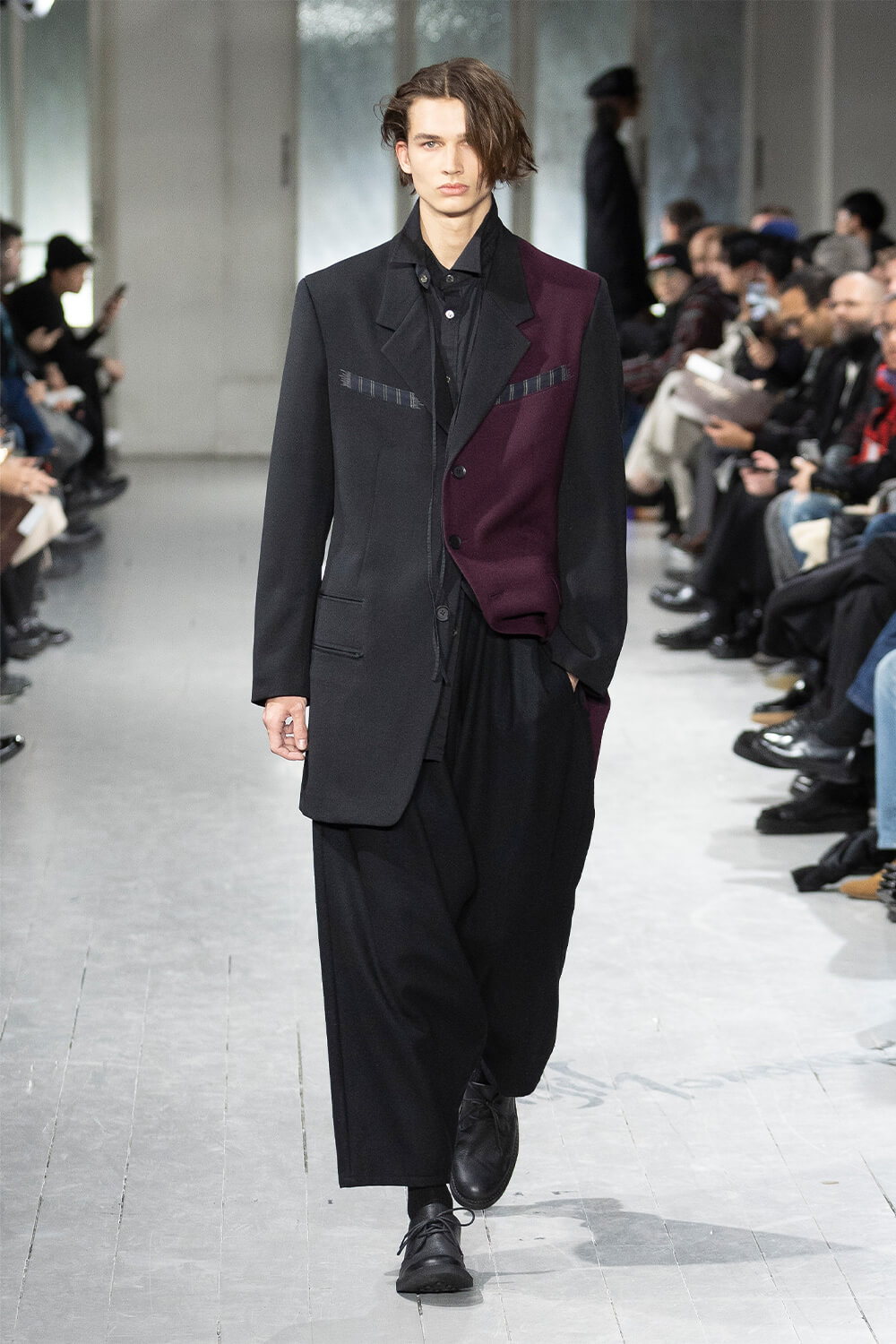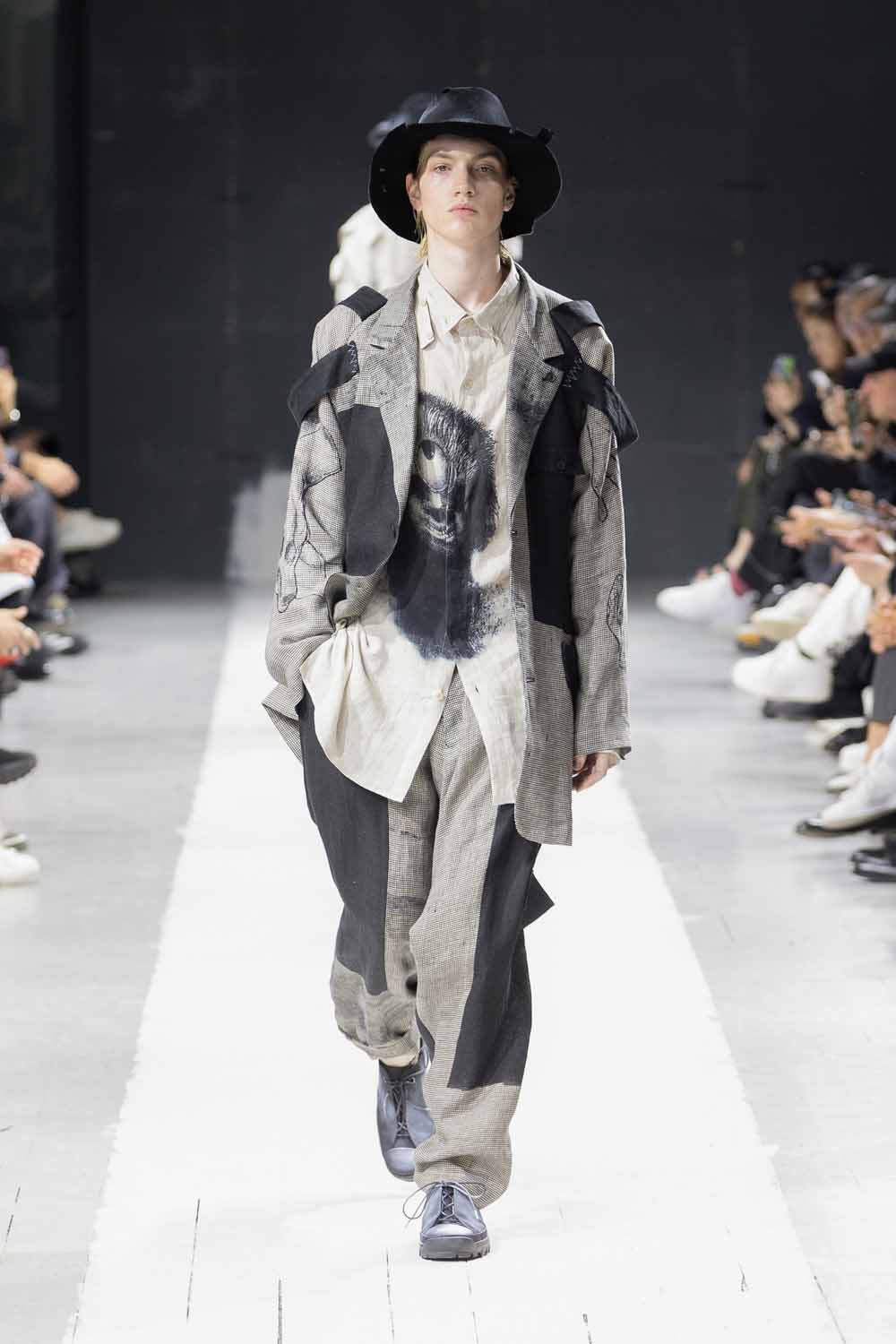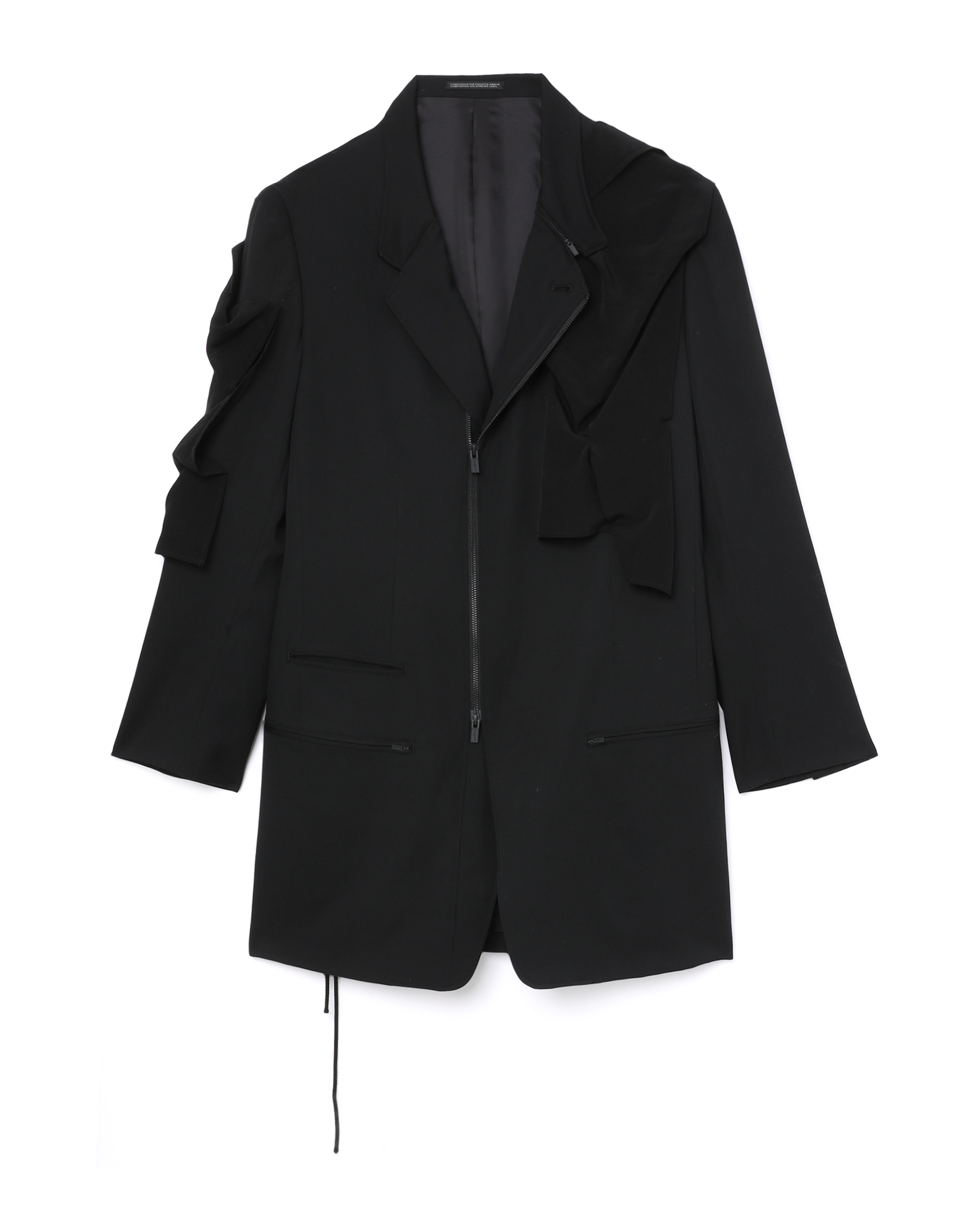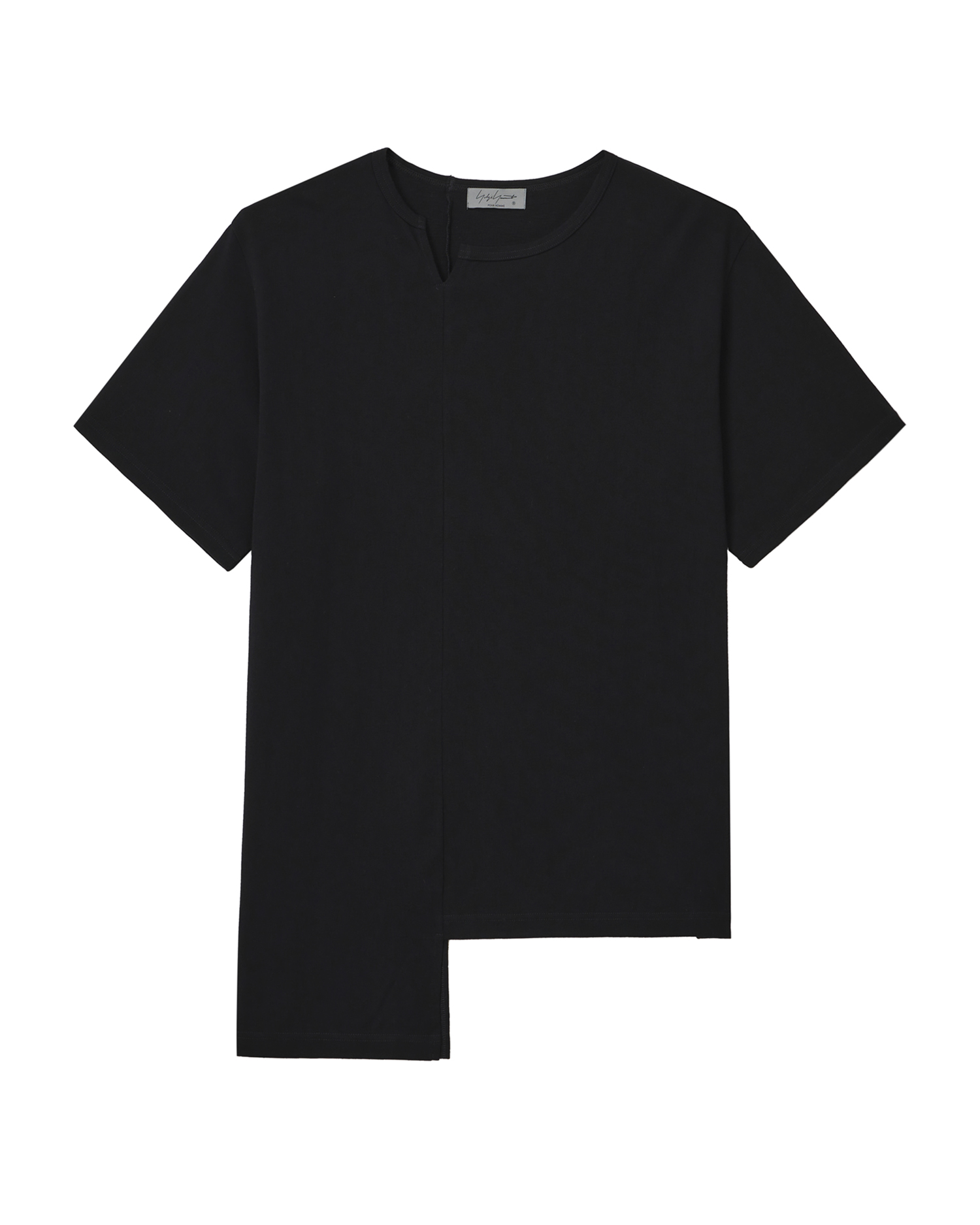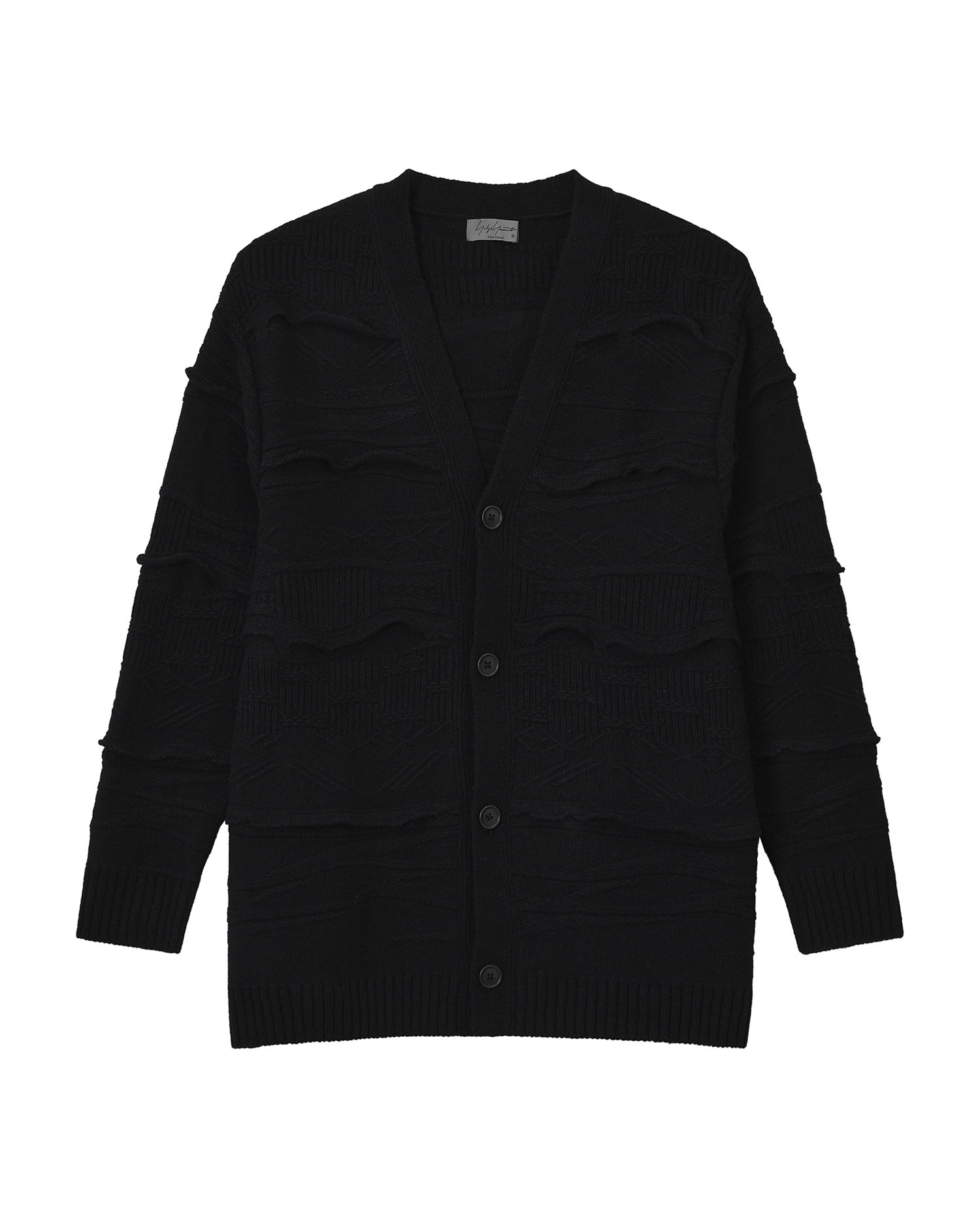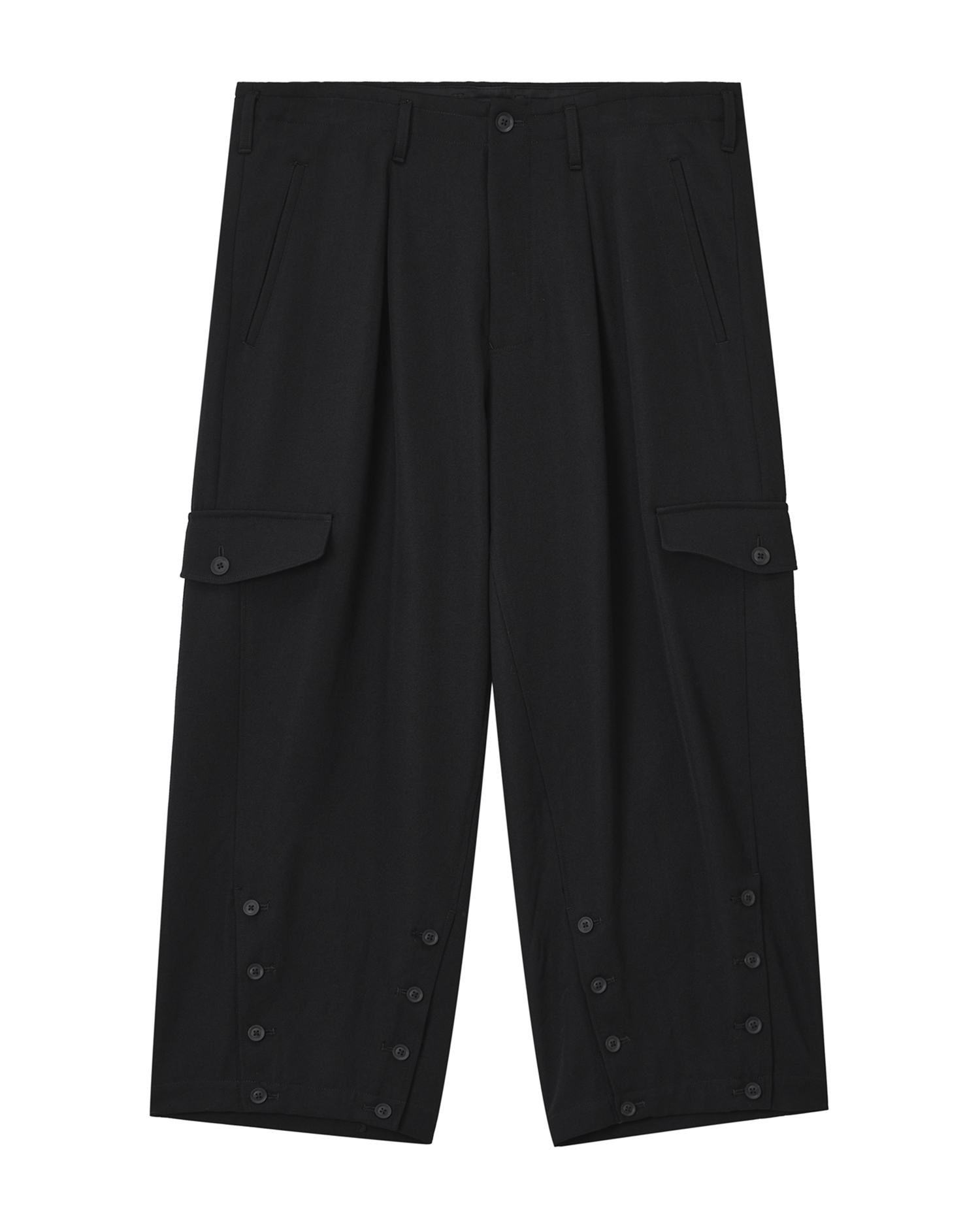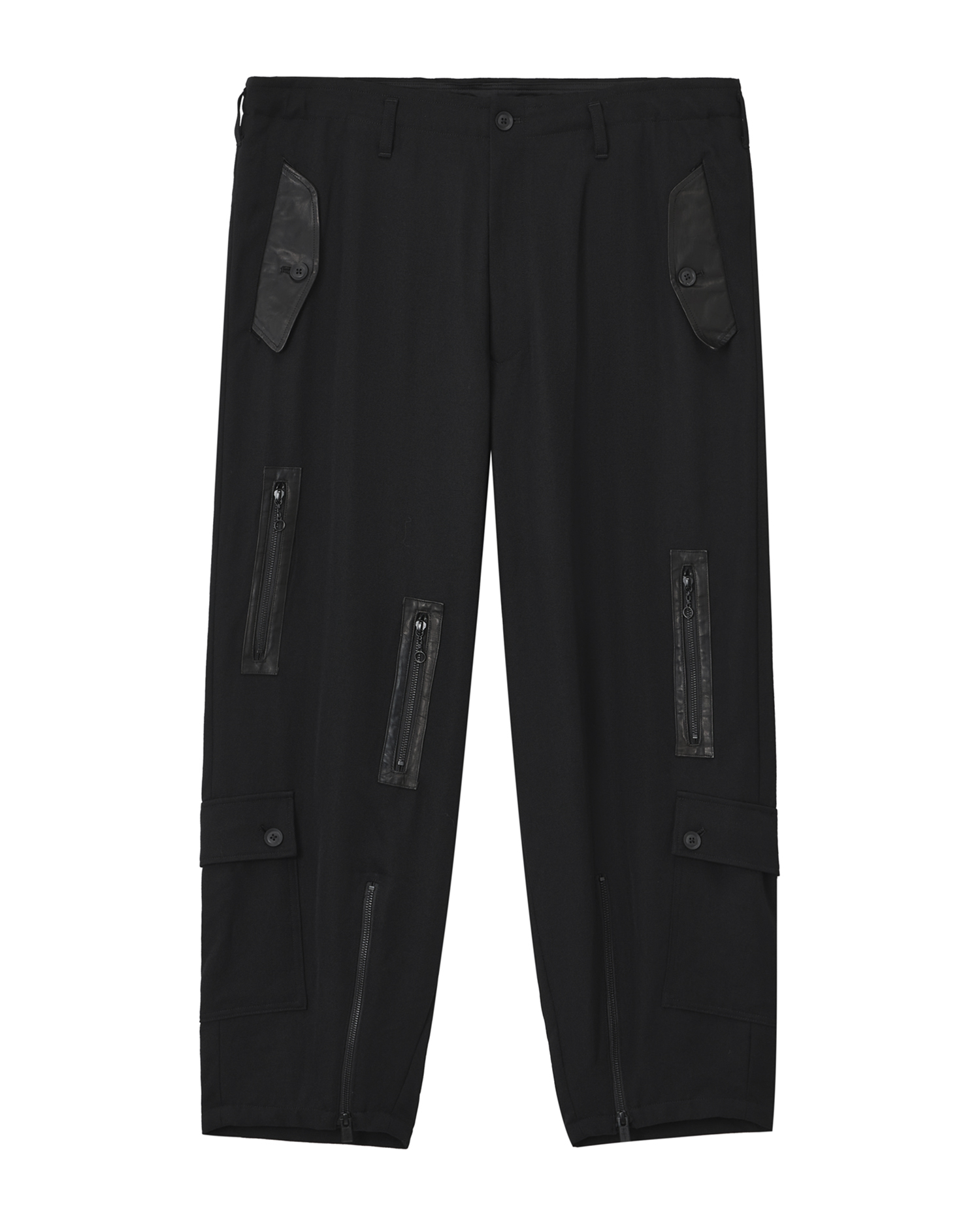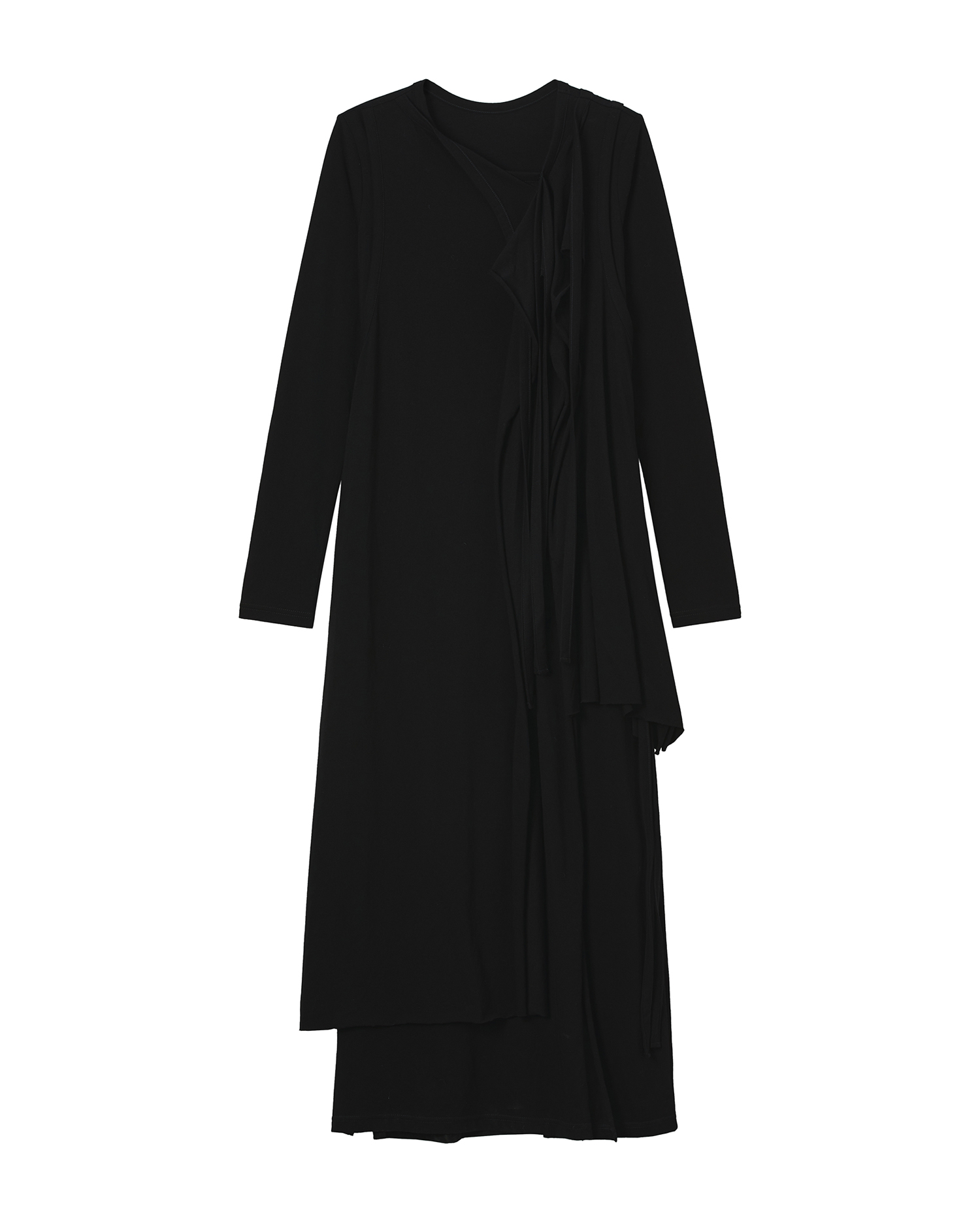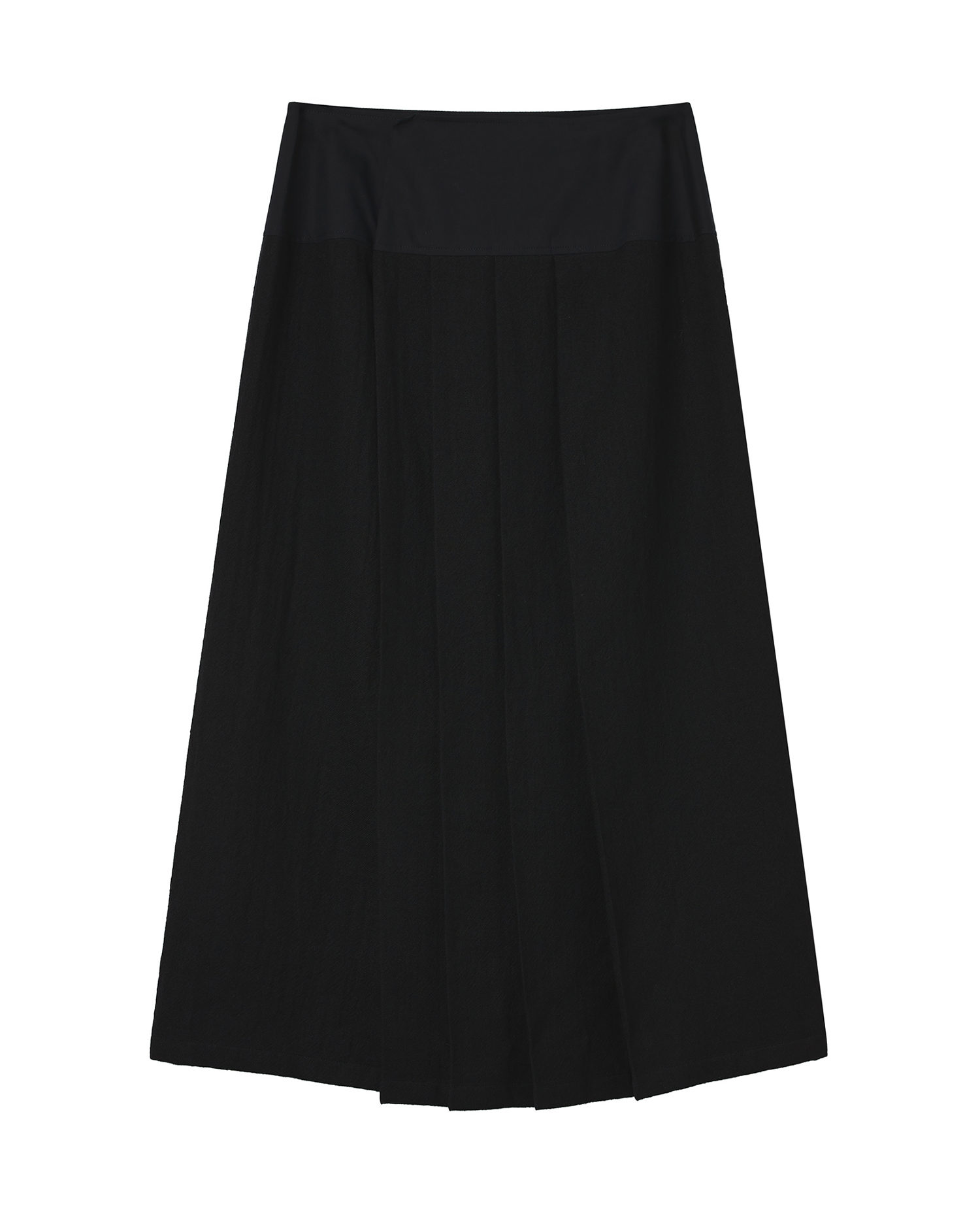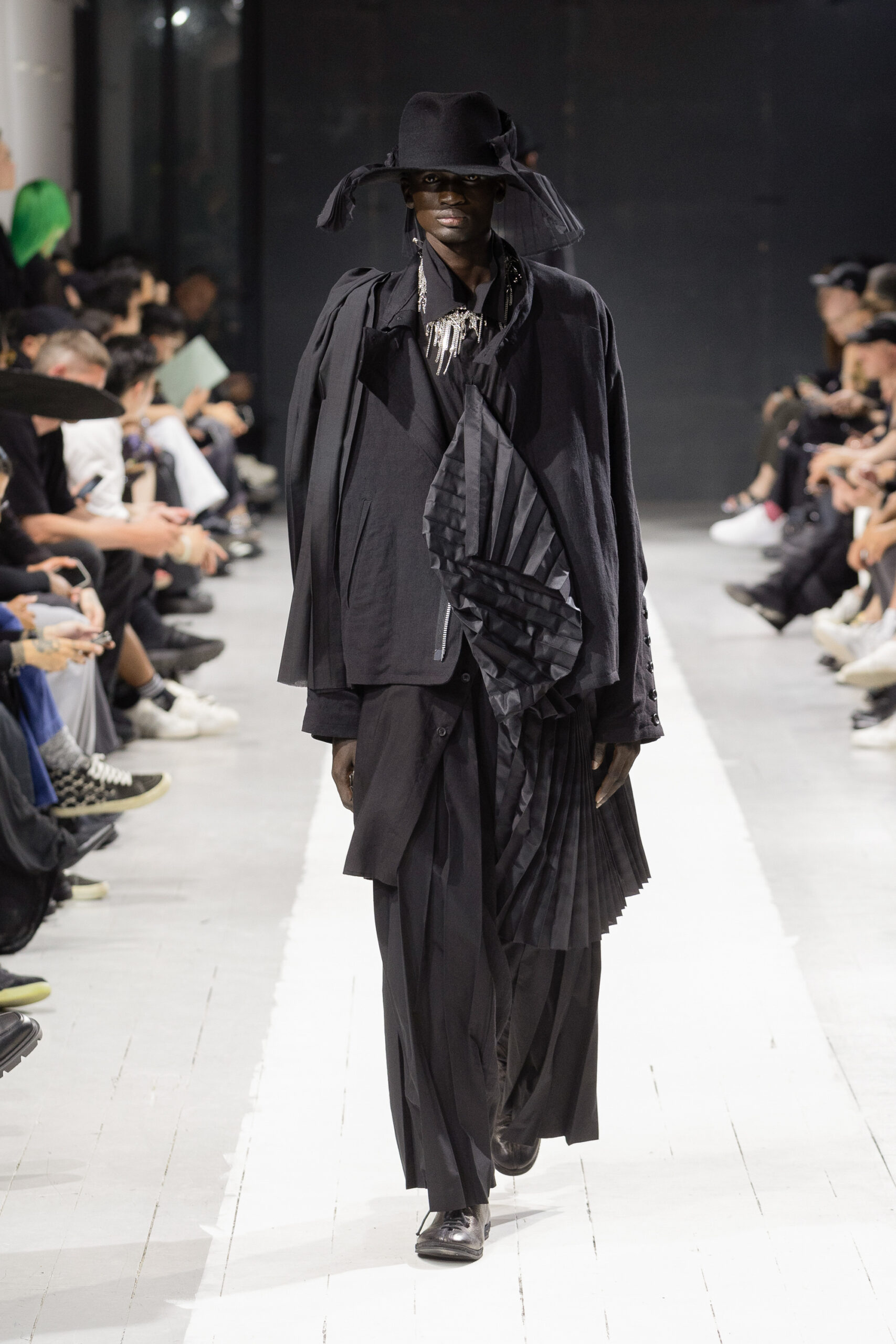
The suit has always been fashion's most conservative promise: stand still and you'll look impeccable. It's a garment built on architecture — shoulders, lapels, a chest that holds its shape — and it asks the body to conform to the cloth rather than the cloth to respond to the body. YOHJI YAMAMOTO HOMME has spent four decades dismantling that premise. With the "cut motion + motion sewing" suit, the house delivers its most literal and most radical answer yet: tailoring engineered not around the static silhouette, but around the body in motion.
At the heart of the garment is a construction philosophy the brand calls "cut motion + motion sewing" — a pattern-cutting and assembly method in which panels are drafted along the trajectories the body actually travels, then joined with stitching techniques that allow seams to articulate rather than resist. The result behaves like a second skeleton. Shoulders rotate without pulling the chest. Sleeves follow the arm through its full arc. The back of the jacket opens and closes with the stride instead of straining against it. Where conventional tailoring hides its engineering in canvas and padding, YOHJI YAMAMOTO HOMME exposes movement as the structural logic itself.
The Cloth Does the Thinking
The materials serve that logic. Yamamoto's ateliers have long favored wool gabardine, tropical wool, and dry-handed worsteds — fabrics with enough natural recovery to hold a line while yielding to the body's geometry. The palette stays resolutely Yohji: deep black, ink navy, charcoal, with the occasional washed grey. These are not garments that announce themselves through color. They announce themselves through the way they fall, shift, and settle as the wearer moves through a room.
The trousers carry the same intelligence. A rise and drape calibrated so that walking, sitting, and crossing a leg never break the vertical line that defines the house's silhouette. It's a quiet kind of engineering — the sort you only notice when it's absent, when a jacket rides up or a sleeve binds at the elbow. Here, nothing binds. The cloth simply moves.
A Suit With a Cultural Argument
Culturally, the collection arrives at a charged moment. Yamamoto's paradox — a designer celebrated globally while remaining philosophically opposed to fashion's churn — has been the subject of renewed critical attention, from AnOther Magazine's examination of his "perpetual revolution" to GQ's reconsideration of Carolyn Bessette-Kennedy as his great interpreter, and L'OFFICIEL HOMME's career-spanning assessment of his influence. His Paris menswear presentations remain fixed points in the calendar, covered alongside peers like Dries Van Noten as exemplars of a European tailoring tradition that refuses to stand still.
The "cut motion + motion sewing" suit fits squarely within that narrative. It is Yamamoto answering his own question — what does a suit owe the body wearing it? — with construction rather than ornament. No gimmick, no logo, no seasonal conceit. Just the oldest tools of the trade, rethought.
Who It's For
This is not a suit for the collector who archives garments in tissue paper. It is for the person who understands that clothing is completed only in use — the architect who spends the day on her feet, the creative director moving between studios, the man or woman who has tired of tailoring that looks correct standing still and fails the moment life begins.
It rewards those who already own the house's vocabulary: the long coats, the asymmetric shirts, the wide trousers. Worn within that wardrobe, it reads as the logical center — the piece that explains why everything else drapes the way it does. You don't buy it to fill a gap. You buy it because you already dress like this, and you want the suit that finally keeps up.
Why it matters now is precisely this: in an era of performance fabrics marketed as innovation, YOHJI YAMAMOTO HOMME has produced something genuinely new by returning to the oldest tools of the trade — the pattern, the needle, the seam — and rethinking them around the human body in motion. The suit has been declared dying for a generation. The "cut motion + motion sewing" suit is what it looks like when a master tailor refuses the eulogy and, instead, gives the form somewhere to go.