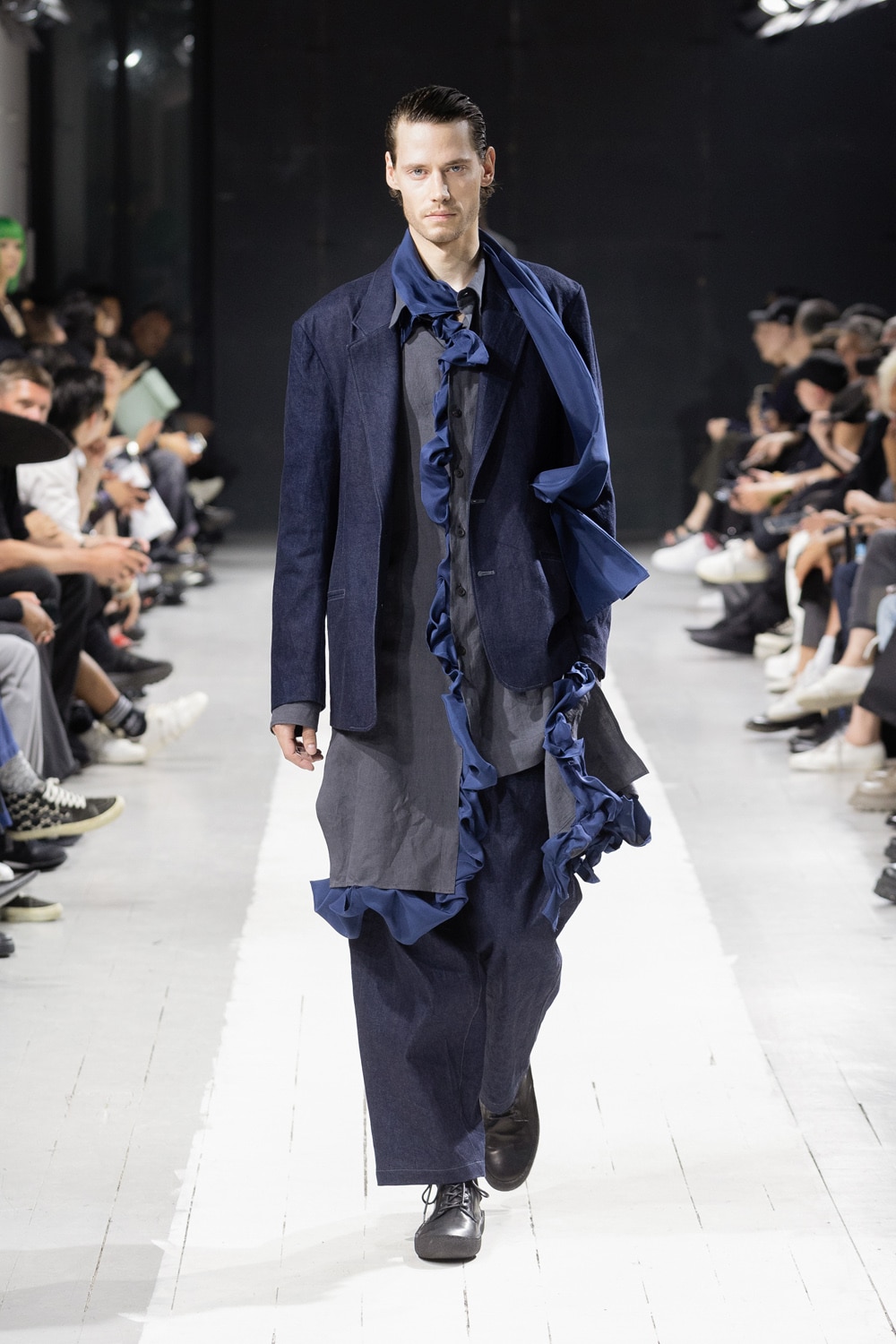
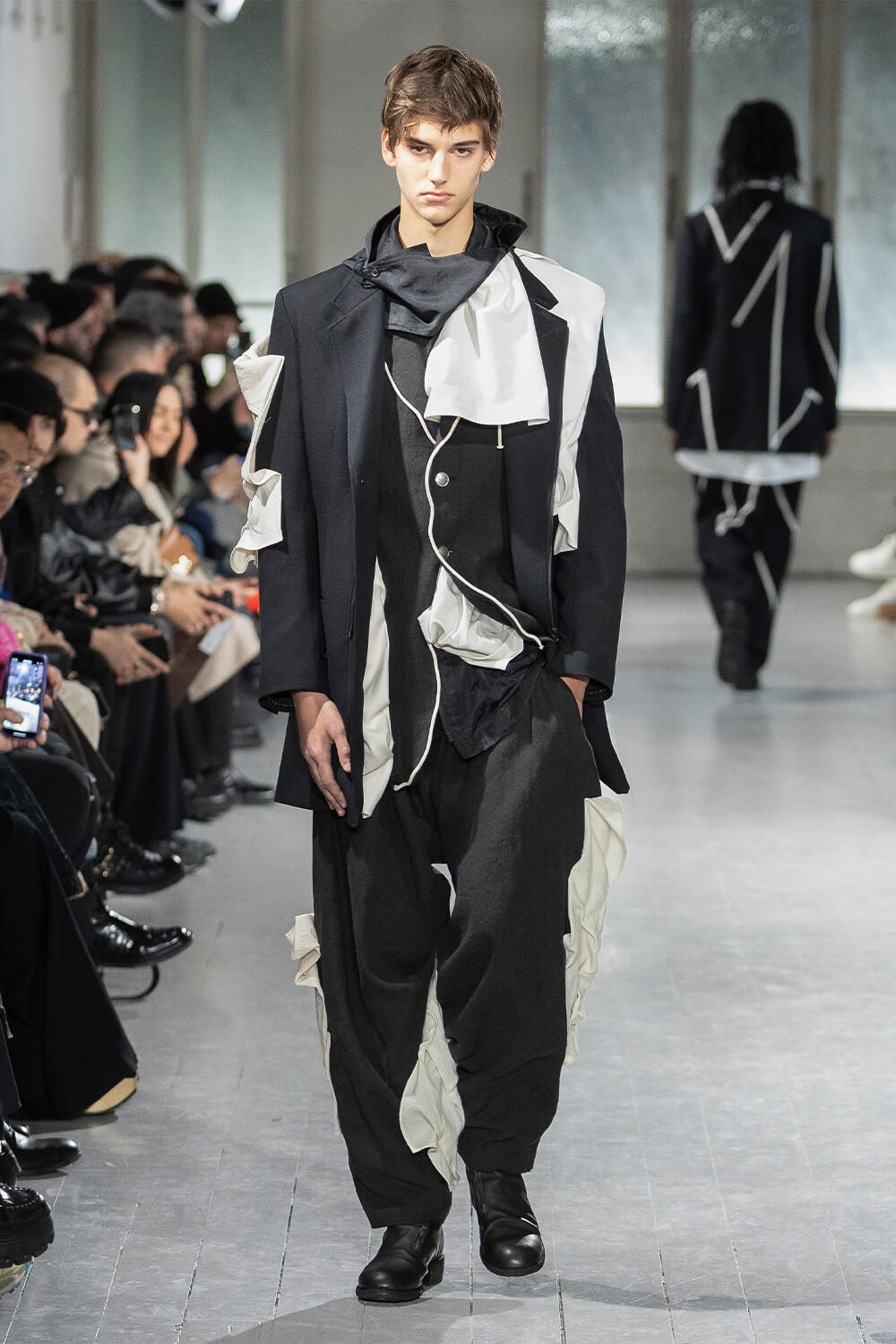
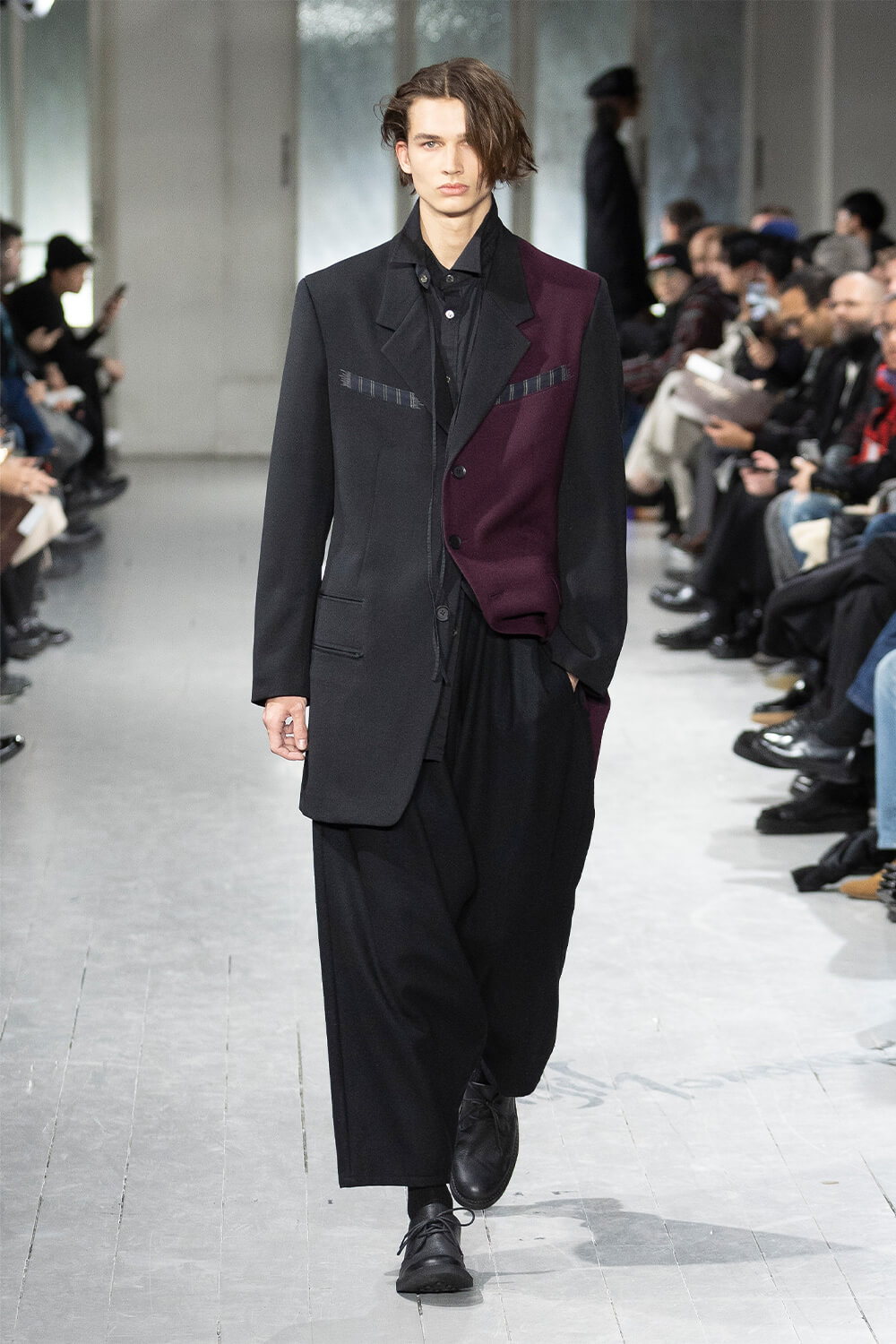
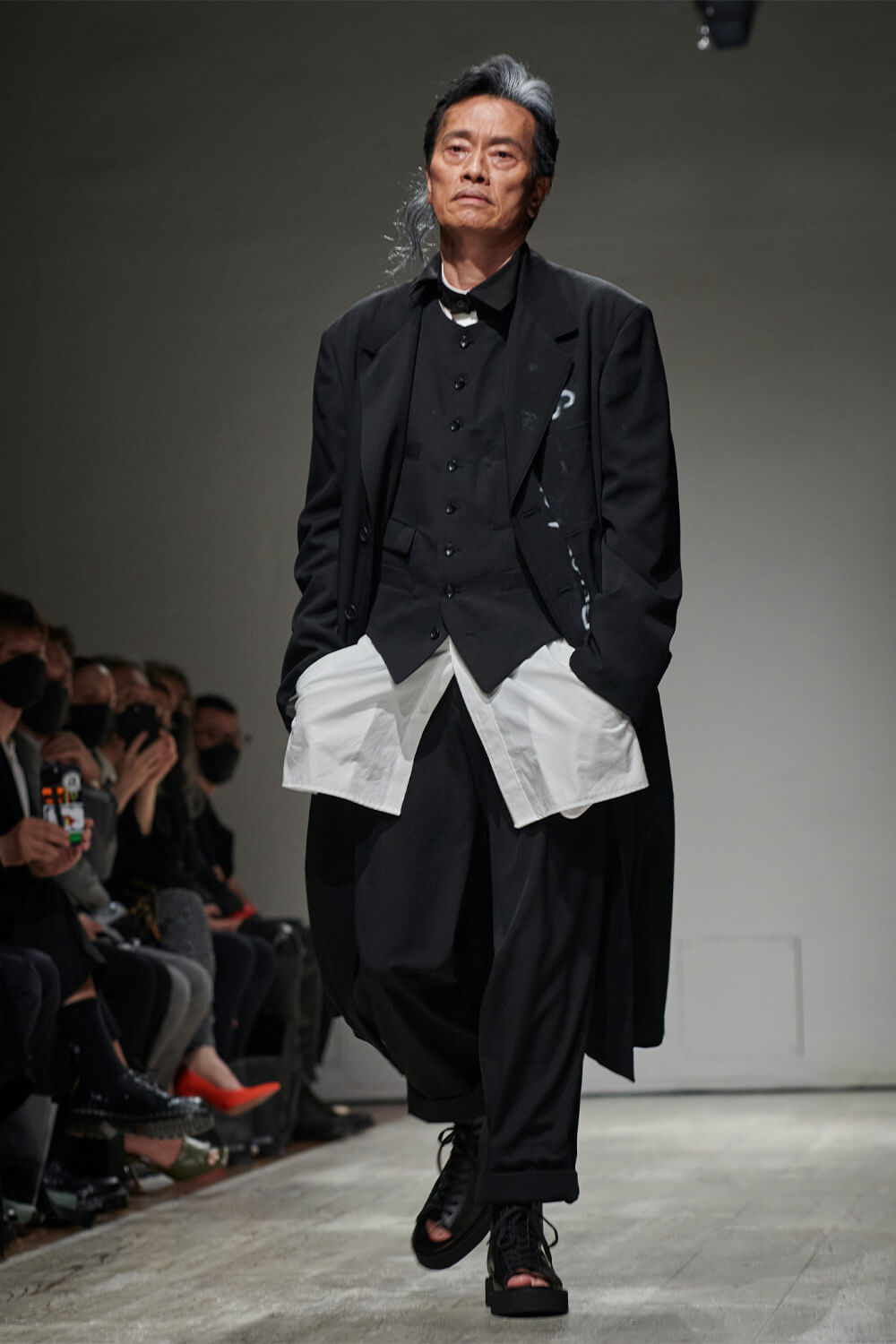
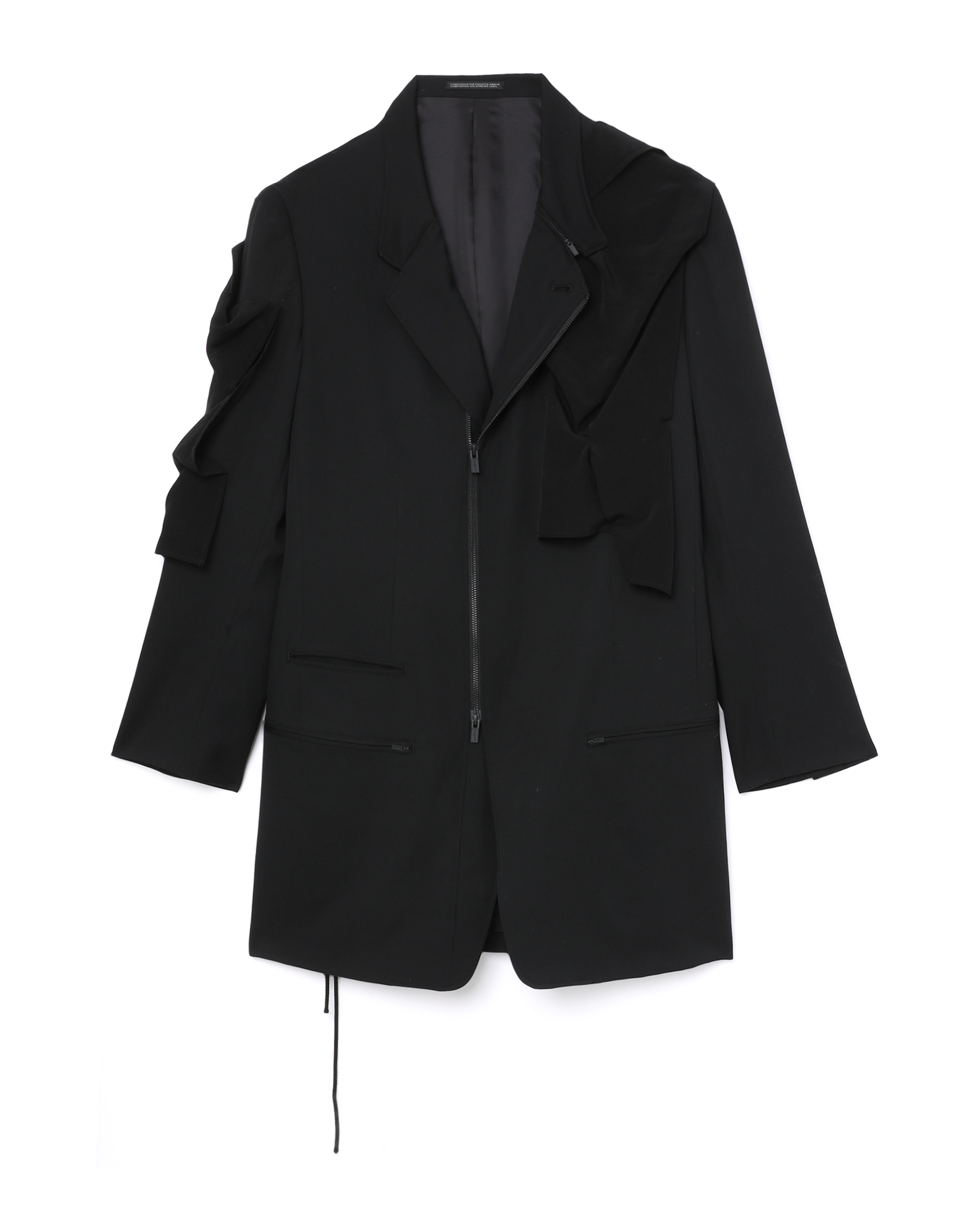
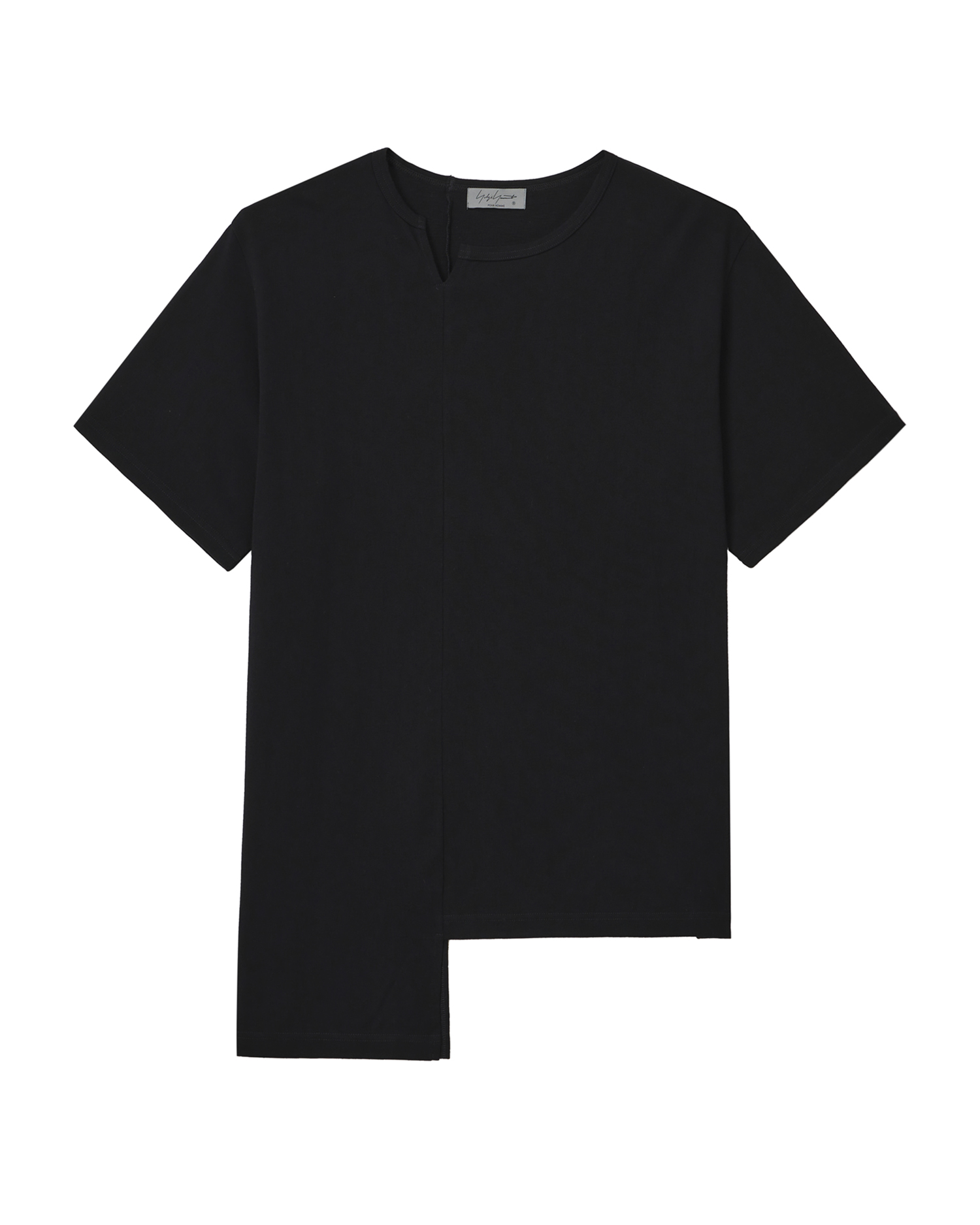
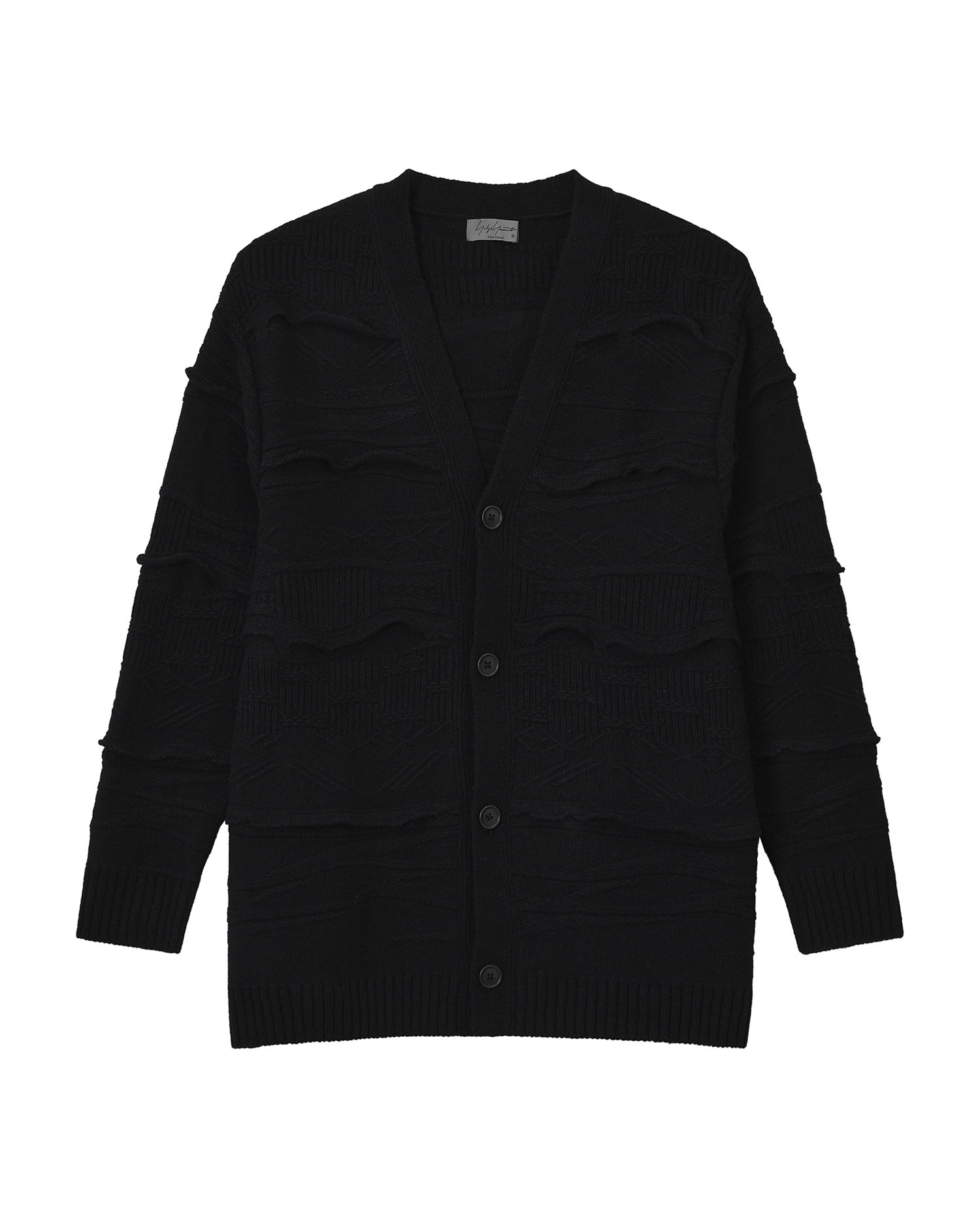
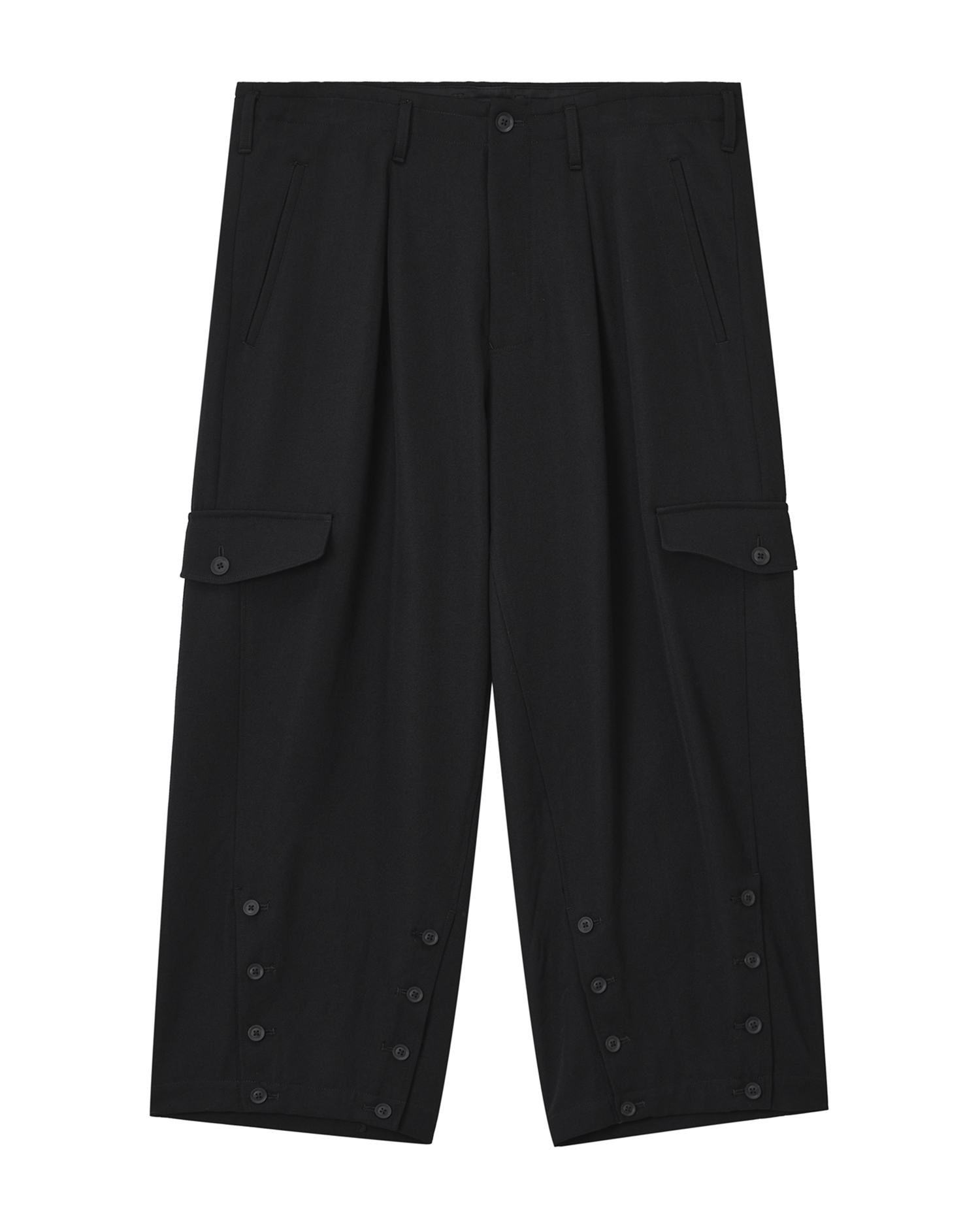
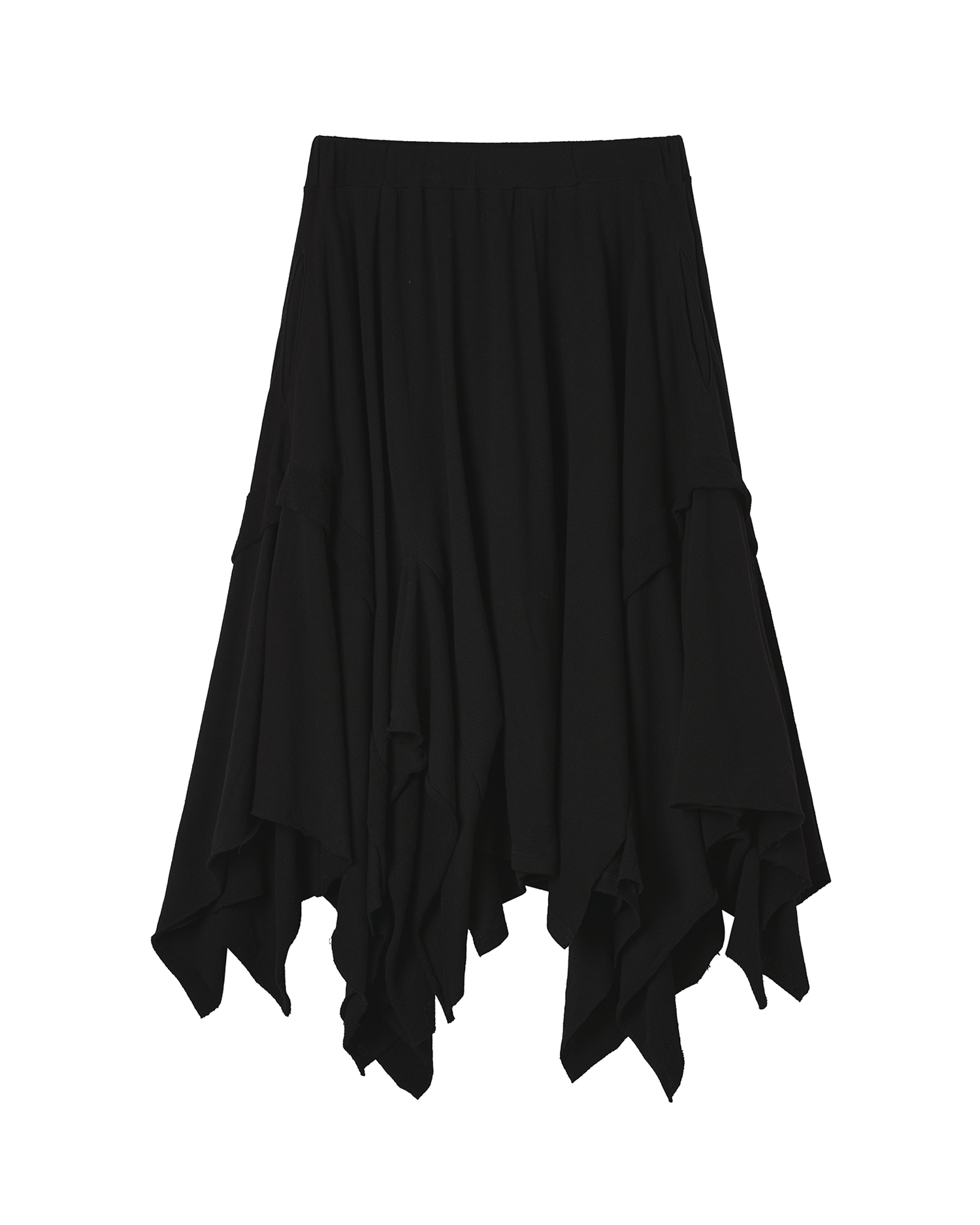
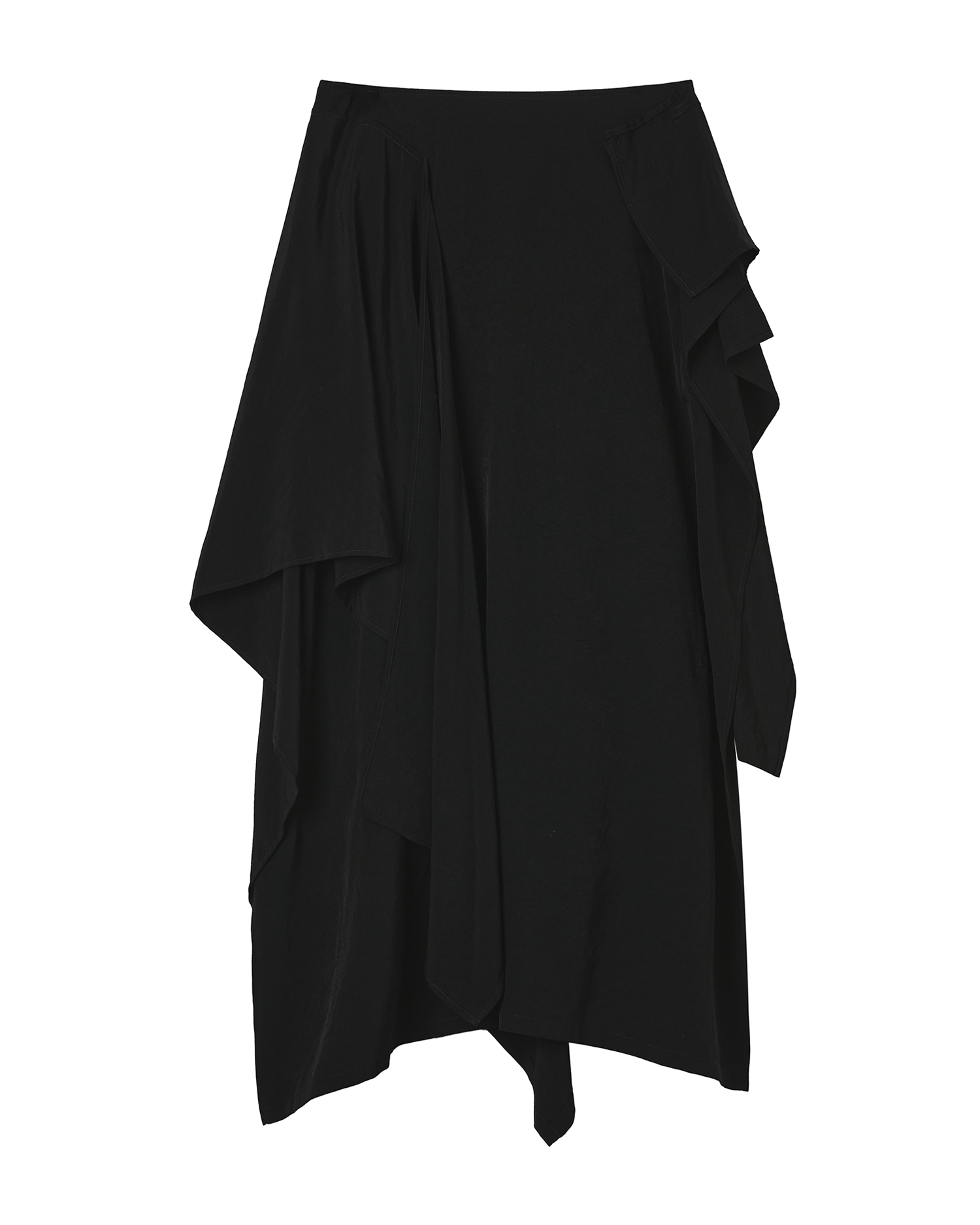
The suit is fashion's most stubborn artifact — a garment built on stillness, posture, and the polite fiction that the body inside it should behave. YOHJI YAMAMOTO HOMME has spent four decades dismantling that fiction. With the Cut Motion + Motion Sewing Suit, the house delivers its most precise argument yet: tailoring engineered not to constrain movement, but to participate in it.
The proposition is deceptively simple. Most suits are drafted around a static mannequin, then imposed on a body that must conform. Yamamoto's atelier works the other way around. Panels are cut along the trajectories the body actually travels — through the shoulder, across the back, down the arm — and the seams follow those lines. The suit opens, drapes, and recovers as the wearer walks, reaches, sits. It is architecture with a hinge.
The Method Behind the Motion
"Cut motion + motion sewing" is the brand's name for this construction. The phrase sounds technical, and it is, but the effect is almost behavioral. A jacket cut this way doesn't hang off the shoulders so much as travel with them.
What separates it from the usual "performance tailoring" rhetoric is restraint. There is no stretch panel, no hidden gusset, no athletic borrowing. The engineering lives in the pattern itself — in where the fabric is divided and how those divisions are rejoined. Yamamoto has never been interested in hiding the mechanics of a garment, and here the mechanics are the point.
Fabric That Knows How to Yield
The materials matter as much as the method. Wool gabardine with a dry, almost papery hand gives the jacket its structure without stiffness — the kind of fabric that holds a line but never fights the body inside it. In the trousers, a cupro-and-wool blend allows the cloth to move against itself rather than catching, which is the quiet difference between a suit you forget you're wearing and one you're constantly adjusting.
Linings are minimal or absent by design. Pockets sit low and deep, cut on the bias so they fall flat when empty and open cleanly when used. The lapels are narrow but not severe. And the shoulder — that most overworked zone in menswear — stays soft, unstructured, and deliberately unresolved, letting the wearer's own frame complete the line. It's a subtle dare: the suit finishes itself on you.
A Suit for a Moment That Wants Both
Culturally, this lands at a particular moment. Menswear has spent several seasons chasing comfort through athleticism — track pants as tailoring, sneakers as dress shoes — but the Cut Motion + Motion Sewing Suit proposes something more interesting: that ease and formality need not be opposites.
It arrives as the house continues to exert a quiet gravitational pull on contemporary fashion, from the reappraisal of Carolyn Bessette-Kennedy as Yamamoto's great interpreter to the label's expanding direct retail presence through THE SHOP YOHJI YAMAMOTO. The perpetual revolution AnotherMag describes is not a break with the past but a deepening of it. This suit is the latest turn of that screw.
It is also unmistakably Yamamoto. The palette stays in the house's register — black, deep indigo, charcoal, the occasional washed grey — and the silhouette carries that familiar, slightly mournful elegance: long jacket, relaxed trouser, nothing cinched, nothing shouted. Yet the technical achievement is genuinely new. Where earlier Yamamoto tailoring gestured toward movement, this collection engineers it, cutting and sewing in dialogue with the body rather than in opposition to it.
Who It's For, and Why It Matters Now
Not the man who wants a suit to announce his arrival. This is for the wearer who understands clothing as a daily negotiation — someone who moves through cities, through meetings, through long evenings, and resents anything that asks them to sit still to look correct. Architects, musicians, creative directors. Anyone who has ever tugged at a jacket mid-conversation and wished the garment would simply cooperate.
It is, notably, a suit that reads as formal without ever feeling borrowed from a dress code. That's harder to pull off than it sounds. Most tailoring that prioritizes movement ends up looking like sportswear in disguise; most tailoring that prioritizes formality ends up looking like a costume. This does neither.
Why it matters now is simple: the suit is being renegotiated across the industry, and most answers have been either nostalgic or evasive. Yamamoto's is neither. The Cut Motion + Motion Sewing Suit treats tailoring as a living system — cut to move, sewn to follow — and in doing so reminds us what the suit was always supposed to be.
Not a cage. A companion.