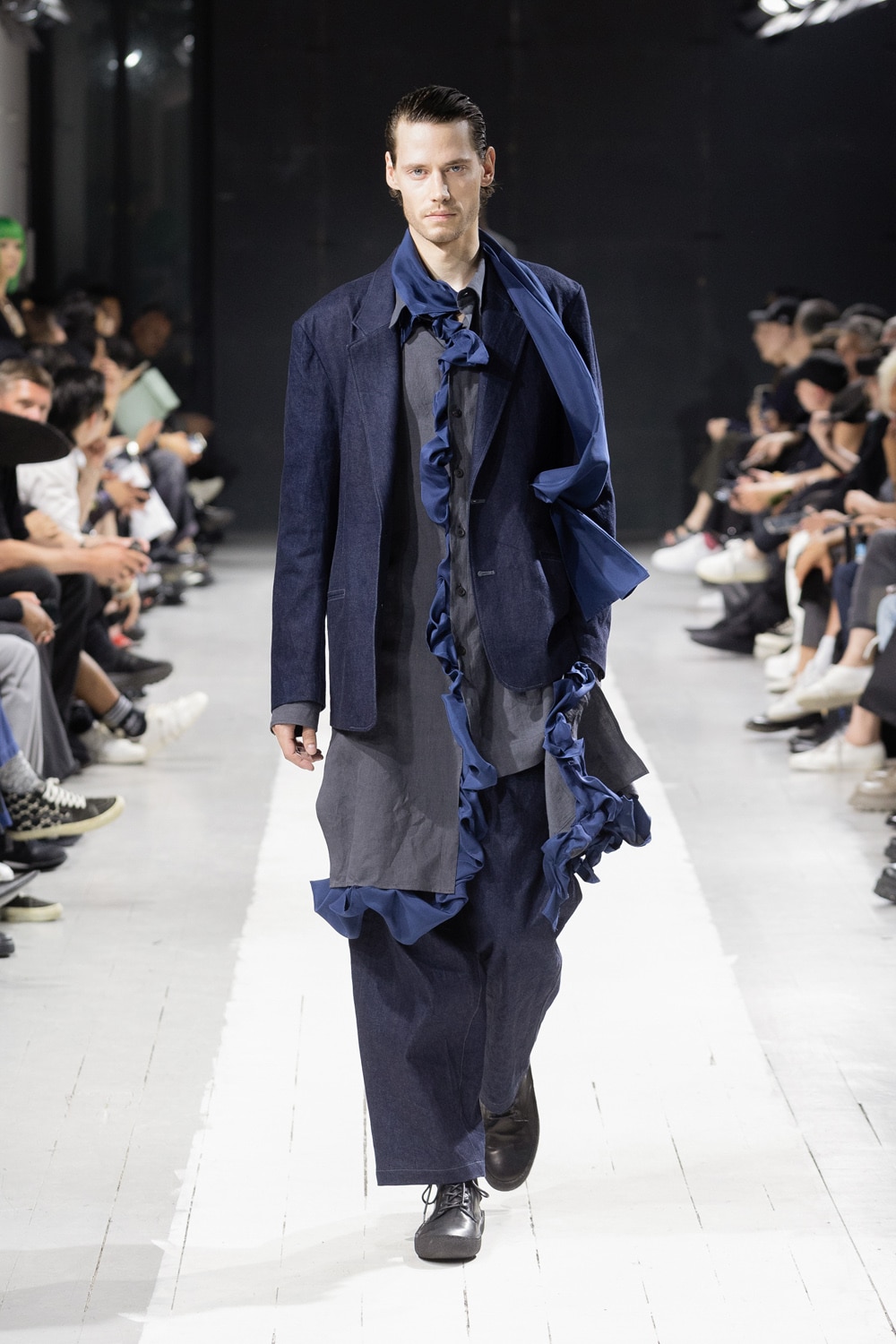
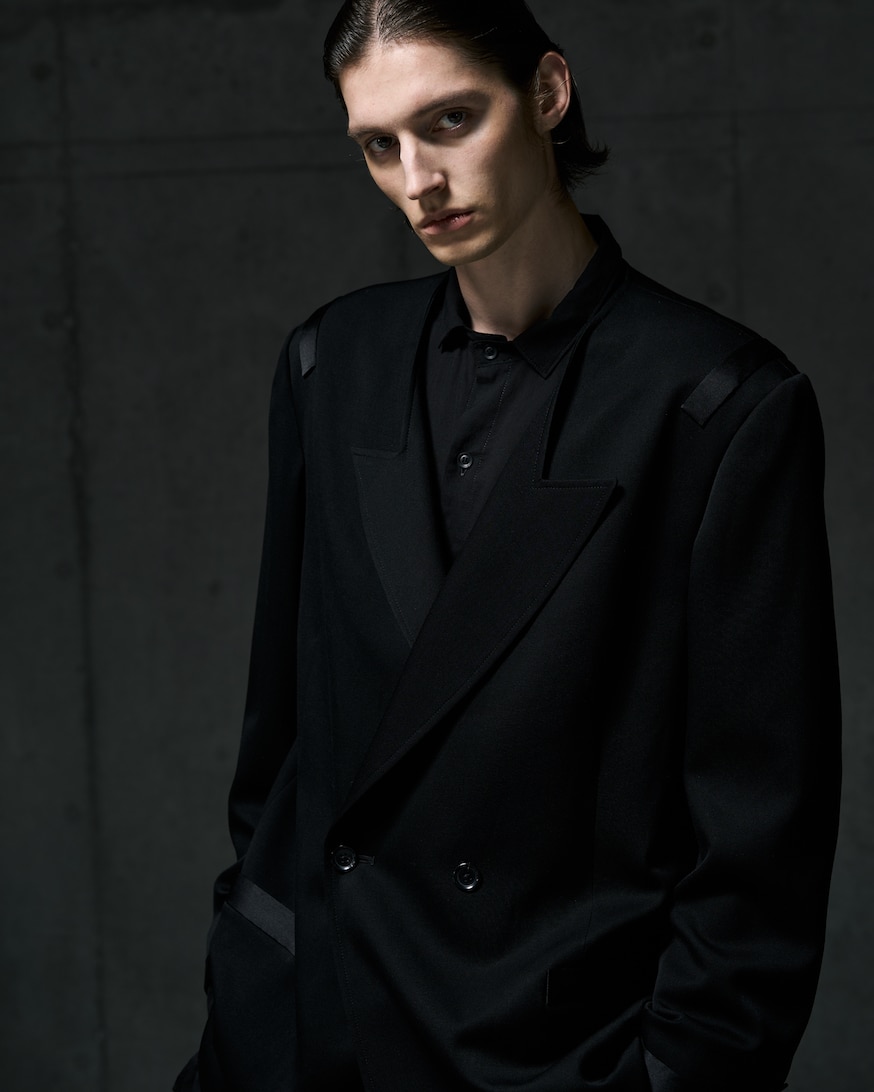
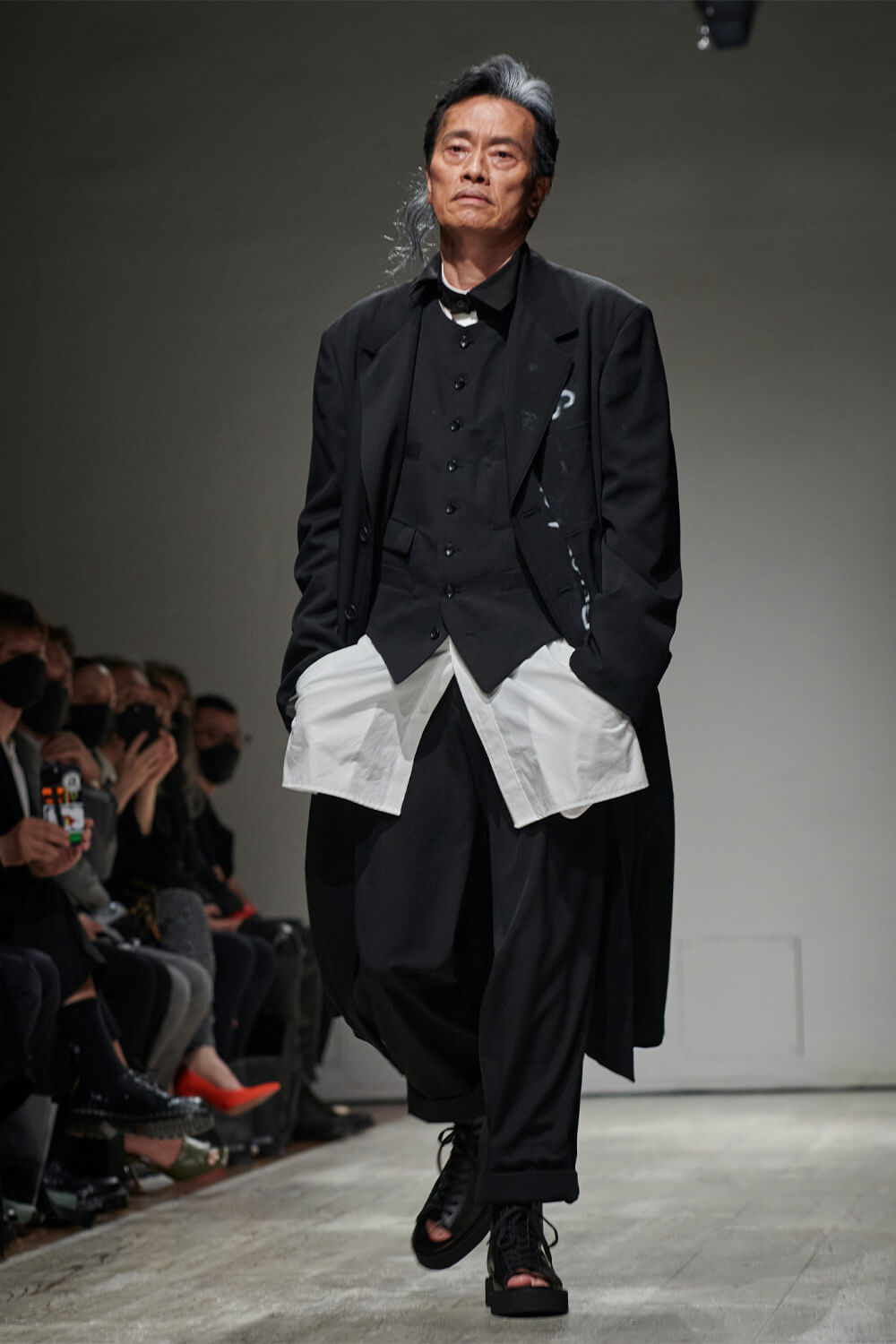
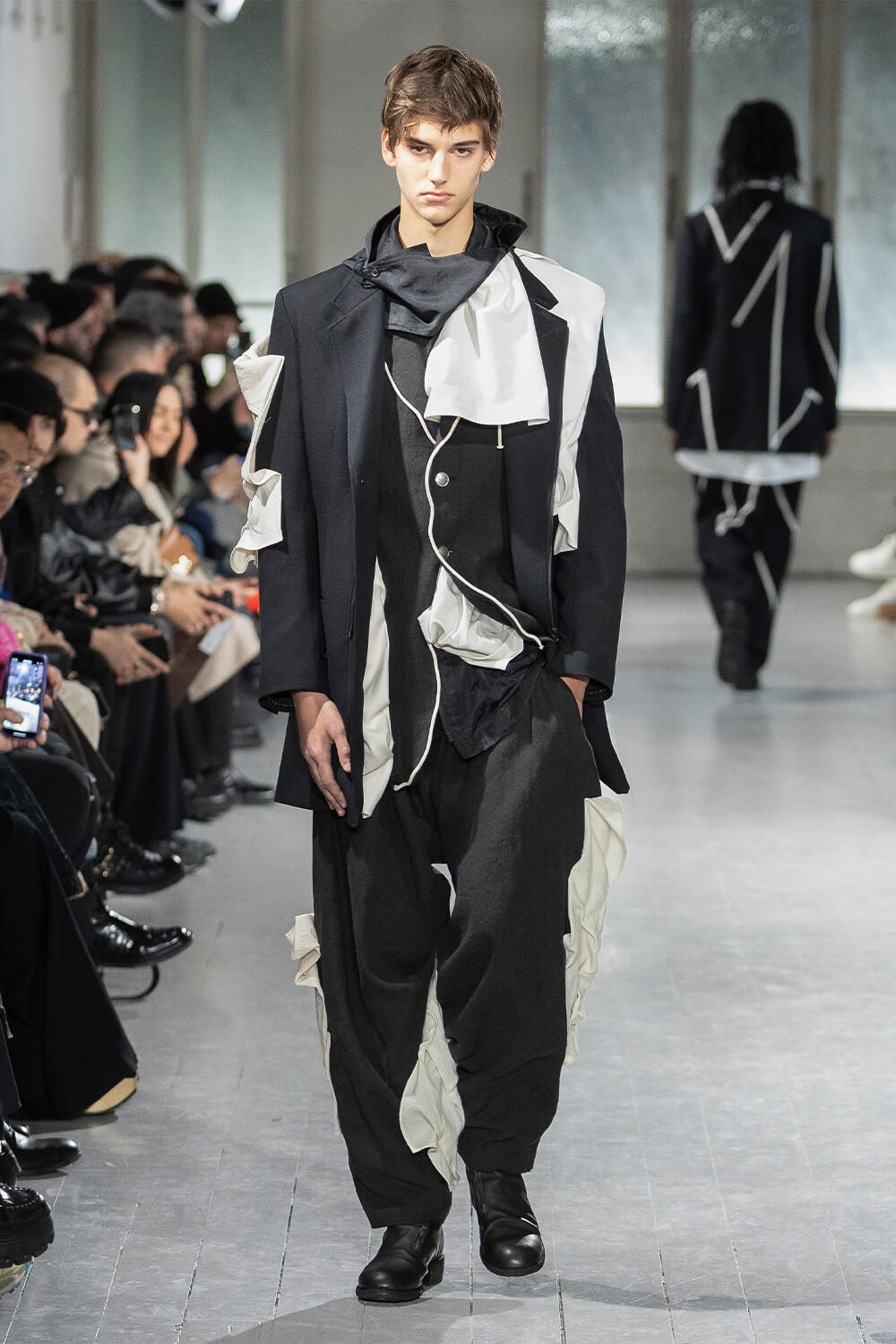
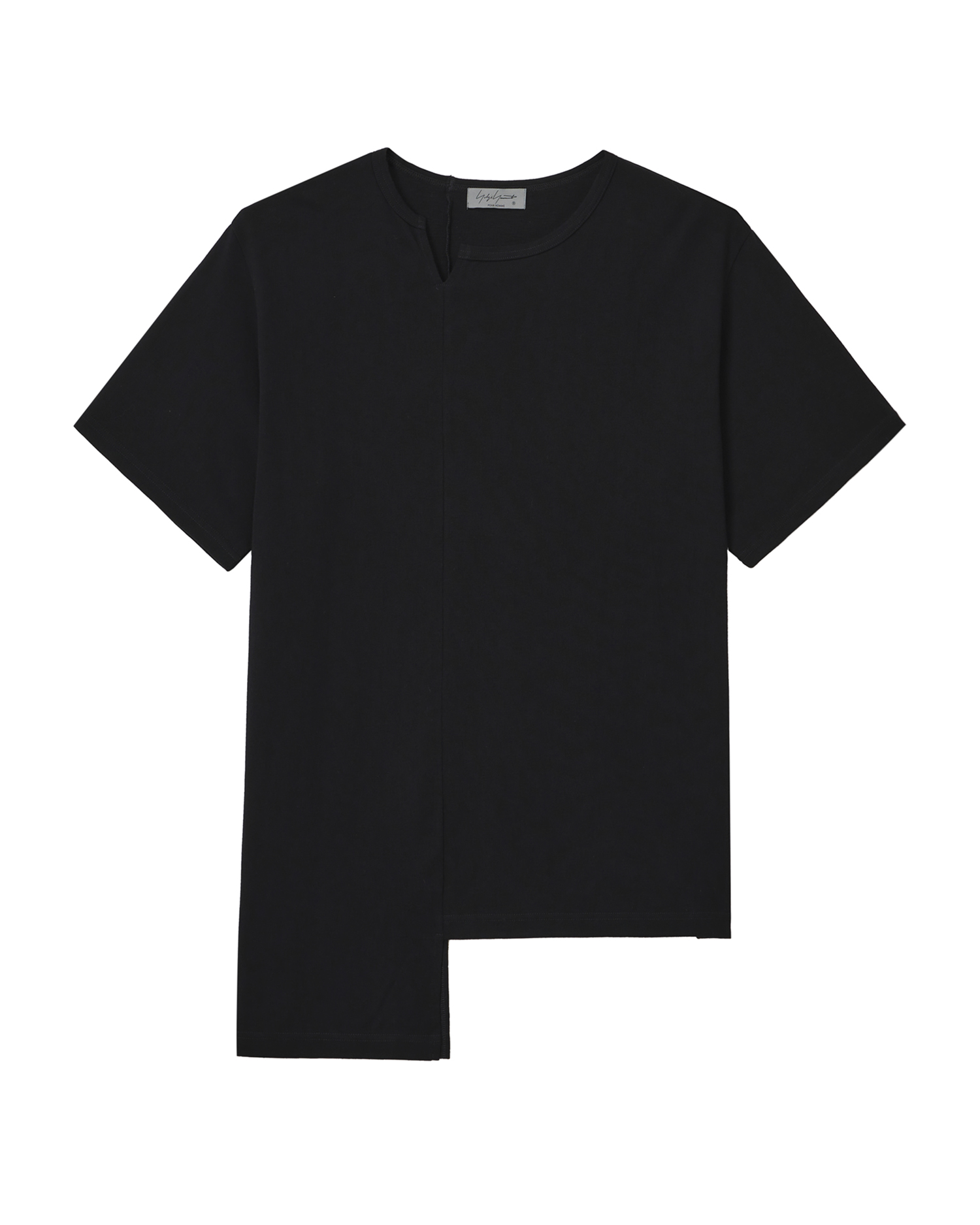
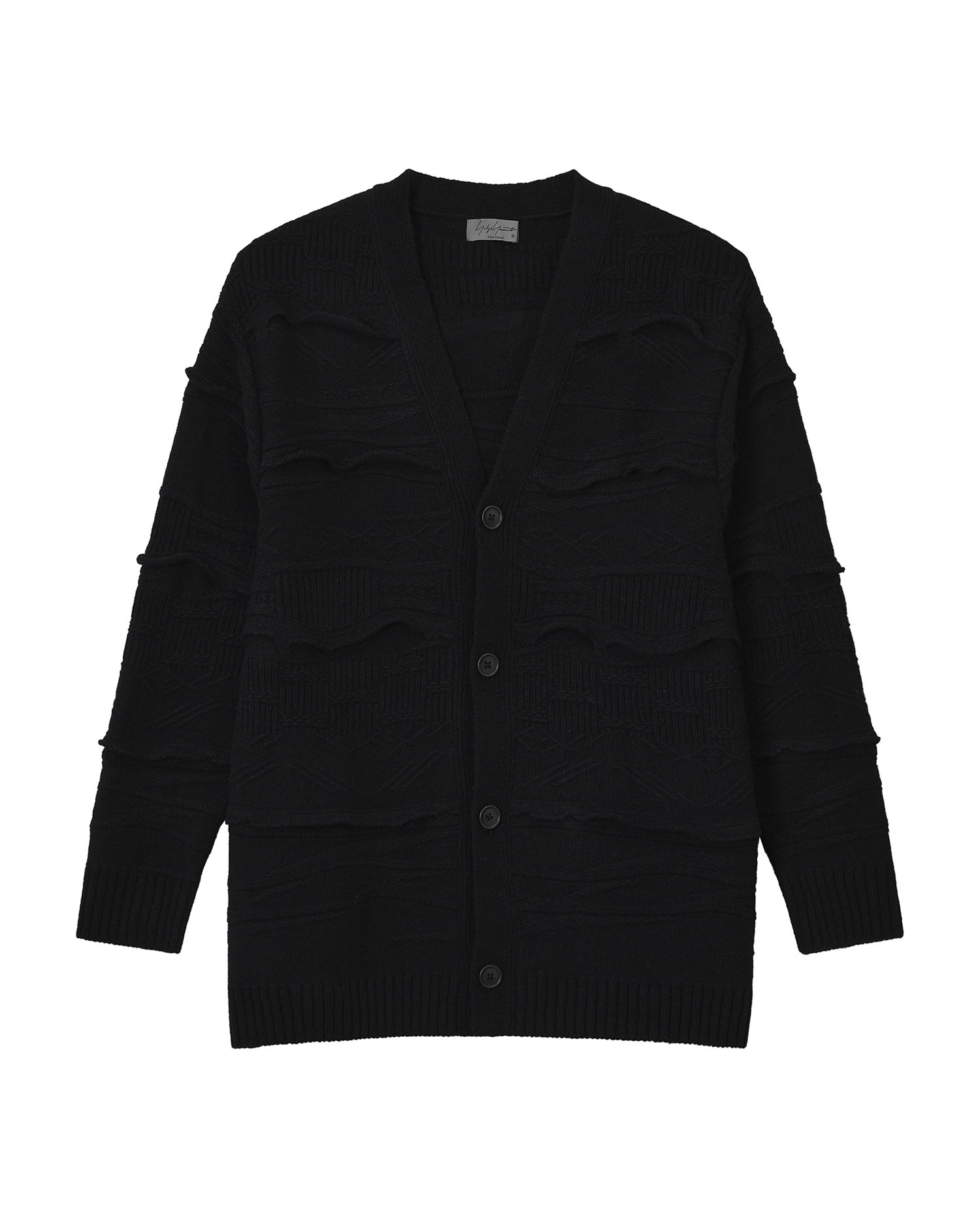
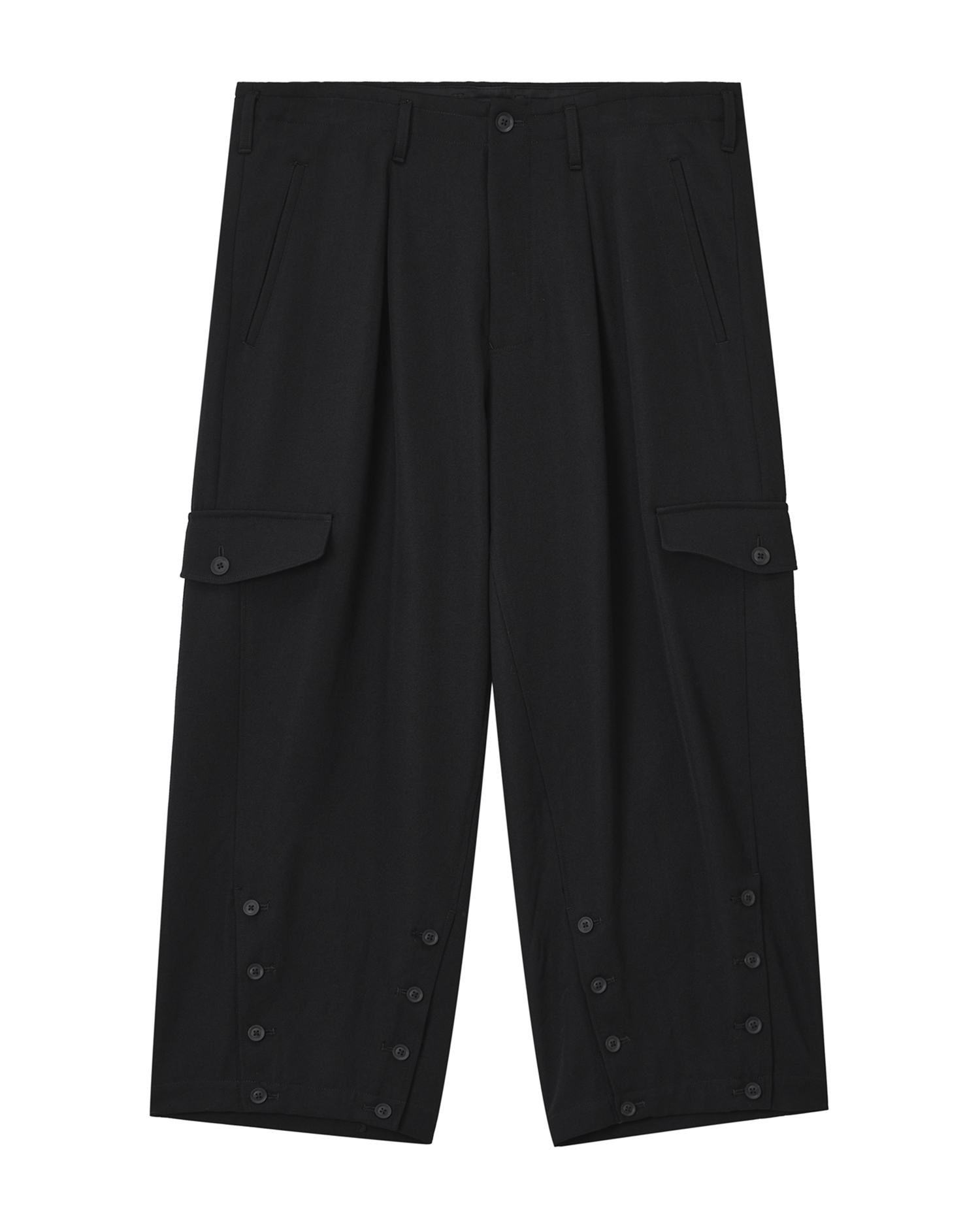
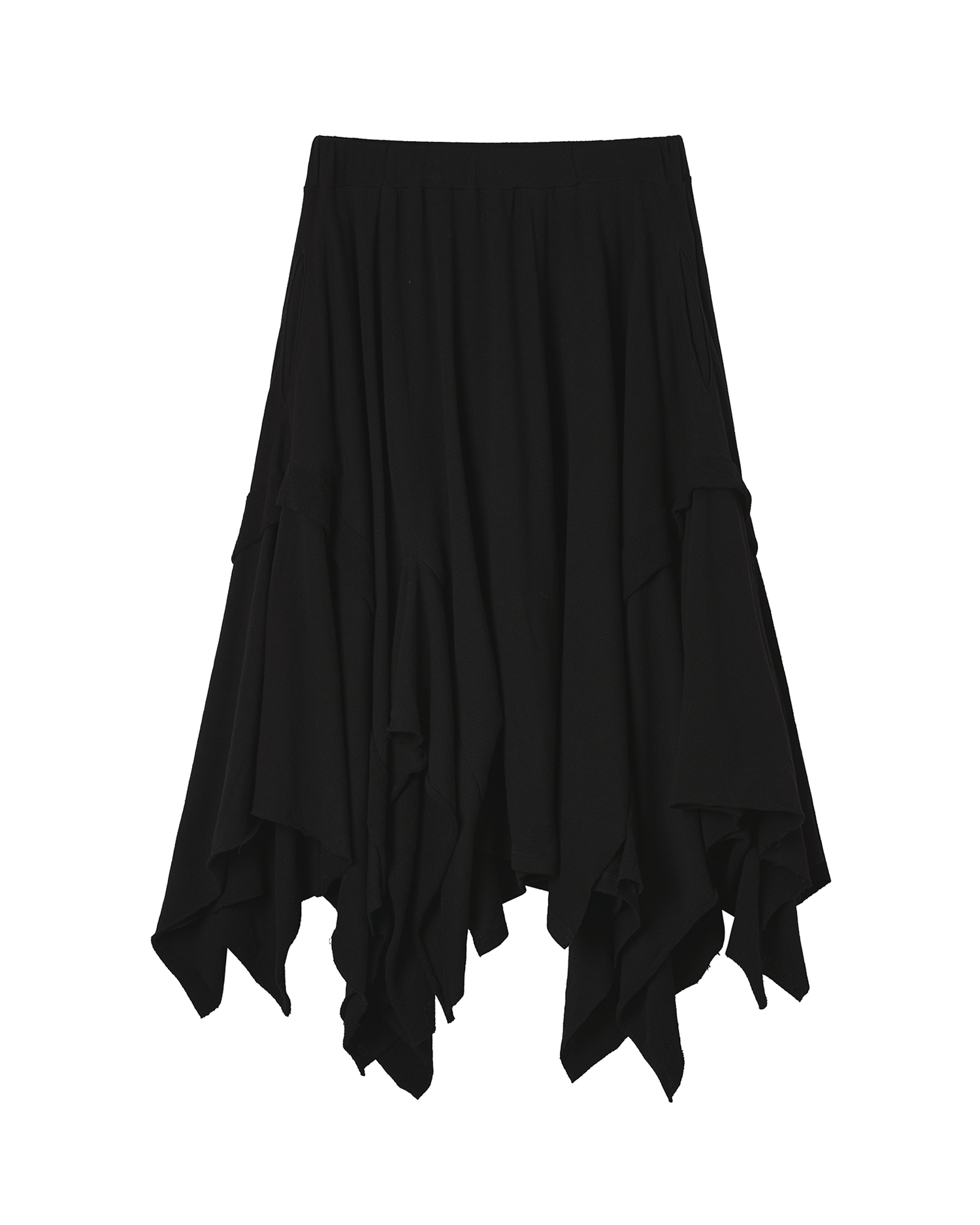
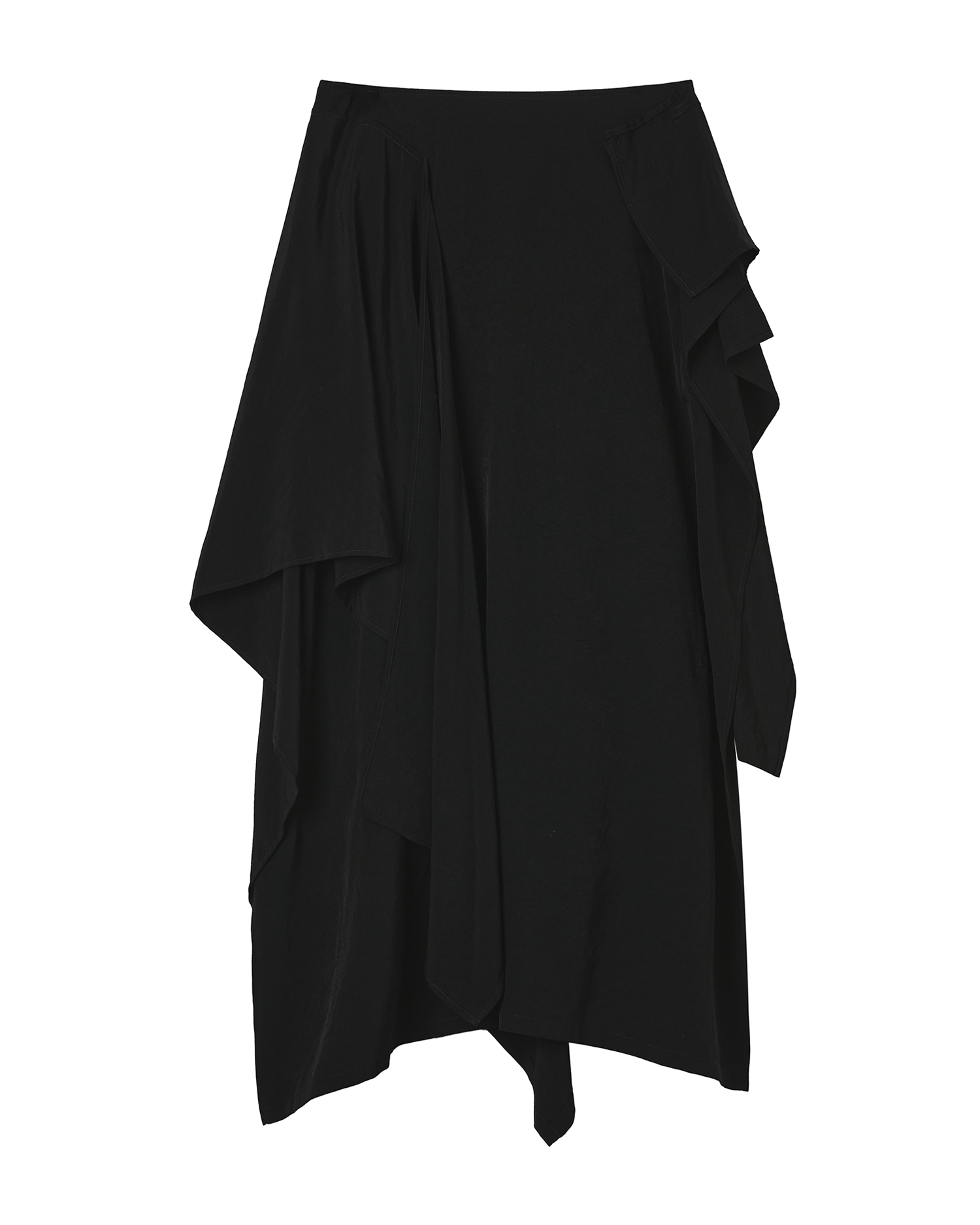
The suit has spent a century frozen in place. Its conventions — the padded shoulder, the suppressed waist, the rigid chest canvas — were engineered for a body at rest, a body on display, a body that stands still long enough to be admired. YOHJI YAMAMOTO HOMME has spent four decades dismantling that assumption, and with the Cut Motion + Motion Sewing Suit, the house arrives at perhaps its most precise argument yet: that tailoring should be built not for the pose, but for the movement that precedes and follows it.
The proposition starts with the name. Cut Motion describes a pattern-cutting philosophy that anticipates the body's trajectory rather than its static silhouette — panels shaped to accommodate the swing of an arm, the rotation of a shoulder, the forward lean of a stride. Motion Sewing extends that logic into construction itself, with seams and darts placed along lines of articulation so the fabric yields where the body bends and holds where it needs structure. The result is a suit that reads as softness in photographs and reveals its engineering only in wear — a garment that hangs with the studied ease of a dressing gown while carrying the shoulder line of a proper jacket.
The Fabric Does the Talking
Materially, the collection leans on the house's long-standing vocabulary: wool gabardine with enough weight to drape but enough give to move, often finished in the deep, light-absorbing blacks that have become Yamamoto's signature. There are subtle textural plays — dry-handed finishes, matte surfaces that refuse the shine of conventional business cloth — and the palette rarely strays far from black, charcoal, and the occasional washed indigo.
This is not a suit designed to announce itself in a boardroom. It is a suit designed to disappear into the person wearing it and reappear as posture, gait, presence.
A Revolution That Never Stopped
The cultural context matters here. Yamamoto emerged in Paris in the early 1980s alongside Rei Kawakubo and Issey Miyake, and the trio's confrontation with Western tailoring — their insistence on asymmetry, volume, and the beauty of the unfinished — permanently altered what a suit could be. The Cut Motion + Motion Sewing Suit is a direct descendant of that revolution, but it arrives at a moment of renewed relevance.
As AnOther Magazine recently framed it, Yamamoto operates in a state of "perpetual revolution," and the fashion press has spent the past year rediscovering him: GQ revisited Carolyn Bessette-Kennedy as his great interpreter, L'OFFICIEL HOMME charted his career and influence, and the recent Paris menswear presentations reaffirmed that Yohji Yamamoto Homme remains one of the few houses still genuinely advancing the suit rather than restaging it. The launch of THE SHOP YOHJI YAMAMOTO, the brand's official web store carrying its full range of lines, has also made these garments more accessible to a global audience than at any point in the house's history.
For the Body in Transit
Who is this suit for? Not the man who needs a uniform of authority, and not the collector who treats clothing as archive. It is for the person who moves through the world at an angle — the architect, the musician, the creative director, the thoughtful dresser who understands that a suit's highest function is to accompany a life rather than constrain it.
It suits a body in transit: walking to a meeting, sitting cross-legged on a studio floor, gesturing through an argument, rising from a table without adjusting a single seam.
Why it matters now is precisely because the suit is under pressure. Menswear has spent a decade oscillating between the hoodie and the hyper-formal, and the middle ground — tailoring that is both serious and humane — has been thin. The Cut Motion + Motion Sewing Suit occupies that ground with authority. It is not a compromise between comfort and formality; it is a refutation of the idea that the two were ever in conflict.
Yamamoto's insight, refined across decades, is that cloth remembers the body it was cut for. Cut it for stillness, and you get a mannequin. Cut it for motion, and you get a person — and that, more than any lapel width or shoulder line, is what the suit was always supposed to be.