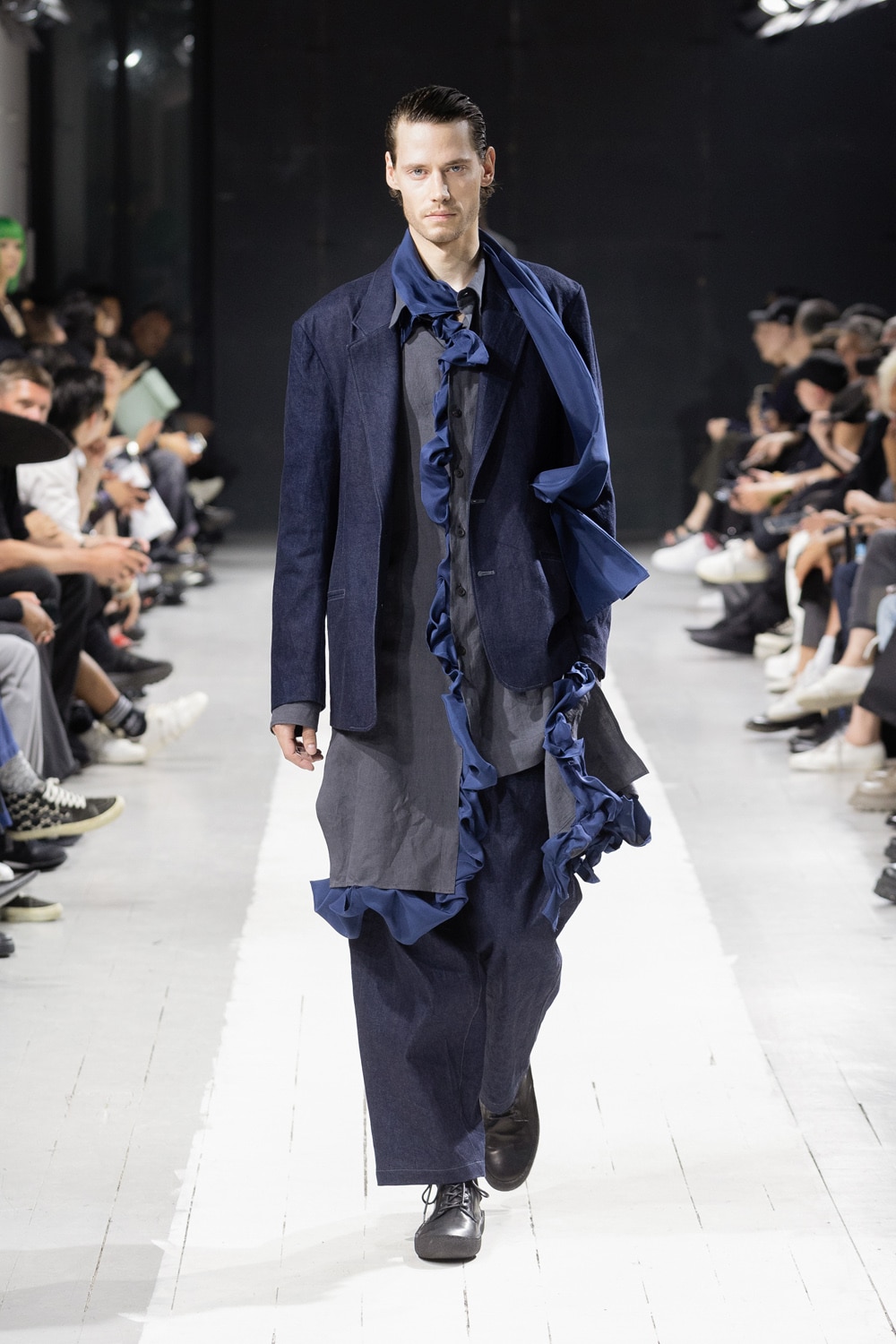
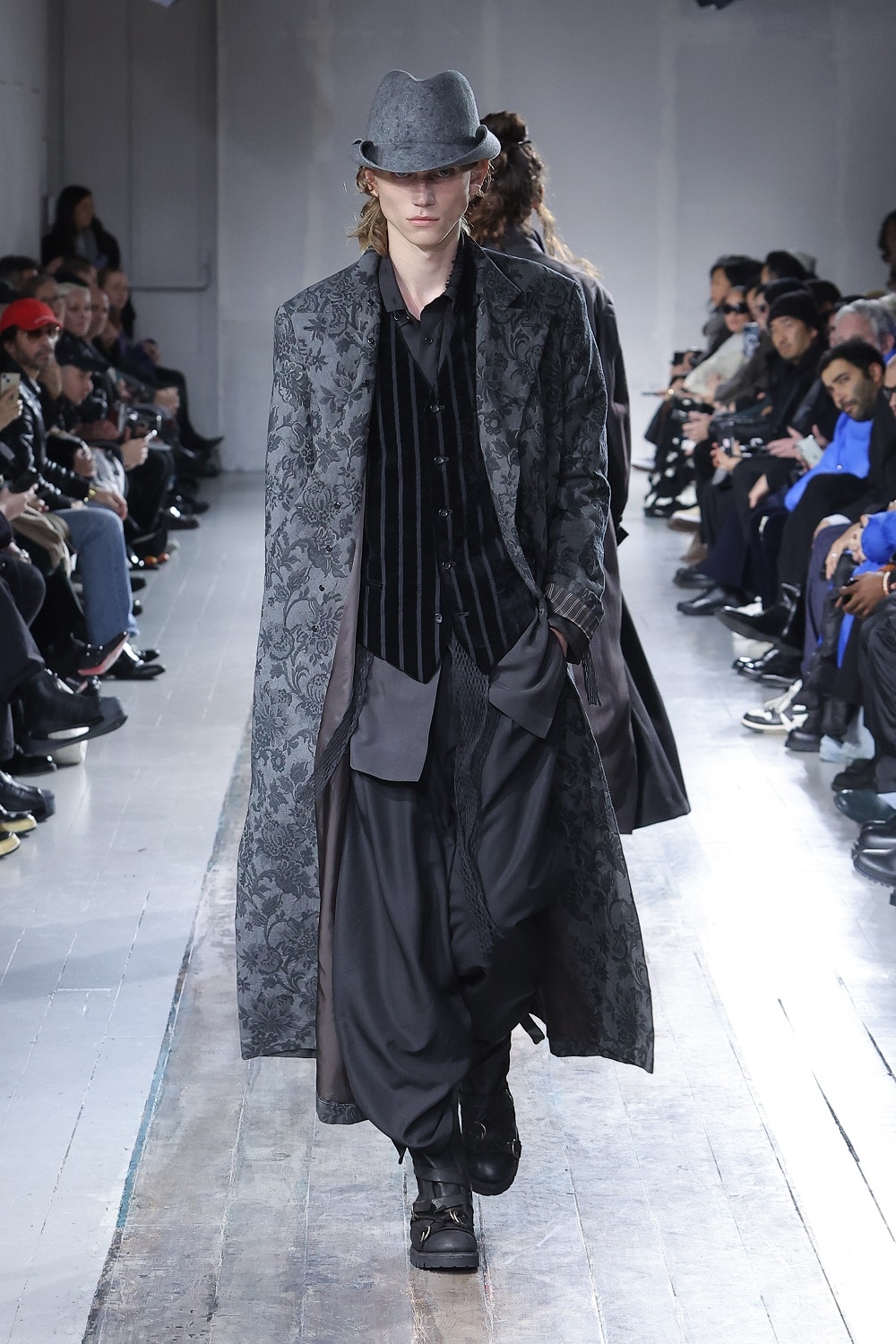
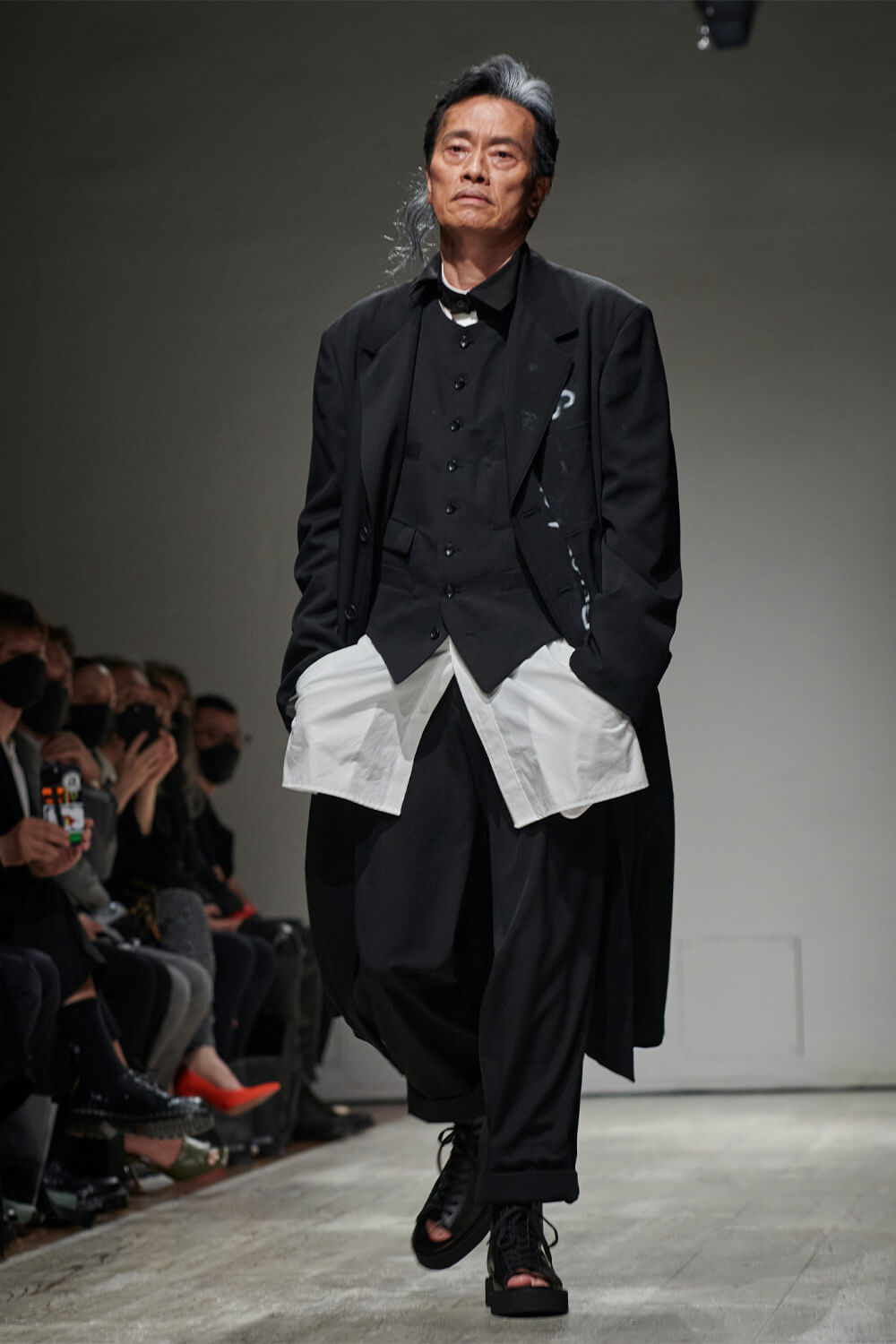
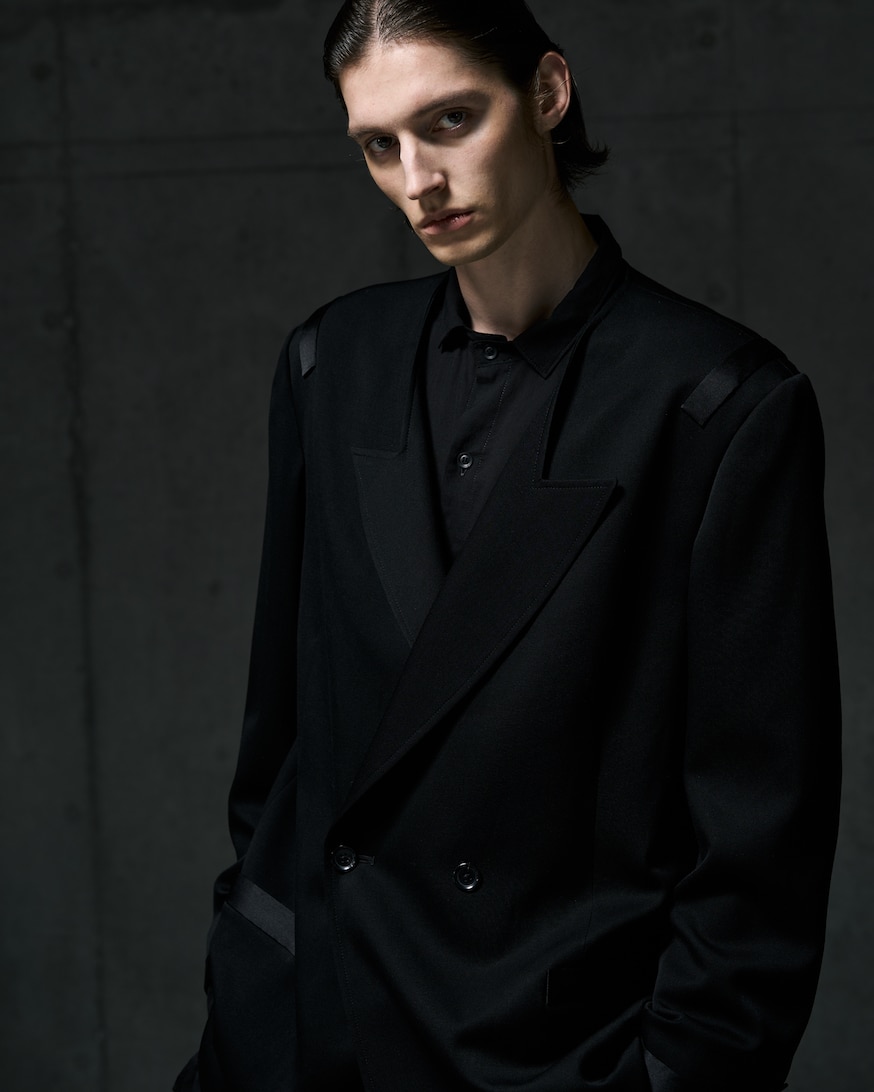
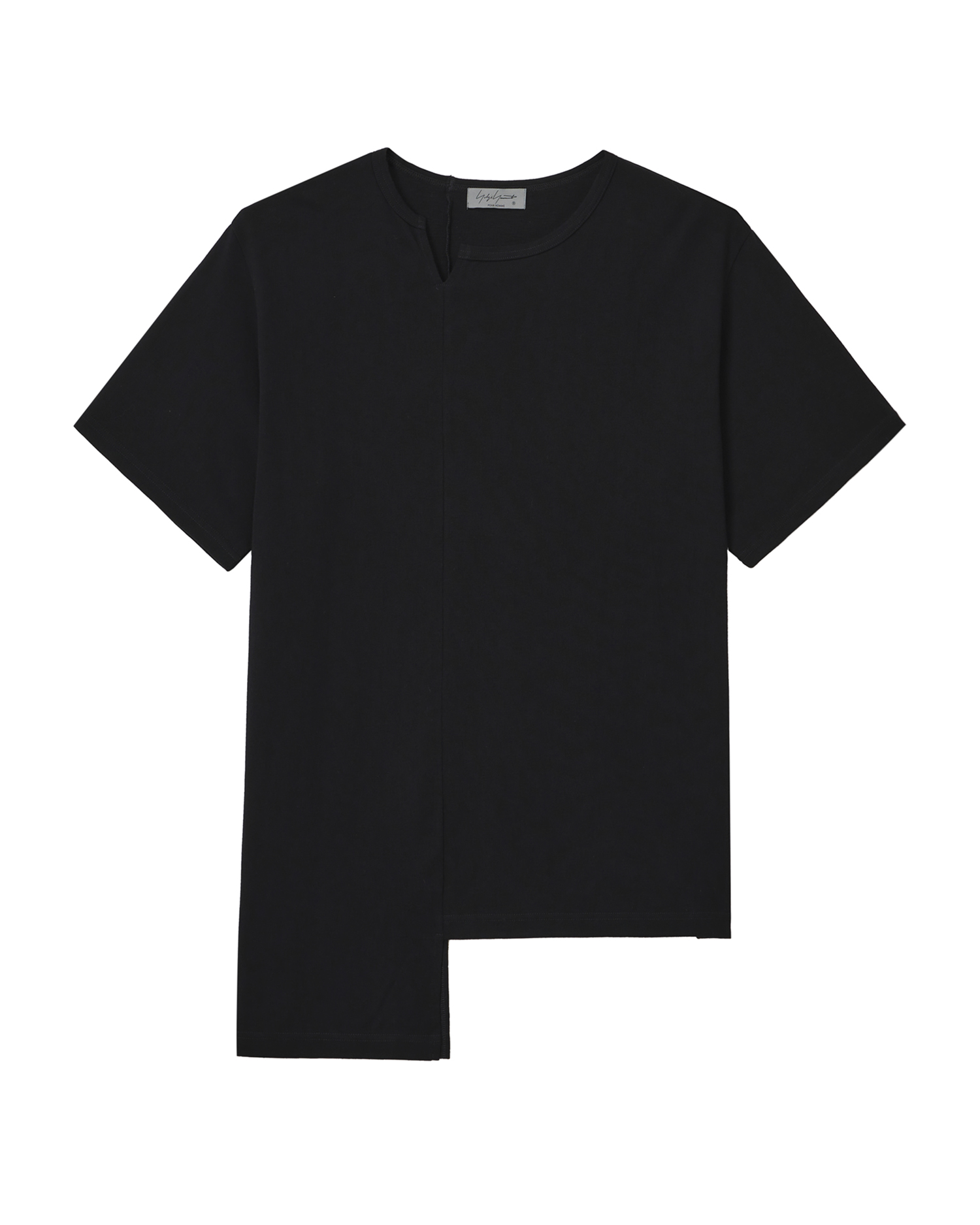
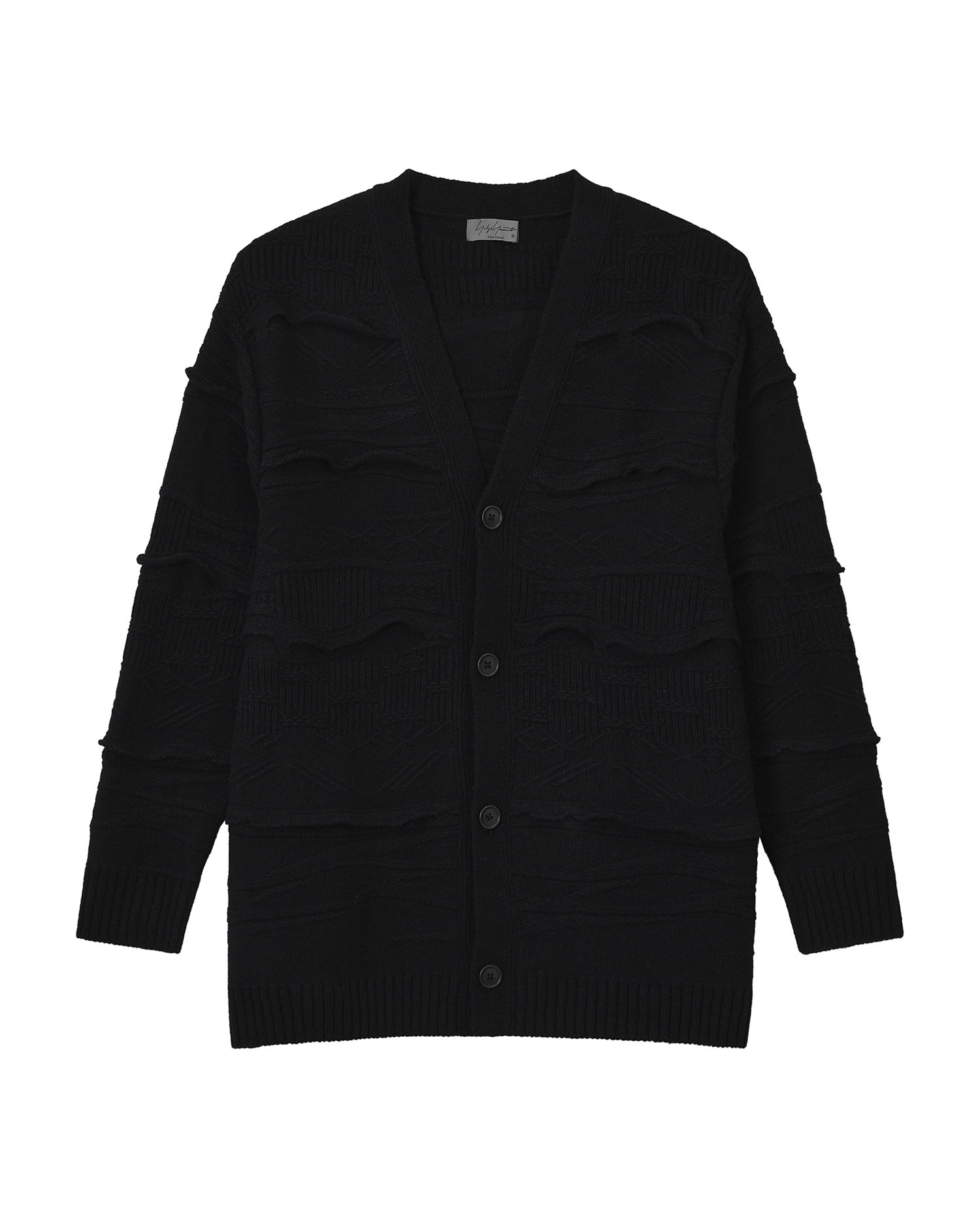
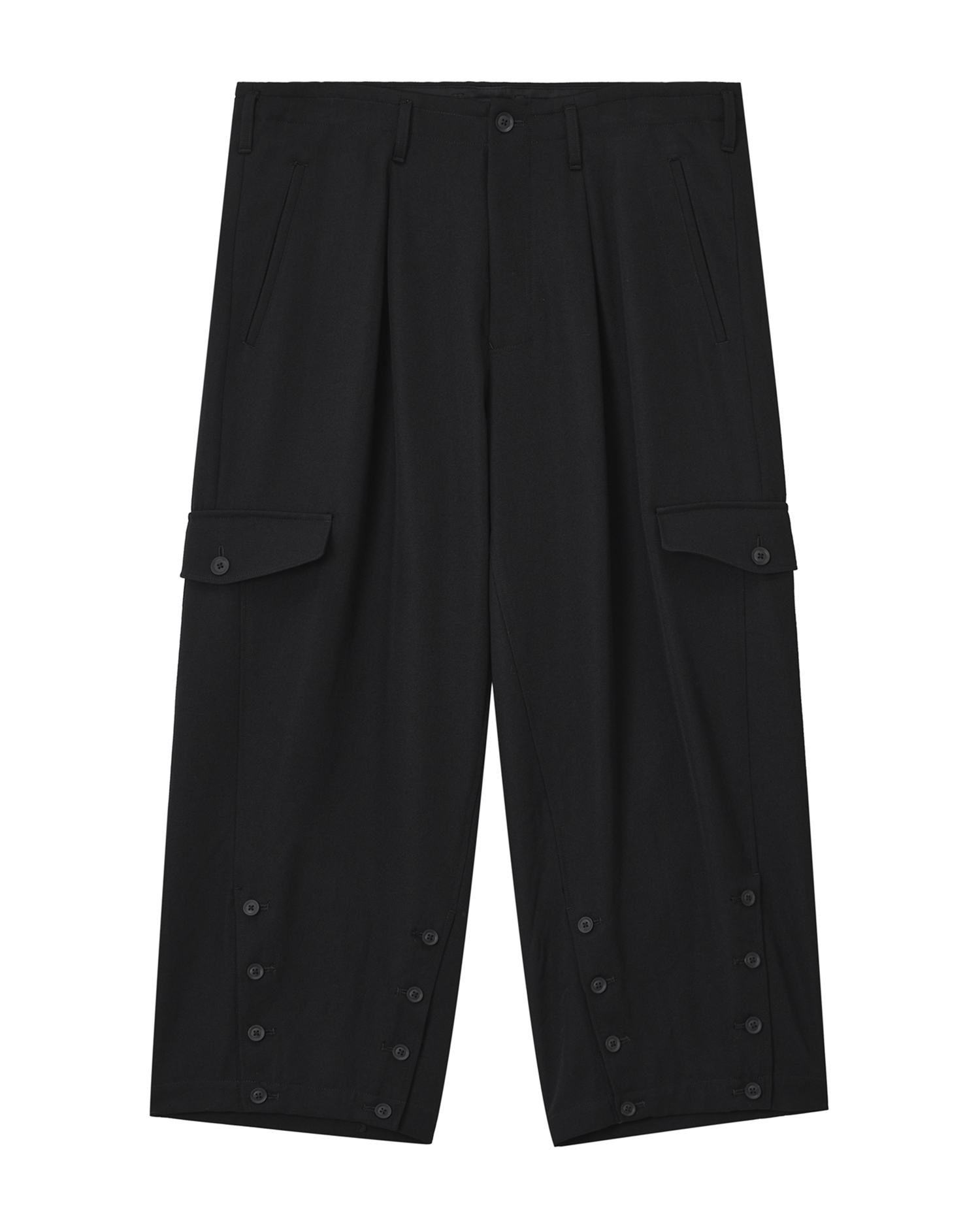
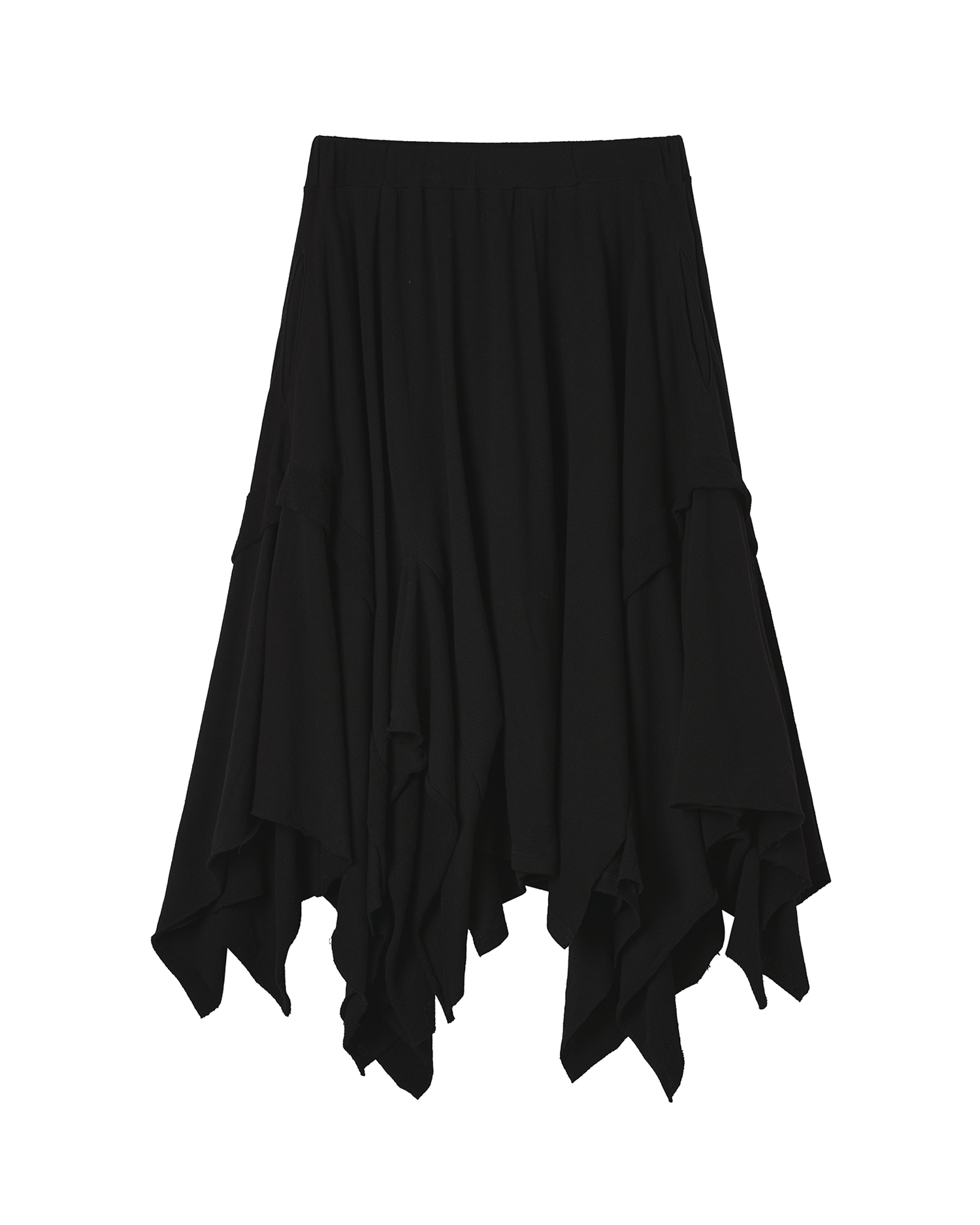
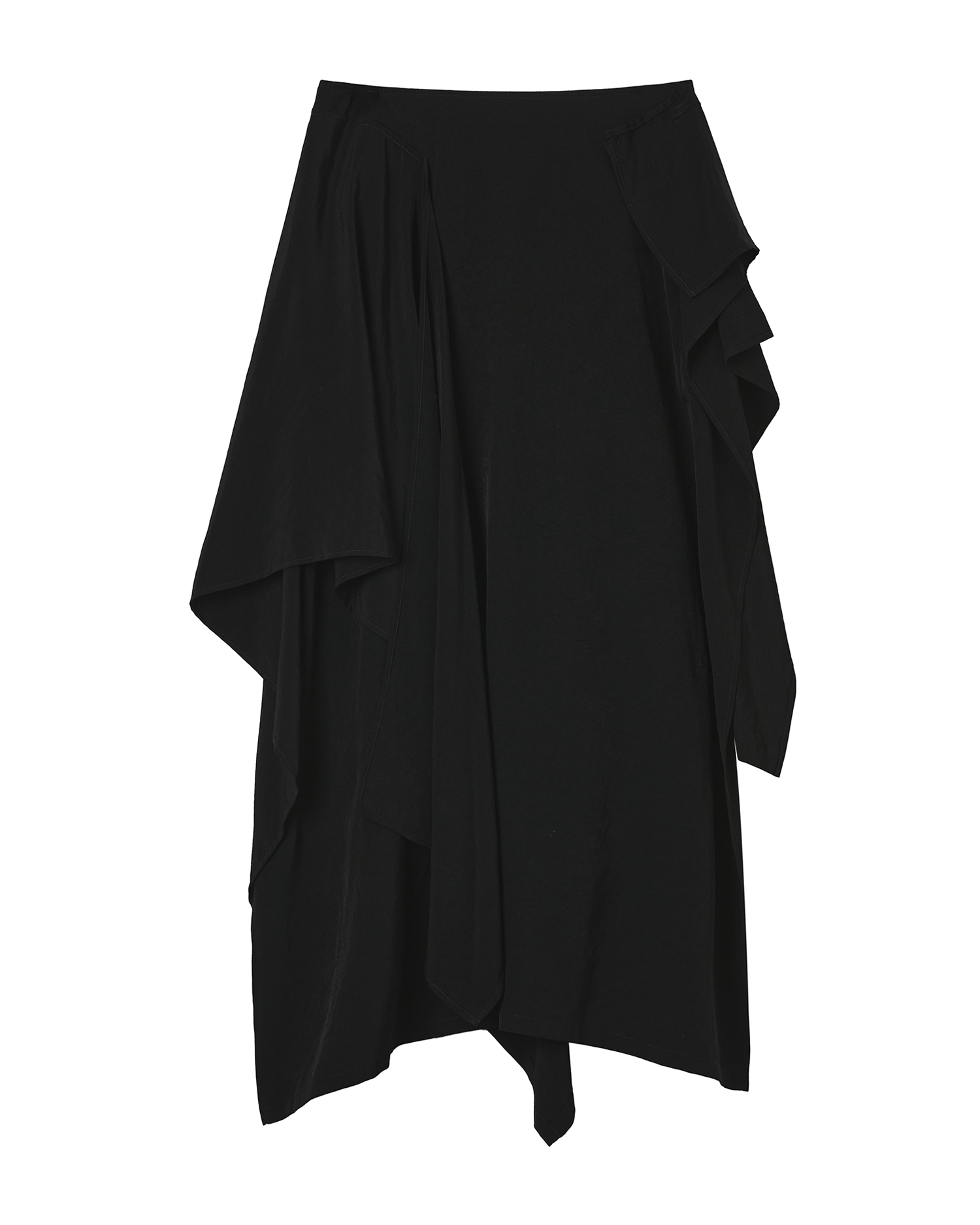
Most suits are built on a lie. They assume the body is a static object — a mannequin's silhouette, frozen at attention, shoulders squared to a drafting table. Pattern cutters have worked this way for two centuries, translating the human form into flat geometry and trusting that the wearer will forgive the difference. YOHJI YAMAMOTO HOMME has never been interested in that bargain. With the Cut Motion + Motion Sewing Suit, the house dismantles the premise entirely, engineering tailoring around the one thing a suit has never been designed to accommodate: movement itself.
The name is not marketing poetry. It is a technical description. In this collection — the "cut motion + motion sewing" project that has drawn attention from Hypebeast and the Paris menswear calendar alike — Yamamoto's atelier approached pattern-making as a study in kinetics. Panels are cut along arcs that anticipate the body in transit: the reach of an arm, the forward pitch of a stride, the twist of a torso turning to speak. The sewing follows the same logic. Seams are placed and stitched not to hold a rigid shape but to release tension precisely where the body demands it, so the garment flexes with the wearer rather than resisting him. The result is a suit that behaves less like armor and more like a second skeleton.
Cutting for the Body in Transit
This is where the tailoring gets interesting. Where a conventional suit pattern treats the torso as a fixed column, Yamamoto's cut treats it as a hinge. Panels are drafted along arcs, not straight lines, so the cloth already knows where the elbow will bend and the shoulder will roll before the wearer ever puts it on. It is pattern-making as choreography — the garment rehearsing your movements in advance.
The effect on the body is subtle but total. Nothing pulls. Nothing binds. The suit doesn't announce its engineering; it simply disappears into the act of wearing it.
Sewing That Releases, Not Restrains
The stitching follows the same kinetic logic. Seams are positioned and executed to release tension exactly where the body asks for it, rather than locking the silhouette into a predetermined shape. It is a quiet inversion of how tailoring usually works: instead of the seam holding the garment together against the body, the seam lets the garment move with it.
The result reads as supple rather than structured — a suit that flexes through a stride, a reach, a turn, and returns to its line without a crease of complaint.
The Yohji Material Vocabulary
Materially, the construction is unmistakably Yohji. There is the signature black — deep, matte, light-absorbing — rendered in fabrics with enough weight to drape and enough give to move. Wool gabardines and tropical wools are cut with the house's characteristic generosity: relaxed shoulders, elongated lines, a silhouette that hovers rather than clings.
But where earlier Yamamoto tailoring could read as sculptural and still, this suit introduces an engineered suppleness. The drape is not incidental; it is calibrated. Every fold that forms when you sit, reach, or turn has been anticipated at the cutting table.
Four Decades of the Same Argument
This matters because Yohji Yamamoto has spent four decades arguing that clothing should serve the person inside it, not the other way around. The AnOther Magazine piece "Perpetual Revolution: The Paradox of Yohji Yamamoto" captures the tension at the heart of the house — a designer who is simultaneously one of fashion's most radical figures and one of its most consistent, returning season after season to the same questions of black, volume, and the poetry of imperfection.
The Cut Motion + Motion Sewing Suit is that paradox made wearable: an experimental proposition executed with the discipline of a master tailor. It also arrives at a moment when the culture is rediscovering Yamamoto from every angle — GQ revisiting Carolyn Bessette-Kennedy as his great interpreter, new critical surveys asking who he really is, and the house's own THE SHOP YOHJI YAMAMOTO platform widening access to its lines. The timing is not coincidental. A suit built for movement speaks directly to a generation that has rejected rigidity in dress as thoroughly as it has rejected it in work.
Who is this for? Not the man who wants a suit to announce his authority from across a room. This is for the wearer who understands that presence is a matter of motion — the architect crossing a lobby, the creative director pacing a studio, the person who lives in his clothes rather than posing in them. It rewards those who value construction over logo, proportion over trend. And it asks something of the wearer in return: a willingness to let the garment do its work quietly, without explanation.
In an era of disposable fashion and algorithmic sameness, a suit engineered around the human body in motion is a genuinely radical object. YOHJI YAMAMOTO HOMME has not reinvented the suit by decorating it. The house has reinvented it by finally admitting what the suit has always been: a garment worn by a body that never stops moving.