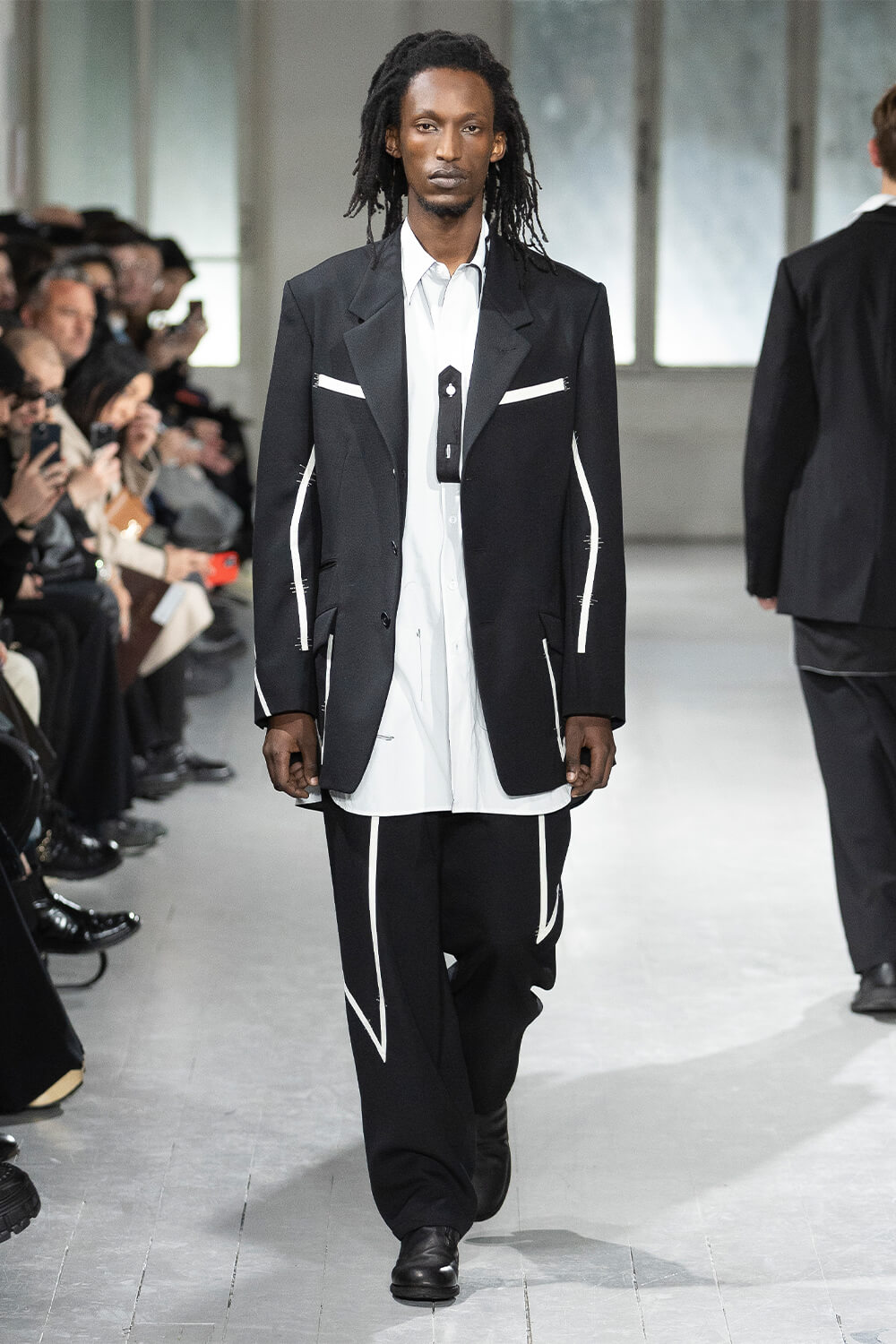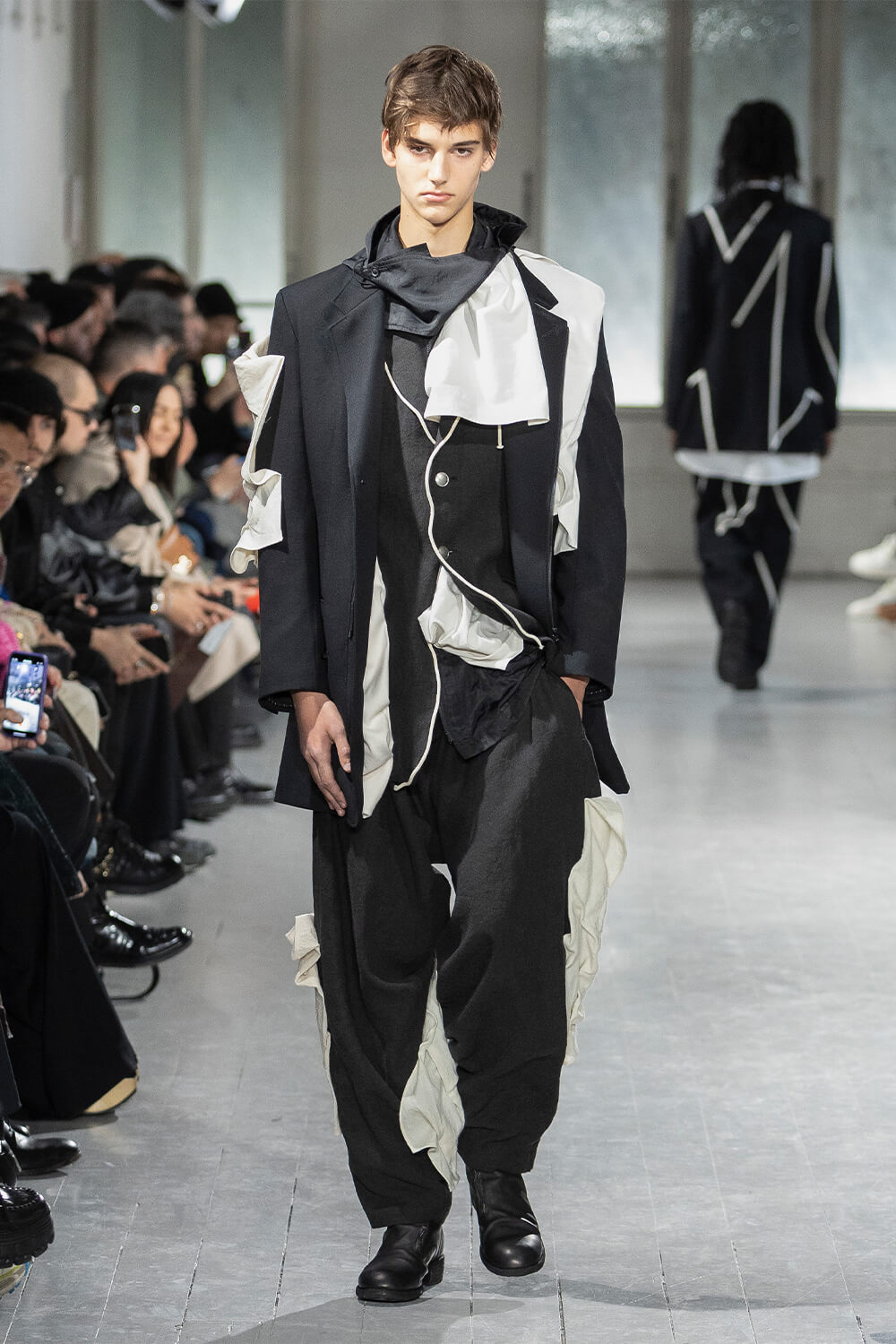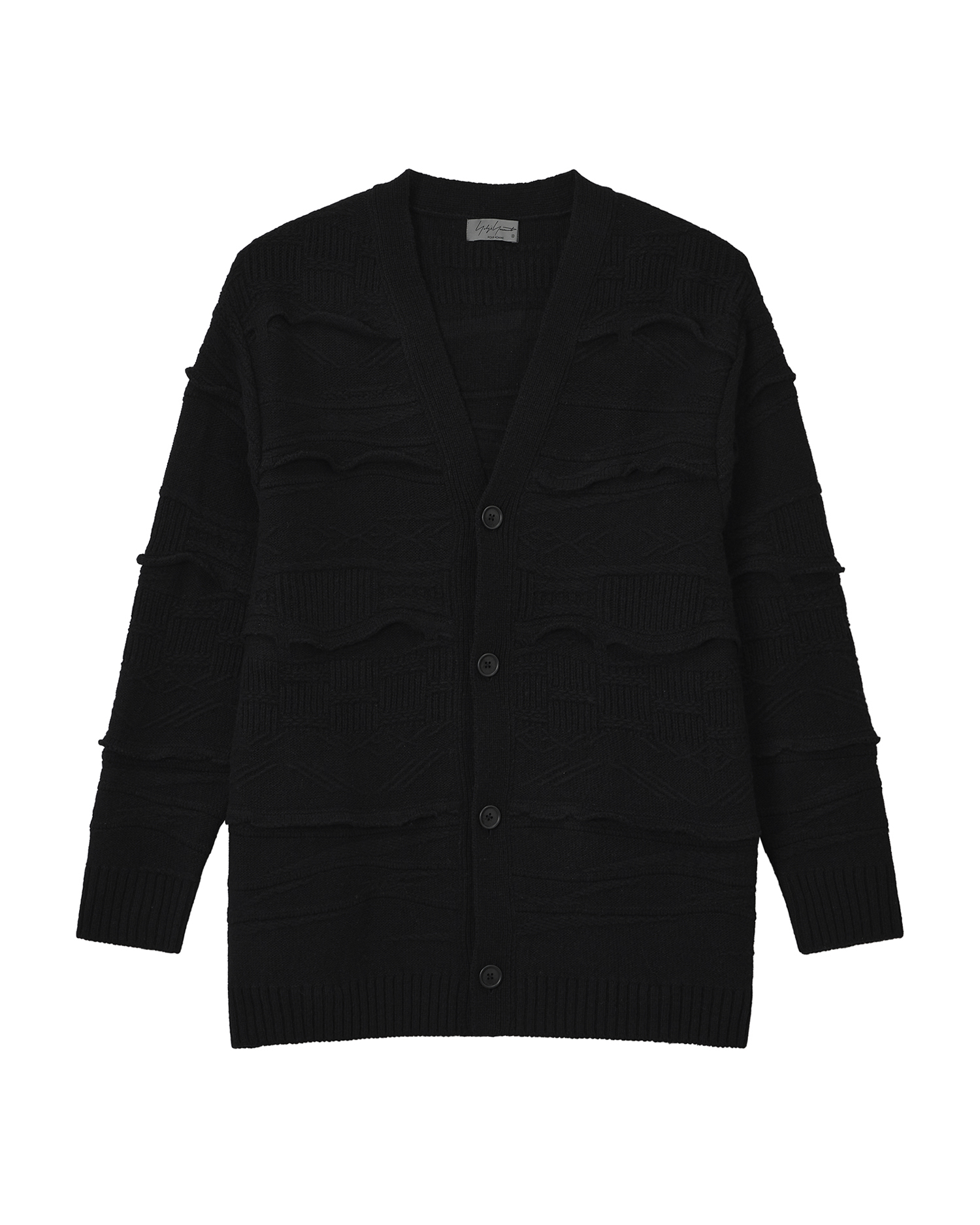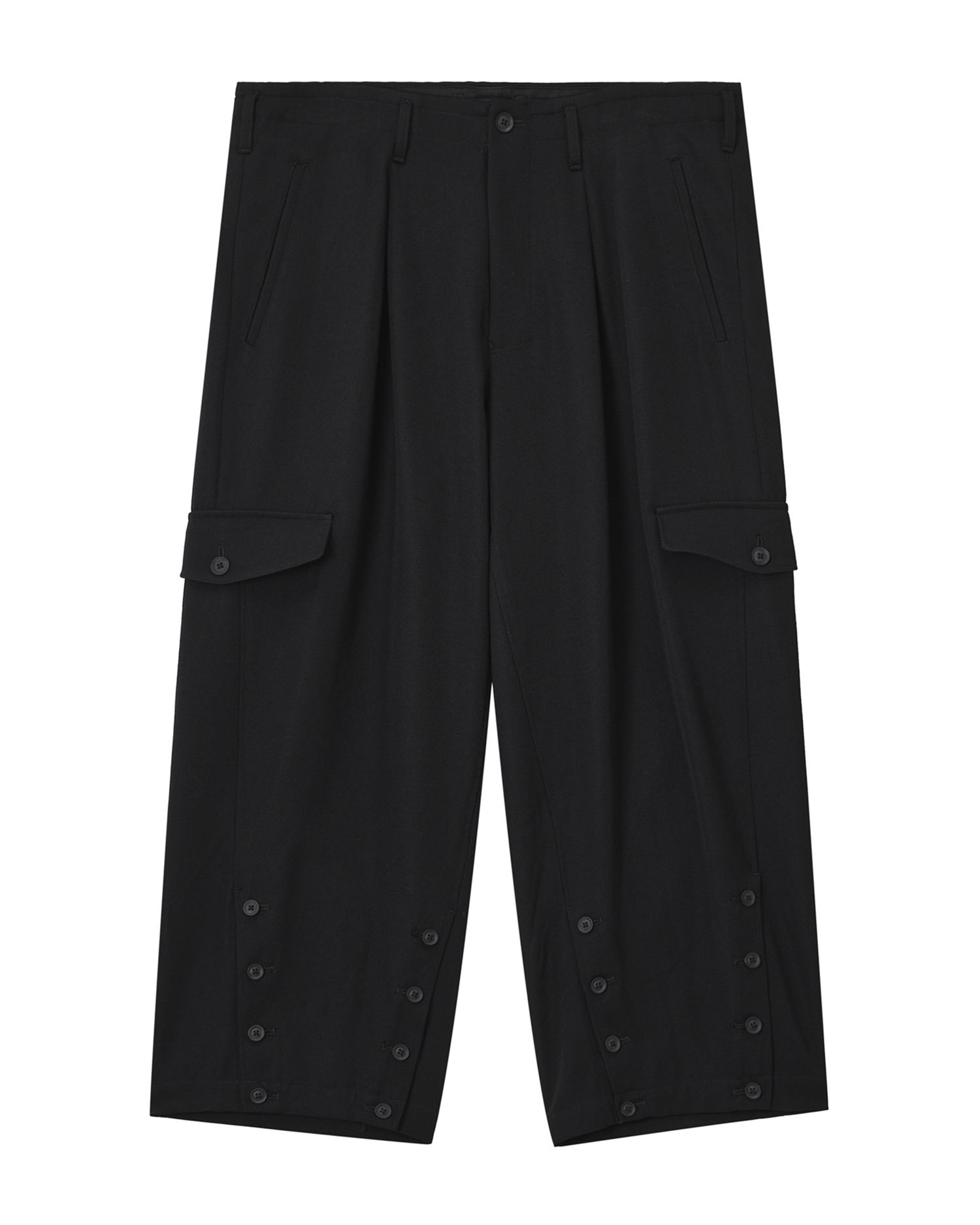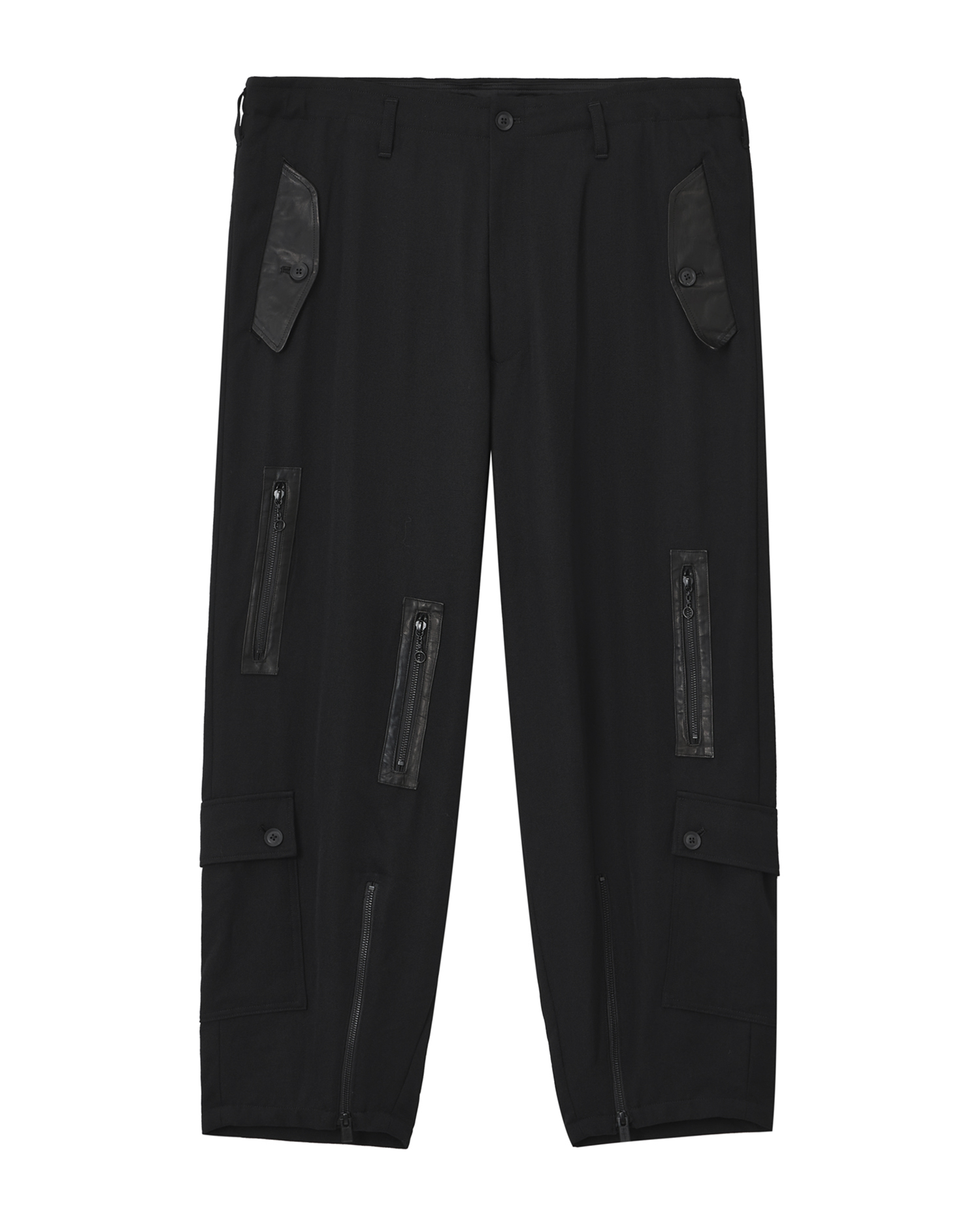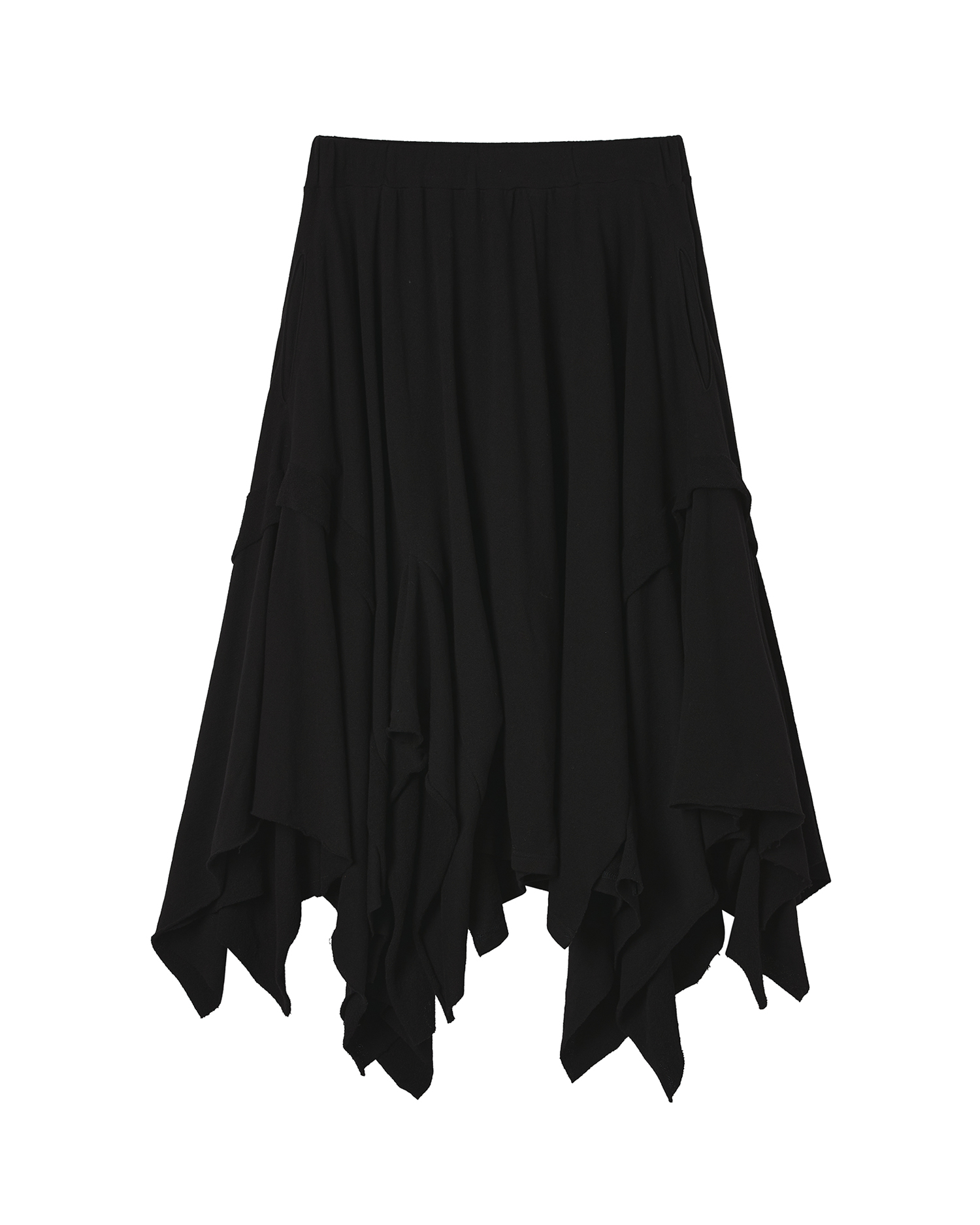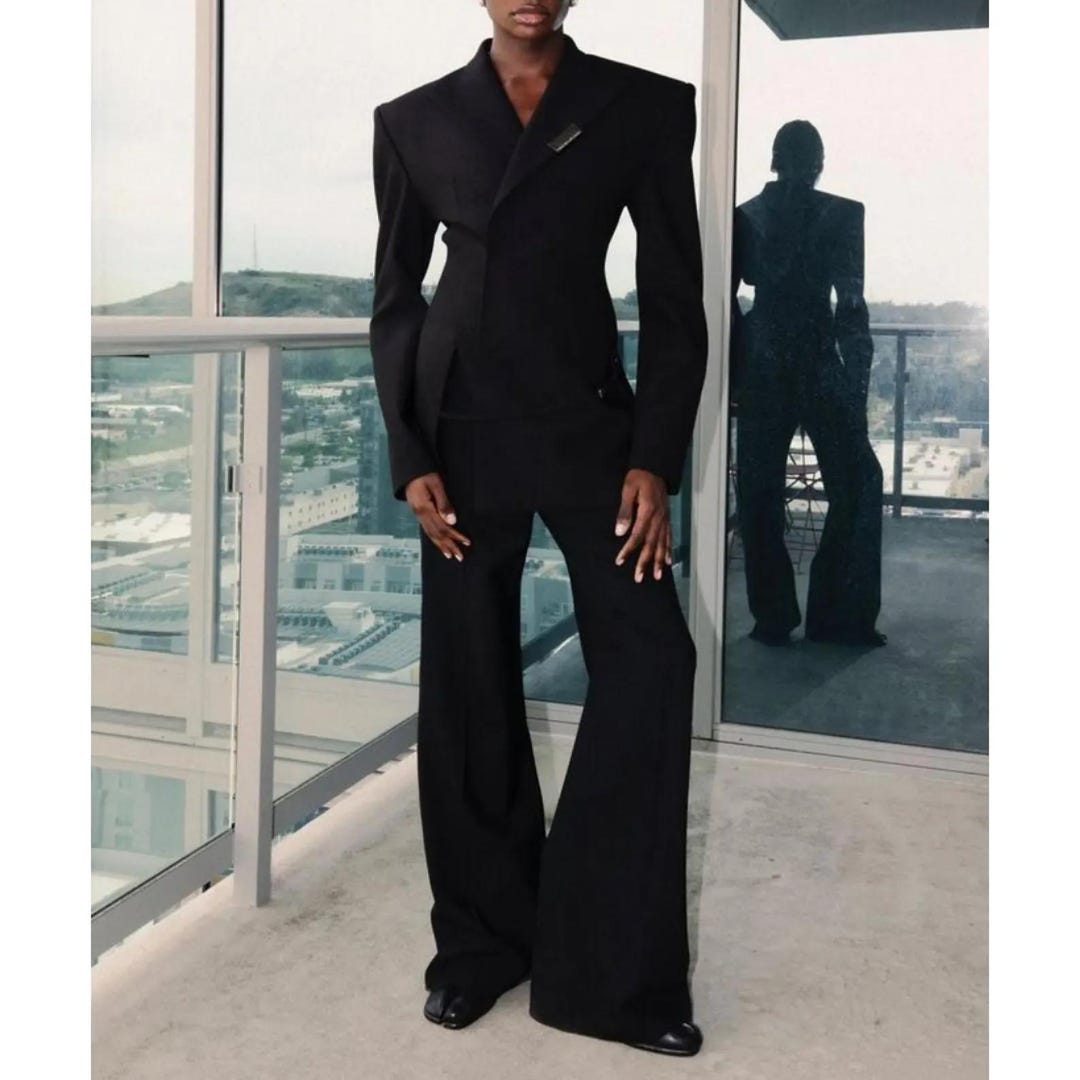
The suit has long been menswear's most conservative artifact—a fixed geometry of shoulders, lapels, and hems engineered to hold the body still. YOHJI YAMAMOTO COSTUME D'HOMME's "cut motion + motion sewing" suit dismantles that premise. Rather than tailoring cloth to freeze the wearer into a posture of authority, this collection treats the suit as a record of movement itself, cutting and constructing the garment so that motion is built into its architecture before a single step is taken.
It arrives at a moment when Yohji Yamamoto Homme is again commanding the Paris menswear conversation, and when the broader culture is reappraising the designer's half-century of quiet insurrection. The timing feels deliberate: a garment about motion, landing in a season fixated on stillness and nostalgia.
The Cut That Anticipates the Body
The technical premise is embedded in the name. "Cut motion" refers to pattern-cutting that anticipates the body in transit—panels shaped not to a static mannequin but to the arcs and pivots of a walking, turning, gesturing figure. "Motion sewing" extends that logic to construction: seams and stitching placed to accommodate and even amplify the drift of fabric as the wearer moves.
The result is a suit that behaves less like armor and more like a responsive system, its drape shifting with the body rather than resisting it. Where conventional tailoring hides its engineering in canvas and padding, this suit wears its dynamism openly. The line of a jacket or the fall of a trouser leg changes character with every stride—you notice it in the way a hem catches air, the way a shoulder rolls rather than locks.
Fabric That Travels
Materially, the collection stays faithful to the Yohji vocabulary: fluid, often matte fabrics with a weight that lets them hang and travel—gabardines and wool blends that read as sober at rest and reveal their suppleness in motion. The palette is characteristically restrained: blacks, deep neutrals, the occasional softened tone, so that the innovation registers through silhouette and behavior rather than surface noise.
This is tailoring that asks to be worn and observed over time, not decoded in a single glance. It rewards the second look—the seam that curves where you didn't expect it, the trouser that moves like water when you cross a room.
A Perpetual Revolution, Still in Motion
The cultural context is impossible to separate from the garment. Recent coverage has framed Yamamoto's career as a "perpetual revolution"—a paradox of a designer who has spent decades interrogating fashion's foundations while refusing the seasonal churn that defines the industry. The resurgence of interest in Carolyn Bessette-Kennedy as Yamamoto's great interpreter is instructive: her minimalist uniform demonstrated how his clothes confer a kind of austere self-possession, an elegance that comes from restraint and movement rather than ornament.
Meanwhile, the broadening of THE SHOP YOHJI YAMAMOTO as an official direct channel has made the full range of the house's lines more accessible to a global audience, and the continued prominence of Yohji Yamamoto Homme on the Paris schedule keeps the menswear world attentive to each evolution. This suit sits precisely at that intersection of heritage and forward motion—an archive piece that hasn't stopped walking.
For the Wearer in Transit
It is designed for the wearer who understands tailoring as a living form rather than a corporate costume: the architect, the creative director, the collector who prizes garments that reward movement and time. It suits those who find conventional suiting too rigid and unstructured dressing too casual, who want the authority of a suit without its stiffness. In an era obsessed with technical performance in sportswear, COSTUME D'HOMME applies the same rigor to the most traditional garment in the wardrobe, arguing that a suit can be engineered for the body in motion.
Why it matters now is simple: menswear is saturated with nostalgia, and the suit is its favorite relic. Yamamoto's "cut motion + motion sewing" proposal refuses both the stiff revival and the casual retreat. It treats tailoring as an ongoing investigation—one in which the cut itself becomes a gesture, and the garment a partner to the life moving through it. That is the quiet radicalism the house has always practiced, and it has rarely looked so precisely of the moment.