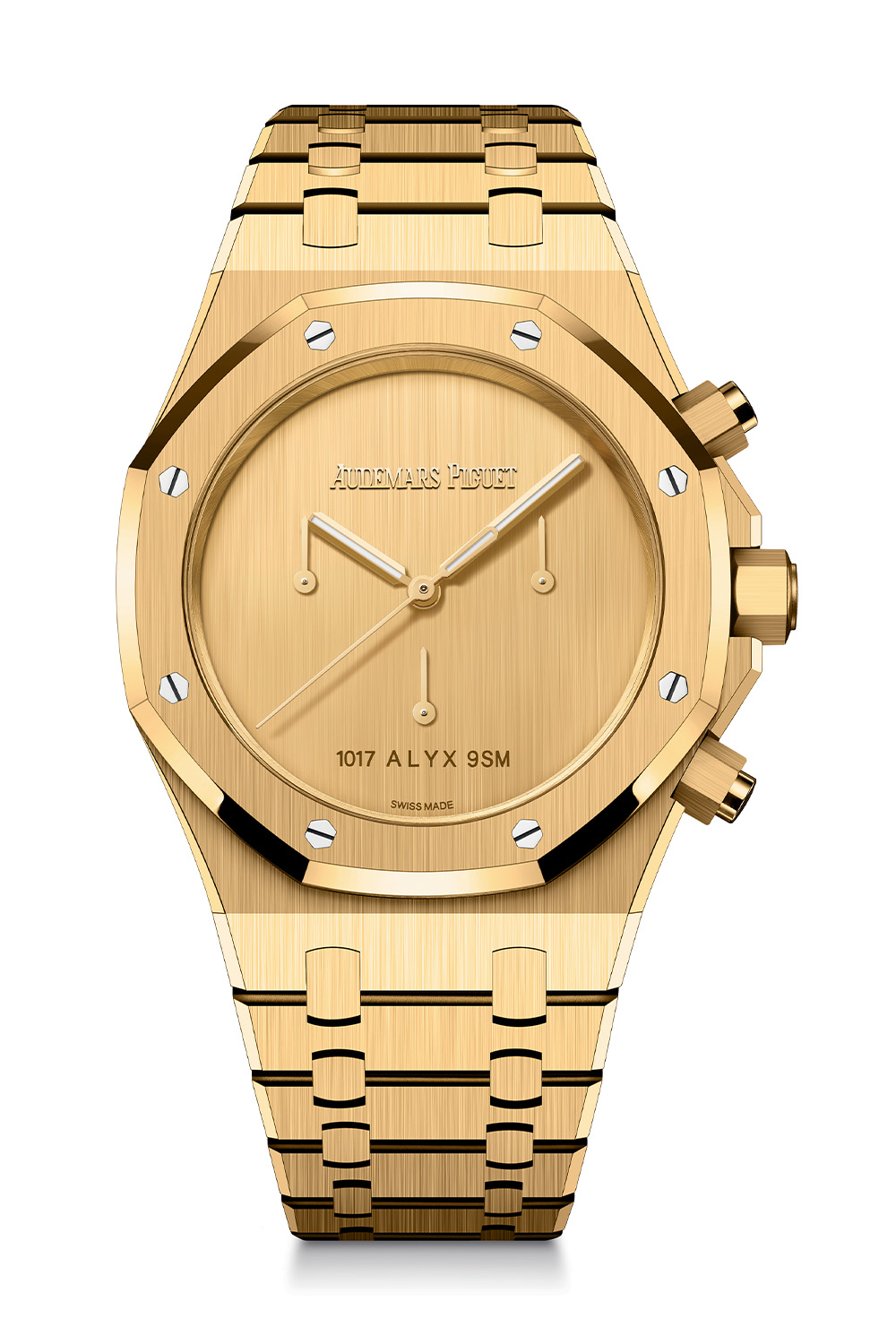
When Audemars Piguet and 1017 ALYX 9SM announced their collaboration, the watch world braced for something seismic. What emerged — a collection of five limited-edition references spanning the Royal Oak and Royal Oak Offshore — delivered precisely that: a collision of brutalist industrial design and haute horlogerie that few partnerships could credibly engineer.
Matthew M. Williams, the American designer behind 1017 ALYX 9SM, has spent his career translating subcultural grit into luxury objects. Here, he turns that sensibility loose on one of the most recognisable silhouettes in modern watchmaking. The result does not whisper.
A Royal Oak That Broods
The most arresting gesture is the treatment of the case and bracelet. Brushed surfaces and stark geometry evoke scaffolding, machinery, and the raw concrete of a Tokyo underpass. Williams has long drawn from industrial hardware — the brand's signature rollercoaster buckle, inspired by a ride at Six Flags, became a defining accessory of the late 2010s — and that vocabulary translates naturally onto a watch case.
The effect reads less like jewellery and more like equipment: functional, uncompromising, and deliberately severe. Where a standard Royal Oak gleams, this one broods. It is the rare collaboration that makes an icon look unfamiliar without diminishing it.
Materials That Absorb, Not Reflect
Materials matter here. The collection leans on sandblasted and micro-blasted finishes, matte titanium and steel that absorb light rather than bounce it back, giving the pieces an almost tactical presence. Dial treatments are similarly restrained — monochrome, low-contrast, stripped of the decorative flourish that often defines collaborative watchmaking.
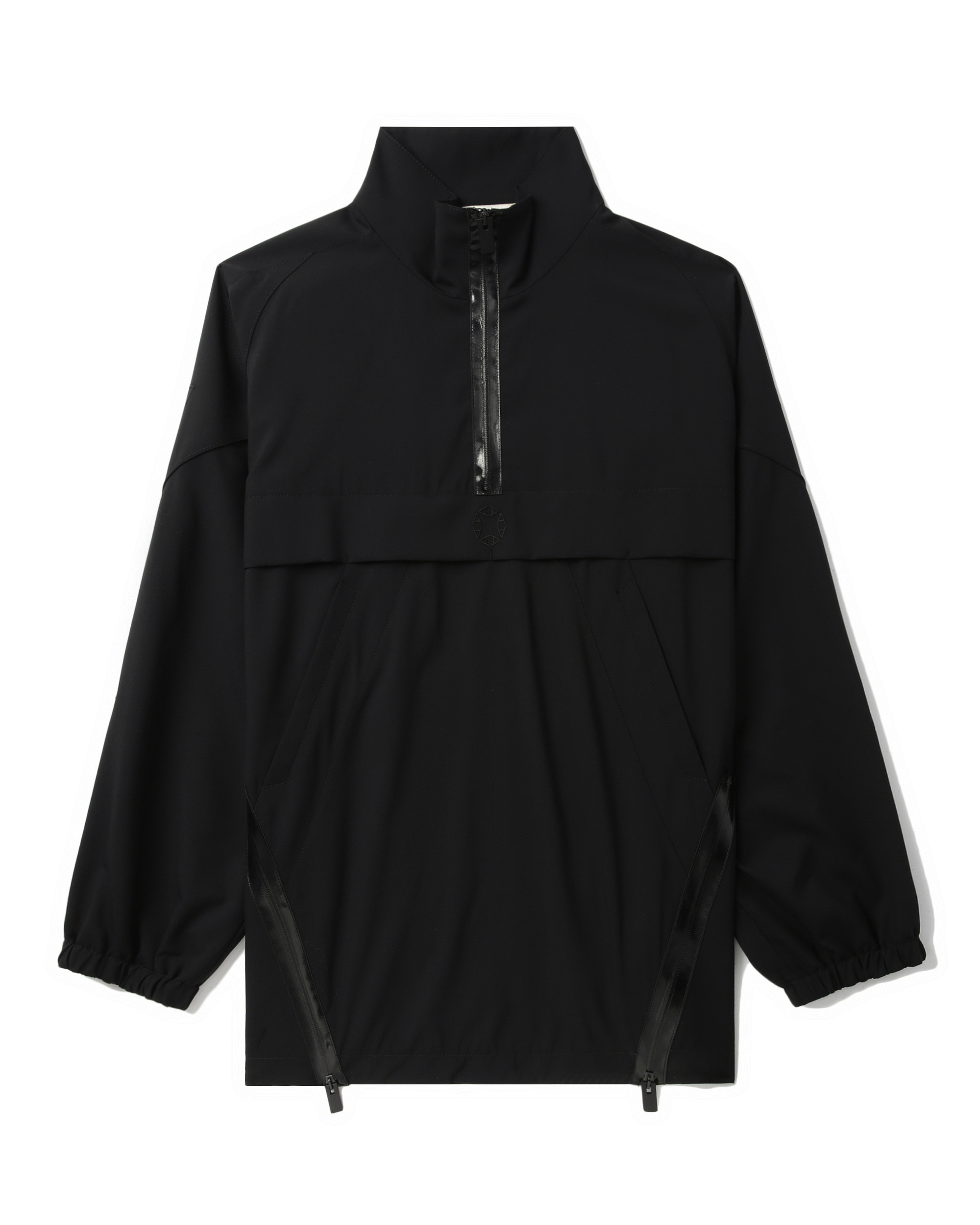
Nothing is ornamental. Every element earns its place. The Royal Oak Offshore variants, larger and more aggressive, push the industrial language further still, their pushers and crown guards resembling the clasps and hardware found throughout ALYX's garments. It is a rare instance where the watch feels like a direct extension of the clothing rather than a branded accessory riding alongside it.
A Cultural Moment, Precisely Timed
Culturally, the timing is instructive. 1017 ALYX 9SM has spent the past several seasons consolidating its position as one of fashion's most disciplined voices — showing in Milan, refining a vocabulary of elevated workwear, and, notably, attracting majority investment from Hong Kong entrepreneur Adrian Cheng. That backing signals institutional confidence in Williams's vision, and a watch partnership of this calibre extends the brand's reach into a collector base that prizes provenance and mechanical integrity as much as silhouette.
The collaboration also arrives as fashion and horology increasingly overlap, with maisons seeking designers who can speak to a younger, culturally fluent audience without diluting heritage. Few designers are better equipped for that conversation than Williams, whose work has always sat at the intersection of club culture, industrialism, and precision. The pairing is not a stunt. It is a logic.
For the Collector Who Already Owns the Classics
Who is this watch for? Certainly not the traditionalist who reveres the Royal Oak as an untouchable icon of 1970s design. These references are aimed at the collector who already owns the classics and wants something that registers differently — someone who understands the reference to underground club culture and industrial hardware, who values a watch that reads as a statement of allegiance rather than a display of wealth.
The pièce unique Royal Oak Chronograph, the crown jewel of the five references, sharpens that proposition to its purest form: singular, unrepeatable, and unmistakably of its moment. It is the collection's thesis statement, rendered in metal and matte finish.
What makes the Audemars Piguet x 1017 ALYX 9SM Royal Oak matter now is its refusal to soften either party. Too often, fashion-house watch collaborations produce compromise — a dial colour here, a strap there, heritage politely nodding to hype. This collection does the opposite. It lets Williams's brutalist instinct run through the architecture of the Royal Oak, and it trusts Audemars Piguet's craftsmanship to hold the line.
The tension between those two forces is the entire point. In an era of relentless collaboration, that kind of conviction is rare — and it is exactly what makes these five references worth remembering.