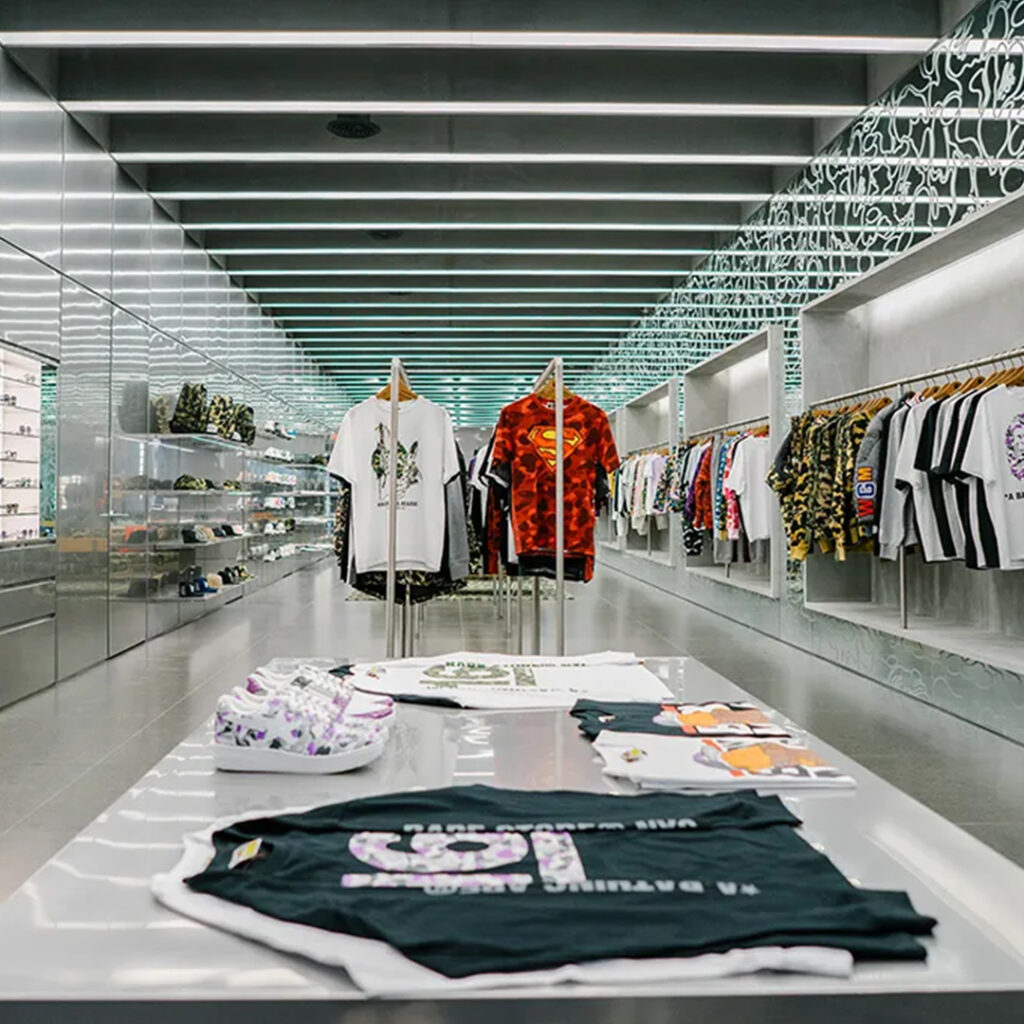
When the founder of one of streetwear’s most enduring labels calls his own creation “actually a big mistake,” the fashion world tends to pause. That is precisely what happened when Nigo, the visionary behind A BATHING APE®, recently reflected on the brand he launched in 1993. On the surface, the confession reads as a rare moment of creative self-doubt from a designer who has shaped urban style for three decades. But dig deeper, and Nigo’s so-called regret is the very foundation upon which BAPE built its remarkable longevity. What he framed as a mistake — the accidental exclusivity, the chaotic brand extensions, the cultish devotion to a single motif — turned out to be a masterclass in scarcity, identity, and cultural staying power. The brand that was never supposed to become a global juggernaut is now celebrating flagship openings, collaborating with Disney, and previewing releases years in advance, all while maintaining the mystique that made it legendary.
The Accident That Became the Blueprint
The “mistake” Nigo refers to is rooted in the brand’s origins. BAPE was never designed to be a mass-market phenomenon; it emerged from Tokyo’s Ura-Harajuku subculture as an insider’s code, a wink to those who understood the language of street fashion. The camo print, the shark hoodie, the Ape head logo — these were not conceived as commercial strategies but as personal expressions of a designer obsessed with Americana, sci-fi, and military surplus. Yet that very insularity created an explosive demand. When Nigo capped production runs and limited distribution to a single Tokyo store, he inadvertently invented the modern hype model. The scarcity wasn’t a business plan; it was a byproduct of his creative process. And that accident became the blueprint for every drop, collab, and limited release that followed. BAPE’s refusal to over-saturate its core products — even as it expanded into footwear, accessories, and home goods — kept the flame burning precisely because it never stopped feeling underground.
Reinvention Without Losing the DNA
What makes BAPE’s longevity so remarkable is how it has weathered the cycles that destroyed its contemporaries. While other brands from the late ’90s and early 2000s faded into nostalgia, BAPE reinvented itself without losing its DNA. The recent news cycle is a testament to that agility: a San Francisco flagship opening in Union Square with a block party headlined by Marshawn Lynch, a 19th collaboration with mastermind JAPAN that reworks vintage grunge, and a preview of 2027 footwear releases that signals confidence in a future most brands fear to plan. Even the partnership with Disney’s Mickey & Friends — a move that might seem corporate to purists — is executed with BAPE’s signature irreverence, turning beloved characters into streetwear icons rather than mere merchandise. These are not the actions of a brand apologizing for its existence; they are the moves of a label that has learned to treat its founder’s “mistake” as a renewable resource.
Exclusivity as a Permanent State of Mind
The genius of BAPE lies in its ability to make exclusivity feel permanent. Unlike other labels that chase trends, BAPE has maintained a consistent visual language — the shark teeth, the camo in endless iterations, the BAPE STA sneaker — that fans recognize instantly. That consistency creates a sense of belonging, a club that you join by simply wearing the logo. Nigo’s departure from the brand in 2011 could have been the death knell, but the label’s DNA was so deeply embedded that it survived the transition, now thriving under new leadership while still honoring its founder’s original vision. The collaborations with Vans on the Premium Knu Skool, the 48 colorways of the BAPE STA for the World Cup with KidSuper, and the Crocs Echo Clog — these are not random partnerships but calculated expansions of the BAPE universe. Each one reinforces the brand’s mythos while introducing it to new audiences.
The Mistake That Became a Movement
Perhaps the most striking lesson from Nigo’s “mistake” is that authenticity cannot be manufactured. BAPE’s longevity stems from its refusal to be anything other than itself. While other brands chase viral moments, BAPE builds slowly, layering its history into each release. The Union Square store isn’t just a retail space; it’s a physical manifestation of three decades of cultural influence. The 2027 footwear preview isn’t hype; it’s a promise that the brand will continue to evolve on its own terms. Nigo may have called BAPE a mistake, but the brand’s continued relevance — its ability to draw crowds, spark collaborations, and command premium prices — proves that sometimes the best things in fashion are the ones you never planned. The mistake was never the brand itself; it was underestimating the power of an accident that became a movement.