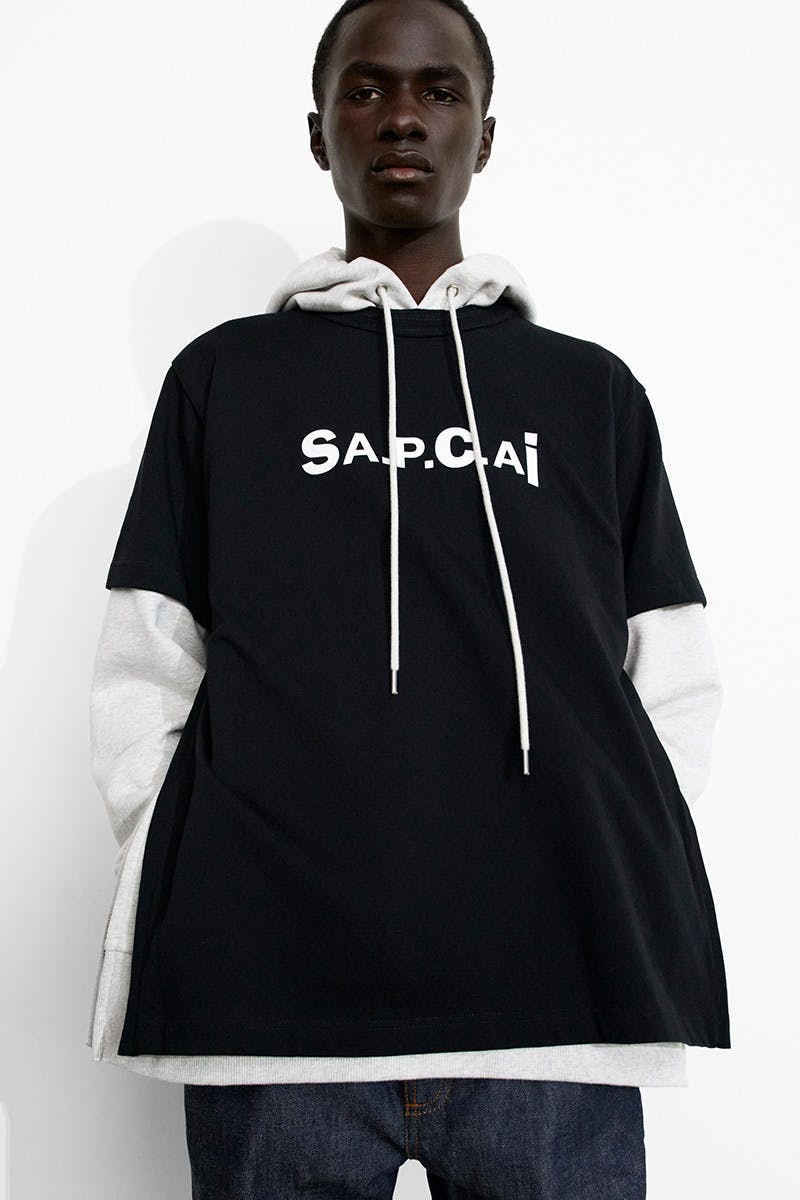
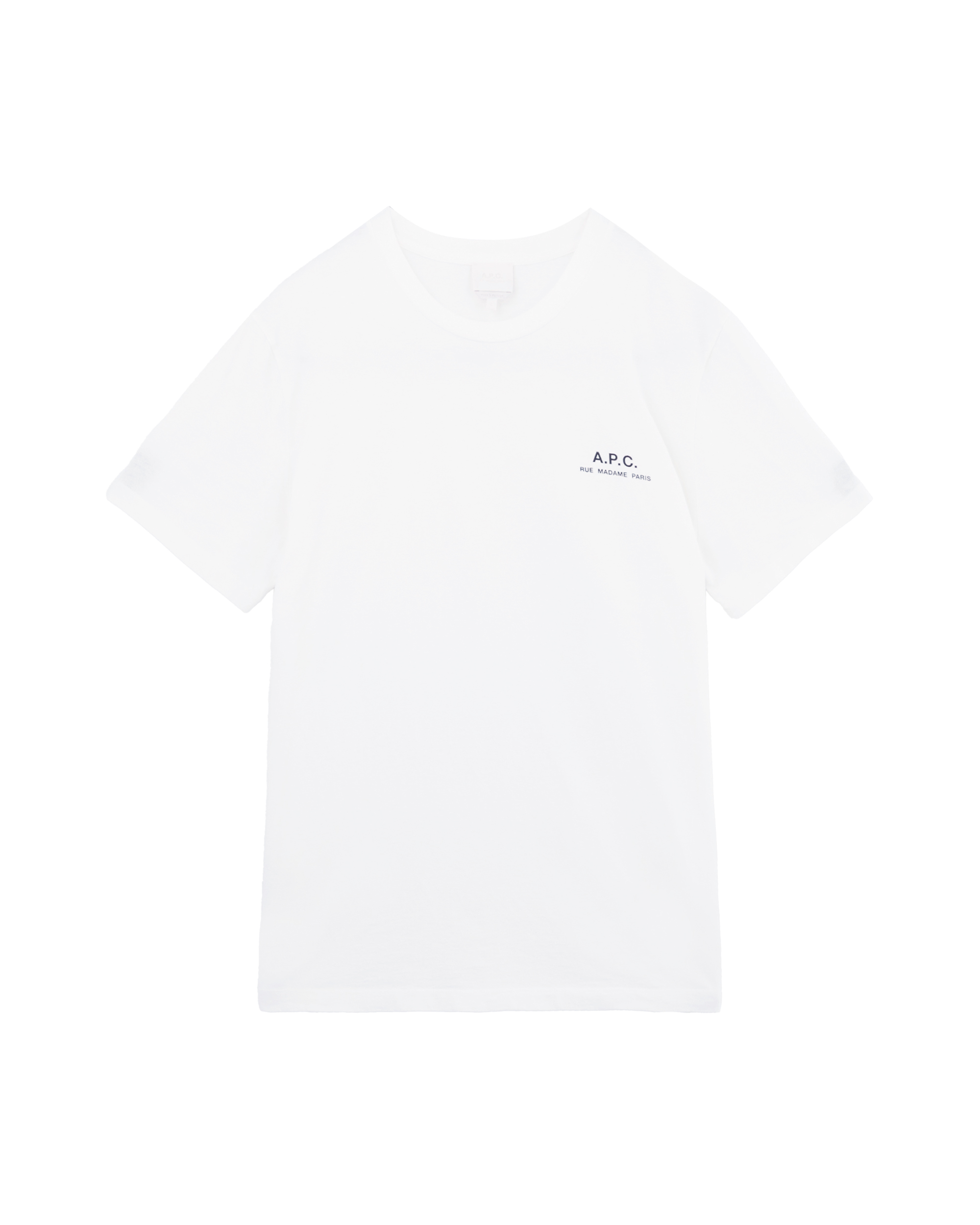
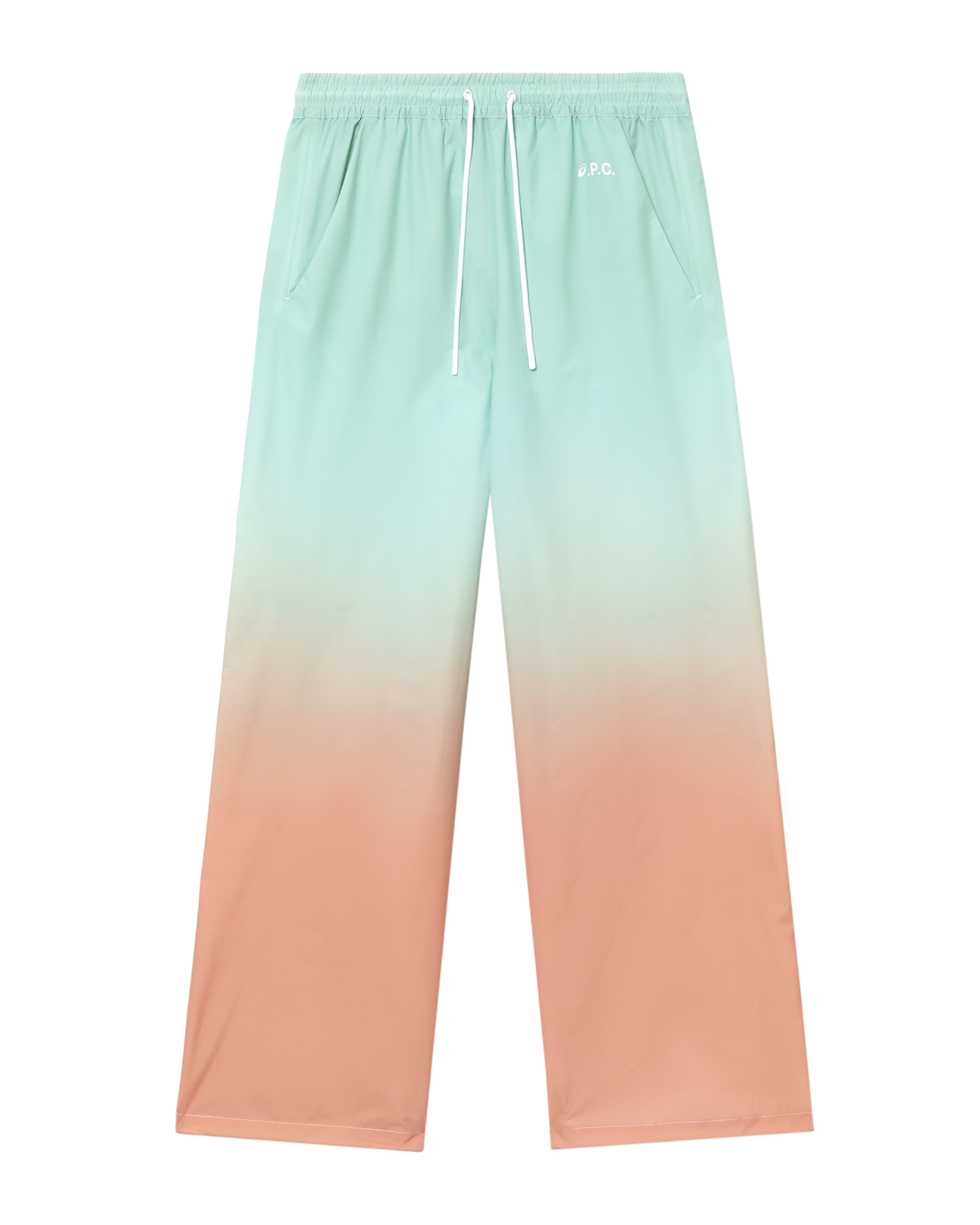
There is a particular kind of luxury that refuses to announce itself—one that trusts the wearer to know, and trusts everyone else to look twice. The A.P.C. x Sacai camouflage hoodie belongs squarely to that tradition. It arrives as the latest expression of a partnership between two houses that, on paper, should have nothing in common: A.P.C., the Parisian standard-bearer of understated, workwear-inflected minimalism, and Sacai, Chitose Abe’s Tokyo-based label celebrated for its radical hybridizations of silhouette and texture. That the two should meet over a camouflage hoodie is less surprising than it first appears. Both brands have built their reputations on disciplined reinvention—A.P.C. through restraint, Sacai through deconstruction—and this garment is where those impulses quietly collide.
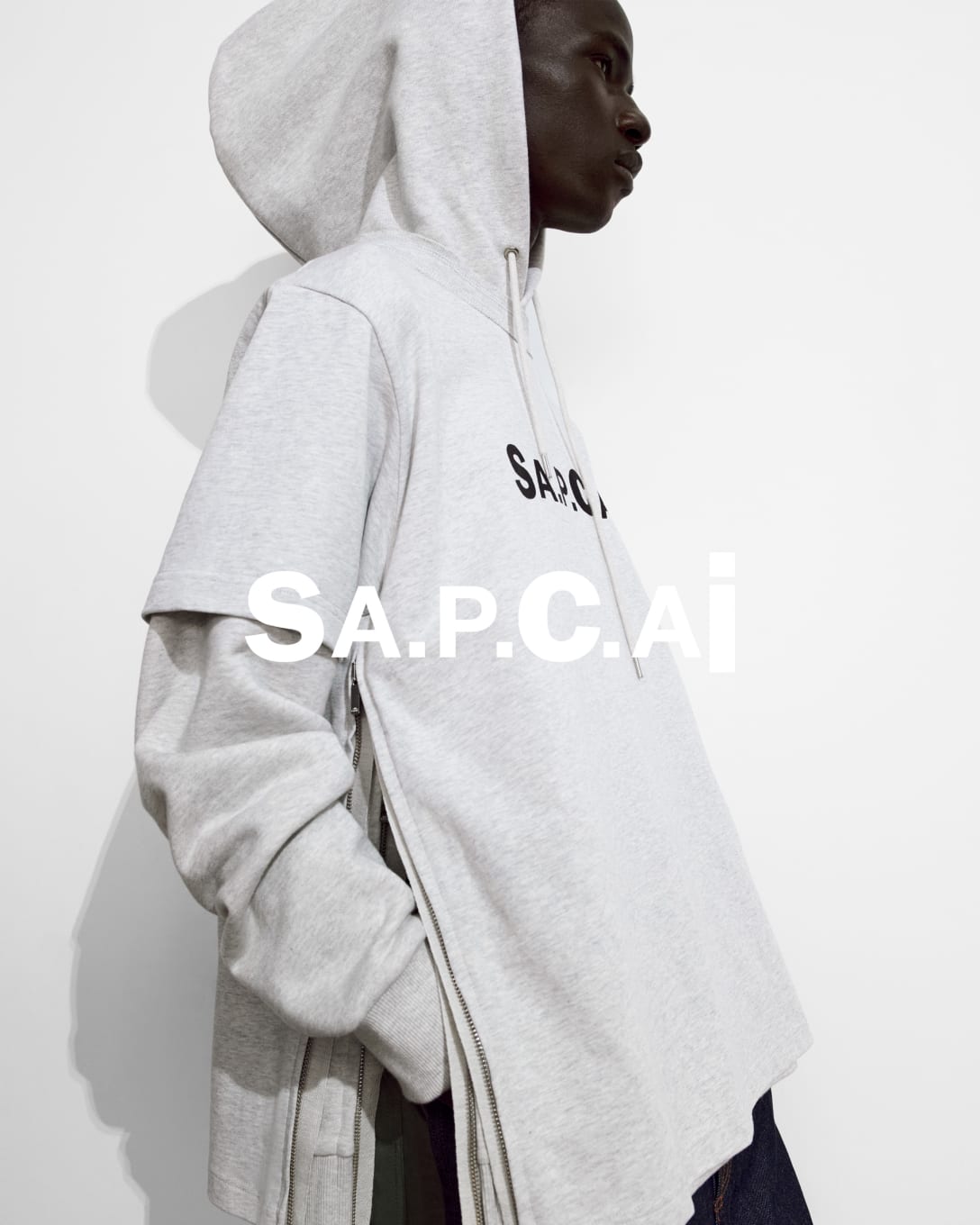
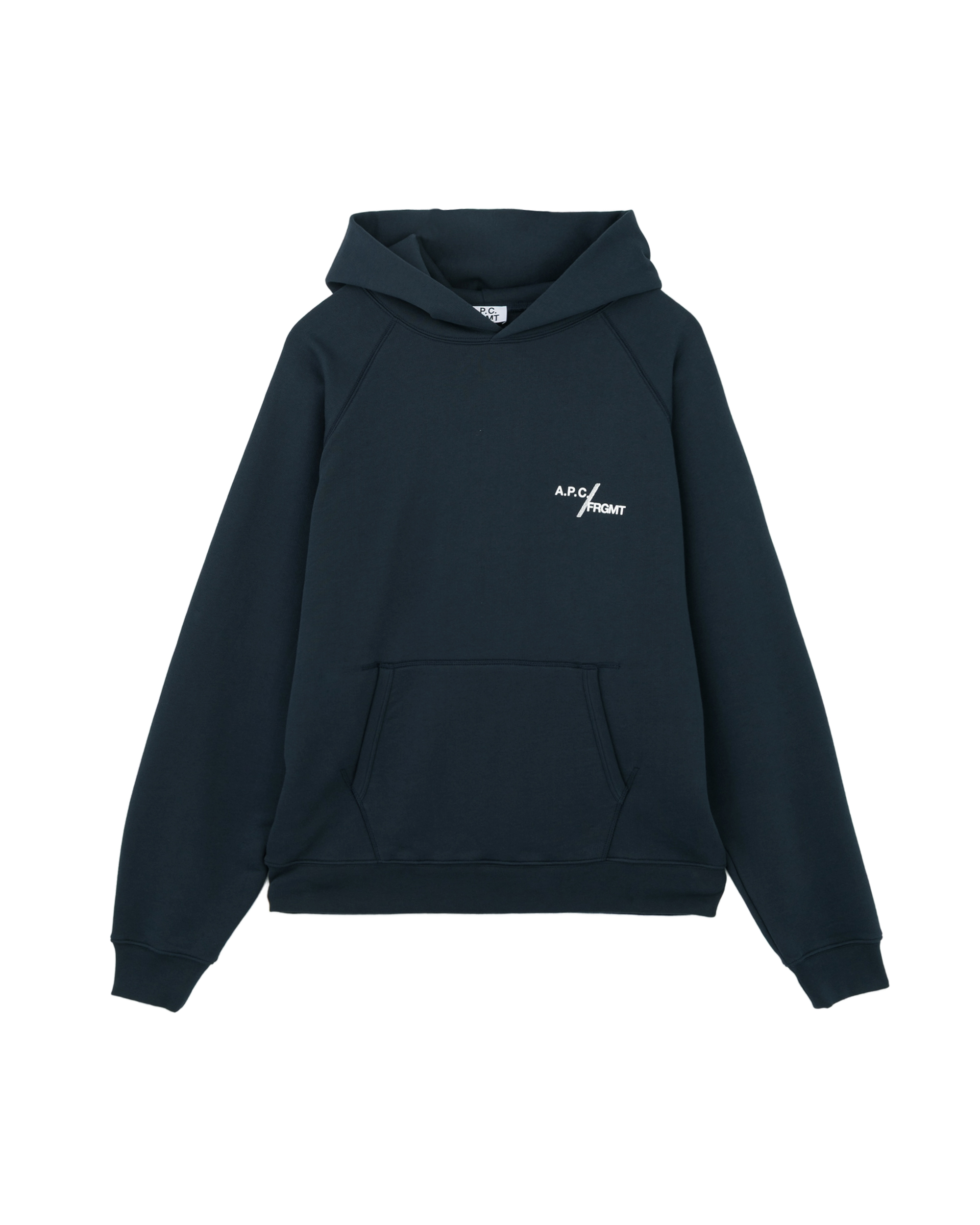
The design begins with the familiar architecture of a heavyweight hoodie: a generous hood, ribbed cuffs and hem, a relaxed but never slouchy body. Then Sacai does what Sacai does. The camouflage print is rendered not as military pastiche but as something closer to a tonal study—muted, almost washed, its organic shapes softened into something that reads as texture more than pattern. Paneling and proportion are subtly reworked, with the kind of asymmetric detailing and layered construction that rewards close inspection. The A.P.C. logo appears with characteristic discretion, a small confirmation rather than a billboard. In a market saturated with logo-forward statement pieces, this is a hoodie that whispers.
When Paris Restraint Meets Tokyo Deconstruction
What makes the pairing legible is the shared grammar beneath the surface. A.P.C. has spent decades refining the art of the almost-plain—garments whose value reveals itself in cut, cloth, and longevity rather than flourish. Sacai, meanwhile, has built a language out of splicing: unexpected seams, doubled layers, silhouettes that seem to be two things at once. Drop both sensibilities onto a single hoodie and you get something rarer than a logo play. You get a piece that looks familiar at arm’s length and unfamiliar up close, where the paneling and proportion do the talking.
The Camo, Rendered as Texture
Camouflage has been one of the defining style narratives of the past decade, migrating from military utility to countercultural uniform to streetwear shorthand and finally into luxury menswear. What this collaboration does is strip the motif of aggression. The print here is a tonal study rather than a statement—washed, muted, its organic shapes softened until they behave more like surface than signal. It is camouflage that doesn’t want to be spotted. Against the hoodie’s clean architecture, the effect is a kind of détente: minimalism without austerity, pattern without noise.
Built to Fade Gracefully
Materials are where the collaboration justifies itself. A.P.C. has long sourced robust, long-staple cottons and fleeces built to survive years of wear, and this piece follows that doctrine. The fabric is substantial without stiffness—dense enough to hold its shape, soft enough to feel broken-in from the first wearing. The print is applied with a restraint that suggests it will fade gracefully rather than crack or peel, aging into something more personal than it was on the rack. This is the quiet promise of well-made French basics: that the garment will improve as the novelty wears off.
The Hoodie’s Strange and Enviable Position
Culturally, the hoodie occupies a strange and enviable position. Once purely utilitarian, it has become the connective tissue of modern dress—equally at home under a tailored overcoat, over a collared shirt, or alongside raw denim and loafers. That versatility is exactly what this version exploits. It is not for the collector chasing hype, nor for the minimalist who refuses any deviation from plain grey. It is for the person who understands that the most interesting wardrobes are built on tension—who wants a piece that reads as anonymous from across the room and as deliberate up close. It suits the design-literate professional, the traveler who packs light but refuses to look it, the longtime A.P.C. customer curious about Sacai, and the Sacai devotee seeking something wearable every day rather than once a season.
Why it matters now is precisely because of how little it insists upon itself. Fashion is in a moment of maximal visibility—runway spectacle, algorithmic drops, logos as currency—and the most sophisticated response is often subtraction. This hoodie is that response in garment form: a collaboration between two cultures of design, executed with the confidence to leave things out. It will not trend on a timeline or sell out in seconds. It will simply be worn, season after season, until it becomes the piece people ask about. That is the quietest flex of all—and the hardest one to fake.