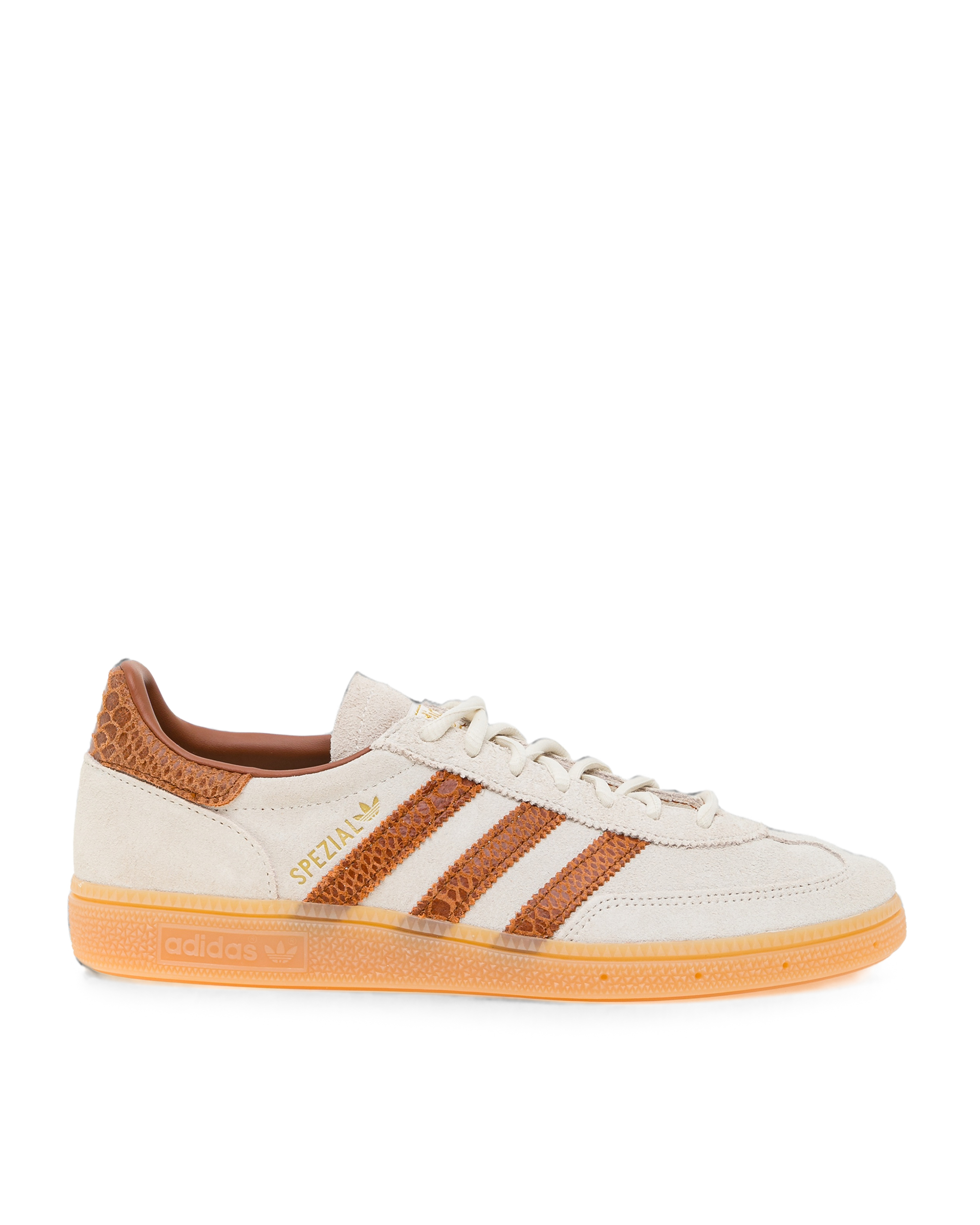
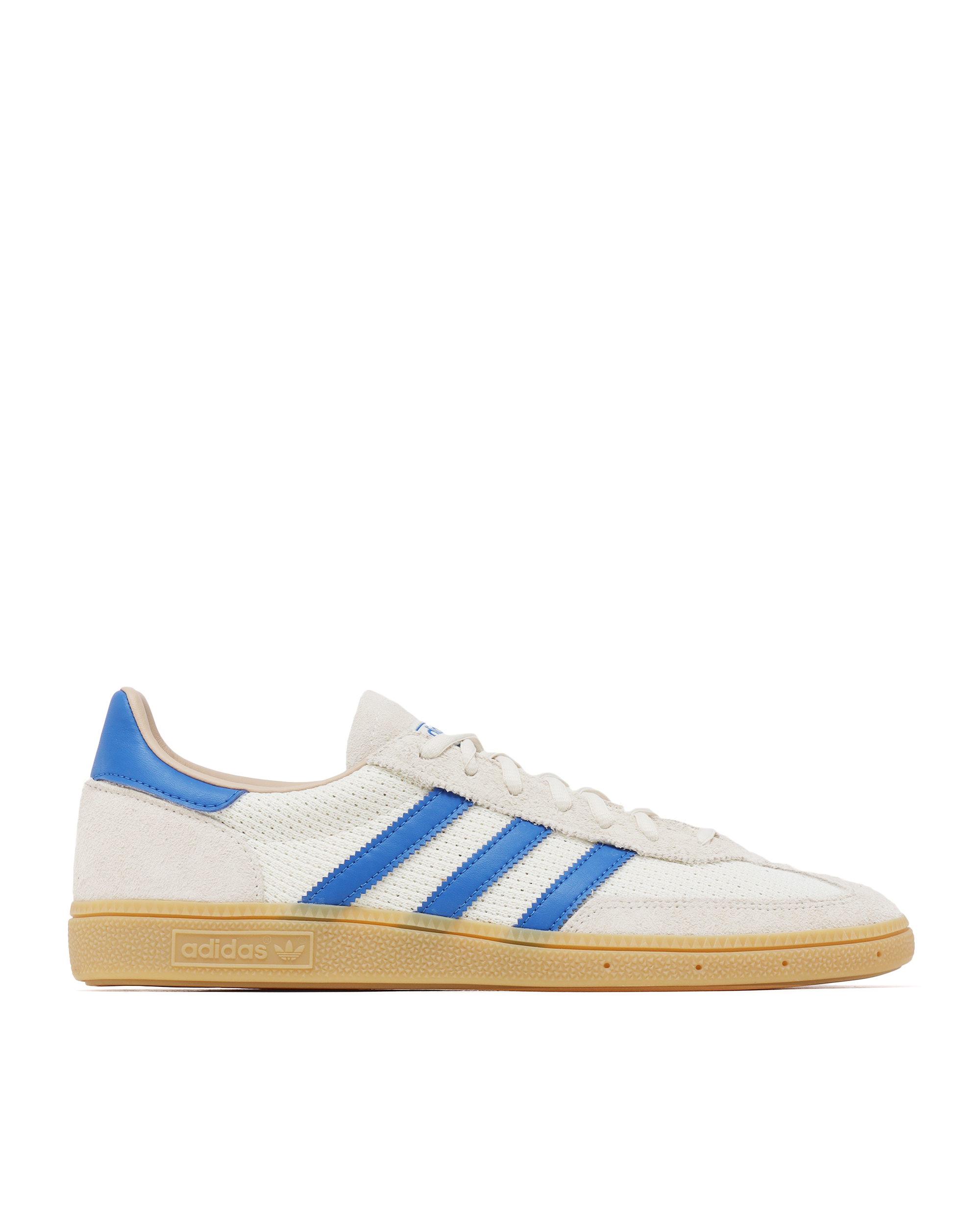
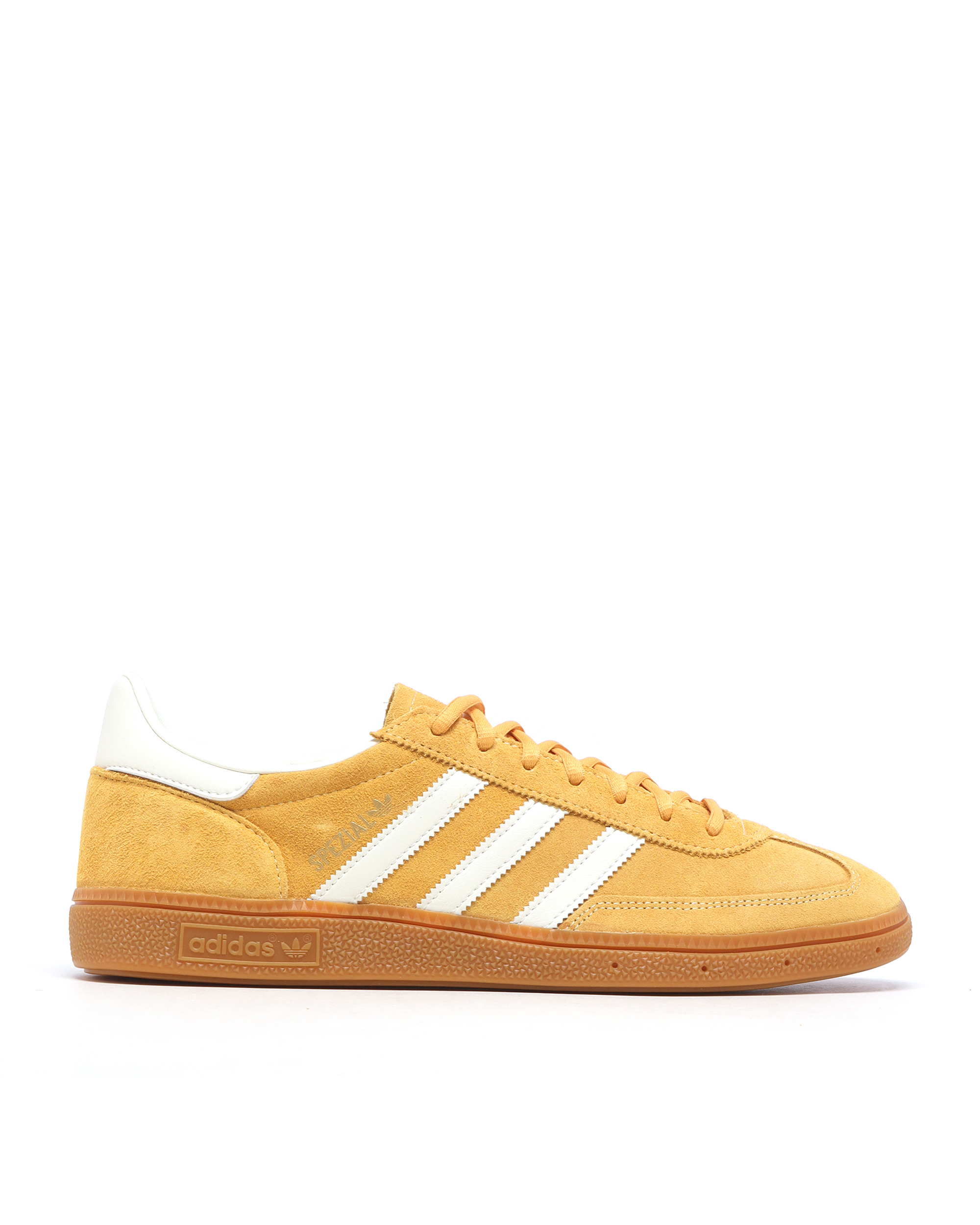
The Bad Bunny x adidas Badbo 1.0 arrives at a moment when the sneaker industry has largely exhausted its appetite for easy categorization. Collaboration culture has flattened the distance between luxury houses and skate brands, between performance tech and streetwear nostalgia, until the very idea of a "lifestyle" or "athletic" shoe feels like a relic of a simpler retail era. Into this blur steps a silhouette that doesn't so much split the difference as ignore it entirely — a shoe built on the premise that the people who care most about footwear are precisely the ones who refuse to be sorted into a single aisle.
It helps that the Badbo 1.0 looks the part. The upper moves between sculpted overlays and exposed mesh, a layered construction that reads as part trail runner, part basketball hightop, and part something that has never quite existed before. Underneath, the tooling is where the genre-blurring turns literal: a chunky, segmented midsole that borrows from adidas's performance archives without committing to any single discipline. This is a shoe designed to be worn, not filed.
A Silhouette With No Single Ancestor
The Badbo 1.0 carries the unmistakable fingerprints of Bad Bunny's prior work with adidas while pushing into stranger, more architectural territory. The tooling is the tell. That segmented midsole doesn't quote one archive — it raids several, then walks away without explaining itself. The result is a shoe that feels engineered rather than styled, built from the ground up instead of assembled from a mood board.
Two Versions, One Deliberate Choice
What makes the release genuinely notable is the dual-version strategy. The Badbo 1.0 and its sibling, the Badbo 1.1, land in Night Navy and Chalk White respectively, separated by roughly $40 in retail price. That gap isn't arbitrary — it's a deliberate editorial choice, inviting the buyer to consider which version of the shoe they actually want rather than simply defaulting to the most hyped colorway. The two silhouettes share DNA but diverge in material treatment and proportion, giving collectors a reason to engage with the design rather than just the drop date.
It's a small move with a large implication: the release assumes you'll read the fine print, not just the resale graph.
Bad Bunny's Design Manifesto
Culturally, this lands squarely in Bad Bunny's ongoing project of refusing the boundaries imposed on Latin music, on masculinity, and now on footwear. His adidas collaborations have never been mere endorsement exercises; they've functioned as design manifestos, translating the genre fluidity of his music into physical form. The Badbo 1.0 extends that logic. It is a sneaker that sounds like a Bad Bunny album looks — restless, referential, and uninterested in staying in one register for too long.
The Brand Behind the Bet
The context around adidas right now makes the timing sharper. The brand is in the middle of a quiet repositioning — localization efforts that analysts say are paying off, a Messi farewell jersey that trades on emotional legacy, a Pokémon partnership pushing into digital avatar territory, and a multi-year commitment to the Unrivaled women's basketball league. Each of these moves signals a brand thinking about where culture is going rather than where it has been. The Badbo 1.0 fits that posture: it's not chasing a trend, it's betting on a sensibility.
Who is this shoe for? Not the collector who buys to shelf. Not the purist who needs a shoe to do one thing well. The Badbo 1.0 is for the person whose wardrobe already refuses easy labels — the one who wears technical outerwear with tailored trousers, who moves between scenes without announcing the transition. It rewards that instinct. The dual-release structure, the deliberate $40 differential, the colorway split between Night Navy and Chalk White — all of it assumes an audience sophisticated enough to read the nuance and confident enough not to need a category to feel safe in.
Why it matters now is simple: the sneaker market has spent years rewarding novelty for its own sake. The Badbo 1.0 offers something rarer — a genuinely new silhouette from a collaborator with a coherent creative vision, released in a way that respects the intelligence of the people buying it. In a landscape of endless retreads and hollow anniversary drops, that's not just a good shoe. It's a signal that adidas, at least in this corner of its universe, still knows how to take a real swing.