Alexander Wang has never been a designer content to work within the boundaries of the possible. From the grunge-meets-luxury insouciance of his early aughts runway shows to the subversive downtown energy that made his studded sandals a red-carpet staple — recently revived by Tyla for a Berlin outing — the house has consistently treated fashion as a site of provocation rather than mere decoration.
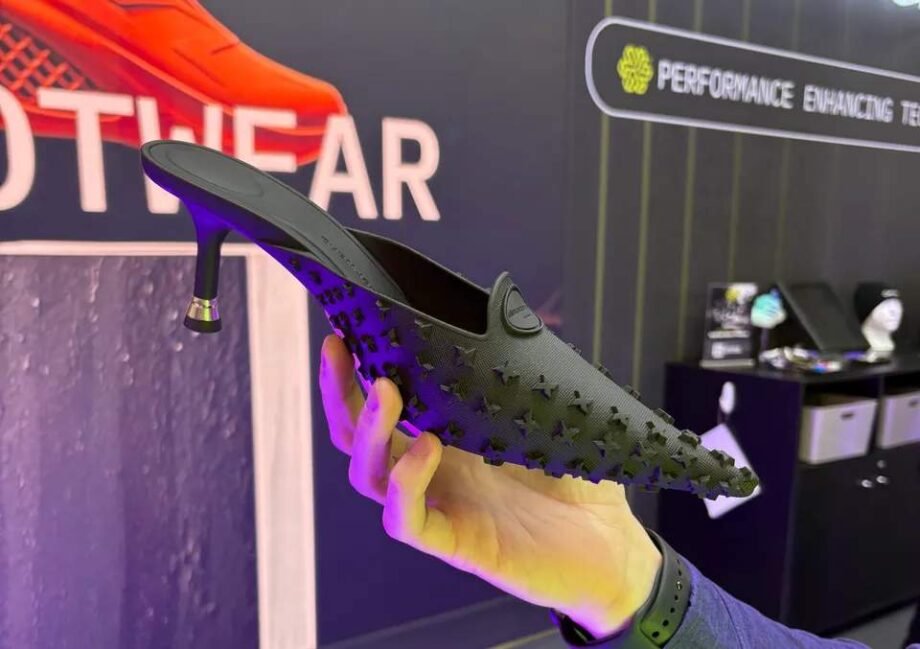
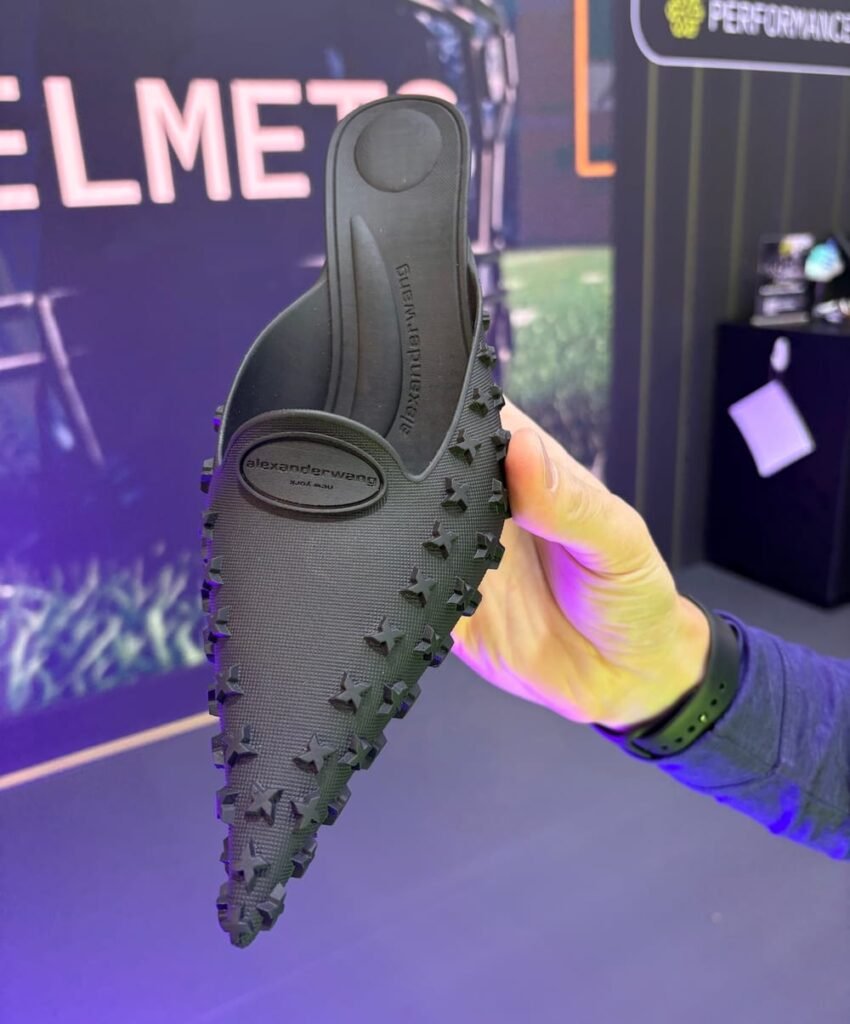
With the Griphoria Stiletto, Wang has pushed past provocation into something closer to a manifesto. This is the brand's first fully wearable 3D-printed heel, and its debut constitutes less a seasonal release than a quiet recalibration of what a luxury shoe can be, how it comes into being, and what it signals about the industry's material future.
An Architecture You Can Walk In
At first glance, the Griphoria Stiletto reads as pure Alexander Wang: architectural, unapologetic, and engineered to command a room. The silhouette draws on the house's long-standing fascination with hard-edged femininity — the tension between armor and exposure, between the clinical and the sensual.
Where a traditional stiletto relies on a steel shank and layered construction, the Griphoria is printed as an integrated whole, its geometry resolved through computational design rather than assembled from discrete parts. The result is a shoe whose curves feel almost impossible, its lattice-like structure flowing from heel to sole in a single continuous gesture. The name itself — a coinage evoking both "grip" and "euphoria" — hints at the dual promise Wang is making: that a printed heel can be both technically secure and emotionally transporting.
From Vitrine to Sidewalk
The material story is where the Griphoria Stiletto earns its landmark status. 3D-printed footwear has existed for years, but almost always as a conceptual exercise or a limited-edition curiosity — objects meant for a vitrine, not a sidewalk.
Wang's achievement is in crossing the threshold from prototype to product, using advanced photopolymer resins and print parameters refined for durability, flex, and weight distribution. The shoe is not a sculpture that happens to be worn; it is a wearable object that happens to look sculptural. That distinction matters enormously, because it moves additive manufacturing out of the R&D lab and into the atelier's commercial vocabulary. For a house that has spent two decades oscillating between streetwear and high craft, the Griphoria represents a synthesis: the precision of industrial design married to the instinct of a designer who has always understood that luxury is, at bottom, a feeling of inevitability.
The Broader Project
Culturally, the timing is pointed. Wang has spent the past year expanding his footprint beyond the runway — opening the Wang Contemporary, a cross-disciplinary arts platform in Chinatown centered on Asian creativity, and debuting a Fall 2026 collection that reaffirmed his grip on downtown New York's visual language.
The Griphoria Stiletto fits within this broader project of institution-building, positioning Wang not simply as a designer of desirable things but as a shaper of how those things get made. In an era when fashion's supply chains are under scrutiny and material innovation is no longer optional, a fully wearable printed heel is both a flex and a forecast. It suggests that the next decade of luxury will be defined less by who can source the rarest leather and more by who can author the most elegant code.
Who It's For
Who is the Griphoria Stiletto for? Certainly not the timid. It rewards the wearer who treats footwear as a statement of intent — the collector, the early adopter, the person who understands that a shoe can be a piece of design history in motion.
It will appeal equally to the fashion insider tracking Wang's technical evolution and to the newcomer drawn in by its alien beauty. What matters now is that the Griphoria exists at all: a printed heel that walks, that bears weight, that refuses to be a footnote.
Alexander Wang has built a career on making the future feel wearable. With the Griphoria Stiletto, he has made it printable, too.