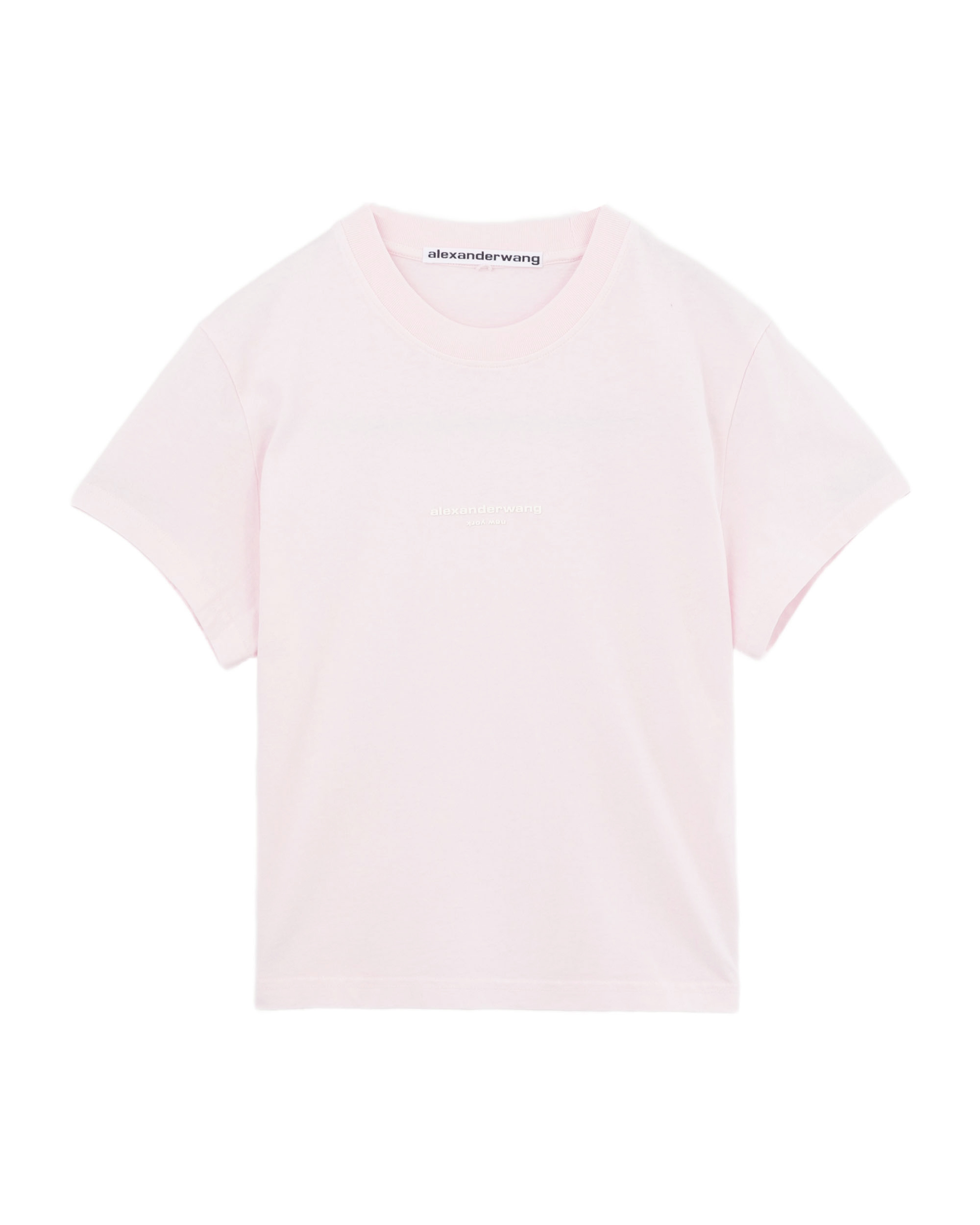
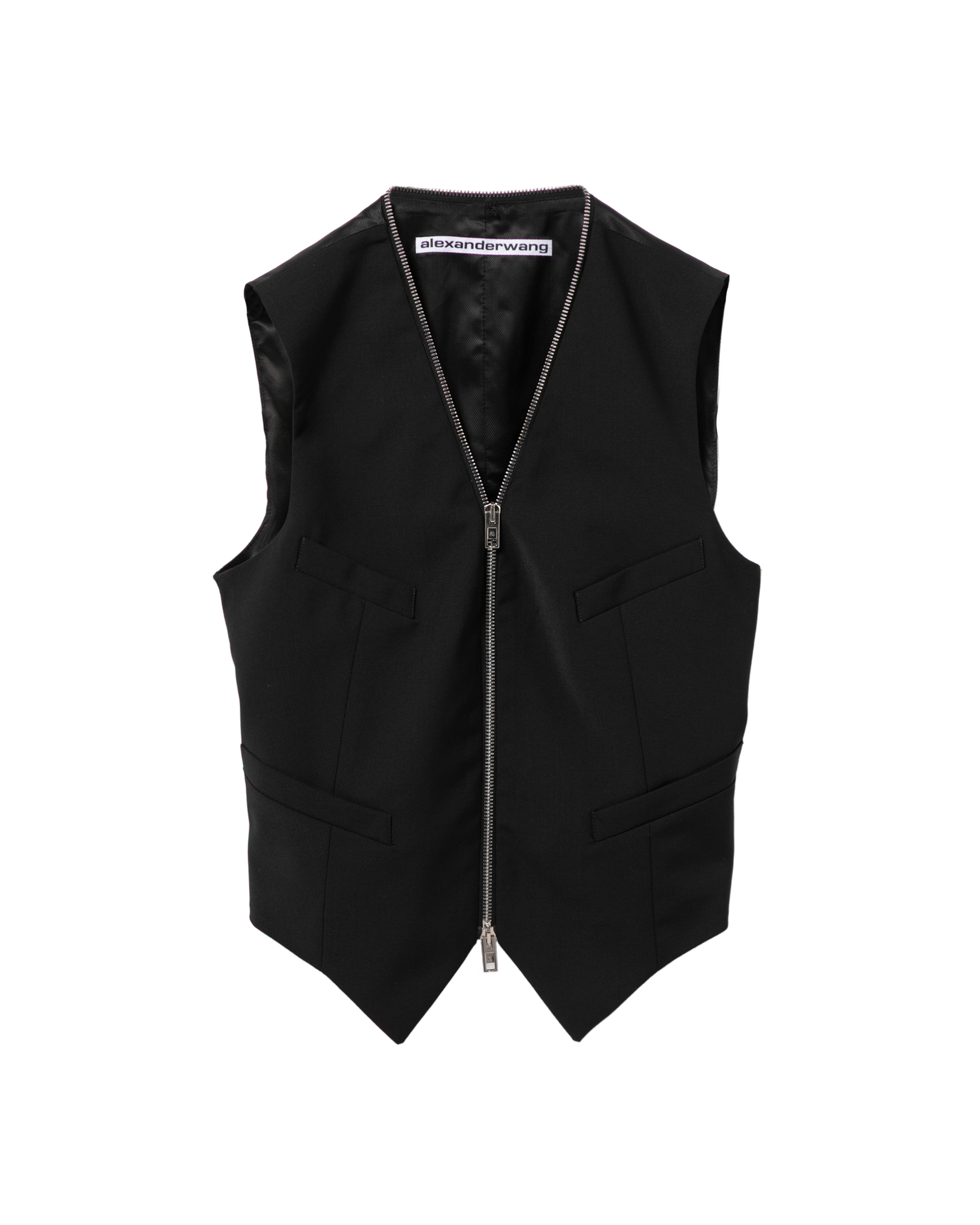
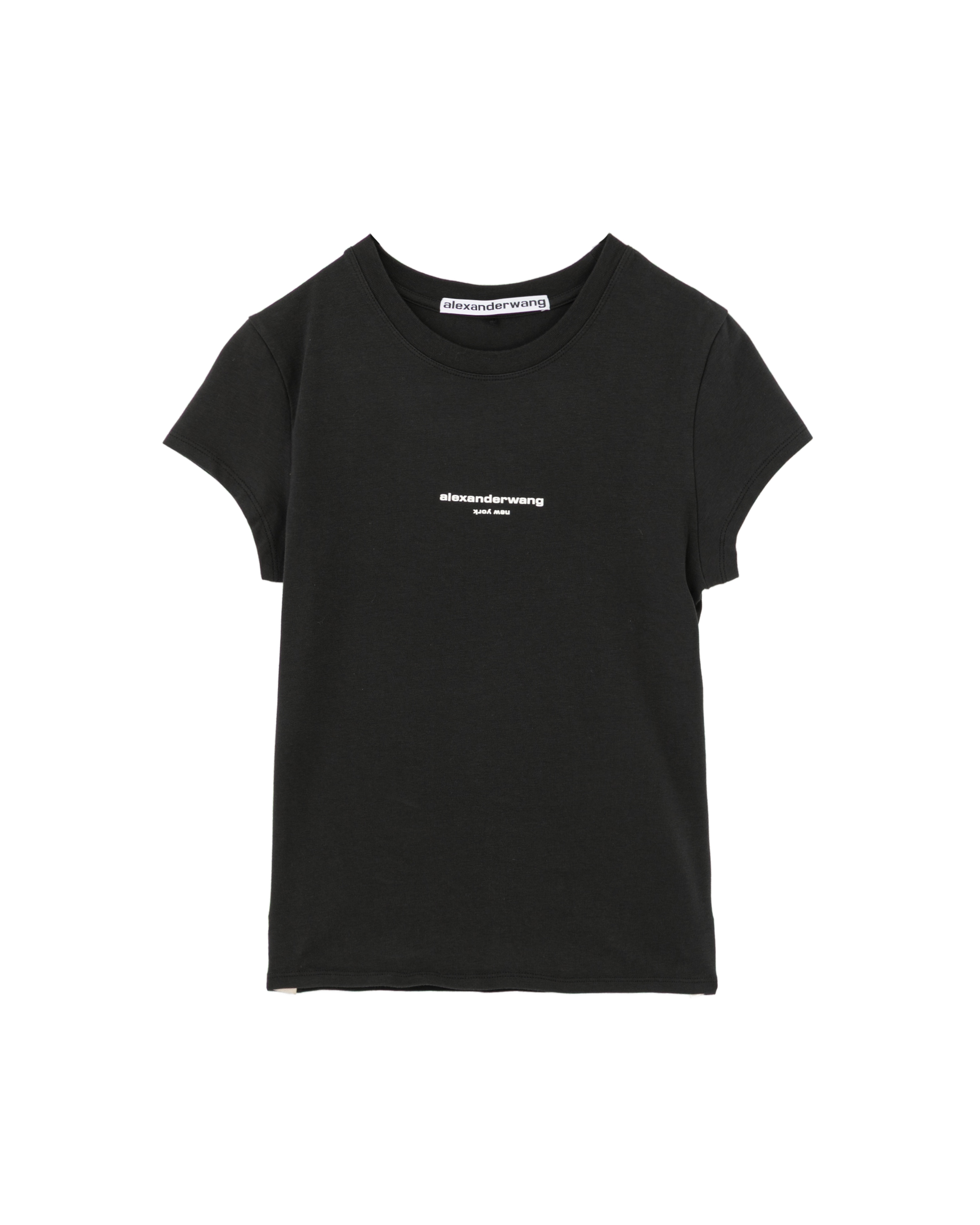
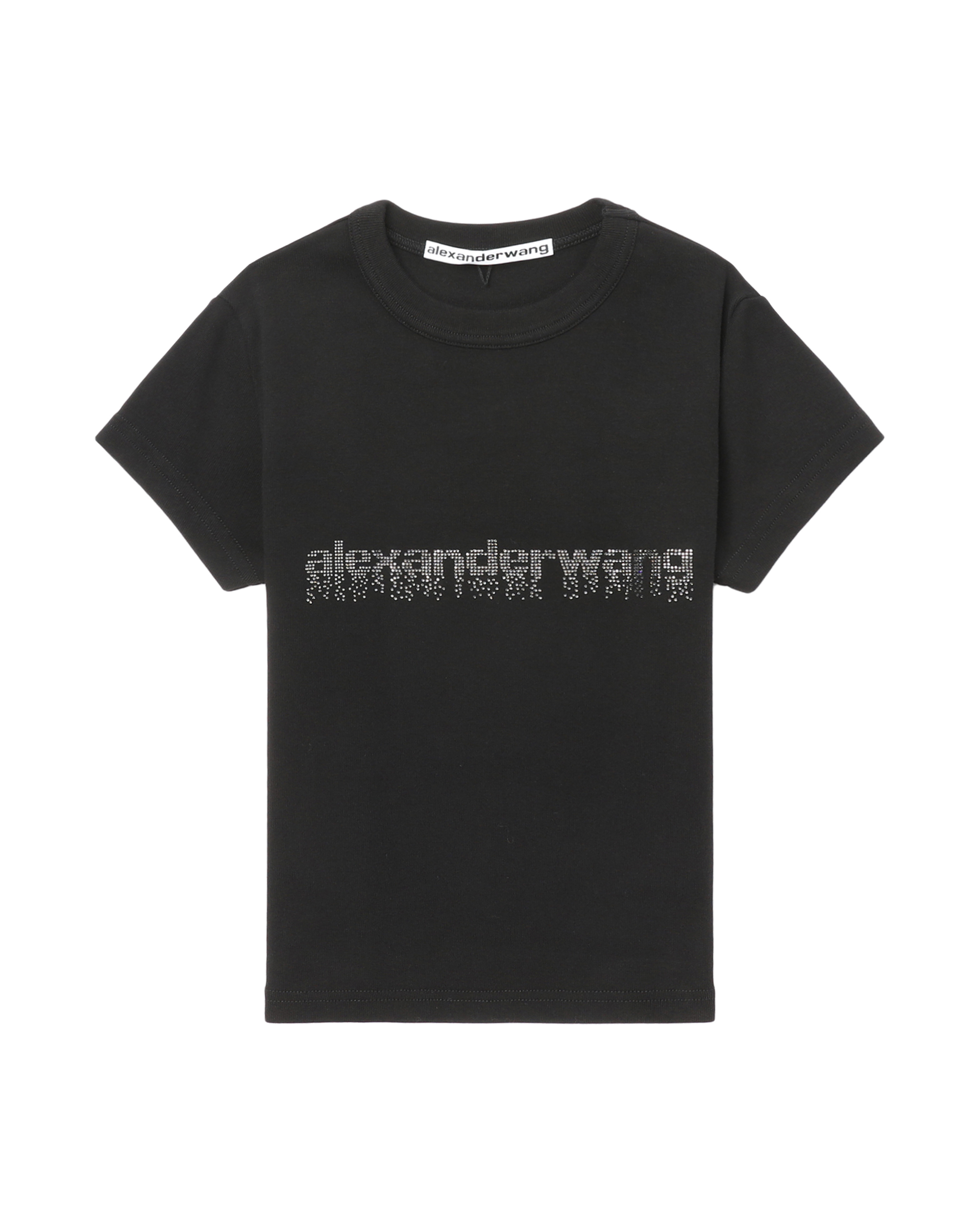
There are viral fashion moments, and then there are viral fashion moments that arrive from the most improbable direction imaginable: a 29-year-old artificial intelligence executive, a camouflage cotton tee, and a collision between Silicon Valley and the runway that no one saw coming. The Alexander Wang Fall 2026 camo t-shirt sits at the exact center of that collision — a garment that began as a utilitarian staple of the designer's fall collection and has since become a genuine cultural artifact, worn by one of the most scrutinized figures in technology and photographed into a thousand memes. What makes it worth your attention is not the noise around it, but the precision of the thing itself.
The design is deceptively straightforward. Cut in a relaxed, boxy silhouette that falls deliberately away from the body, the tee carries a woodland camouflage print rendered in muted olive, charcoal, and bone rather than the aggressive greens of military surplus. The cotton is garment-dyed, giving the fabric a soft, broken-in hand from the first wear, and the print is applied with a subtle irregularity so that no two panels align quite the same way — a quiet rejection of the hyper-uniformity that defines most logo-driven streetwear. The Alexander Wang name appears sparingly, if at all, letting the camo pattern do the talking. It is a piece that reads as anonymous from across a room and unmistakably considered up close.
The Anatomy of a Quiet Garment
Look closer and the restraint becomes the point. The boxy cut is generous but never sloppy, falling with intention rather than indifference, the kind of proportion that flatters without announcing itself. That muted palette — olive, charcoal, bone — pulls the tee out of surplus-store territory and into something closer to editorial. Garment-dyeing softens the hand from the first wear, so the cotton feels broken-in before you've broken it in yourself. And the irregular print placement means no two panels align quite the same way, a deliberate flaw that undercuts the hyper-uniformity of most logo-driven streetwear. The branding, where it appears at all, is sparing. The camo does the talking.
When Silicon Valley Wears the Runway
The cultural context is what elevates the garment from product to phenomenon. When Alexandr Wang — Meta's highest-paid employee, the young AI chief whose every move is now dissected by both tech and fashion press — began appearing in the camo tee, the internet did what the internet does. Business Insider dubbed him Silicon Valley's newest fashion icon; the tee became shorthand for a generation of technical founders who dress with intention rather than indifference. The symmetry of the names — designer Alexander Wang, technologist Alexandr Wang — only sharpened the story.
The Designer Behind the Pattern
But the deeper resonance belongs to the designer himself, who has spent the past year transforming a Chinatown landmark into the Wang Contemporary, a cross-disciplinary arts platform, and debuting everything from a 3D-printed stiletto to an energy drink launched alongside a humanoid robot. The camo tee belongs to that same restless, category-blurring instinct — less a merch drop than another facet of a broader project.
Why It Registers Now
It matters now because it captures a genuine shift in how style circulates. This is not a logo tee engineered for maximum visibility; it is a piece whose credibility comes from context — from the fall runway, from the art center, from the unlikely figure who wore it into a boardroom. The Fall 2026 camo t-shirt is for the person who understands that the most compelling fashion statements of the moment are the ones that refuse to announce themselves, that operate at the intersection of utility and subversion. Pair it with tailoring and it sharpens; wear it with denim and it disappears into something effortless. Either way, it registers.
In a season saturated with spectacle, the camo tee earns its place through restraint and timing. Alexander Wang built a collection around it, Silicon Valley adopted it, and the culture has now absorbed it. Whether you encountered it on a runway in February or on a timeline in the months since, the garment rewards a second look — and then a third. This is the rare viral piece that holds up once the noise fades, and a reminder that the most enduring fashion objects are rarely the loudest ones in the room.