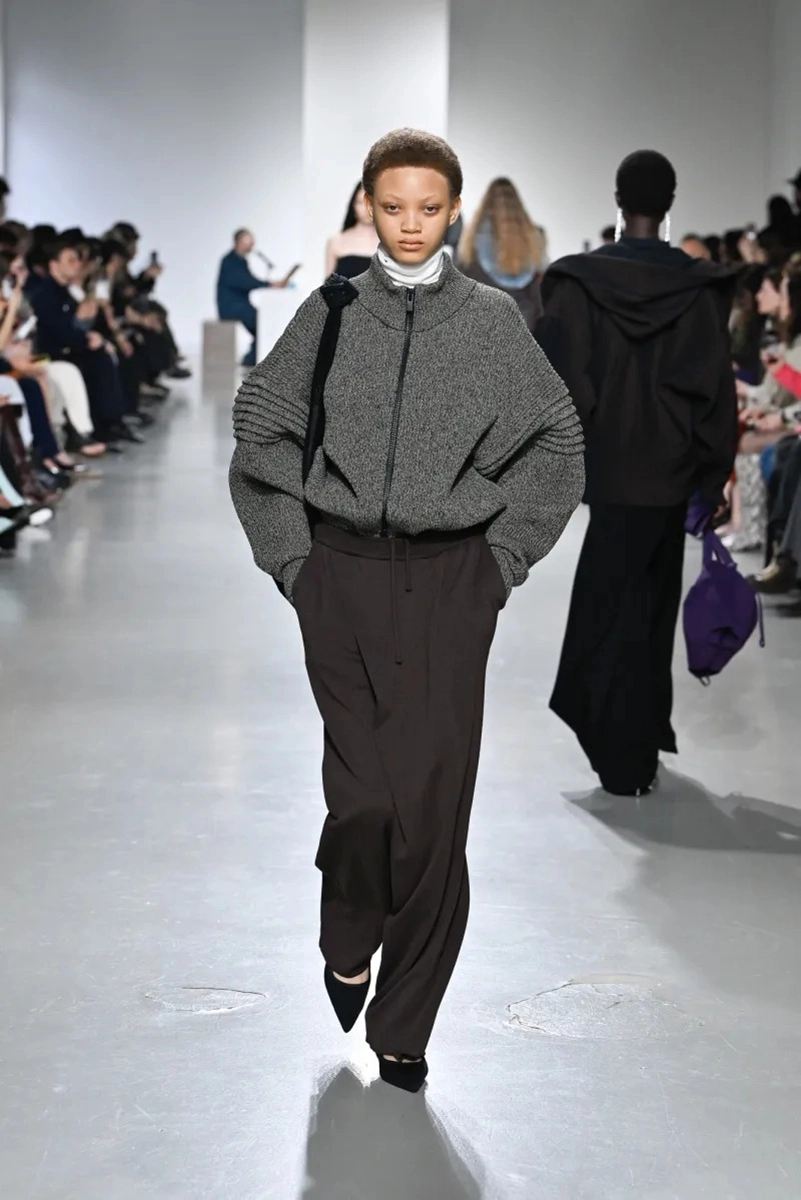
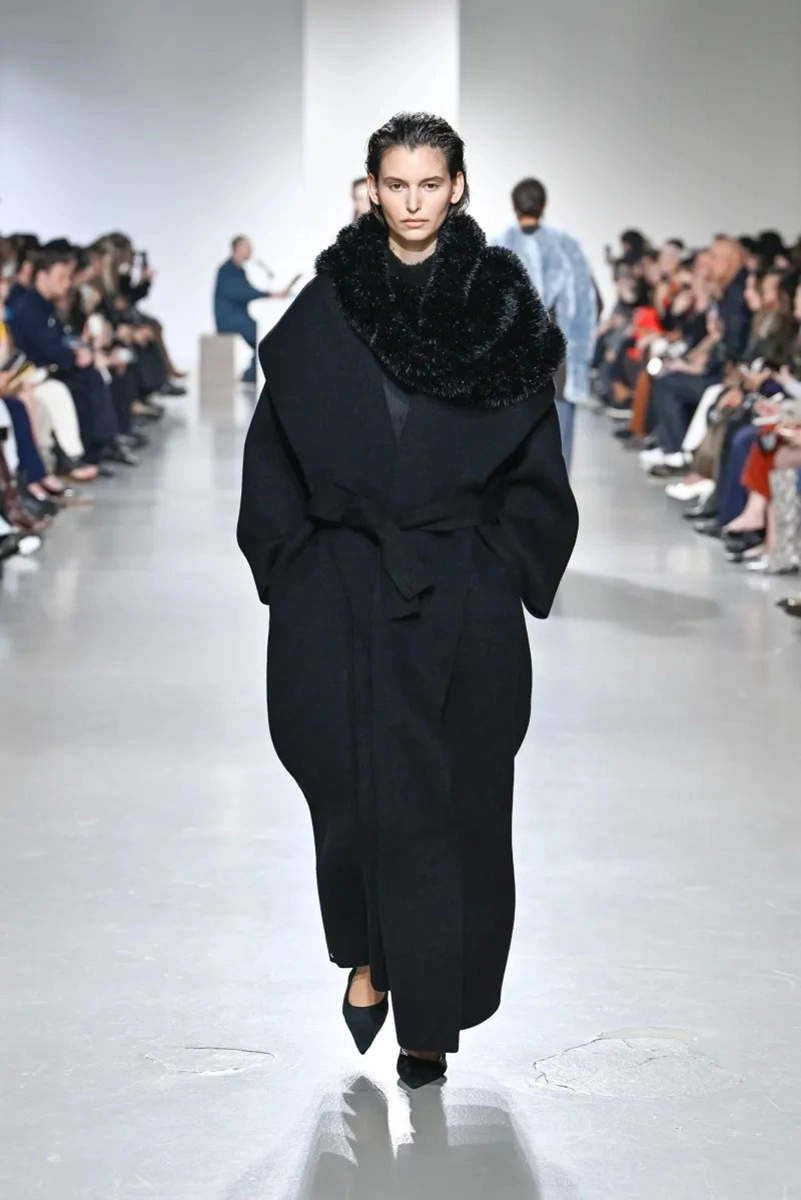
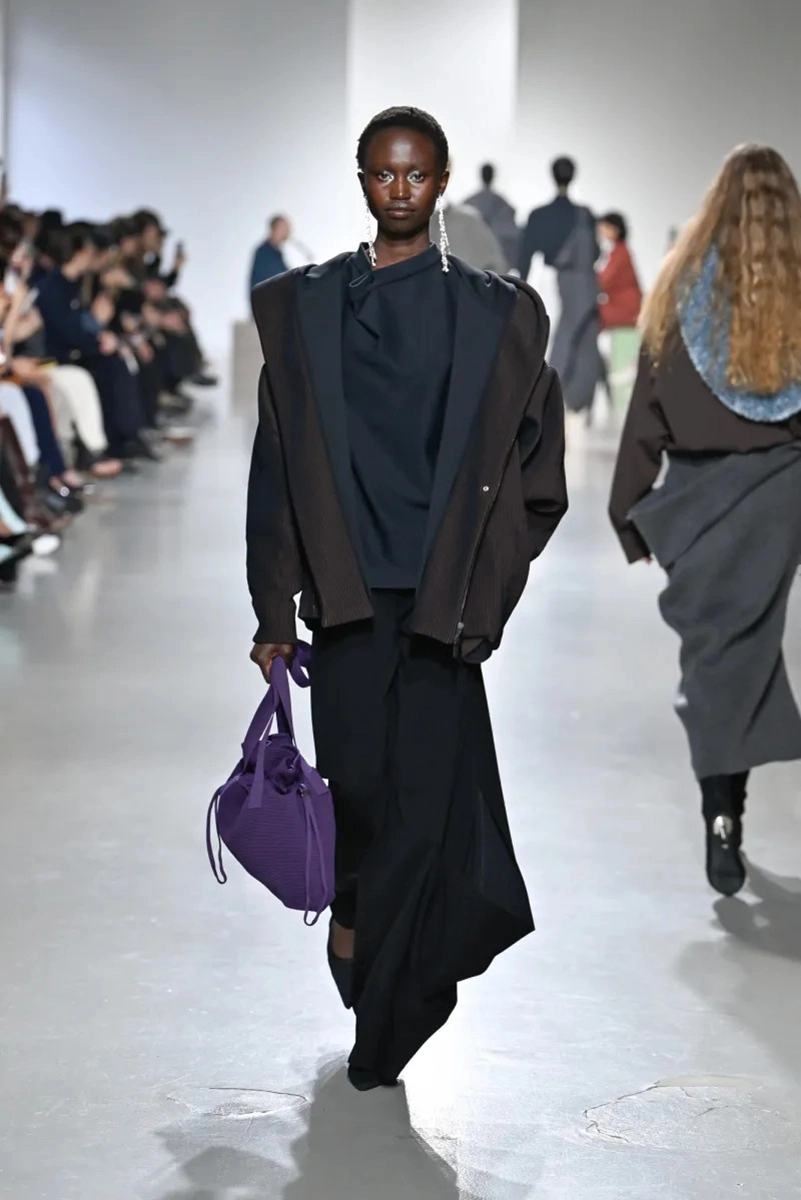
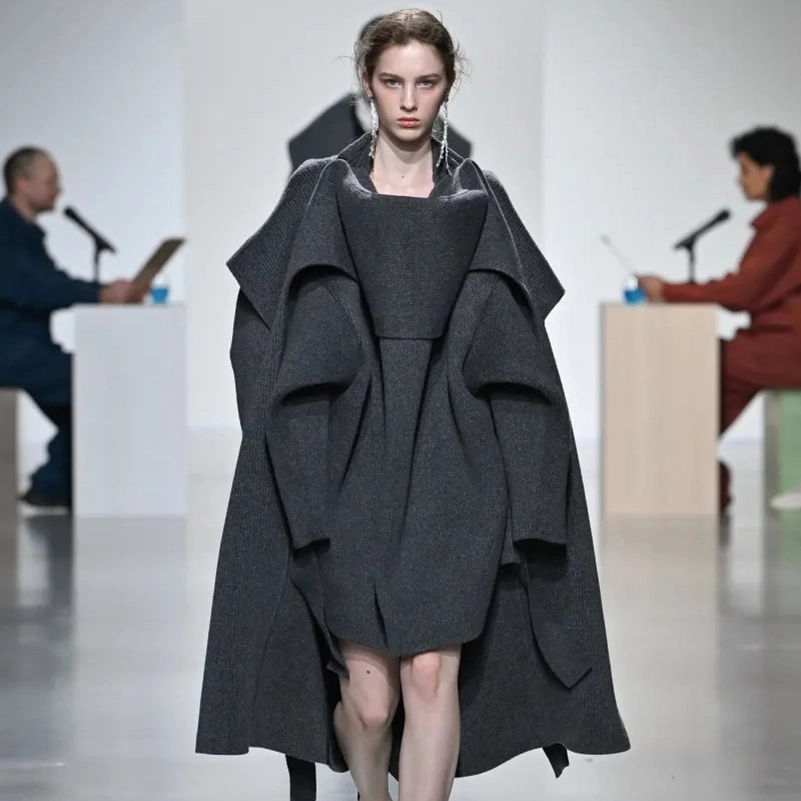
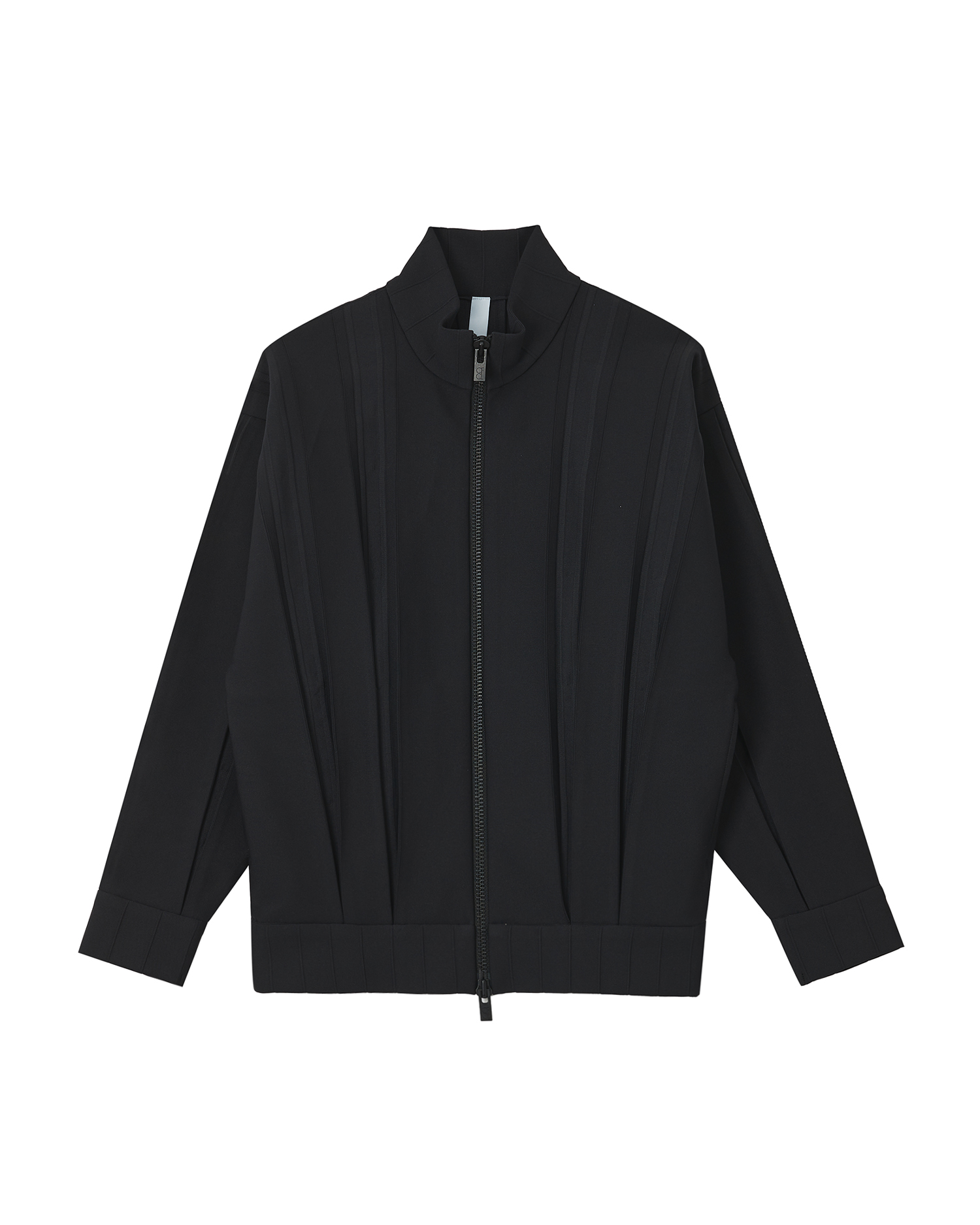
There is a specific kind of magic that happens when a material is pushed past its known limits—when something inherently soft and yielding decides to stand its ground. At CFCL, Yusuke Takahashi has spent seasons perfecting that exact alchemy, and for Fall 2026, he has delivered what might be his most compelling argument yet. This is a collection where knitwear stops being a second skin and becomes something closer to architecture: garments that carve volume out of thin air, holding sculptural, almost impossible shapes while remaining featherlight against the body. It is, in every sense, a construction project—just one executed with a single, continuous thread.
The fashion crowd—from WWD editors to front-row regulars—has taken note. And the buzz is warranted. Takahashi, who cut his teeth under the late Issey Miyake, understands the kinetic relationship between fabric and form better than most. But with this new body of work, he has shifted that relationship into an entirely different dimension, one where precision engineering and organic comfort coexist without compromise. The result is a quiet manifesto on the future of tactile luxury, and it wears remarkably well.
The Thread That Builds
The technical foundation of this collection is as impressive as the visual payoff. Each garment is produced using 3D whole-garment knitting technology—a process that creates pieces in their entirety, with zero fabric waste. But the sculptural quality on display isn't achieved through padding, boning, or any stiffening agent. Instead, Takahashi manipulates tension and stitch density with obsessive precision, coaxing wool and technical yarns into shapes that defy their soft origins.
Consider a cocooning coat that flares from the shoulders like a bell, or a dress that spirals around the torso in a controlled vortex. These pieces appear almost hewn from marble, yet they weigh next to nothing and retain the breathable, intimate comfort of fine-gauge knit. That tension—between monumental form and featherlight wearability—is the collection's defining gesture. It is knitwear that behaves like sculpture but remembers it is clothing.
Volume as the New Logo
In a market saturated with quiet-luxury buzzwords and monogram fatigue, CFCL takes a different route to status. There are no visible markers here, no branding to speak of. The construction itself is the statement. The Fall 2026 palette runs from stark optical whites to deep forest greens and grounding earth tones—colors that act as a neutral canvas for the dramatic play of light and shadow across the garments' undulating surfaces.
The effect is inherently tactile. These are clothes that demand to be touched, a sensory rebellion against the flatness of digital consumption. For the architect, the curator, the creative director—anyone who communicates through material intelligence—this knitwear functions as a form of personal expression that speaks before a single word is exchanged. The volume of the silhouette replaces the volume of the logo, and the message is far more compelling.
From Runway to Reality
What anchors this collection in the realm of practical luxury is its deft negotiation between the extreme and the everyday. Yes, the runway presentations featured monumental, almost performative shapes. But the collection is grounded in versatility. A ribbed, high-neck top with a subtly sculpted shoulder seam slides effortlessly into a tailored trouser-and-blazer rotation for the office. The more dramatic, voluminous dresses operate as standalone evening statements—pieces that command a room without shouting.
This duality is the collection's greatest strength. Takahashi understands that the wearer is not a static mannequin but a moving entity, and the garments are engineered to respond to that motion. Sharp, defined angles soften into organic drapes as the body shifts. Clothes breathe, bend, and ultimately empower. They acknowledge the wearer's presence rather than overpowering it.
A New Blueprint for Knitwear
Culturally, CFCL's timing feels significant. As the industry cycles through micro-trends at breakneck speed, this collection offers a counter-narrative of permanence and contemplation. It nods to the minimalist ethos of Japanese design while speaking a global language of intellectual rigor and wearability. Takahashi treats the knitting machine almost like a 3D printer for fabric, rendering the seam obsolete and the shape limitless.
The deeper innovation here is philosophical. By looking backward to traditional techniques while leaping forward with technological prowess, Takahashi proves that the most forward-thinking fashion often emerges from a marriage of the two. The future of knitwear, he suggests, lies not in the pattern of the weave but in the structure of the whole. And in that vision, art and industry find their perfect, harmonious balance—worn directly on the body, moving through the world with intention.
The Fall 2026 collection is a definitive statement that softness can hold its own, that comfort and architecture are not opposing forces, and that true luxury is measured not in what you wear, but in how it makes you stand.