There are red-carpet outfits that register as good taste, and then there are those that register as an event—garments so specific, so loaded with reference and personality that they generate their own weather. Alexander Skarsgård's custom Chopova Lowena kilt skirt, worn to the Los Angeles premiere of *Wicker*, belongs emphatically to the second category. The New York Times anointed it "the skirt of the week." Harper's Bazaar called it an IYKYK piece. ELLE, WWD, People, and L'Officiel all circled the same story. The look paired a pleated punk kilt—signature Chopova Lowena hardware, straps, and all the clanking metal that implies—with a shirt bearing the face of Olivia Colman, Skarsgård's co-star and, in this configuration, his unlikely textile tribute. It was funny, it was deliberate, and it was unmistakably the work of two designers who have spent the last several years teaching the fashion establishment their vocabulary.
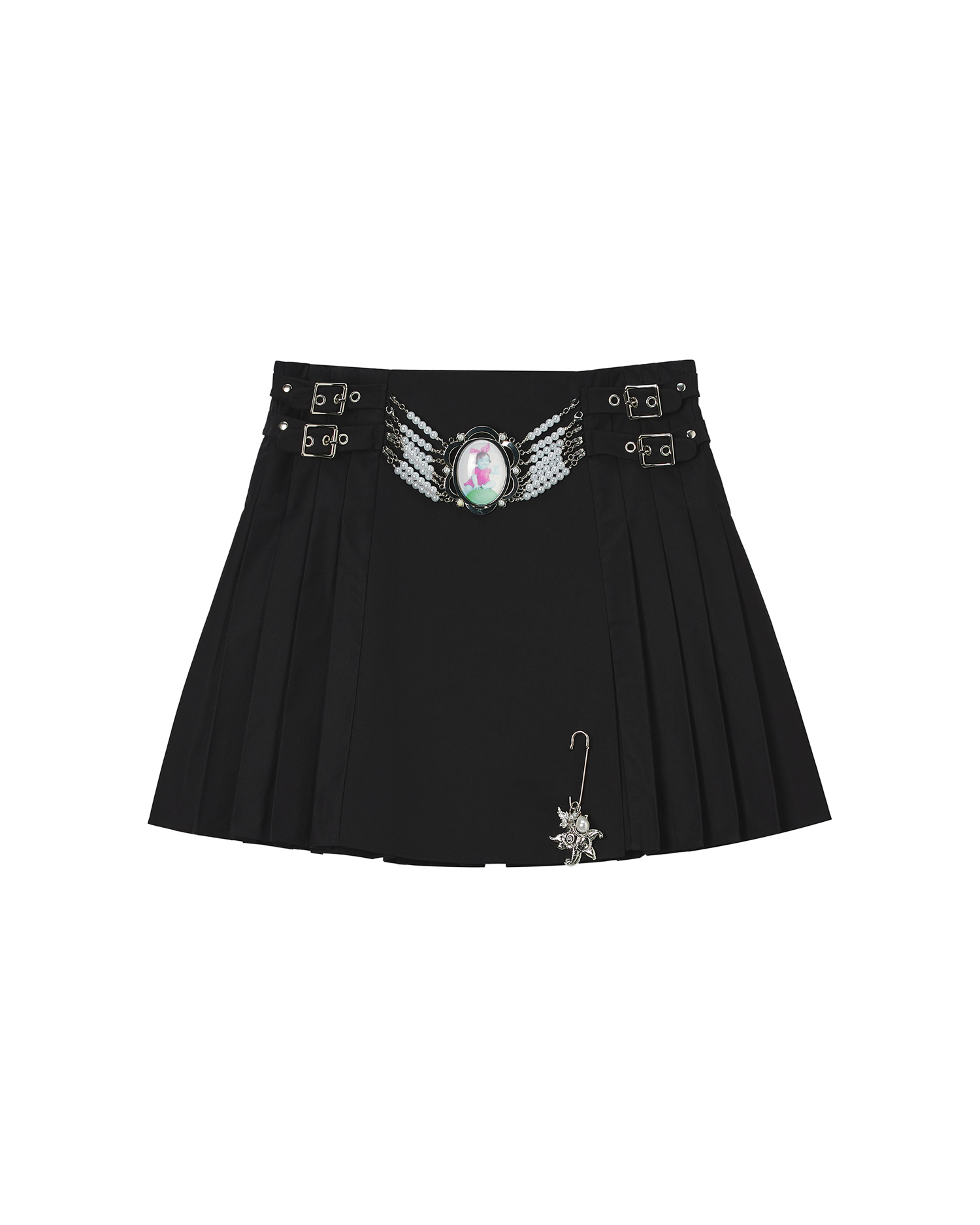
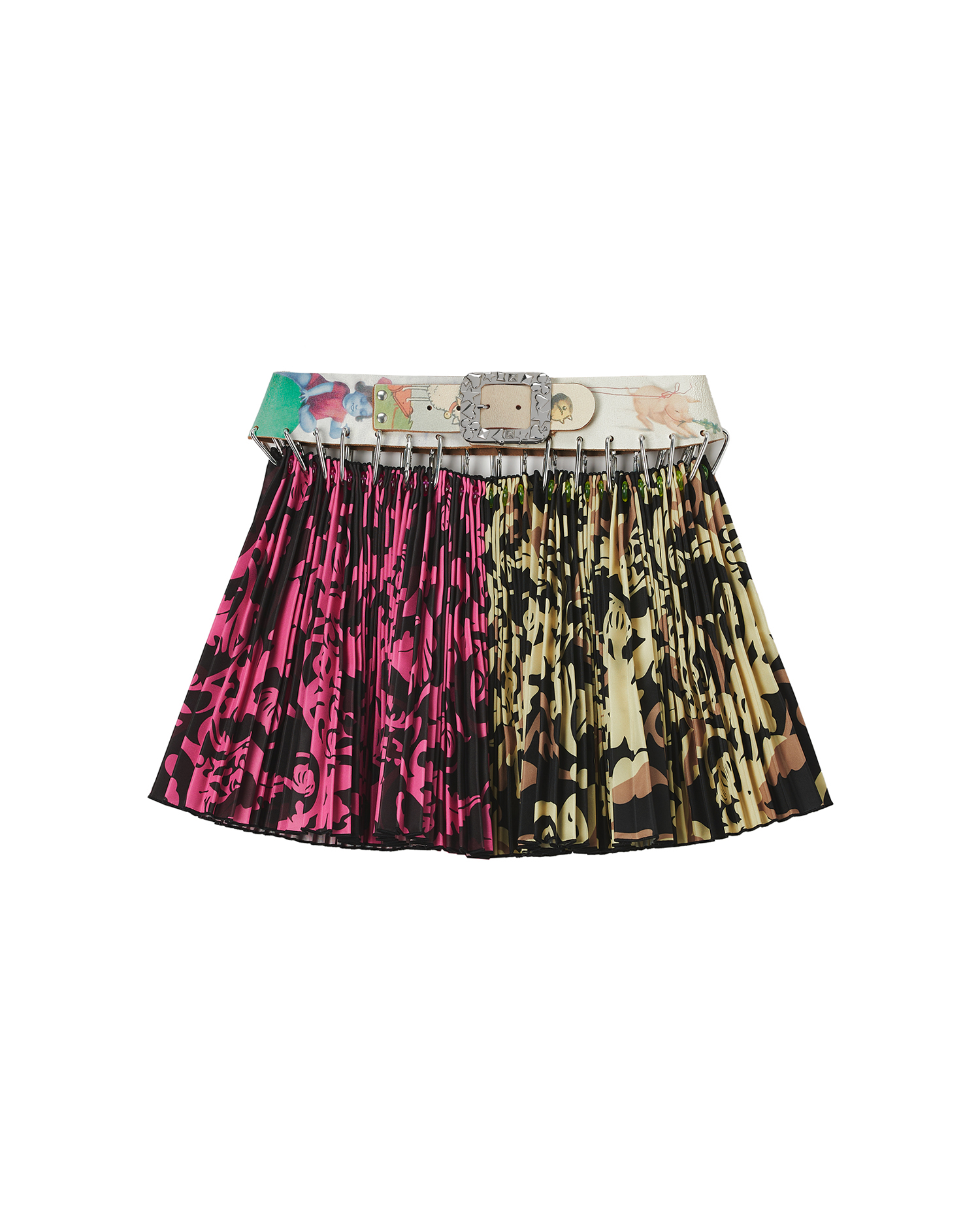
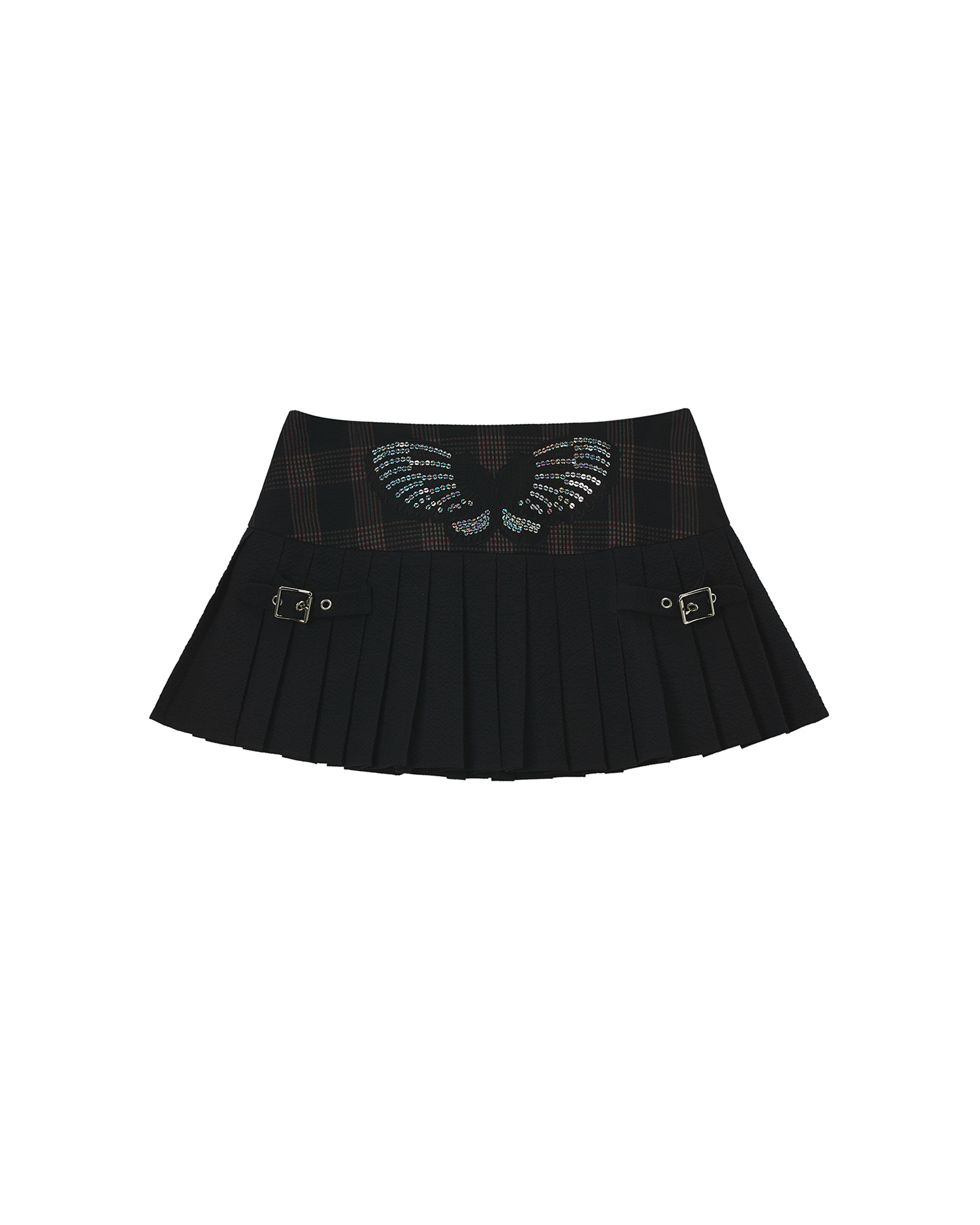
The kilt itself is the through-line of the house. CHOPOVA LOWENA, founded by Emma Chopova and Laura Lowena-Irons, built its reputation on a single, endlessly recombined silhouette: a pleated kilt suspended from a heavy leather waistband, hung with carabiners, climbing rope, and cowbells, its pleats rendered in clashing deadstock and folkloric fabrics sourced from Bulgaria and the wider textile market. The design language is deliberately hybrid—Bulgarian folkloric embroidery meets British punk and climbing gear, a collision the founders have described as the meeting point of their two heritages. Each kilt is assembled from salvaged materials, which means no two are quite alike; the garment is less a product than a small act of conservation, and the hardware and strap detailing that reads as aggressive to some reads as pure joy to the people who wear it.
A Cult Object Leaves the Margins
That kilt has become a genuine cult object. Claudia Winkleman has worn it on television; Skarsgård has now worn a bespoke version on a Hollywood red carpet; and the brand's Spring 2027 collection—shown, in characteristic form, as a bowling-alley "coven" according to Dazed—confirms that the designers have no intention of sanding down the weirdness. The timing of the Skarsgård moment is not incidental. The label has just opened the Clubhouse, its first bricks-and-mortar store, an AnOther Magazine-covered milestone that marks the transition from cult to institution. A viral red-carpet look landing in the same news cycle as a first physical shop is the kind of narrative arc publicists dream about, and it happened here largely on the strength of the clothes themselves.
Why the Skarsgård Commission Mattered
What makes the custom Skarsgård kilt matter beyond the photo op is what it demonstrates about the garment's range. A skirt built for punk-adjacent styling and a certain downtown swagger translated, without dilution, onto a six-foot-plus Swedish leading man at a studio premiere. The Olivia Colman shirt supplied the wink, but the kilt supplied the conviction. This is a piece that reads as costume only to people who have not been paying attention; to everyone else it reads as the most articulate thing on the carpet—a pleated kilt with folkloric fabric, industrial hardware, and a sense of humor, worn by a man who understood exactly what he was doing.
Hardware, Heritage, and a Sense of Humor
Look closely and the tension is the point. Heavy leather against soft, mismatched pleats. Climbing rope and cowbells against embroidery that carries folk memory in its stitches. The silhouette is historic and the styling is contemporary; the materials are salvaged and the attitude is entirely new. That friction—between craft and chaos, between heritage and subversion—is what gives the kilt its charge, whether it's on a television sofa or under premiere lights.
It is, in the end, a garment for the person who wants to be recognized rather than merely admired. The Chopova Lowena kilt rewards a wearer with a point of view, and in the case of this custom commission, it rewarded a red carpet with something worth talking about the next morning. The skirt of the week was never really about the week at all—it was about a decade of two designers insisting that a kilt could carry folk memory, punk attitude, and a face-print shirt all at once, and being proven right in front of the entire industry.