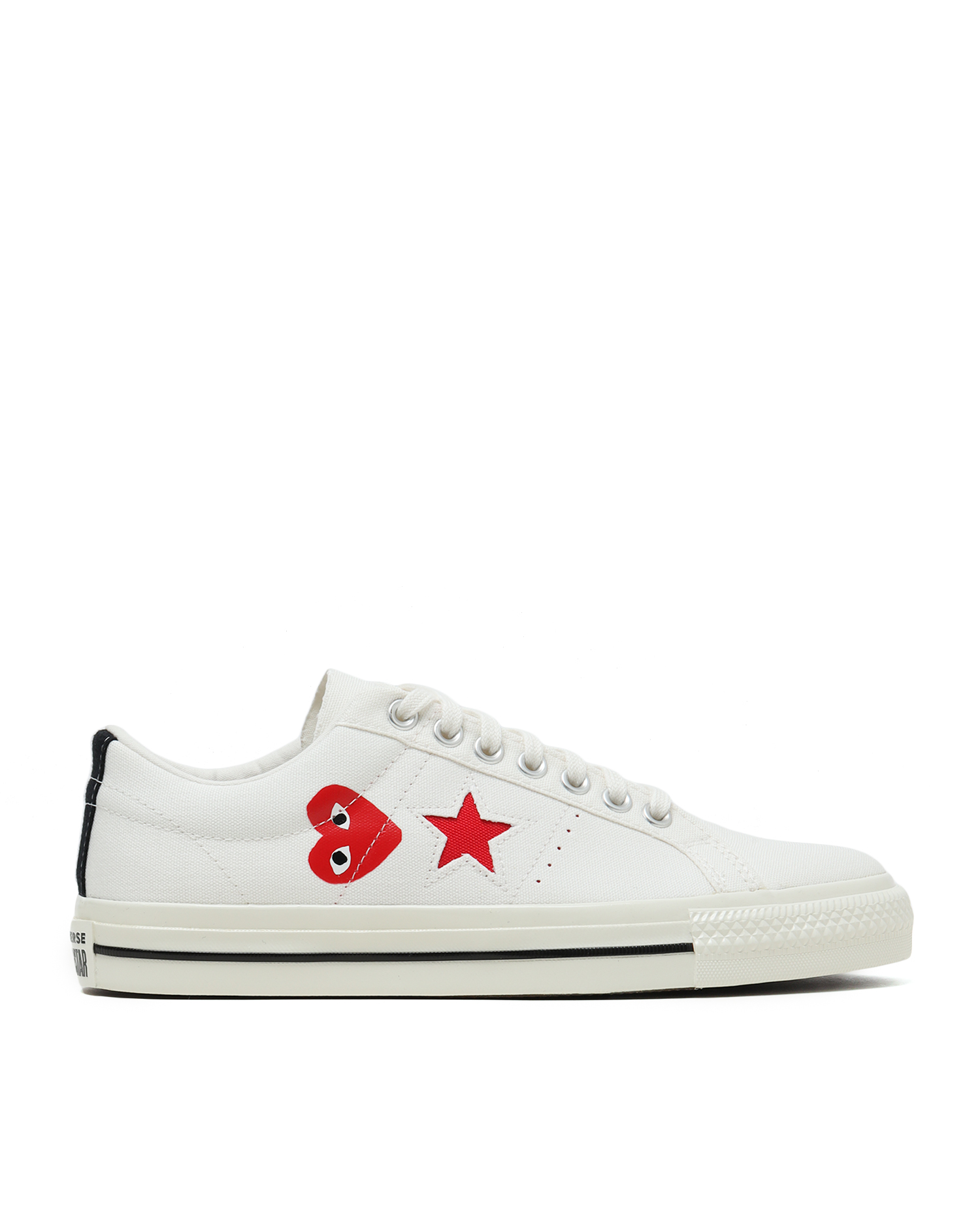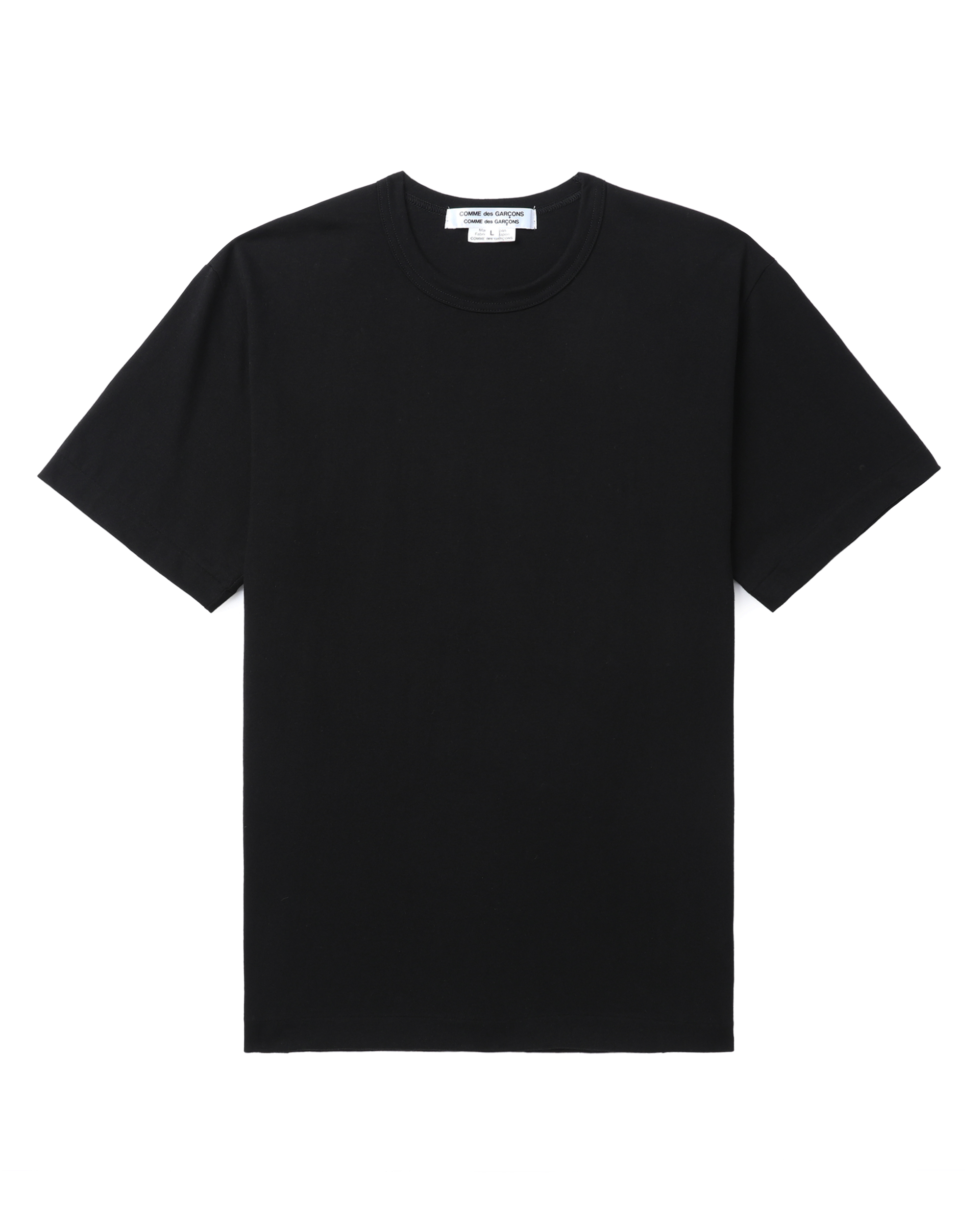
Rei Kawakubo has never been interested in making things easy. So it follows that her house's most prolific sneaker era would arrive wrapped in unease. This season alone, COMME des GARÇONS' various lines have touched the Air Jordan 11, the LD-1000, the Field General 82, and the ASICS GEL-1130 — an unprecedented run that has turned CDG into one of Nike's most unpredictable partners. But the Air Max 97 stands apart within that output, because it is the silhouette least in need of reinvention and the one most ruthlessly transformed.
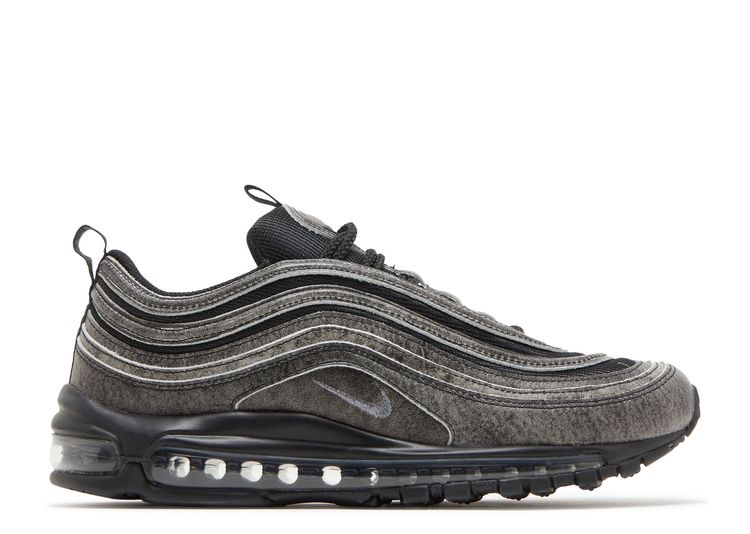
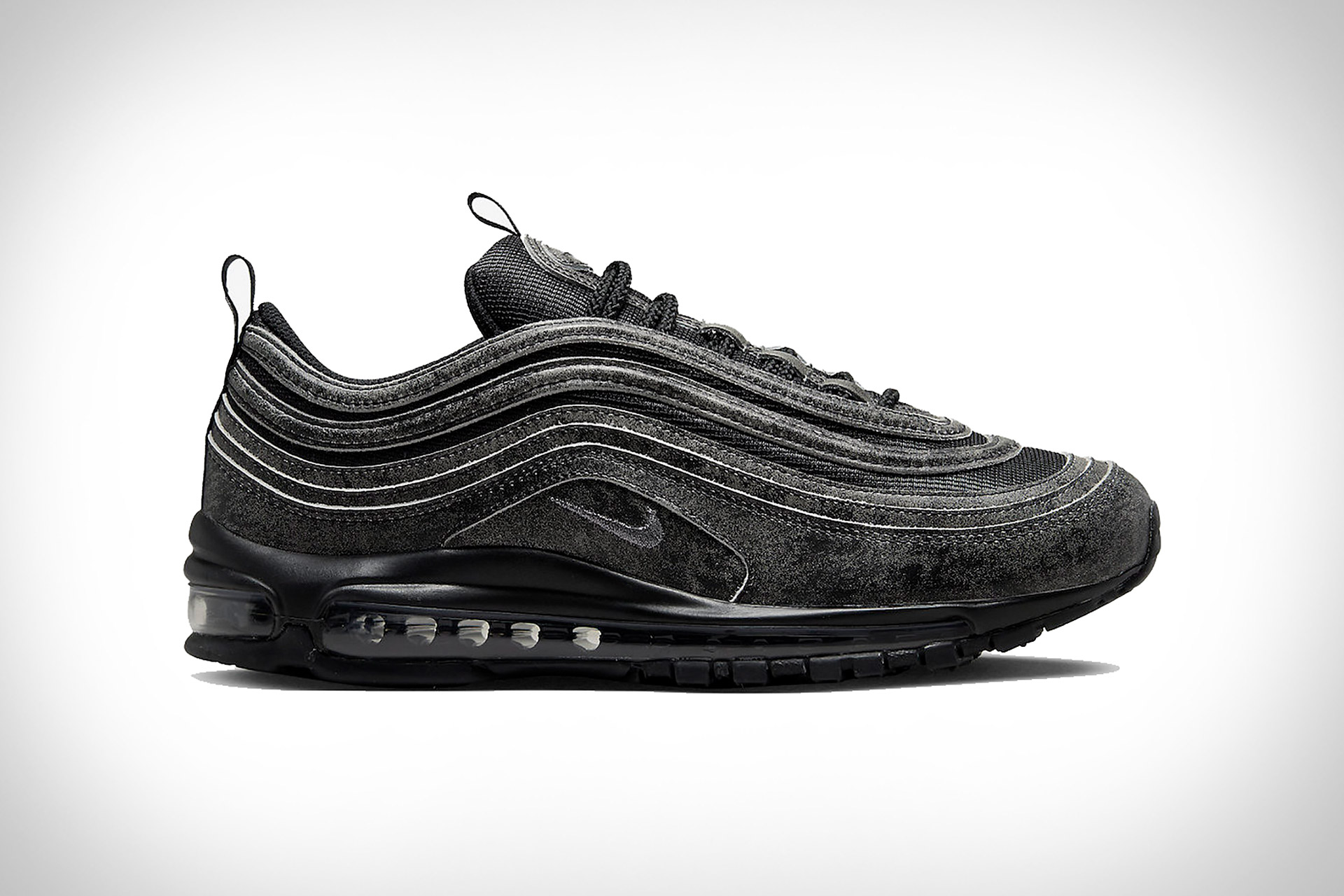
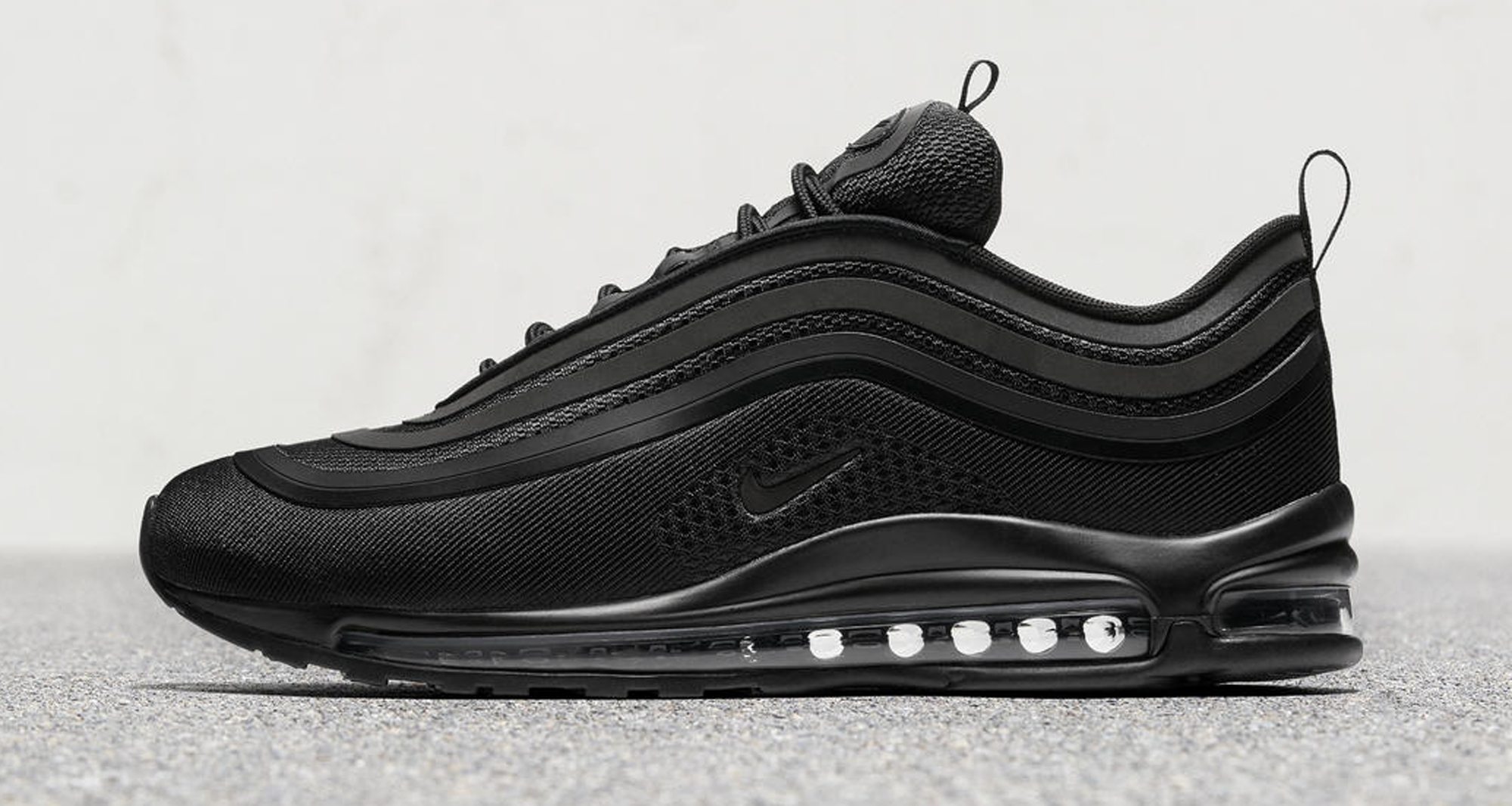
The COMME des GARÇONS BLACK x Nike Air Max 97 Black arrives pre-distressed. Not lightly worn — studied, deliberate, as though the shoe has already lived a life and kept receipts. Where the standard model gleams with the metallic sheen of its 1997 debut, this edition is treated with scuffs, abrasions, and a muted, dusted finish. The signature wavy lines remain, but they no longer shine; they bruise.
A Silhouette That Bruises Instead of Gleams
The Air Max 97's origin story is well known: a design legendarily inspired by the ripples of a Japanese bullet train, all speed and chrome and Y2K optimism. The CDG BLACK edition strips that optimism back to something quieter and stranger. Layered panels that once caught light now absorb it. Full-length visible Air cushioning sits beneath, and the colorway stays resolutely monochrome — a black-on-black exercise in restraint that lets texture, not pigment, carry the statement. Nothing here announces itself. Everything here asks you to look closer.
This is the COMME des GARÇONS BLACK philosophy distilled: garments and objects that feel inherited rather than purchased, worn rather than debuted.
BLACK, and the Case Against Novelty
That philosophy has a lineage. BLACK, the diffusion line Kawakubo established in 2009, was conceived as a rebuttal to fashion's obsession with novelty — a permanent collection built almost entirely in black, emphasizing cut, fabric, and a certain everyday utility over seasonal spectacle. Its collaborators have included everyone from Nike to Chrome Hearts, but the through-line never wavers: familiar forms, quietly destabilized.
The Air Max 97 fits this program perfectly. It is one of the most recognizable shoes on earth, a staple of sneaker culture that has been rereleased, remixed, and referenced to the point of visual exhaustion. To distress it is to interrupt that familiarity — to make a mass object feel personal, almost archival. The scuff becomes a signature. The abrasion becomes a kind of authorship.
Imperfection as Continuation, Not Gimmick
The cultural context matters here, too. Kawakubo has spent five decades insisting that beauty can reside in the unfinished, the asymmetric, the deliberately imperfect — from the holes of her 1982 "lace" sweaters to the lumps and bumps of her Body Meets Dress collections. Applying that sensibility to sportswear is not a gimmick but a continuation.
And it lands at a moment when the resale market increasingly prizes "aged" and "vintage" aesthetics, when sneaker culture is reckoning with its own history rather than chasing the next hyped drop. The COMME des GARÇONS BLACK x Nike Air Max 97 speaks directly to that shift, offering not a future classic but a fabricated past one. It is nostalgia, reverse-engineered — and then sanded down at the edges.
Who It's For
Not the collector seeking pristine deadstock. Not the casual buyer drawn to the Air Max 97 for its Y2K nostalgia. This shoe is for the wearer who understands that CDG's most radical gesture is often subtraction — the removal of shine, of color, of newness itself. It rewards those who read sneakers as design objects rather than status symbols, and who appreciate that a scuff can be as deliberate as a stitch.
In a market flooded with loud collaborations, the Air Max 97 Black is the rare release that whispers.
That whisper is the whole point. BLACK was never about absence — it was about what remains when you strip away the noise. A silhouette, a texture, a finish that suggests time passed through it. The COMME des GARÇONS BLACK x Nike Air Max 97 Black doesn't ask to be kept in a box. It asks to be worn into the ground, and to look like it already has been.