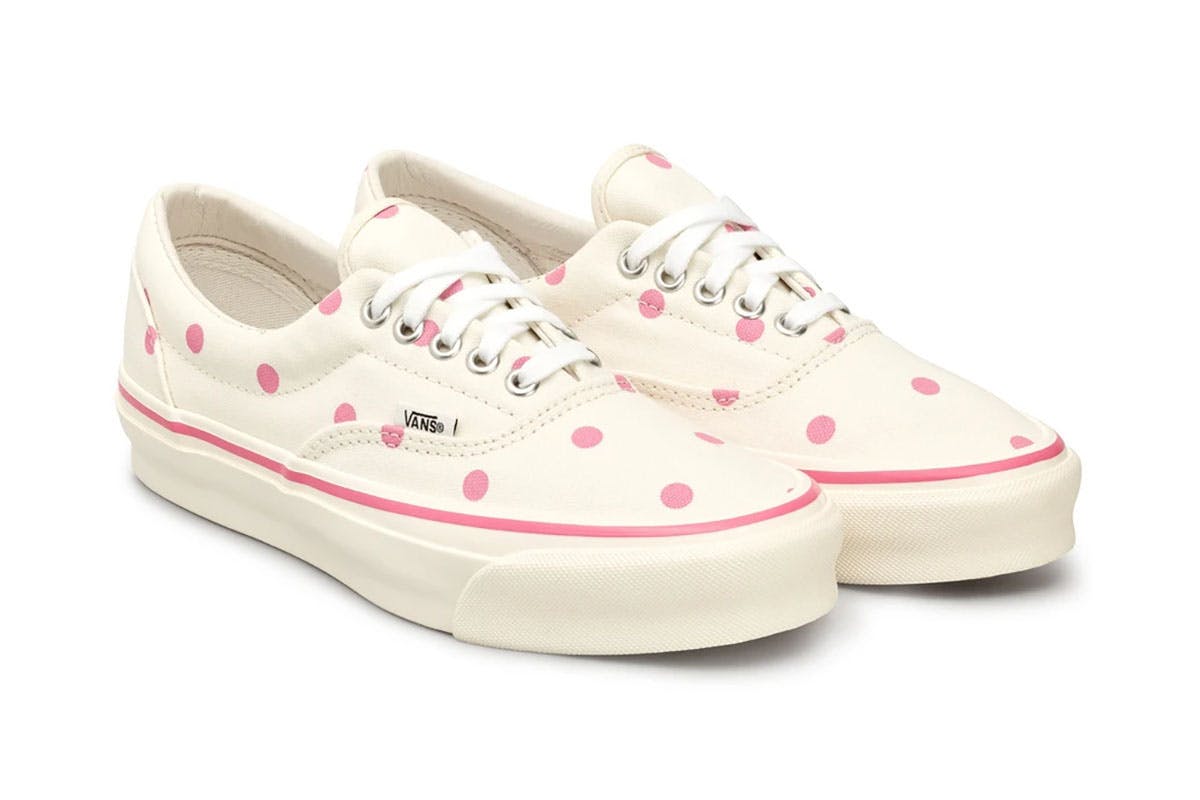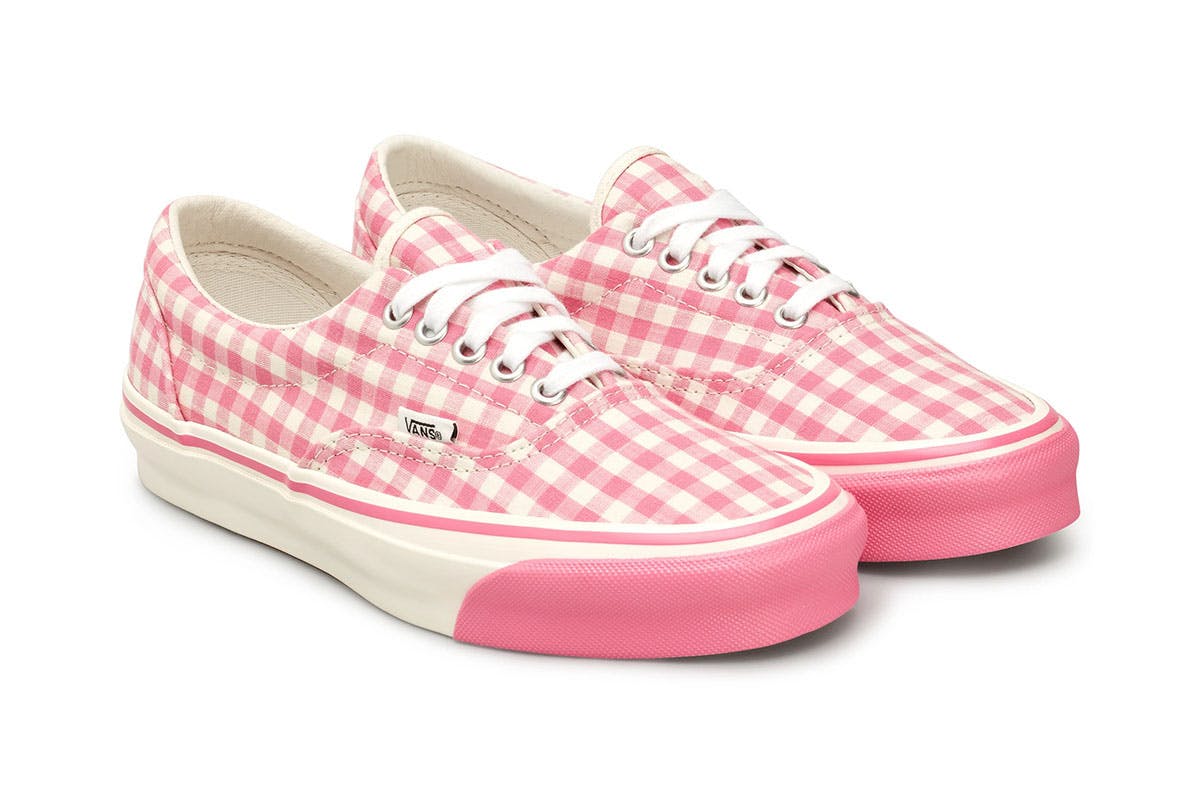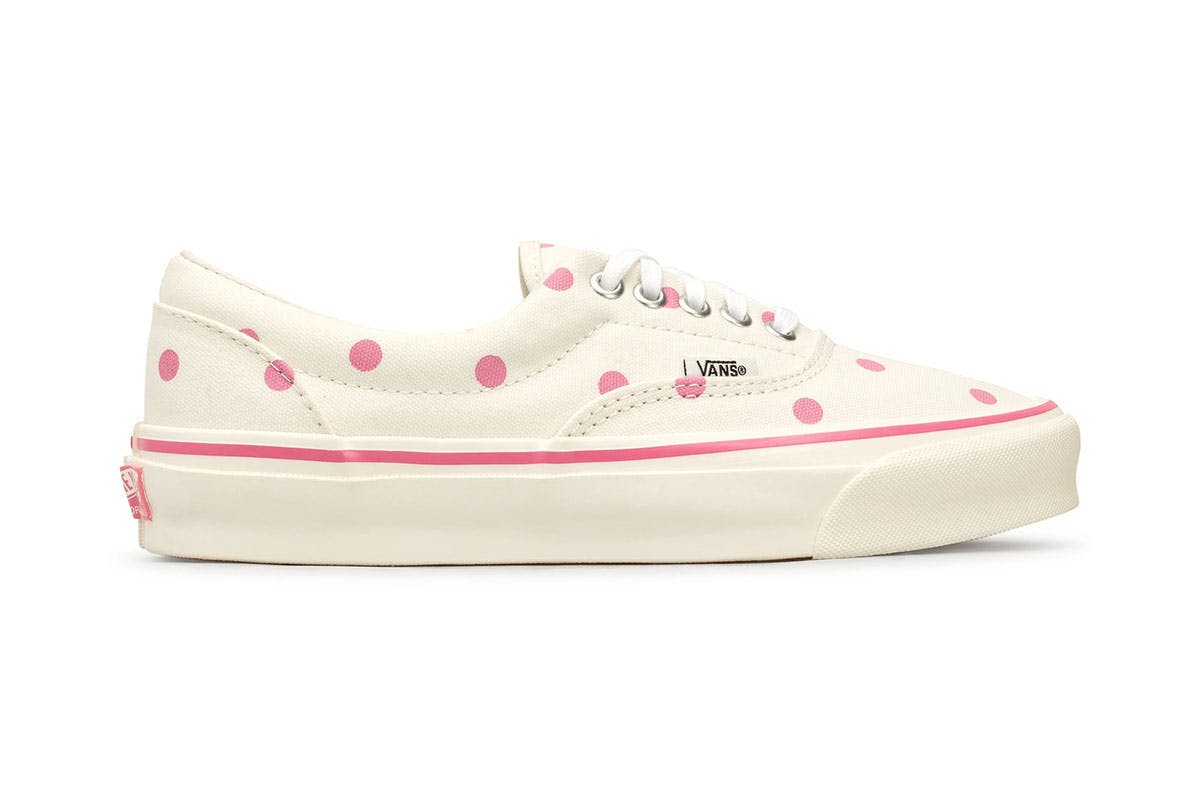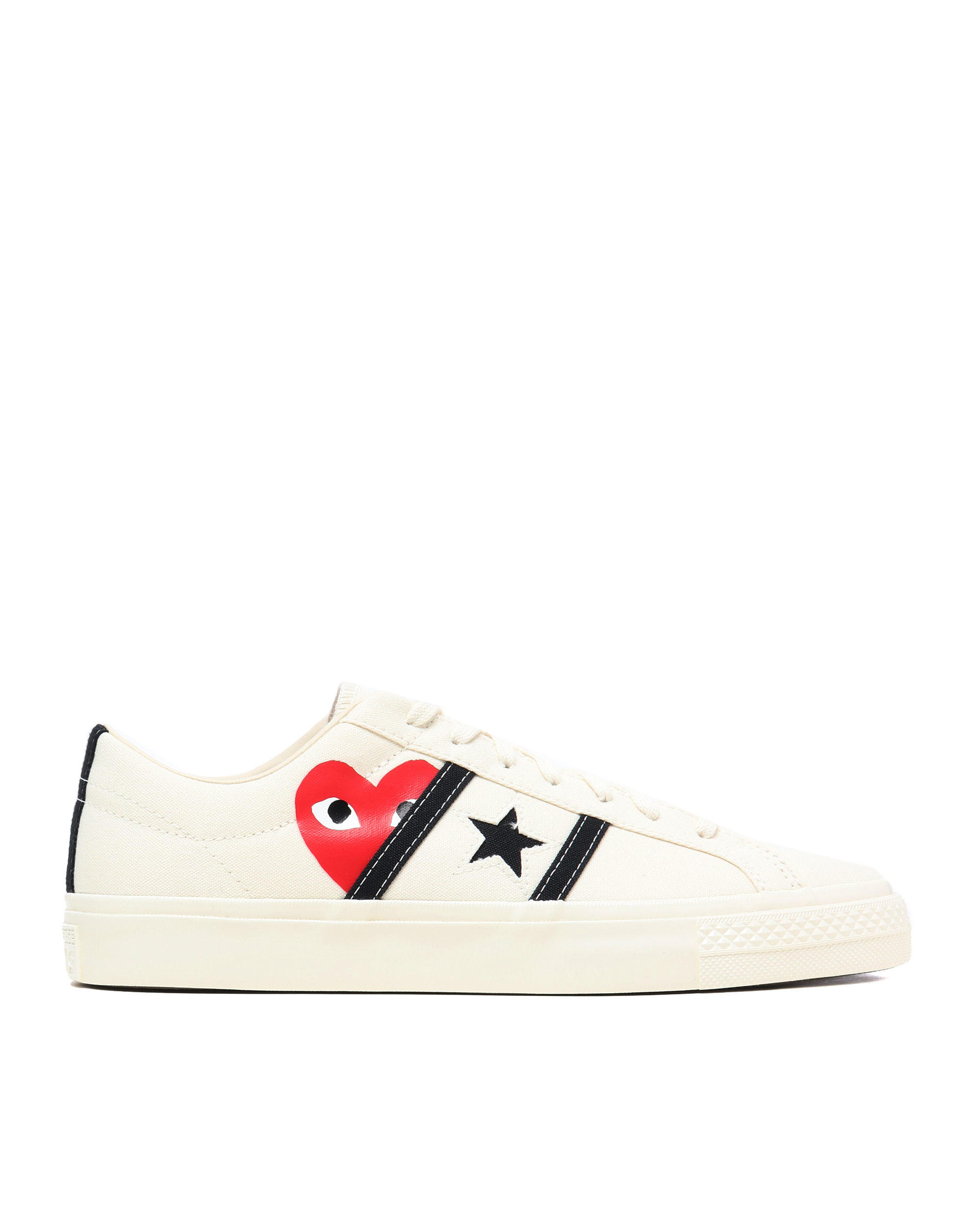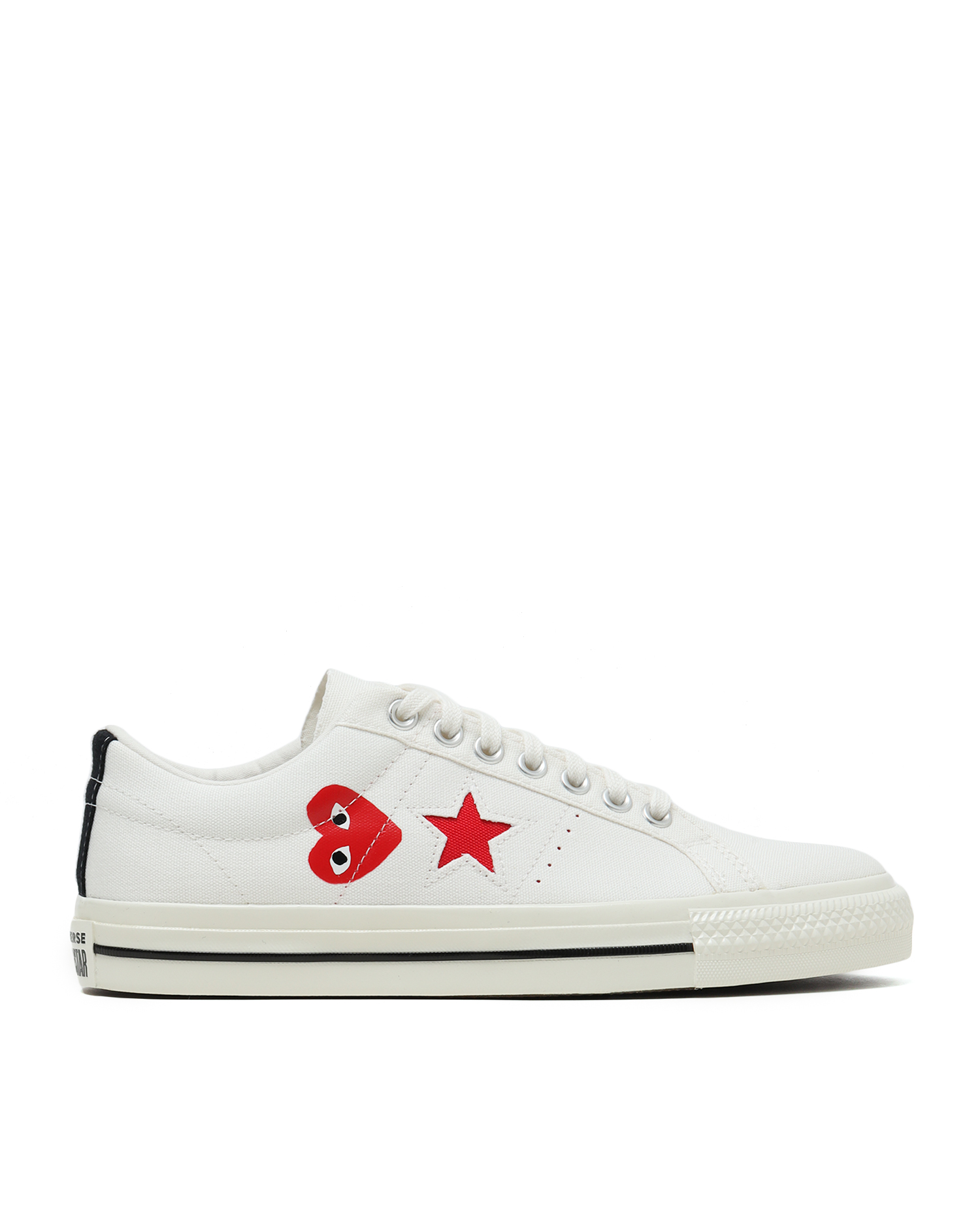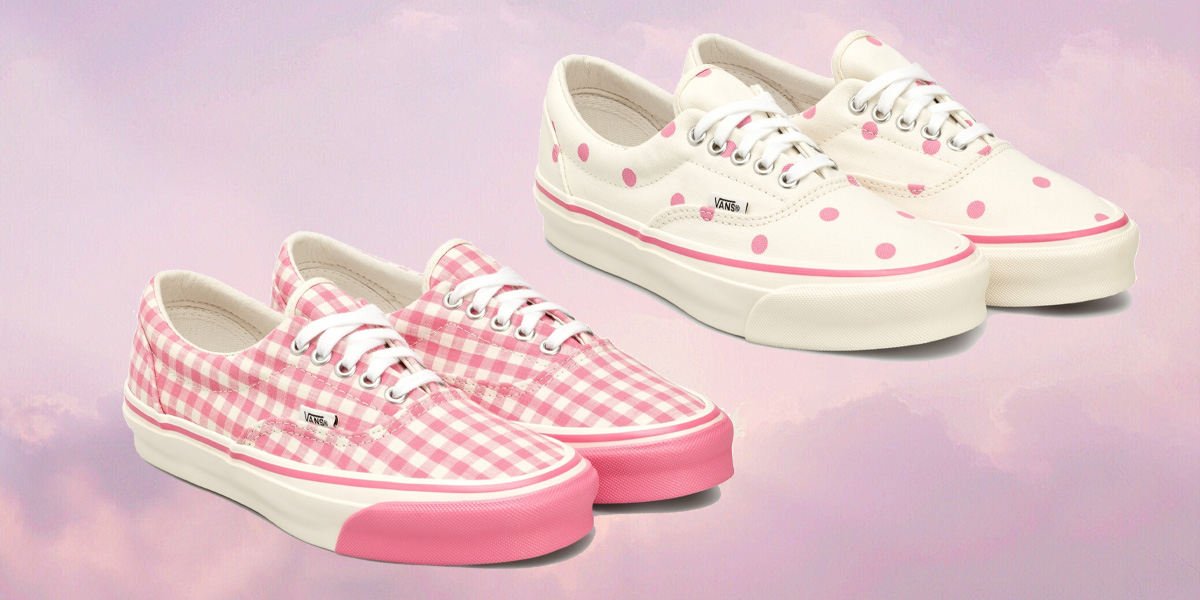
There is a particular kind of fashion object that refuses to sit still in its own category — that insists on being two things at once and dares you to resolve the tension. The COMME des GARÇONS GIRL x Vans OG Era in Pastel Pink is exactly that kind of object. On paper, it is a Vans Era: the unimpeachable canvas skate silhouette first introduced in 1976, worn by generations of skaters, musicians, and downtown fixtures who never once thought of it as precious. But in the hands of Rei Kawakubo's girl-coded diffusion line, that shoe has been softened, sweetened, and subtly destabilized — rendered in a powdery blush that reads less like skatewear and more like confectionery with a knowing wink.
The design itself is a study in restraint. The upper is executed in pastel pink canvas, while the classic Vans waffle outsole and padded collar remain intact — a deliberate choice that keeps the shoe anchored to its utilitarian roots even as the palette pushes it into more whimsical territory. COMME des GARÇONS GIRL branding appears with characteristic understatement, allowing the color to do the heavy lifting. The effect is deliberately ambiguous: is this a sneaker for the soft-girl aesthetic that has dominated TikTok and Pinterest mood boards, or a quiet act of fashion-world mischief, dressing a skate staple in the trappings of innocence? As with so much of Kawakubo's output, the answer is probably both.
A Skate Shoe, Softened
Strip away the label and you still have one of the most democratic silhouettes in footwear history. The Vans Era was built for grip tape and pavement, not mood boards — which is precisely what makes its pastel-pink iteration so effective. The shoe hasn't been redesigned so much as recontextualized. The waffle outsole stays. The padded collar stays. Nothing about the construction apologizes for its origins. Instead, the blush canvas does the disrupting, shifting the Era from utility to object of desire without ever quite abandoning where it came from. It's a familiar shape wearing an unfamiliar mood, and that dissonance is the whole point.
The COMME des GARÇONS GIRL Footwear Portfolio
The collaboration lands in the middle of an unusually restless stretch for COMME des GARÇONS GIRL, which has spent recent seasons quietly assembling one of the most interesting footwear portfolios in contemporary fashion. Recent releases have included hand-air-brushed Nike Blazer Lows and salmon-pink iterations of the same silhouette, alongside a Salomon SR811 platform that pushed the line into overtly technical terrain. Against that backdrop, the Vans OG Era sits at the opposite end of the spectrum — familiar, approachable, almost disarmingly simple — and that is exactly its power. In a market saturated with maximalist statement sneakers, a pastel pink Era reads like a palate cleanser, yet it still carries the full weight of the COMME des GARÇONS name.
Timing Is Everything
The release also arrives during a notably visible moment for Kawakubo's empire, from the opening of an otherworldly new store in Paris to the MARKET MARKET pop-up in Tokyo, where black-and-pink exclusives drew crowds and headlines alike. The Vans collaboration slots neatly into this broader chapter of accessibility and play — a reminder that COMME des GARÇONS, for all its avant-garde reputation, has always understood the commercial and cultural value of a well-placed, wearable object. A pink canvas Era bearing this label is a far more interesting proposition than yet another chunky, logo-slathered trainer, and the house clearly knows it.
Who It's For
Ostensibly, the shoe belongs to the soft-girl archetype — the wearer who pairs pastel sneakers with slip dresses and scrunchies, who treats fashion as gentle self-expression rather than armored provocation. But the COMME des GARÇONS GIRL x Vans OG Era reaches a more seasoned audience too: the collector who understands that Kawakubo's most radical gestures are sometimes her quietest, and the insider who recognizes restraint as its own form of subversion.
What makes this sneaker matter now is its refusal to choose sides. It is simultaneously a skate shoe and a fashion object, a soft-girl staple and an insider's nod, an accessible commercial product and a genuine expression of a design philosophy that has spent five decades interrogating the boundary between the beautiful and the strange. In pastel pink, those contradictions don't cancel each other out — they soften, becoming something wearable, desirable, and quietly radical all at once. Which, if you've been paying attention to Kawakubo for the last fifty years, is precisely the point.