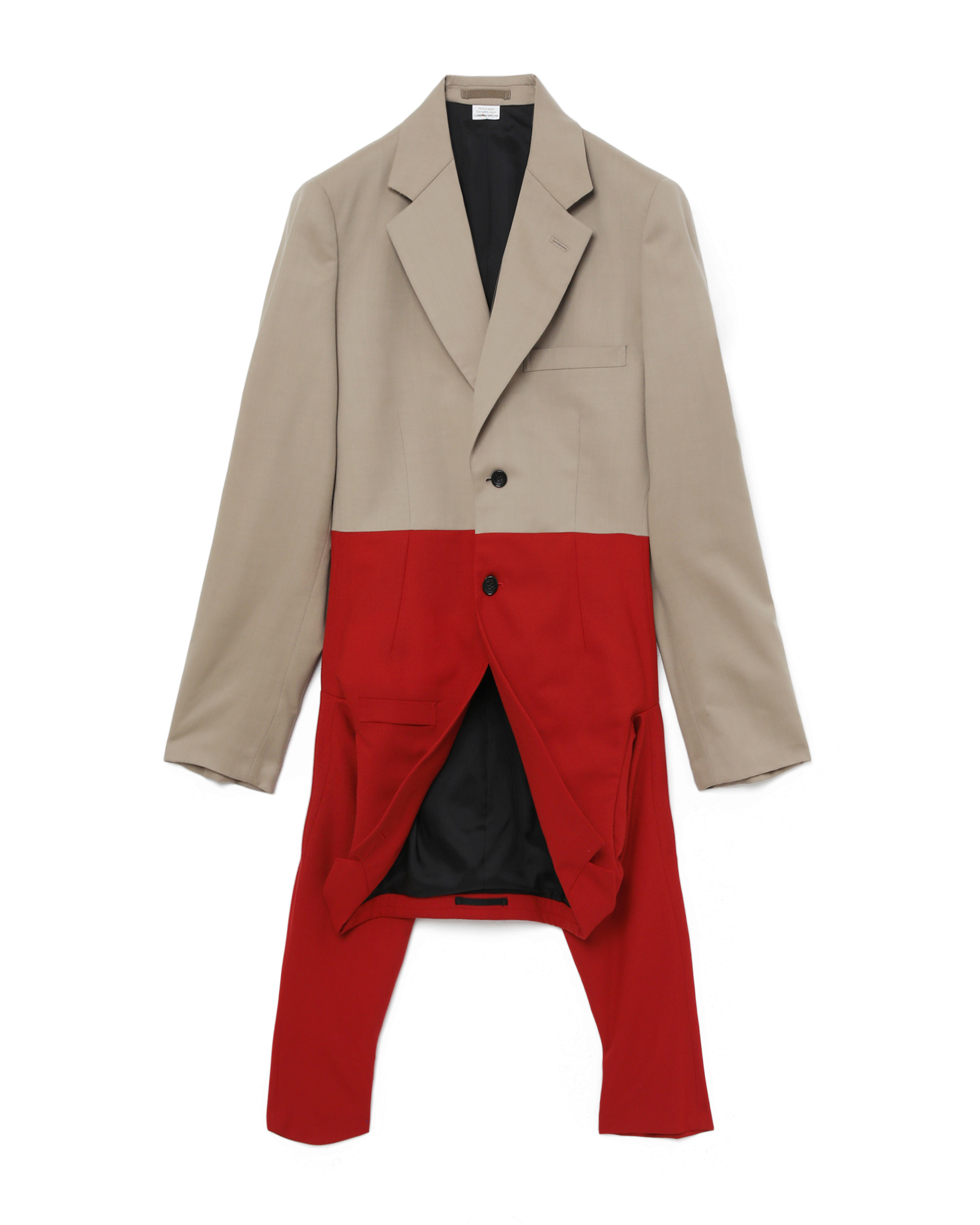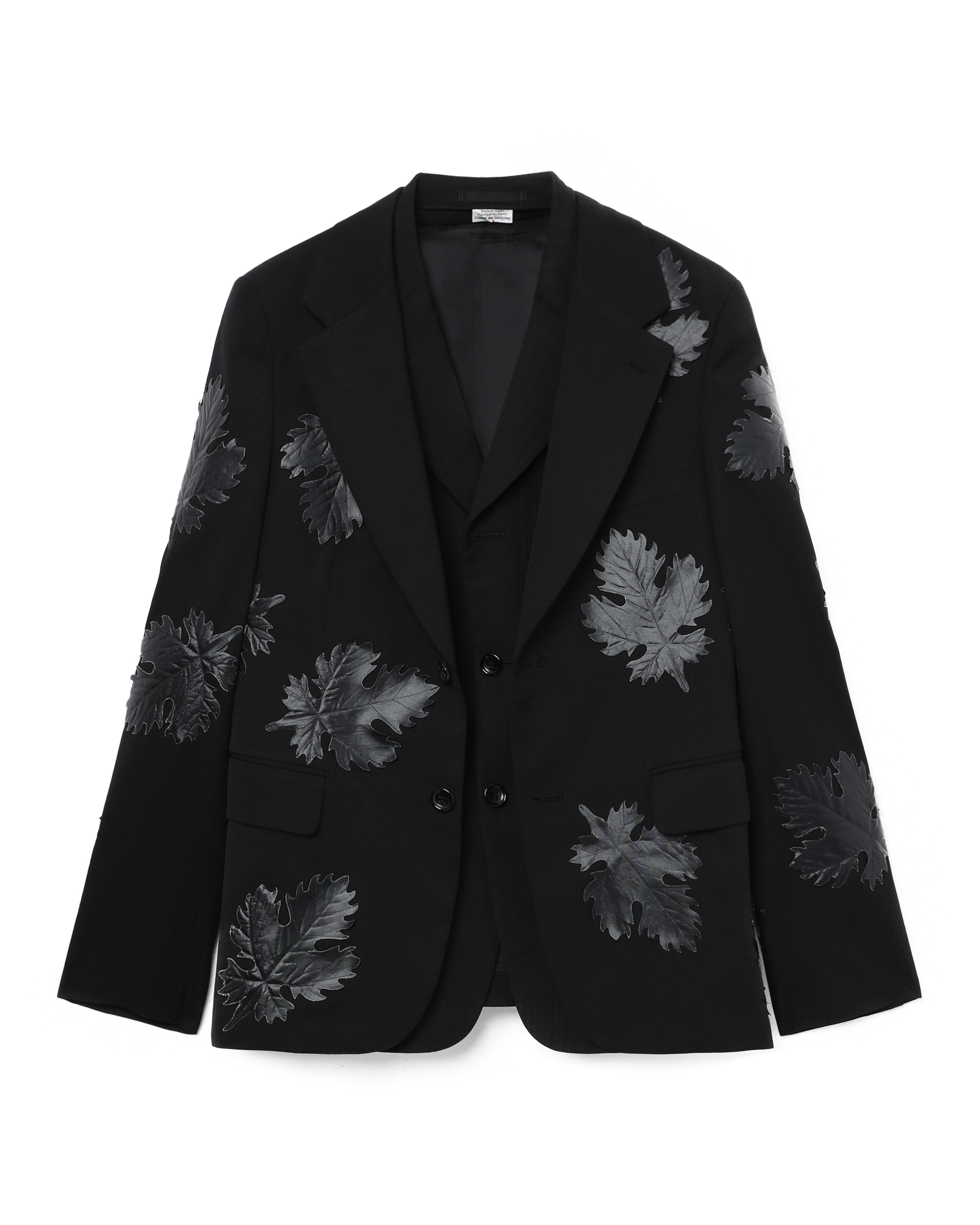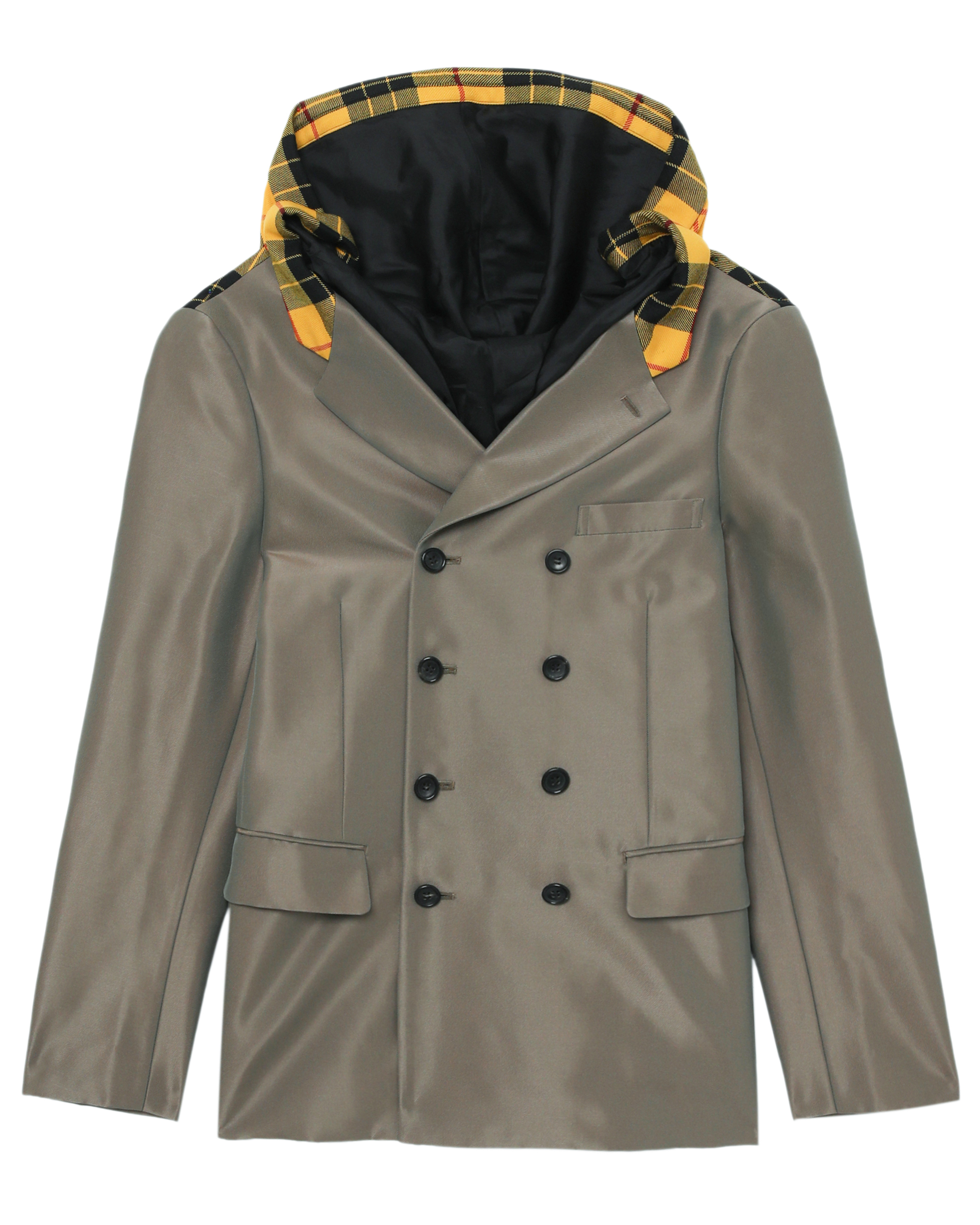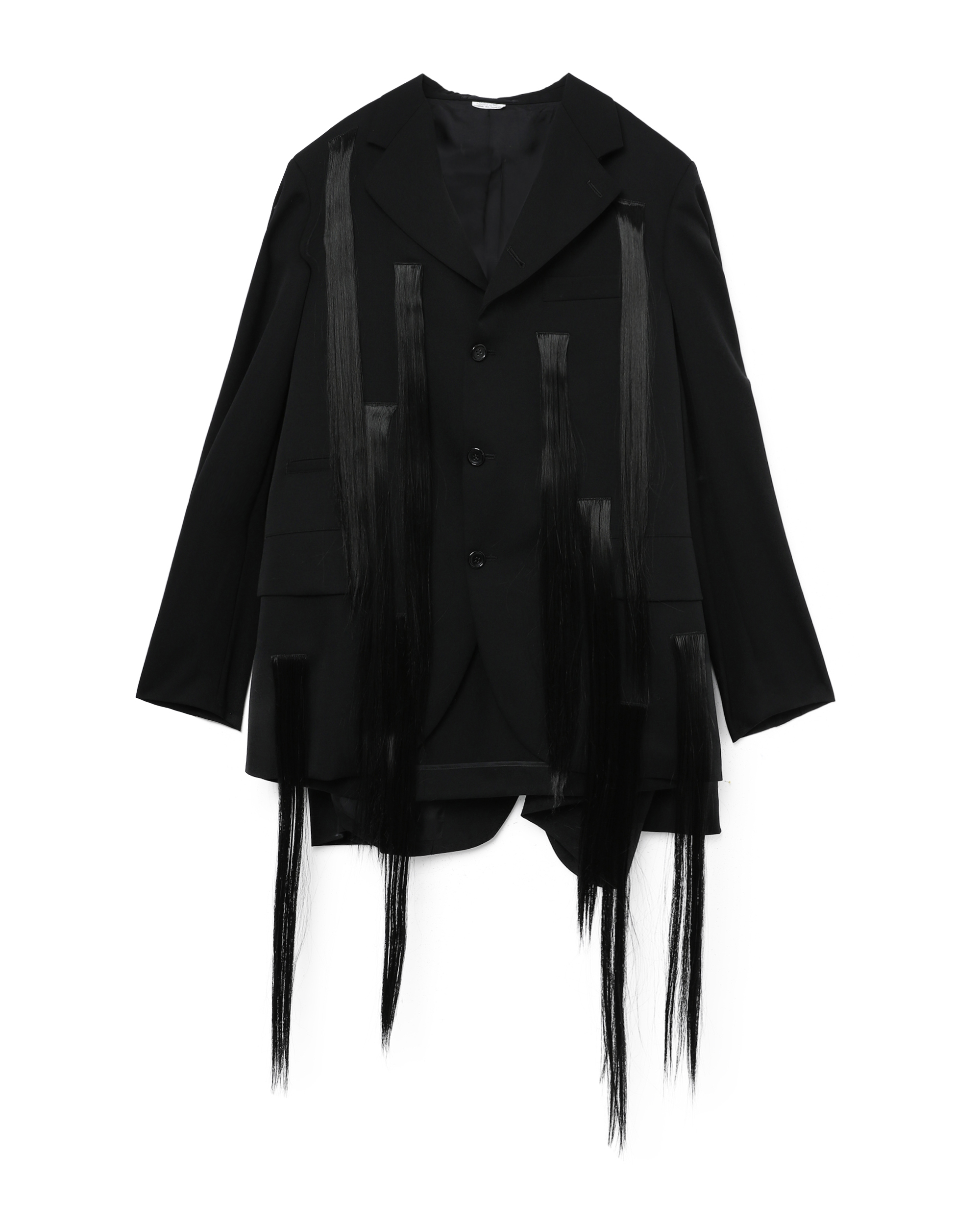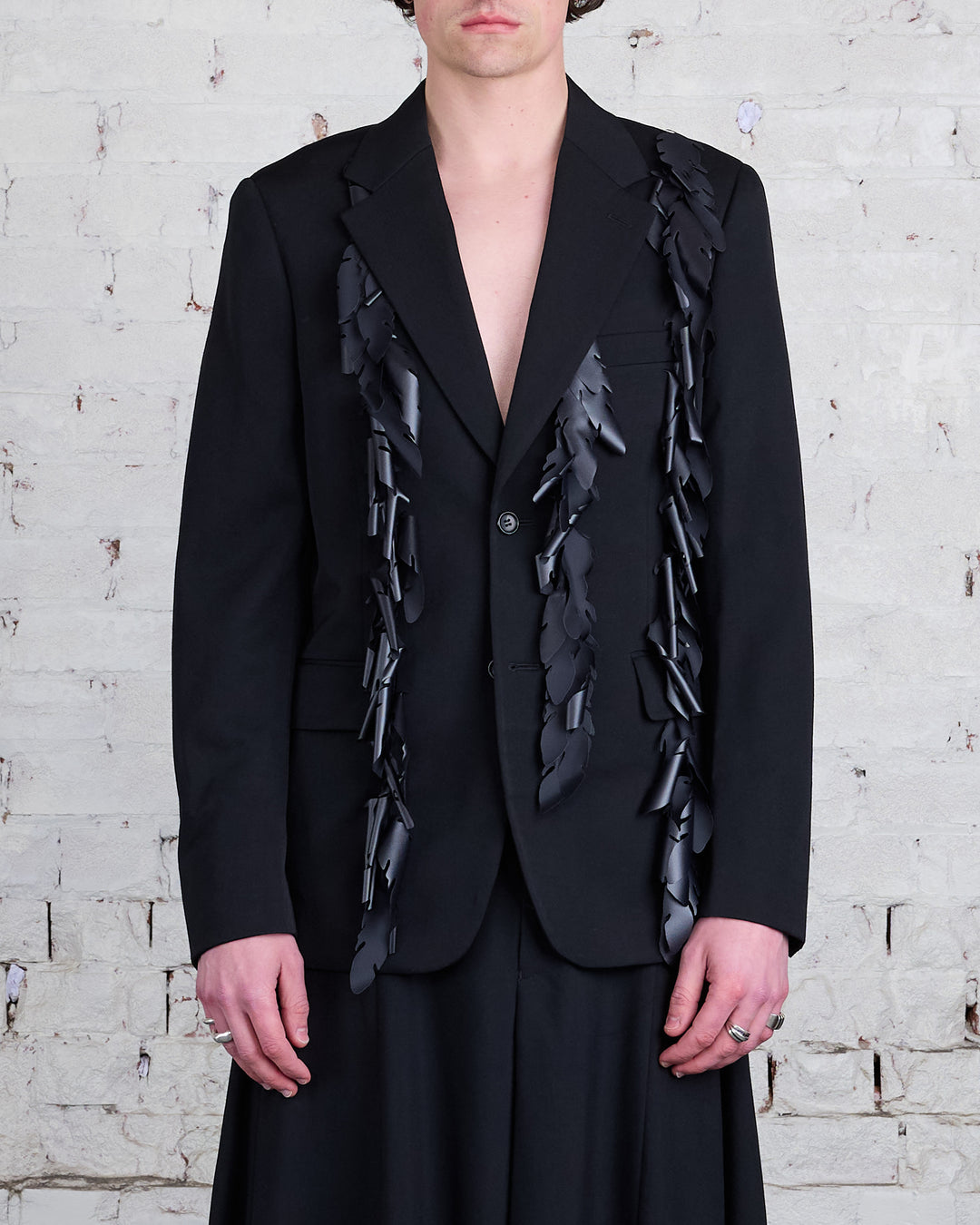
There is a particular kind of silence that follows a declaration of peace—a stillness that isn't empty but heavy with the possibility of rebuilding. For COMME des GARÇONS HOMME PLUS, Rei Kawakubo's Spring 2027 collection, "If The War Were To End..," doesn't merely observe this quiet; she dissects it with the precision of a master economist of form. While the fashion world often reads her work through the lens of deconstruction or avant-garde provocation, this season's tailoring offers something more profound: a near-macroeconomic thesis that the cost of optimism is paid in the currency of structure. Kawakubo's answer to the post-war question isn't a retreat into pacifist minimalism, but an aggressive, defiant investment in the very architecture of menswear—a calculated bet that the future requires a new kind of formal wear, one that has survived the black hole of conflict and emerged with its seams intact but its logic fundamentally rewritten.
The runway, staged as a dual-act performance, moved from a darkness that critics from *Another Magazine* and *Hero* described as a "black hole" into a daylight of unexpected colour. This transition isn't merely narrative; it's economic. In times of austerity, fabric is rationed and silhouettes slim down; in times of boom, cloth is abundant and shoulders broaden. Kawakubo, ever the contrarian, collapses this timeline into a single show, suggesting the post-war economy isn't linear but cyclical. The tailoring on display was, by all accounts, "fearless"—a term *WWD* used to describe jackets that seemed cut with a blade simultaneously surgical and reckless. These weren't the soft, draped shoulders of a peacetime leisure class. Instead, the garments carried a rigid, almost stubborn boning, as if the suits were armour repurposed for civilian life. The economics here are clear: you don't abandon the infrastructure of conflict; you convert it. A military tunic's strict line becomes a blazer's new collar; a parachute's silk becomes a shirt's drape. The value of these pieces lies not in their novelty, but in their utility as vessels for memory.
Colour as Speculative Asset
What makes this collection particularly potent is the deliberate injection of colour—not as a decorative afterthought, but as a speculative asset. *Dazed* noted Kawakubo's "dreams of colour without conflict," and the palette of acid yellows, electric blues, and startling pinks functioned like a bull market rally against the bearish gloom of the show's first act. In fashion economics, colour is often the first casualty of war; khaki and grey dominate. By reintroducing these saturated hues into sharply tailored jackets and trousers, Kawakubo is pricing in a future of hope. It's a risky move, one that could easily veer into kitsch, yet her masterful restraint—pairing a neon top with a severe, ink-black wool trouser—ensures the optimism remains collateralized by discipline. She understands that joy, like any luxury good, is only valuable when it's scarce and precisely deployed.
The Commercial Subsidy
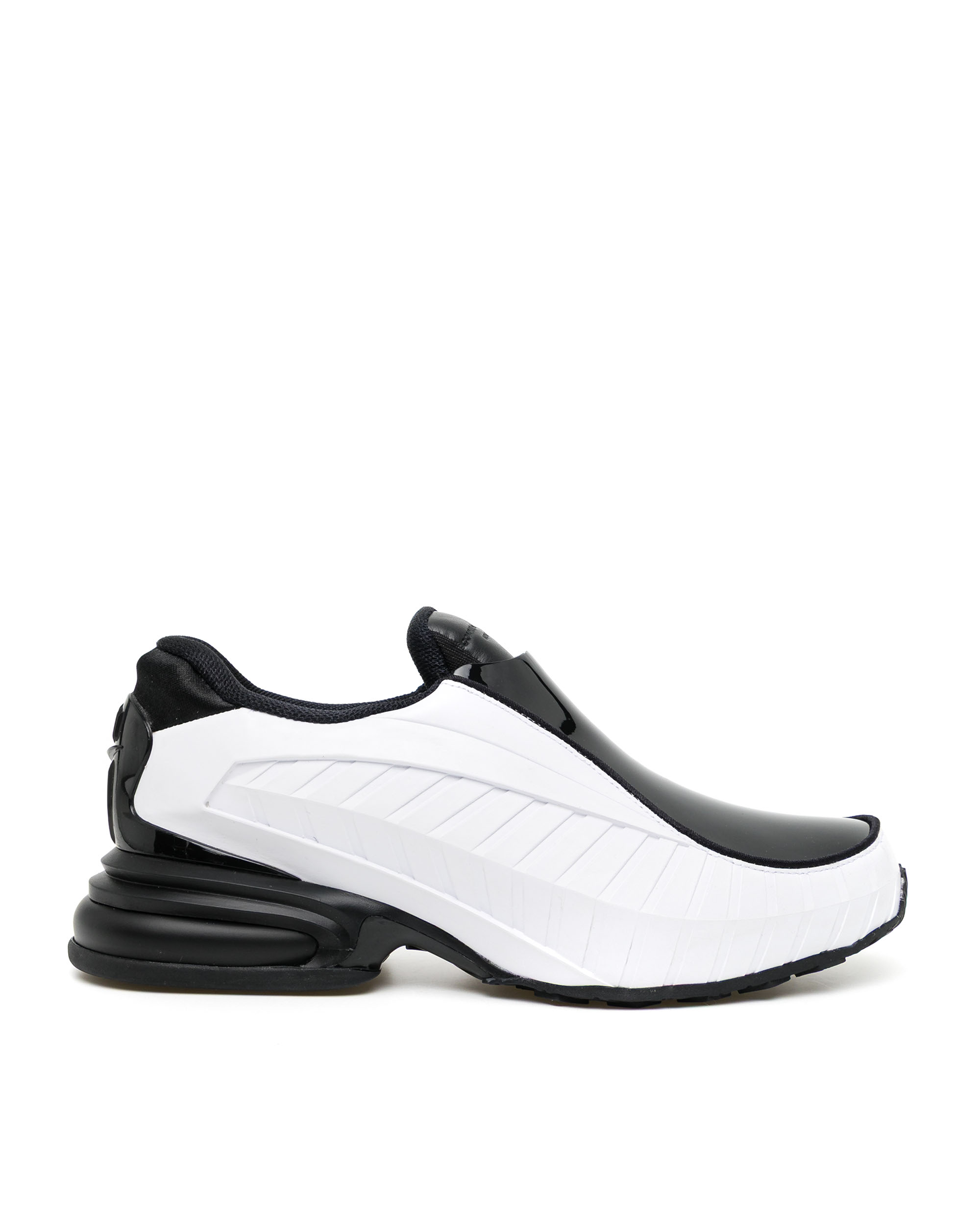
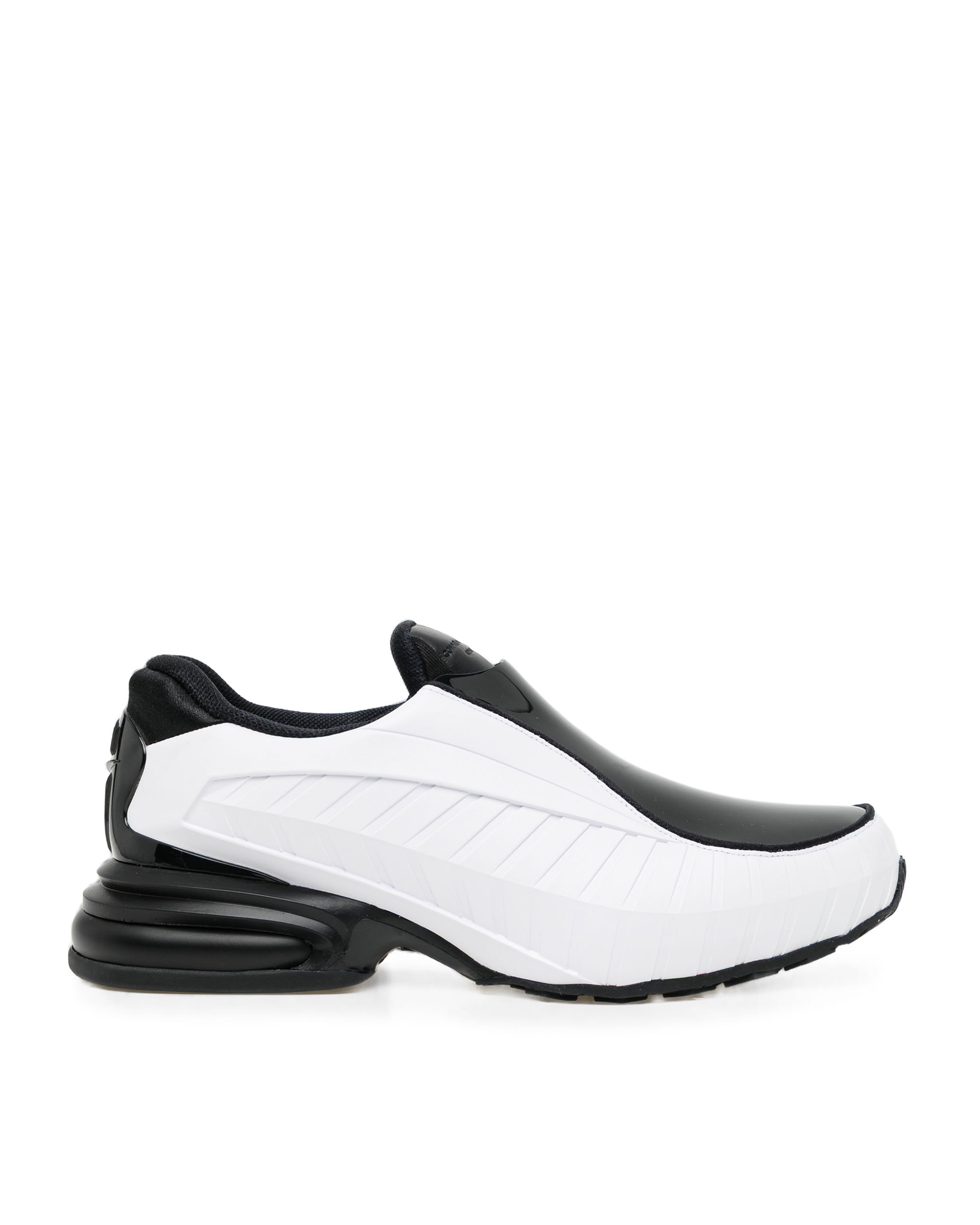
The collaboration with Nike on the Air Jordan 11, slated for September 2026, might seem like a commercial footnote to this high-concept narrative, but it's actually the most telling economic indicator of the season. Kawakubo has long understood that the avant-garde cannot exist in a vacuum; it requires the financial lubrication of the mainstream to fund its more esoteric explorations. The sneaker—likely a study in monochrome and distorted proportion—serves as the accessible entry point to her thesis. It democratizes the post-war optimism, allowing a younger generation to buy into the idea that structure and comfort can coexist. This isn't a sell-out; it's a subsidy. The profits from these collaborations underwrite the experimental tailoring that, on its own, would be financially unviable. It's a pragmatic, almost Schumpeterian approach to creative destruction—destroy the old rules of commerce to build a new, sustainable model of artistry.
Structure as Resilience
Ultimately, the SS27 collection is a lesson in value creation. Kawakubo's post-war world isn't one of utopian softness, but of rigorous reconstruction. The suit, that most traditional of economic symbols, is reimagined not as a uniform for corporate drudgery, but as a testament to resilience. The seams left raw, the buttons misplaced, the collars folding with an unnatural stiffness—these aren't errors. They are the visible costs of a new social contract. In the black hole of conflict, certain certainties are lost; Kawakubo's tailoring suggests we shouldn't try to retrieve them. Instead, we should invest in a new wardrobe of being, one where the jacket on your back is worth more than the gold in your vault, because it carries the weight of survival and the promise of a brighter, more colourful morning.