For thirty years, the Air Jordan 11 has resisted outside authorship. Tinker Hatfield drew it in 1995 with patent leather borrowed from formalwear and ballistic mesh borrowed from the court, and in doing so created a basketball shoe that already threatened to become a dress shoe. Nobody touched it. Until Rei Kawakubo.
The COMME des GARÇONS Homme Plus x Air Jordan 11 Retro is the first collaborative interpretation ever mounted on the silhouette — a fact that gives it documentary weight independent of taste. That Kawakubo is the one to break the seal is not incidental. It is the entire point.
A Single Continuous Surface
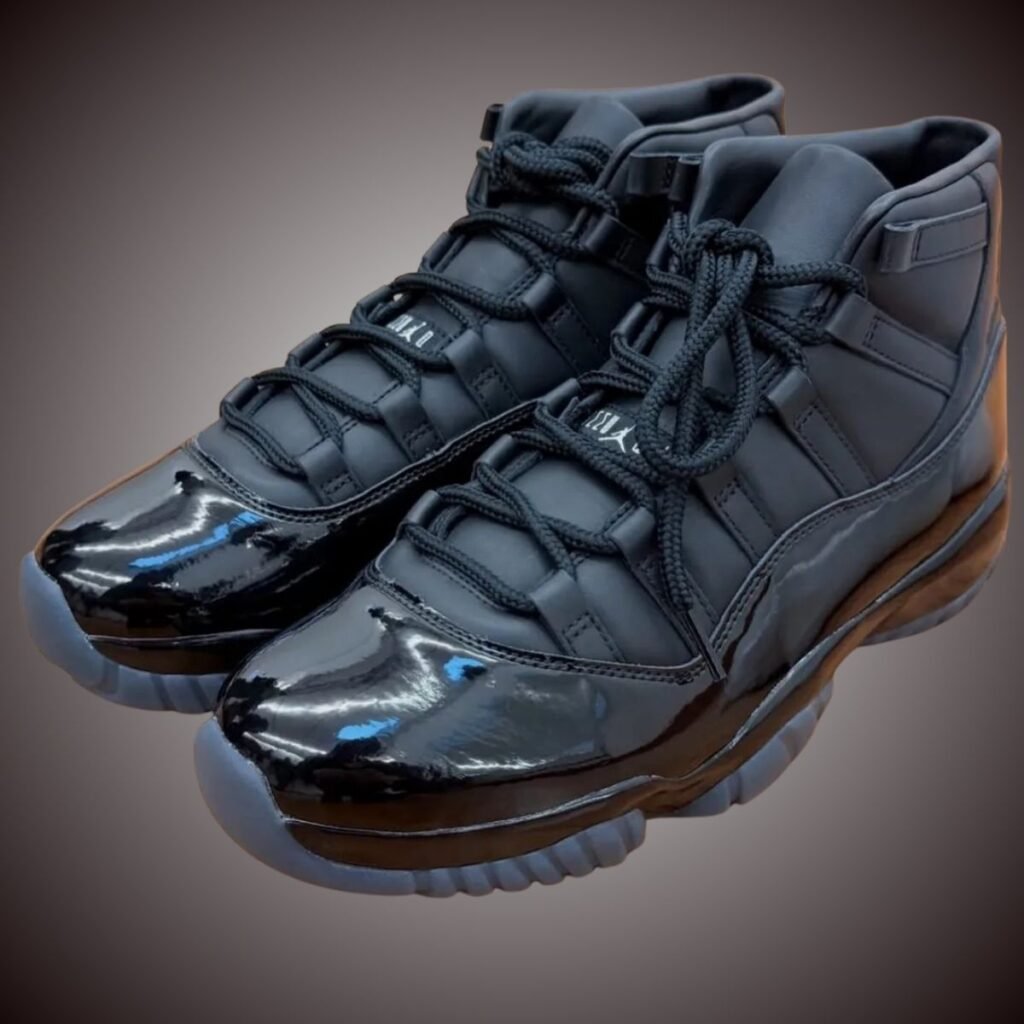
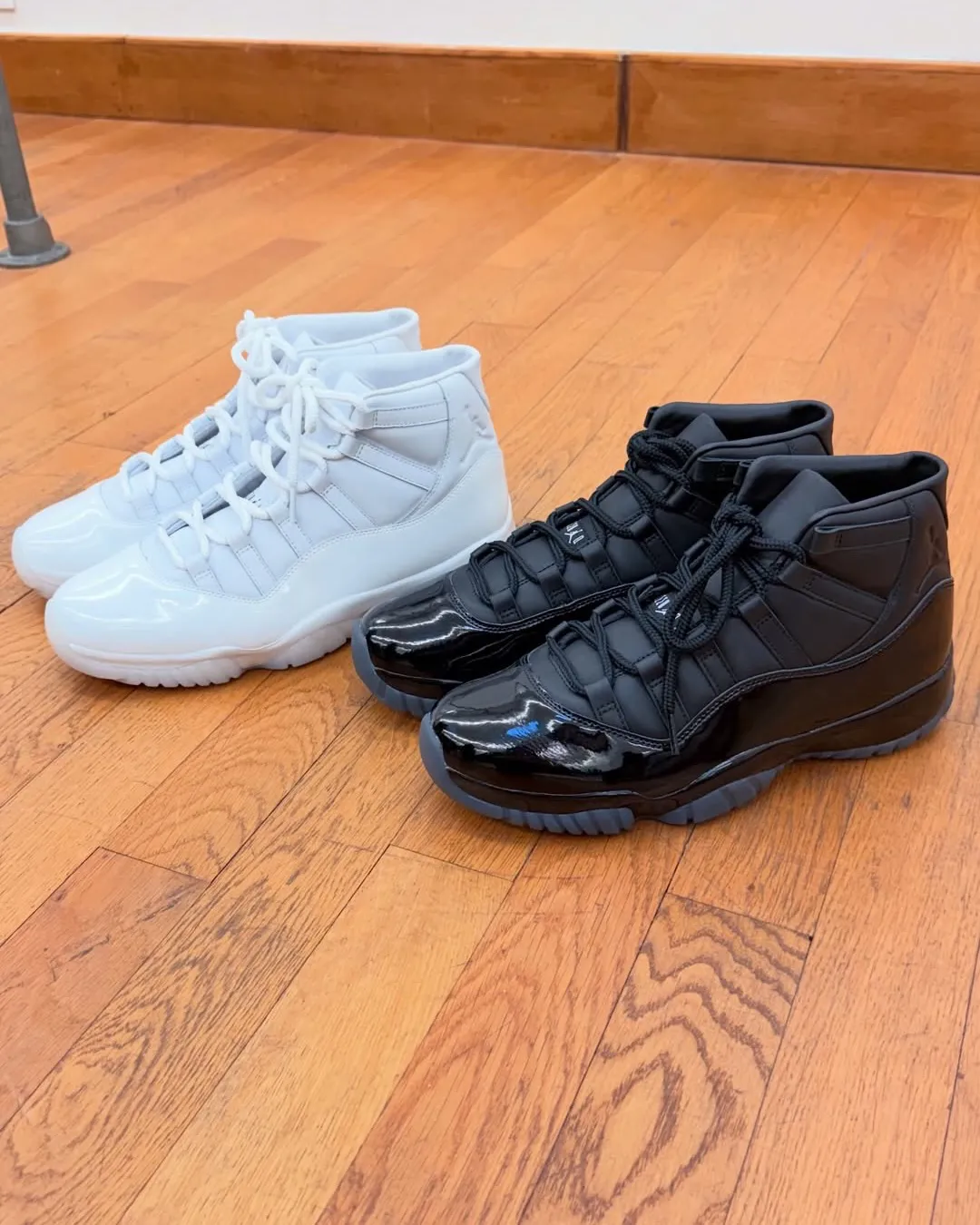
Where the original 11 relied on contrast — glossy patent mudguard against matte mesh, speed against ceremony — Kawakubo replaces it with one material: premium leather, rendered with the restraint of a formal shoe rather than the bravado of a court sneaker. Highsnobiety called it the model stripped to its purest form. Hypebeast observed that it makes the Air Jordan 11 feel like a dress shoe, which is precisely what it always threatened to become. The collaboration simply removes the ambiguity.
The news cycle confirms the industry reads this as a threshold moment rather than another seasonal tie-in — from Anothermag's exclusive first look to GQ's assessment of the release as "an absolute doozy." The pack lands September 5.
What the Leather Does
Jordan Brand's 11 has always been a study in tension: the translucent outsole, the carbon fiber plate, the patent leather lifted from formalwear. Kawakubo takes that borrowed formality and makes it literal.
This is not a sneaker dressed up as a shoe. It is a shoe that happens to carry the 11's geometry — the mudguard, the heel tab, the sculpted midsole — translated into a material that holds light differently, creases differently, and ages differently. For a designer whose career has been built on dismantling the expected relationship between garment and body, between function and ceremony, this is a characteristically exacting gesture. She does not decorate the 11. She re-specifies it.
Peace Treatise, Stated Twice
The cultural context runs deeper than a release calendar. COMME des GARÇONS Homme Plus has spent recent seasons asking what comes after conflict. The Spring 2027 collection, titled "Peace Treatise," was read by both WWD and Anothermag as Kawakubo's meditation on life after wartime; Dazed described its palette as dreaming of color without conflict.
Against that backdrop, a leather Air Jordan 11 is not a streetwear flex. It is an object of repair: the basketball shoe as formalwear, the athletic body as dressed body, the sneaker as something you could wear to a negotiation. The collection's hopeful vision and the shoe's material severity are the same argument stated twice.
Who It's For
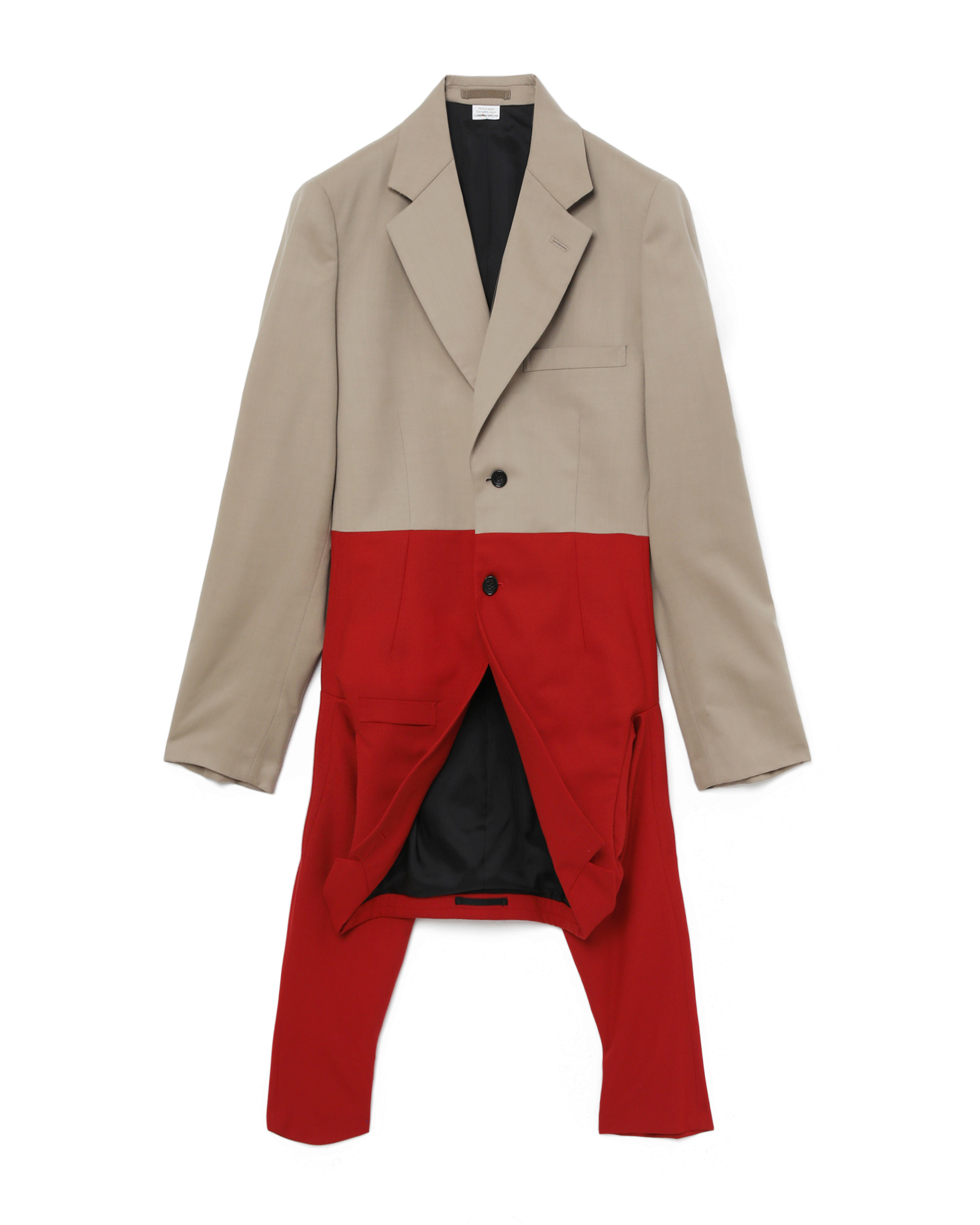
Not the collector chasing a colorway. Not the purist who wants the 11 frozen in 1995. This is for the wearer who has already decided that the boundary between tailoring and sportswear is administrative rather than aesthetic — someone who owns both a CDG Homme Plus wool jacket and a rotation of Jordans, and has never understood why those two facts needed reconciling.
Why it matters now is simple. The sneaker collaboration economy has exhausted nearly every available pairing, and the remaining meaningful moves are the ones that change a silhouette's category rather than its color. This does exactly that: it takes the most ceremonial basketball shoe ever produced and finishes it in the material of ceremony itself. Available now — and already the subject of the season's most serious design conversation.
What Kawakubo understands, and what the 11 has been quietly arguing for three decades, is that the line between sport and dress was never a line at all. It was a seam. She has simply cut along it.