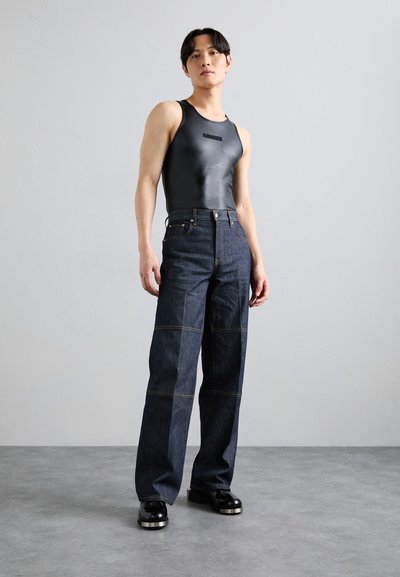
Helmut Lang has never treated denim as a mere commodity. Since the Austrian designer first sent stark, unwashed jeans down his runway in the late 1980s—garments that felt less like fashion and more like architecture for the body—denim has functioned as the label's philosophical backbone, a democratic fabric subjected to an uncompromising modernist gaze. With Helmut Lang Jeans Seen by Priscillia Saada, the latest chapter in the brand's artist-led campaign series, that legacy is reframed through a distinctly contemporary lens: denim as an object of intimacy, memory, and quiet observation rather than spectacle.
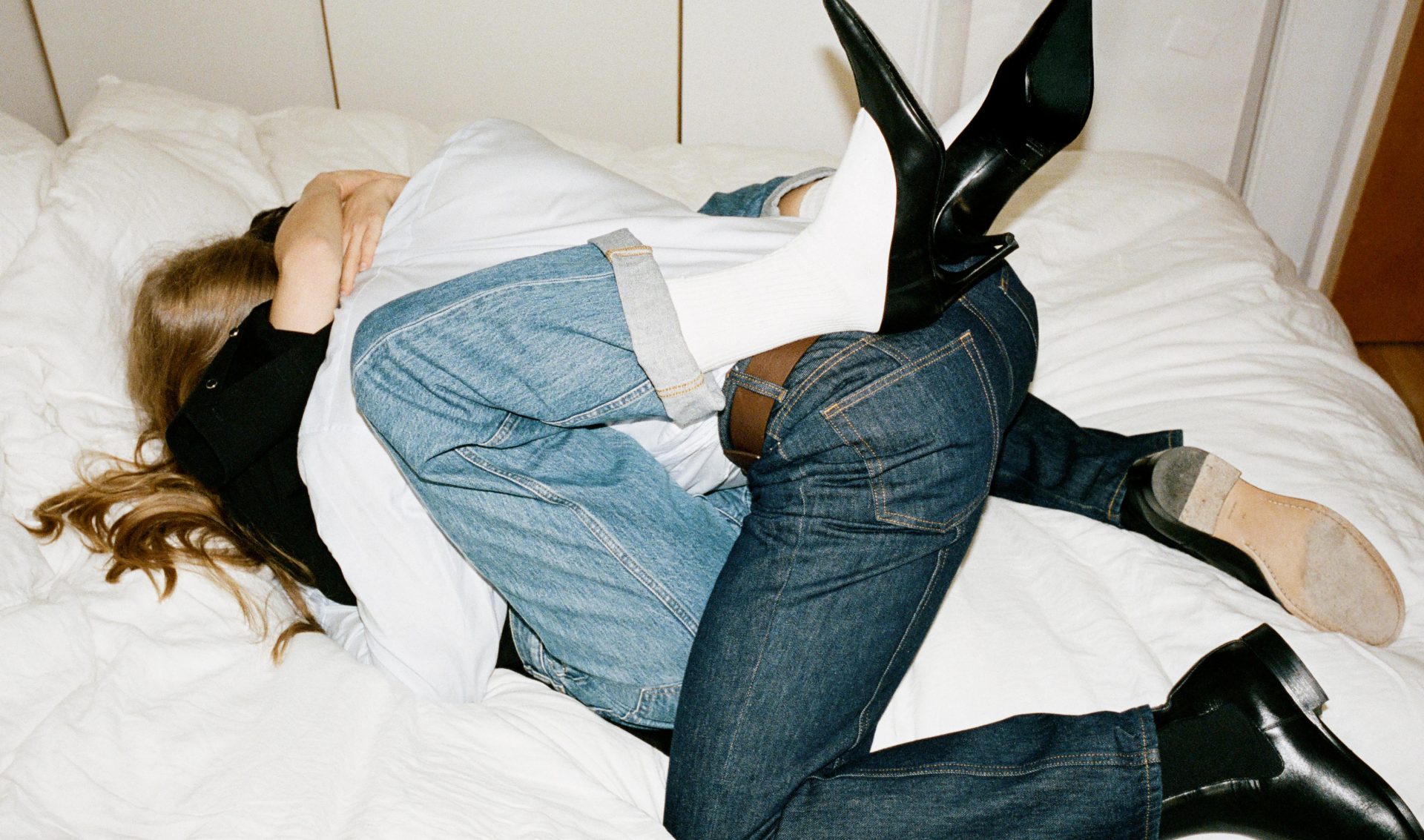
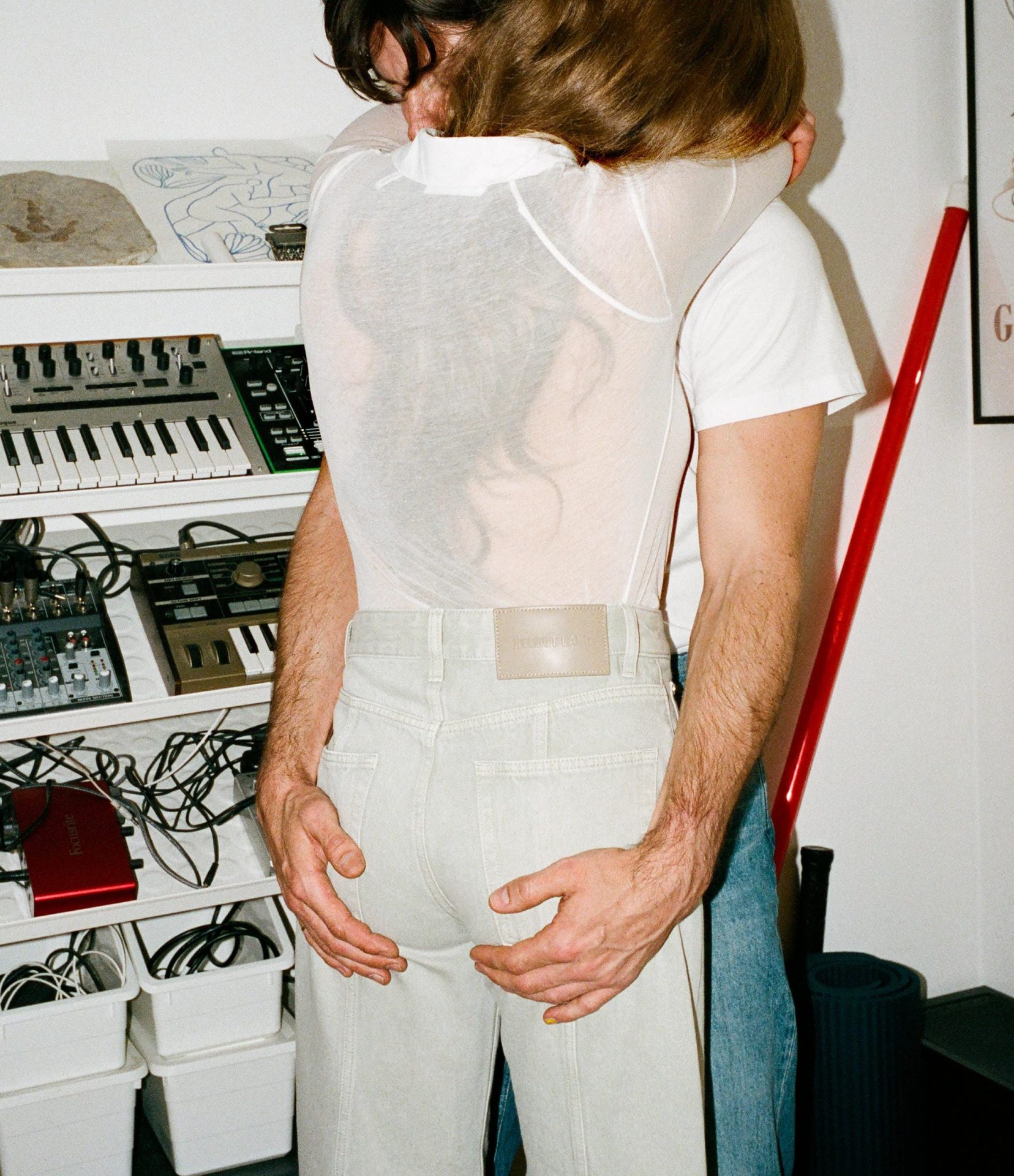
The campaign, revealed in partnership with WWD and covered widely across the fashion press, hands the visual language of Helmut Lang denim to Priscillia Saada, an artist whose practice orbits around the poetics of everyday life—gesture, tenderness, the unguarded moment. Where previous installments in the "Seen by" series invited photographers such as Chloe Jones, whose Western-inflected imagery for the brand drew on wide-open landscapes and Americana, Saada's interpretation pulls inward. Her eye favors closeness over distance, softness over hardness, the domestic over the dramatic. The result is a body of imagery in which the jeans themselves—rigid, precise, deliberately unadorned—become conduits for human feeling.
The Material Case for Restraint
Materially, the product remains faithful to the codes that made Helmut Lang denim a cult reference: heavyweight Japanese and Italian selvedge, raw and rinsed finishes, straight and tapered cuts that refuse superfluous detailing, and hardware kept to an austere minimum. There are no distressed flourishes, no logo-forward branding, no seasonal gimmickry. What distinguishes this release is context rather than construction—the proposition that a garment this stripped-back can carry narrative weight when placed in the right hands.
Saada's images treat the denim as a second skin, worn in bedrooms, stairwells, and half-lit interiors, photographed with the intimacy of a diary entry. The fabric's weight, its faint sheen, the way a hem breaks over a bare foot—these are the details her lens lingers on. Nothing is staged for shock. Everything is staged for feeling.
Artist-Led Campaigns in an Algorithmic Age
This approach lands at a resonant cultural moment. The fashion industry is awash in collaborations and celebrity-fronted campaigns, most of them engineered for algorithmic velocity. Helmut Lang's decision to commission working artists—rather than influencers or actors—positions the brand within a longer tradition of image-making that stretches back to the house's 1990s collaborations with figures like Elfie Semotan, the Austrian photographer and model whose death at 84 this year prompted an outpouring of tributes and reappraisal.
Semotan was more than a muse; she was a co-author of the Helmut Lang visual identity, and her passing has sharpened attention on what artist-driven fashion imagery can accomplish when it is granted genuine creative autonomy. The "Seen by" series reads as a living continuation of that ethos—a quiet rebuttal to the idea that fashion imagery must shout to be seen.
Denim's Return as Narrative
The timing also speaks to denim's broader resurgence as a site of serious design thinking. As houses across the market pivot toward Pre-Fall 2026 collections that treat denim as narrative rather than filler—Helmut Lang's own pre-fall offering has been characterized in the press as a modern love story—the category has shed its status as a safe commercial staple and re-emerged as a canvas for emotional storytelling. The Vienna archive, recently the subject of extensive editorial attention, reminds us that Helmut Lang was interrogating jeans as conceptual objects decades before it became industry orthodoxy.
Who It's For
Who is this product for? Not the consumer chasing novelty, but the one who understands that a great pair of jeans is defined by what it withholds. It speaks to the minimalist who has grown weary of maximalist branding, to the art-world adjacent wearer who reads campaigns as cultural documents, and to the longtime adherent who remembers when Helmut Lang jeans were the uniform of a certain downtown sensibility.
Saada's contribution is not to reinvent the garment but to remind us why it never needed reinvention—only a fresh pair of eyes willing to see it plainly, and to find, in that plainness, something close to devotion. In an era of fashion that often mistakes volume for value, Helmut Lang continues to stake its identity on the opposite proposition: that rigor, restraint, and the right collaborator can say more than any spectacle ever could. The jeans remain the same. The seeing is everything.