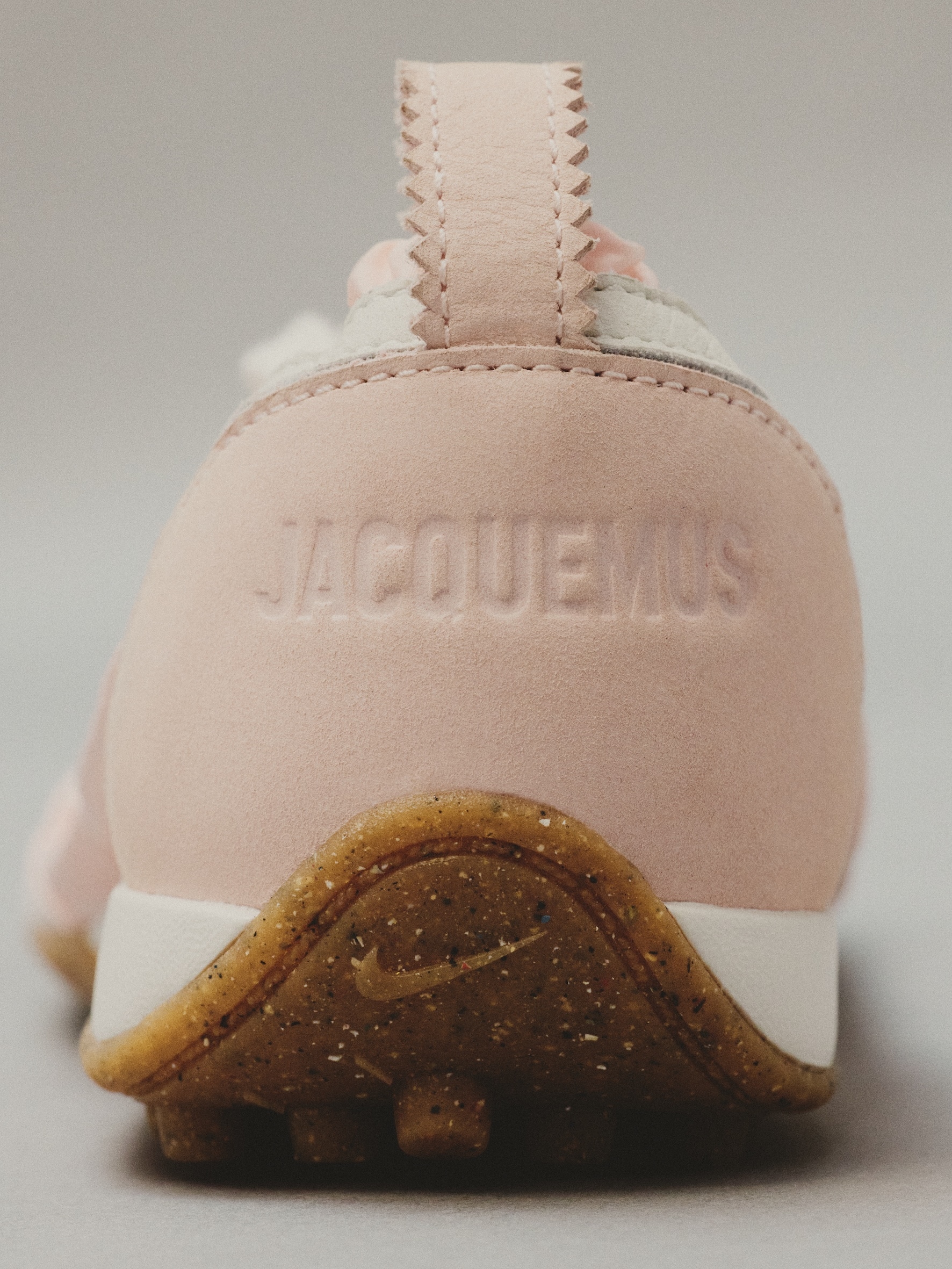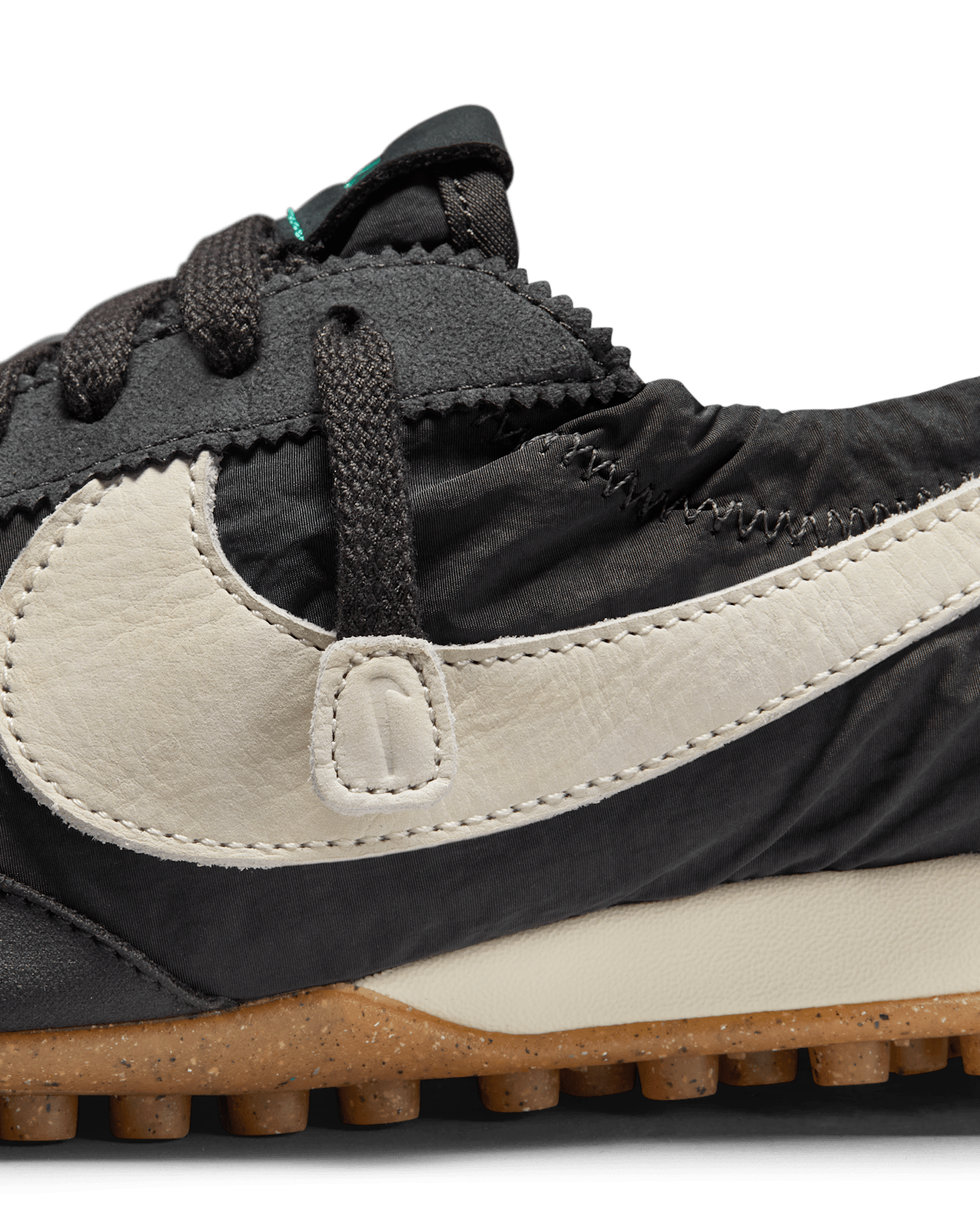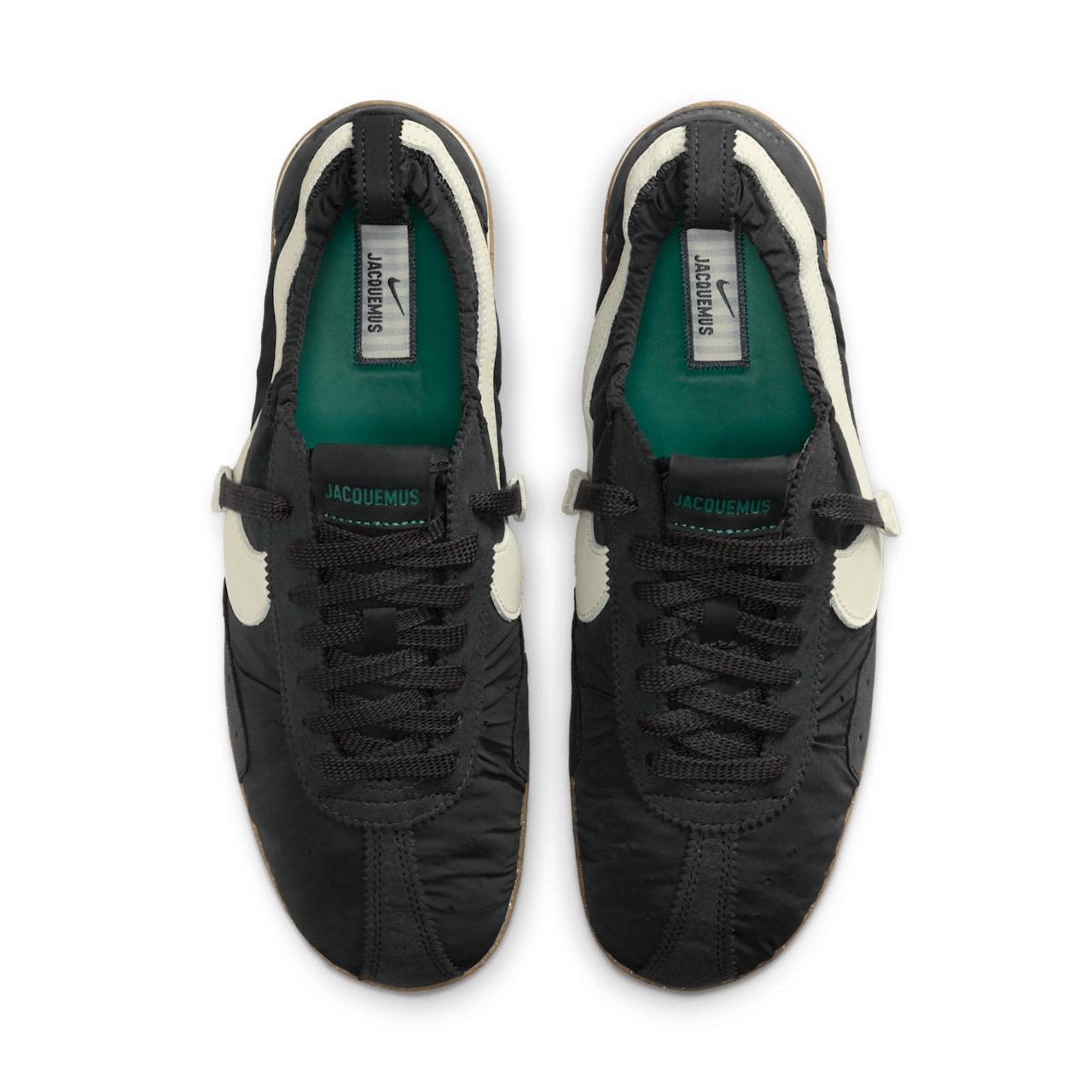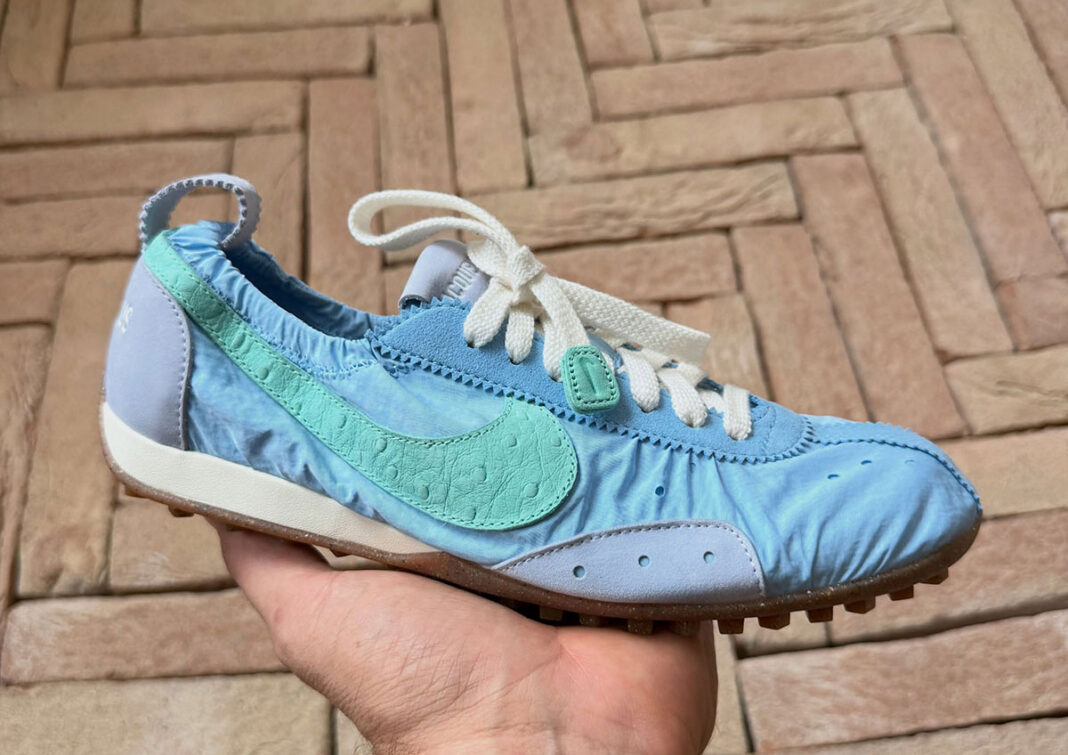
Some sneakers are designed to be worn. Others are designed to be hunted. The Jacquemus x Nike Moon Shoe "Emerald Rise" belongs firmly to the second category — a shoe that arrives already wrapped in the mythology of the drop, photographed on the feet of Zendaya and Kendall Jenner before most of us have even processed the colorway. It is the latest chapter in one of fashion's most unexpectedly resonant collaborations, and it is very nearly impossible to get.
What makes the scarcity sting rather than merely annoy is that the shoe is genuinely good. This isn't a logo slapped on a midsole and sent to market. It's an argument — about history, about taste, about what a sneaker can mean when the right designer gets hold of the right archive.
A Silhouette With Actual History
Before the colorway, the shoe. The Moon Shoe was first released in 1972 as a hand-made prototype for the Munich Olympics, its distinctive waffle-iron sole conceived by Bill Bowerman. It is, quite literally, the technical ancestor of nearly every running shoe that followed — a utilitarian artifact born in a workshop, not a design studio.
That Jacquemus — a brand built on Provençal romance, oversized proportions, and the mythology of the French Riviera — chose to reinterpret something so functional is precisely the tension that makes the collaboration sing. The result reads as both archive object and contemporary fashion proposition, softened by Jacquemus's signature roundness. It's a shoe that knows where it came from and isn't precious about it.
The Color Is the Story
The emerald hue is what you'll remember. A deep, saturated green that lands somewhere between the Mediterranean foliage of the Corsican landscape Jacquemus has recently claimed as his creative backdrop and the polished gemstone tones dominating recent luxury accessory palettes, it feels less like a seasonal color than a jewel.
It also photographs beautifully — which matters enormously for a shoe whose cultural life is lived largely on social media and in street-style imagery. Materially, the "Emerald Rise" maintains the considered construction that distinguished earlier iterations: a low-profile upper nodding to the original nylon-and-suede prototype, reworked with premium finishes and the subtle co-branding that has become the partnership's marker.
Who It's Actually For
Ostensibly, the Jacquemus customer — someone who has bought into the brand's particular vision of effortless French glamour, who owns the oversized shirts and the tiny bags and understands that the sneaker is now legitimate high-fashion vocabulary. But the "Emerald Rise" also speaks to the sneaker collector who recognizes the historical weight of the silhouette, and to the broader audience drawn in by the collaboration's celebrity gravity. Zendaya's custom Jacquemus moments have only intensified the brand's red-carpet currency, and each new Nike release inherits a fraction of that heat.
The Empire Behind the Drop
Timing is everything here, and Jacquemus is in the midst of an expansive moment. The brand staged its Spring 2027 show at a historic Corsican lighthouse, reimagined Riviera beach clubs with a 1950s-inspired makeover, and opened boutiques in airports and Monte-Carlo — moves that position it as a fully realized lifestyle empire rather than a niche Parisian label. The Nike collaboration sits at the center of that expansion, translating Jacquemus's aesthetic into an accessible, wearable, endlessly shareable object.
The catch, as the headlines have made clear, is availability. This is not a release designed for easy acquisition. A beloved silhouette, a beloved colorway, and genuine celebrity endorsement almost guarantee that demand will outstrip supply. For those who secure a pair, the reward is a sneaker that functions simultaneously as fashion statement, archive reference, and cultural shorthand — a rare thing in a market saturated with collaborations that feel transactional rather than considered.
In an era when every brand seems to be chasing a sneaker moment, the "Emerald Rise" stands apart because it earns its desirability. It is a shoe with a history, reinterpreted by a designer with a point of view, released in a colorway that feels inevitable rather than arbitrary. That it will be difficult to obtain is not a flaw in the proposition — it is, for better and worse, the entire point.