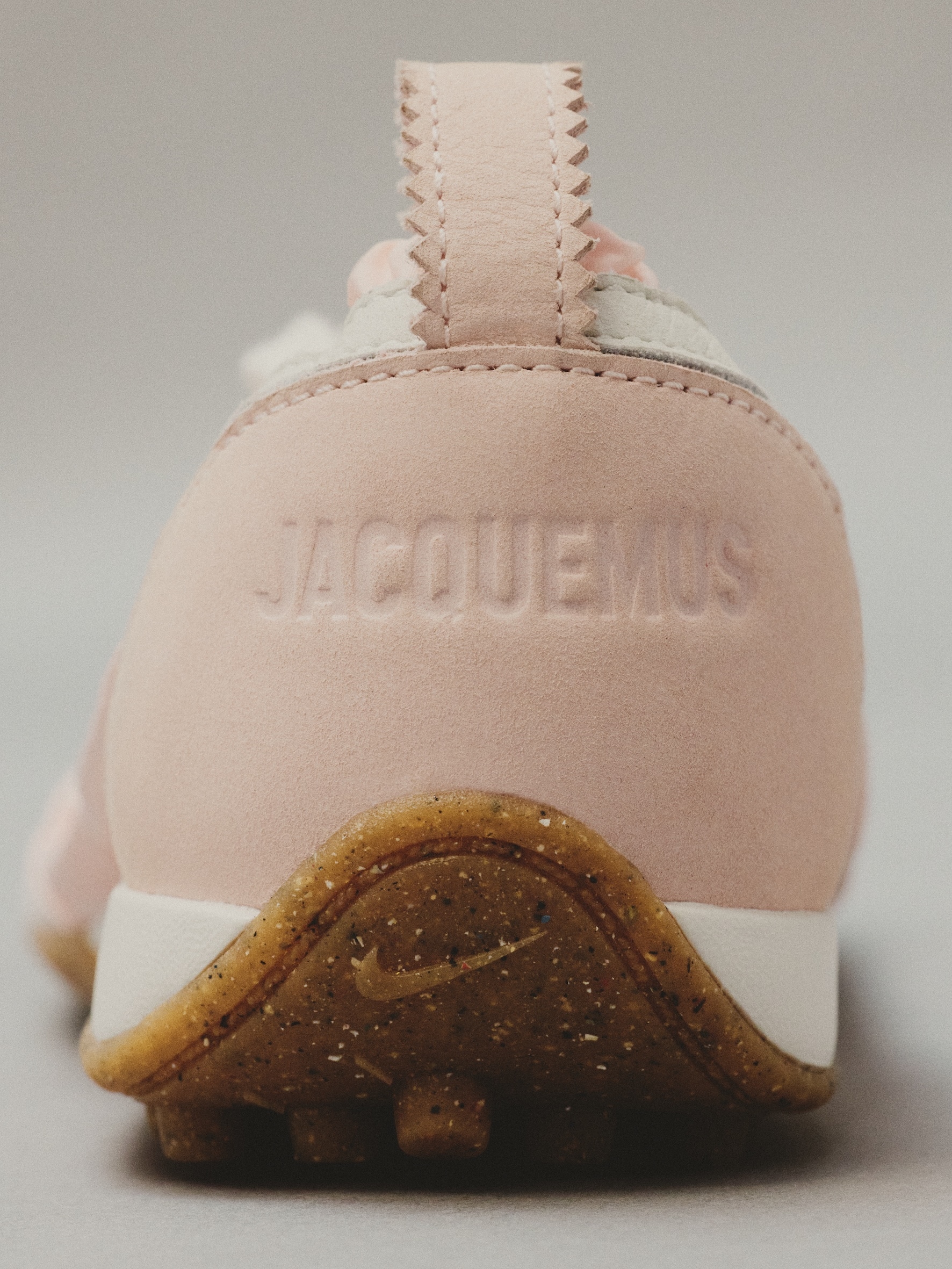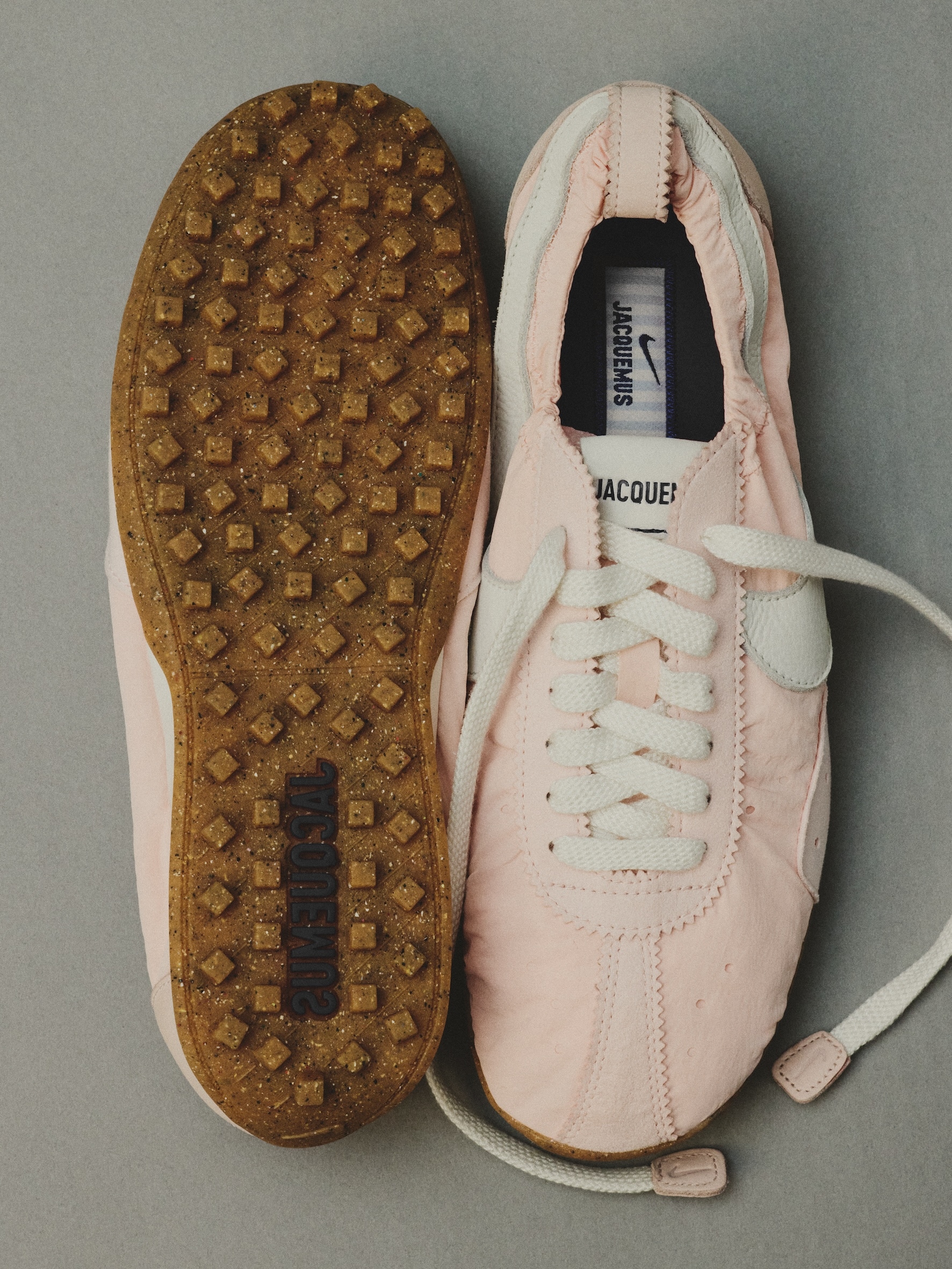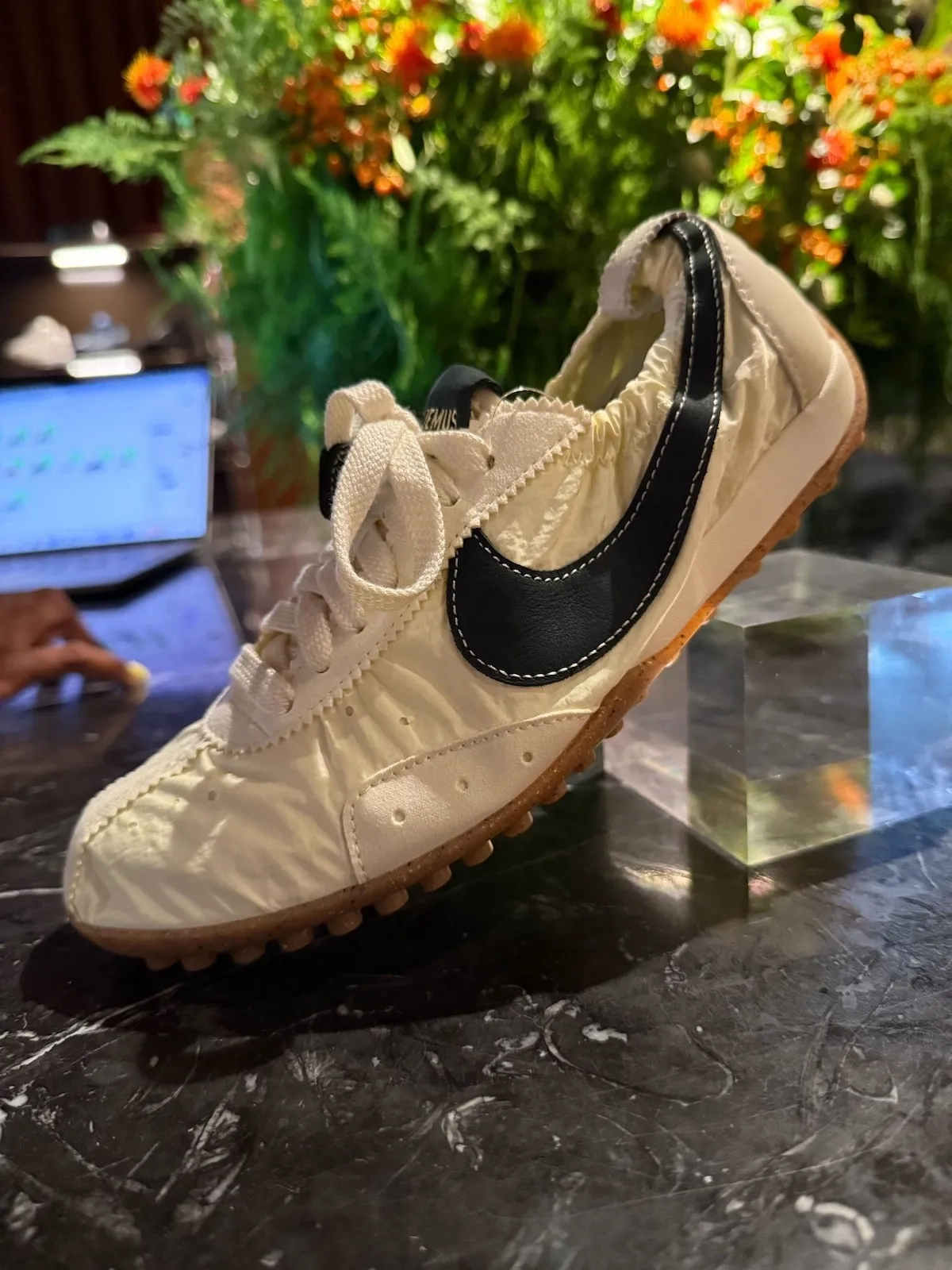
Some sneakers are released. Others are planted. The Jacquemus x Nike Moon Shoe "Miami" belongs firmly to the second category — a shoe conceived not as a product drop but as a piece of place-making, timed to the opening of the Jacquemus Miami flagship in the Design District and steeped in the particular heat of Biscayne Bay.
Simon Porte Jacquemus has spent the past two years turning his label into a masterclass in geography. The lavender fields of Provence. The salt flats of Camargue. The beaches of Capri. Each collection and campaign has functioned as a postcard from somewhere specific, and the Moon Shoe "Miami" extends that instinct to the American subtropics. The shoe is not merchandise. It is a souvenir for a city the brand has only just begun to claim.
A Relic, Softened
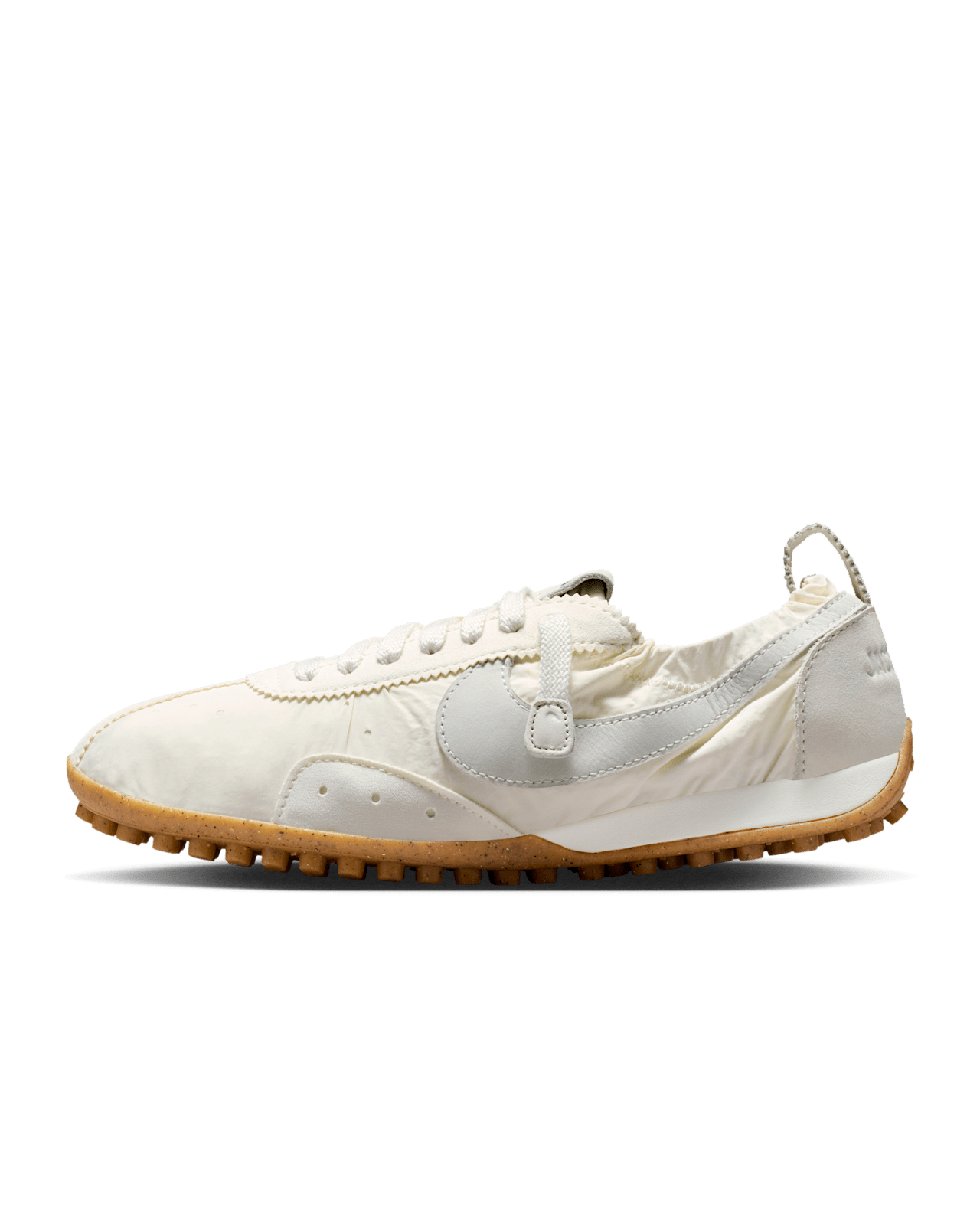
The silhouette itself is a resurrection. Nike's original Moon Shoe, hand-cobbled by Bill Bowerman in 1972 for the Munich Olympics, is the founding relic of the modern running shoe — a waffle-iron experiment that became the blueprint for everything after. Jacquemus reinterprets it with characteristic softness: a rounded, almost bulbous toe box, a low-slung profile, suede overlays that read closer to a driving loafer than a track spike.
The "Miami" edition layers warm, sun-bleached tones across the upper — terracotta, sand, and a faded coral that feels as much Mediterranean as Floridian — while the signature waffle outsole and exposed foam tongue preserve the archival DNA. A discreet Jacquemus wordmark sits at the heel, understated enough to let the shape do the talking.
Why Miami, Why Now
What separates this release from the standard collaboration economy is its regional logic. The "Emerald Rise" iteration, released earlier in the cycle, leaned into deep green and metallic accents. The "Miami" version pivots toward heat, humidity, and the specific light of the bay. That specificity matters.
Jacquemus has been explicit about courting Spanish-speaking markets — Miami, Mexico City, Madrid — and the flagship opening was staged as a cultural event rather than a retail transaction, filled with art and design objects in a Mediterranean-inflected interior. The sneaker is the wearable arm of that strategy: a piece of the boutique you can take home without a shipping crate.
Built to Be Worn
Materially, the shoe is constructed for wear rather than display. Suede panels wrap a breathable mesh base, the midsole is cushioned for actual walking, and the finishing avoids the fragile, collector-only detailing that plagues so many fashion-sportswear hybrids. This is a sneaker designed to carry you through an afternoon of Design District gallery-hopping and into the evening. It is also, crucially, a unisex proposition — Jacquemus has never been precious about gender in his footwear, and the Moon Shoe's low profile flatters nearly any foot.
Who It's For
The audience is the Jacquemus faithful first: the customer who bought the Chiquito bag, who watched Zendaya accept an award in custom Jacquemus and understood the reference, who treats the brand's runway films as seasonal appointments. But the Moon Shoe "Miami" reaches further — to the sneaker collector who recognizes the Moon Shoe's historical weight, and to the traveler who wants an object that encodes a specific trip. In a market saturated with collaborations that amount to little more than logo swaps, this one carries an actual argument about place.
The shoe is limited, regionally themed, and will not be easy to obtain. That scarcity is part of the point. But so is the craft. A sneaker that began as a waffle iron experiment in Eugene, Oregon, has been reworked into a small, wearable piece of the Mediterranean — and dropped, fittingly, in a city that has always known how to hold two worlds at once.