Simon Porte Jacquemus has built a career on the radical proposition that the most ordinary objects—a straw hat, a miniature handbag, a pair of espadrilles—can become extraordinary if you simply look at them differently. His latest collaboration applies that conviction to footwear, and the result is the Timberland x Jacquemus Authentic Boat Shoe in croc-textured leather: a piece that takes one of America's most codified silhouettes and submits it to the designer's singular brand of sun-bleached whimsy. Where the boat shoe has long signified New England prep, yacht clubs, and a certain inherited ease, Jacquemus relocates it to the forest floor—and somehow, it makes perfect sense.
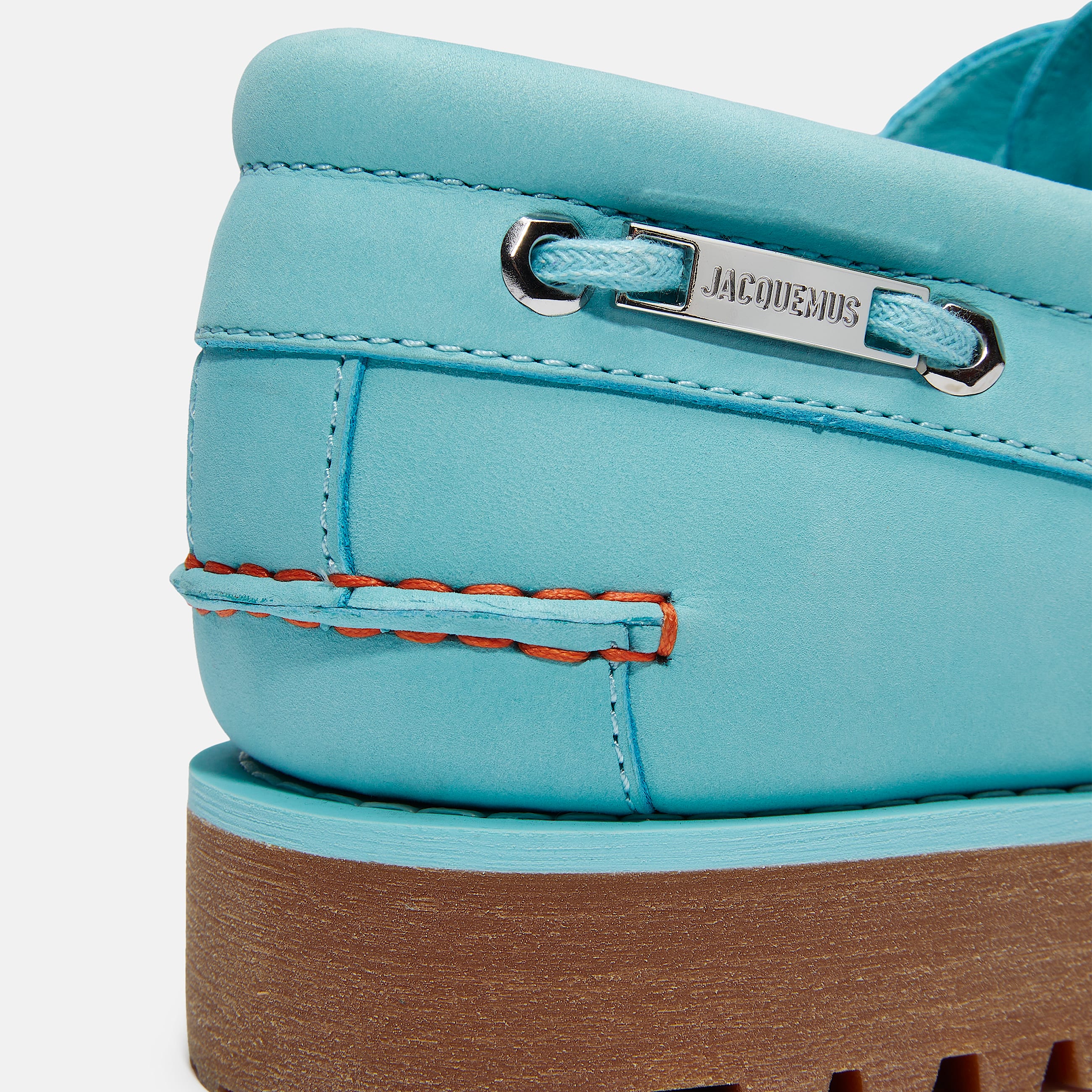
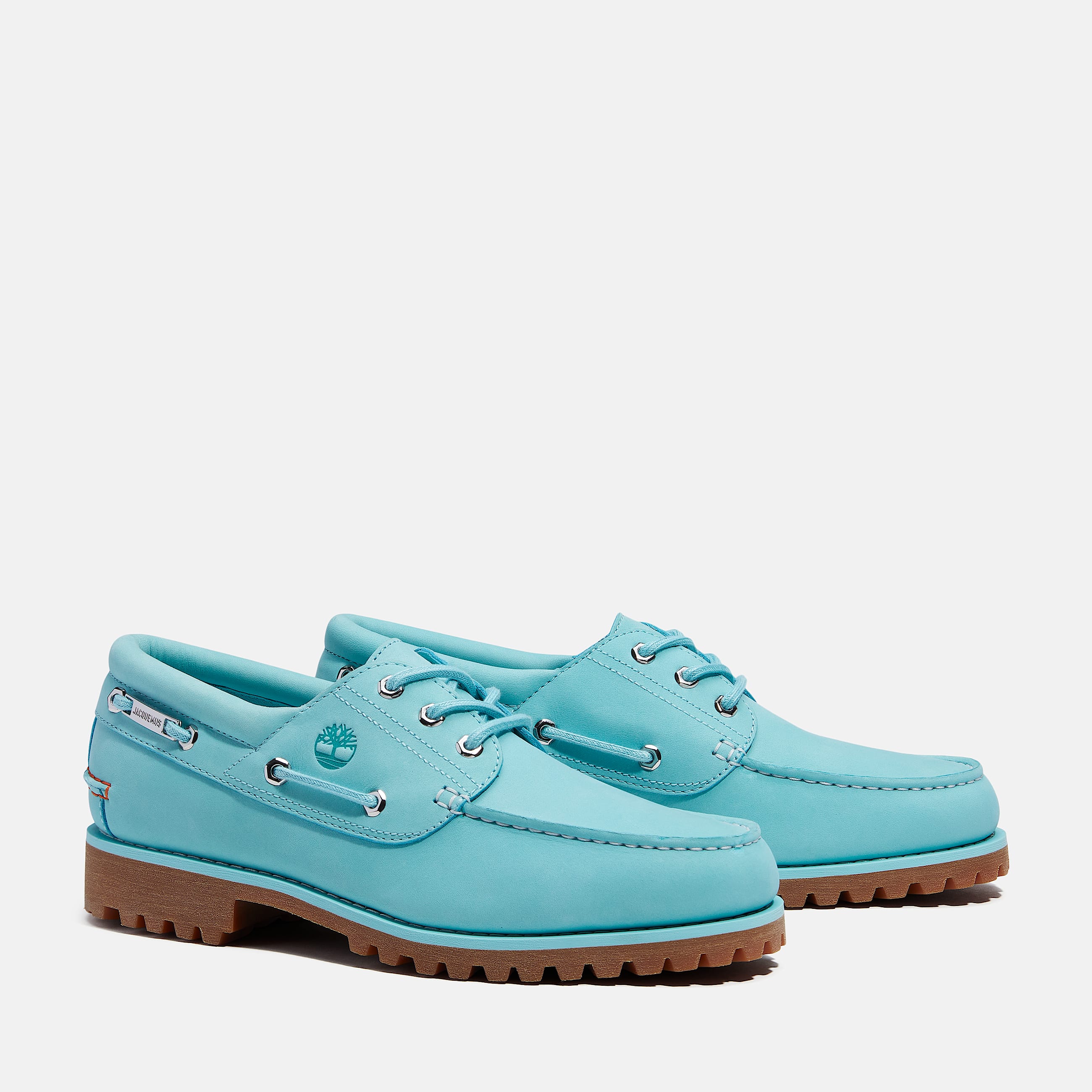
The design starts with Timberland's Authentic Boat Shoe, a style the brand has refined for decades, and reimagines it in a richly embossed croc-textured leather that immediately elevates the shoe from casual staple to statement piece. The hand-sewn moccasin construction remains intact, as does the unmistakable 360-degree rawhide lacing that wraps the collar and ties at the front—a detail so iconic it functions as shorthand for the entire category. But Jacquemus pushes further, introducing playful woodland styling that reads as both pastoral and slightly surreal: earthy, moss-adjacent tones, exaggerated proportions, and a general sense of a shoe that has wandered off the dock and into the underbrush. The lugged rubber outsole, borrowed from Timberland's performance heritage, grounds the shoe with genuine utility, while subtle co-branding signals the collaboration without shouting it.
A Boat Shoe That Left the Dock
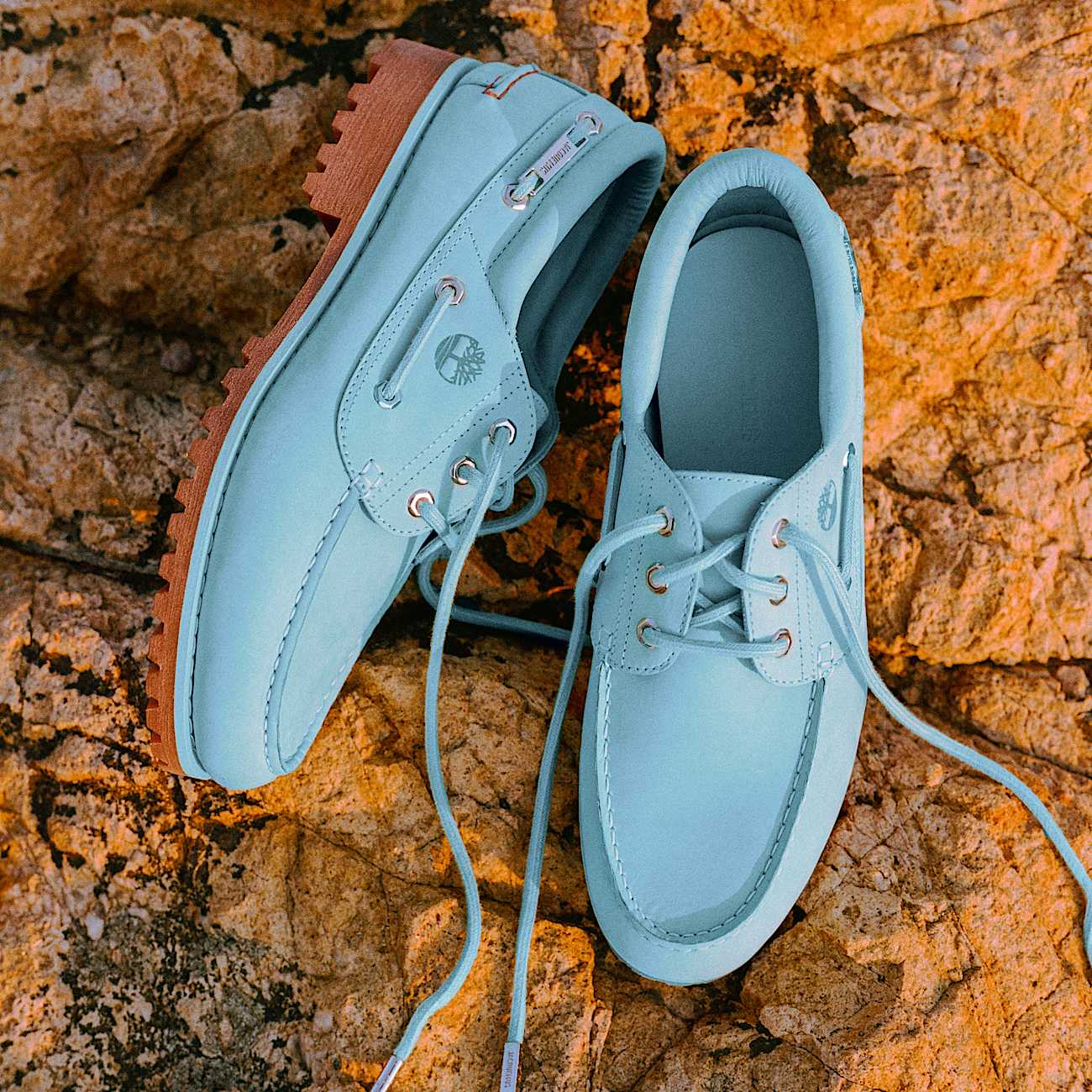
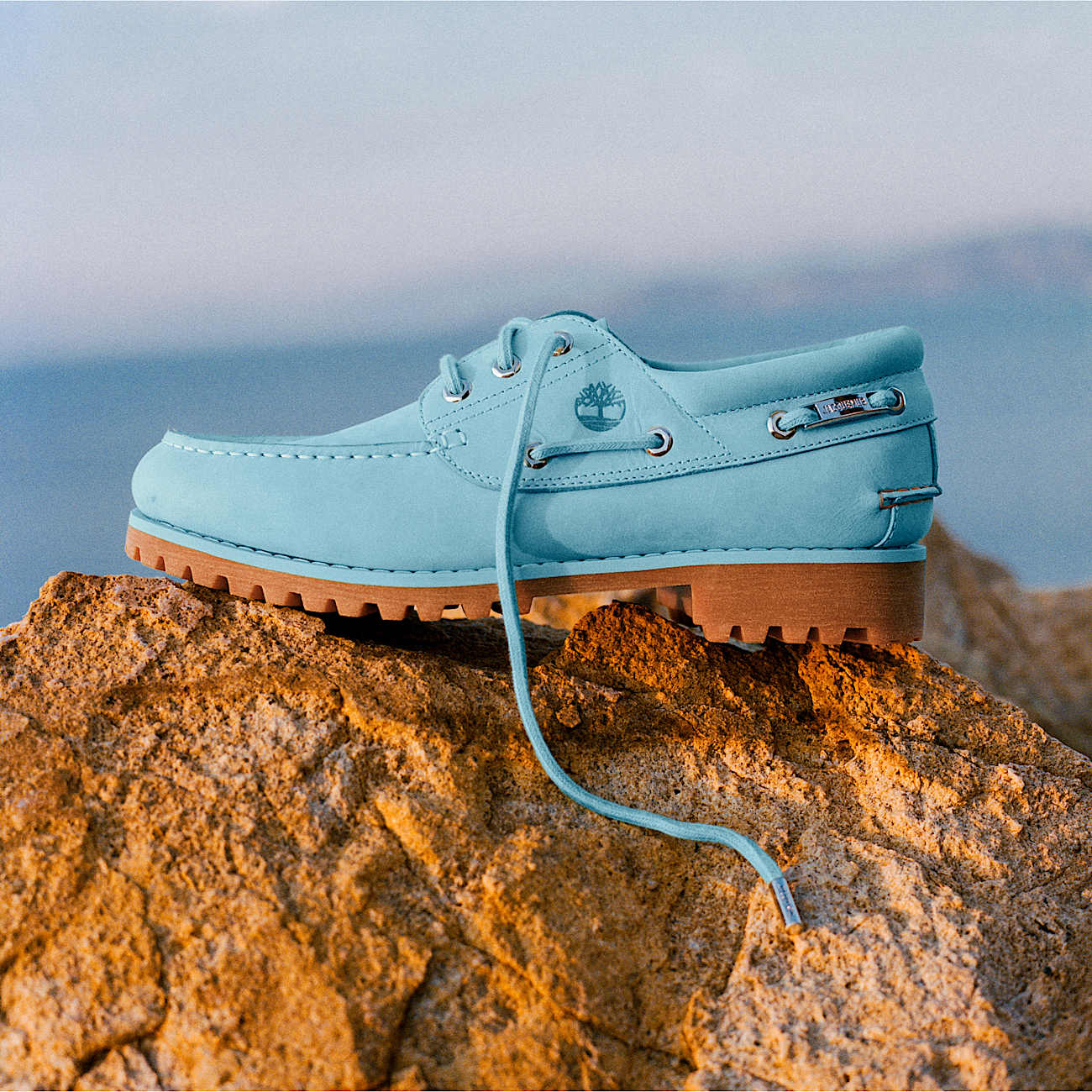
What makes this particular release resonate is timing. Jacquemus has spent the past several seasons refining and simplifying his aesthetic—critics noted as much in reviews of his Spring 2027 ready-to-wear, and the brand's recent expansion into Miami's Design District, with further flagships planned for Mexico and Madrid, signals a designer thinking seriously about permanence rather than mere virality. A footwear collaboration with Timberland fits that evolution. It is accessible in price relative to the brand's handbags, wearable in the way a boat shoe has always been wearable, and yet unmistakably Jacquemus in its refusal to take itself too seriously. The accompanying campaign, which trades the usual nautical backdrop for woodland acrobatics, underscores the point: this is a shoe designed to be worn, scuffed, and enjoyed.
Heritage as Raw Material
Culturally, the boat shoe occupies a curious position. Born in 1935 as a functional deck shoe with a siped sole for wet surfaces, it migrated into Ivy League wardrobes and, by the 1980s, into the broader American prep canon. Its recent revival—on runways, in street style, and across menswear and womenswear alike—has been driven by a generation that treats heritage pieces as raw material rather than heirloom. Jacquemus understands this instinctively. By rendering the shoe in croc-embossed leather and styling it against a woodland fantasia, he acknowledges the silhouette's history while refusing to be bound by it. The Timberland x Jacquemus Authentic Boat Shoe is not nostalgia; it is reinvention.
Who It's For
This shoe is for the wearer who wants a piece of heritage footwear without the costume that often accompanies it—someone who appreciates the craftsmanship of a hand-sewn moccasin but wants the frisson of a designer's eye. It suits the Jacquemus loyalist expanding beyond the brand's accessories, and the Timberland devotee curious about a more fashion-forward iteration of a familiar form. It works with wide-leg trousers and a linen shirt as readily as with shorts and a weathered tee. And in a market saturated with logo-heavy collaborations, its restraint reads as confidence.
Why it matters now is simple: the boat shoe is having a moment, and Jacquemus has arrived with the most considered interpretation of it. In an era when collaborations are often transactional, this one feels like a genuine conversation between two brands with distinct identities—Timberland's rugged American utility and Jacquemus's Mediterranean warmth. The result is a shoe that belongs equally on a cobblestone street in Marseille and a trailhead in New Hampshire. That duality, playful and precise, is precisely the point—and it's the same philosophy Jacquemus has been arguing all along: that the ordinary, viewed with enough intention, becomes something worth coveting.