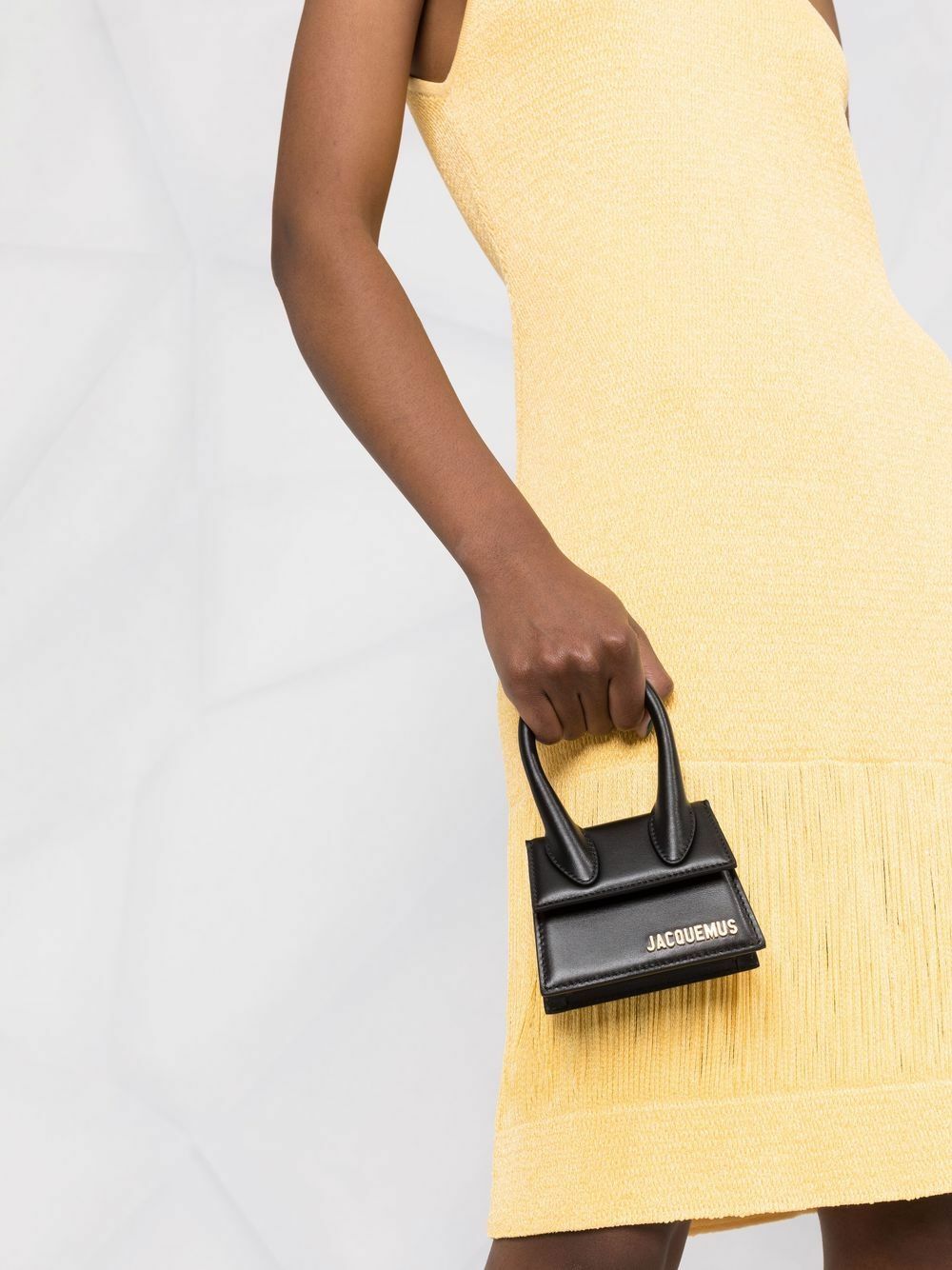
Fashion’s obsession with scale reached its logical, almost absurdist conclusion in 2022 when Simon Porte Jacquemus sent the Le Chiquito down the runway in a size so small it could barely hold a single AirPod. Critics scoffed, calling it a gimmick. But they missed the point entirely. In the age of the AI-native wardrobe—where clothes are rendered in pixels before they’re stitched in cotton, and where a garment’s primary function is to be photographed, not worn—the micro-bag is not a failure of utility. It is a triumph of symbolism.
Jacquemus didn’t shrink a handbag; he distilled the very concept of luxury into a wearable, and now unwearable, cipher. The Le Chiquito in its microscopic iterations, alongside the Le Bambino and the viral Le Petit Bambino (which debuted at the Spring 2025 show in a clear acrylic box, suspended like a rare insect), are not accessories for carrying things. They are accessories for carrying *meaning*—specifically, the meaning that you exist primarily in the digital realm.
The Physics of Pure Signal
Consider the physics of the thing. A bag that cannot hold a phone, a cardholder, or even a lip balm is functionally useless in the physical world. But in the digital world, it is perfect. It appears in a flat-lay, on a marble table, dangling from a manicured finger in a Parisian café—and its sole job is to communicate a specific, highly curated aesthetic. The AI-native consumer doesn't need a bag to transport a laptop; they need a bag to *transport an identity* across Instagram grids, TikTok transitions, and, increasingly, generative AI moodboards.
Jacquemus understands this better than any house. The brand’s entire marketing engine, from the sun-drenched lavender fields of the 2021 "Le Splash" campaign to the 2024 "La Croisière" show staged on a floating white barge, is engineered for the screenshot. The bags are props in a larger theatrical production of Mediterranean escapism, and their diminutive size is precisely what makes them legible as luxury. A large, practical tote is anonymous. A Le Chiquito Noeud—a twist on the classic with a knotted leather bow—is instantly recognizable, even in a 200-pixel thumbnail.
The Status of Irrelevance
This is the genius of the micro-bag as status symbol: it signals a complete detachment from necessity. In Veblen’s theory of the leisure class, status came from visible idleness. Today, status comes from visible *irrelevance*. By purchasing a bag that holds nothing, you are declaring that you have nothing to carry—no keys, no wallet, no commute. You are, in effect, a purely digital entity. The bag is a proof-of-stake in a life that is lived through the screen.
When Jacquemus, at the Fall 2023 show, presented the Le Grand Chiquito—a bag so large it was almost comical, a direct inversion of the micro—he was playing with the same dialectic. The oversized version is for the physical world, for the person who wants to be seen at a distance. But the micro version is for the close-up, for the selfie, for the algorithm that rewards objects that look expensive even when they are functionally inert. The Le Chiquito Moyen, the "medium" size, is actually the largest of the true micros, and it remains the entry-level status signal—a gateway drug for those not yet ready to fully abandon the physical.
Rendering, Not Wearing
What makes Jacquemus uniquely suited to this moment is the brand’s embrace of the ridiculous. Unlike Hermès, which maintains a somber, handcrafted mystique, Jacquemus leans into the playful absurdity of its proportions. The 2022 Le Chiquito in neon pink, barely larger than a matchbox, was not sold as a serious investment piece; it was sold as a digital artifact, a piece of jewelry for the wrist.
The brand has also pioneered the "virtual try-on" experience on its app, where users can see how a bag looks on their avatar—a feature that perfectly encapsulates the AI-native wardrobe. You don't buy the bag to wear it; you buy it to *render* it. In this context, the physical product is almost a byproduct of the digital image. The real value is in the JPEG, the GIF, the AR filter that places a Le Bambino on your shoulder while you're lying in bed in your pajamas.
The Weight of Nothing
Critics argue that this is the death of craftsmanship, but they are looking in the wrong direction. Jacquemus’s micro-bags are not less luxurious because they are small; they are *more* luxurious because they are inefficient. A tiny bag requires the same leather, the same stitching, the same hardware, but yields less utility. It is pure, distilled fashion—a concentrated essence of brand equity that bypasses the brain and speaks directly to the lizard-brain instinct for status.
When you wear a Le Chiquito so small it disappears in your palm, you are not carrying a bag. You are carrying a logo, a statement, and a silent confession: *my life is digital, my possessions are symbolic, and my physical needs are irrelevant.* In a world where AI can generate any outfit on demand, the only truly scarce resource is authenticity—and Jacquemus has figured out that the smallest objects carry the heaviest weight. The micro-bag isn't dead. It was never alive in the way we thought. It is a ghost in the machine, and it is wearing a very, very tiny handbag.